
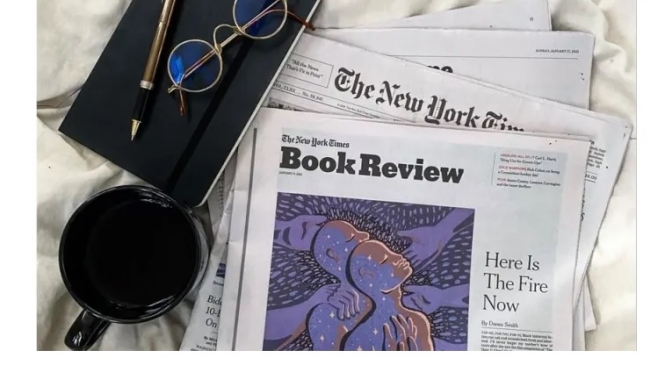
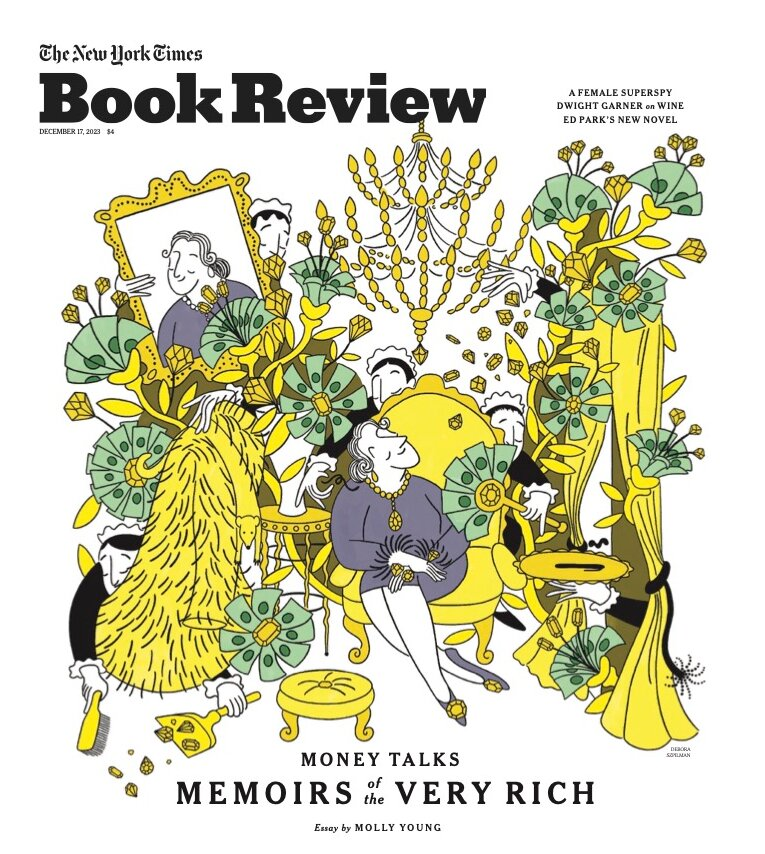

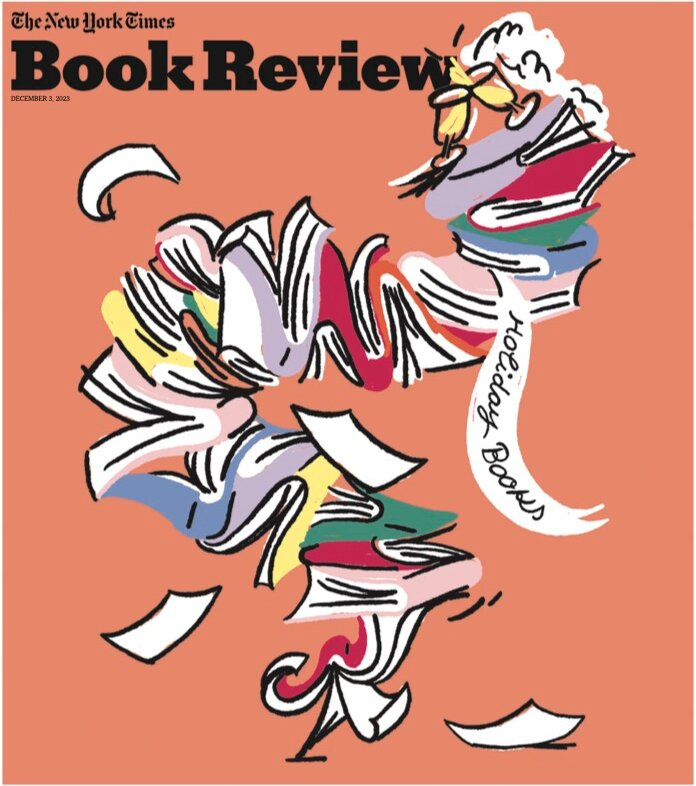
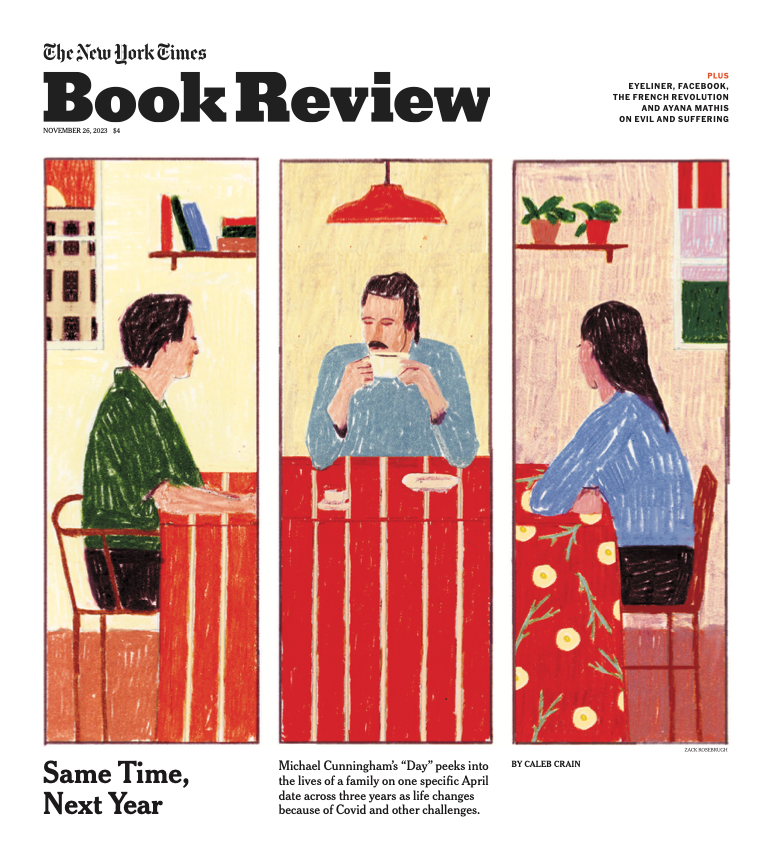
THE NEW YORK TIMES BOOK REVIEW (December 15, 2023): The latest issue features ‘Glorious Memoirs by the Very Rich’ – A look back at a time when the super-wealthy felt they had nothing to lose by letting readers inside their gilded corridors; For Kate Christensen, Bad Prose Can Never Yield a Great Book – “A book is made of language,” says the author, whose new novel is “Welcome Home, Stranger.” “How can a house be great if it’s made of shoddy materials? How can a dinner be great if it’s made with terrible ingredients?”
It’s My Privilege: Glorious Memoirs by the Very Rich

A look back at a time when the super-wealthy felt they had nothing to lose by letting readers inside their gilded corridors.
By Molly Young
“Class consciousness takes a vacation while we’re in the thrall of this book,” Barbara Grizzuti Harrison wrote in the Book Review in 1985, in her evaluation of the heiress Gloria Vanderbilt’s memoir “Once Upon a Time.” To be clear, Harrison was referring to the class consciousness of the reader, not the author. Vanderbilt demonstrates perfect awareness throughout her book that most young children don’t play with emerald tiaras and alligator jewel boxes lined in chestnut satin, or rely on the services of multiple butlers, or lose count of their own houses. Harrison’s point was that Vanderbilt’s talent with a pen — and perspective on her own economic altitude — allowed consumers of her tale to suspend their envy and engage with the reality of growing up in opulent neglect.
For Kate Christensen, Bad Prose Can Never Yield a Great Book

“A book is made of language,” says the author, whose new novel is “Welcome Home, Stranger.” “How can a house be great if it’s made of shoddy materials? How can a dinner be great if it’s made with terrible ingredients?”
What books are on your night stand?
I’m living temporarily in a rented house in Iowa City, teaching at the Writers’ Workshop. When I arrived there was not one book in the entire place, so I made an emergency trip to the local used-book store, collecting whatever leaped out at me from the shelves, mostly based on the wonderful titles: “Overhead in a Balloon,” by Mavis Gallant; “Watson’s Apology,” by Beryl Bainbridge; “Anthills of the Savannah,” by Chinua Achebe; “The Brandon Papers,” by Quentin Bell; “The Marquis of Bolibar,” by Leo Perutz; “The Seven Sisters,” by Margaret Drabble; “Bruised Hibiscus,” by Elizabeth Nunez; “A Journal of the Plague Year,” by Daniel Defoe.


















 Boomers Daily