Tag Archives: Environment

Opinion: U.S. & India Draw Closer, UK As An AI Power, Lula Can’t The Amazon

‘Editor’s Picks’ Podcast (June 12, 2023) Three essential articles read aloud from the latest issue of The Economist. This week, why India is indispensable to America, how to make Britain an AI superpower (10:35) and Lula’s unsustainable plans to save the Amazon (18:45).

Joe Biden and Narendra Modi are
drawing their countries closer

India does not love the West, but it is indispensable to America

India’s prime minister has been afforded the honour of a state visit by President Joe Biden. Mr Modi will be one of the few foreign leaders, along with Winston Churchill, Nelson Mandela and Volodymyr Zelensky, to address a joint session of Congress more than once. 

How Britain can become an AI superpower

Rishi Sunak’s enthusiasm is welcome. But his plans for Britain fall short

Britain, says Mr Sunak, will harness ai and thus spur productivity, economic growth and more. As he told an audience in London this week, he sees the “extraordinary potential of ai to improve people’s lives”.

Lula’s ambitious plans to save the Amazon clash with reality

A Kayapo tribe member walks on a highway during a protest in Brazil.

The Brazilian president faces resistance from Congress, the state oil company and agribusiness

 “There should be no contradiction between economic growth and environmental protection,” he said. Yet Lula’s green agenda is suffering setbacks.
Environment: The Grand Canyon Is Losing Its River

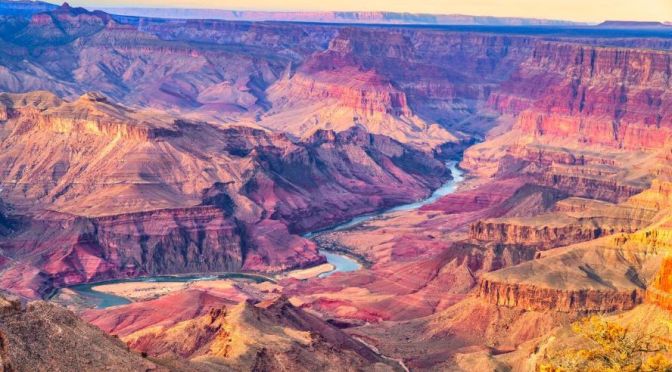
Long shadows are in the foreground of a view of the reddish canyon walls, which loom on either side and ahead. The sky is blue with ribbed white clouds.

The New York Times (June 6, 2023) – Down beneath the tourist lodges and shops selling keychains and incense, past windswept arroyos and brown valleys speckled with agave, juniper and sagebrush, the rocks of the Grand Canyon seem untethered from time. The oldest ones date back 1.8 billion years, not just eons before humans laid eyes on them, but eons before evolution endowed any organism on this planet with eyes.

The Grand Canyon, a Cathedral to Time, Is Losing Its River

Written and photographed by Raymond Zhong, who joined scientists on a 90-mile raft expedition through the canyon.

About half a dozen people with orange life jackets ride a blue raft on a murky, brownish and somewhat choppy Colorado River. Rust-colored canyon walls loom on either side and ahead of them. Three other rafts are in the distance.

Since 1963, the Glen Canyon Dam has been backing up the Colorado for nearly 200 miles, in the form of America’s second-largest reservoir, Lake Powell. Engineers constantly evaluate water and electricity needs to decide how much of the river to let through the dam’s works and out the other end, first into the Grand Canyon, then into Lake Mead and, eventually, into fields and homes in Arizona, California, Nevada and Mexico.


Spend long enough in the canyon, and you might start feeling a little unmoored from time yourself.

A spring that looks like a narrow waterfall cascades out of a hole in a canyon wall down into a calm part of the Colorado River. The canyon walls are rust-red.
North Canyon, and a spring at Vasey’s Paradise.

The immense walls form a kind of cocoon, sealing you off from the modern world, with its cell signal and light pollution and disappointments. They draw your eyes relentlessly upward, as in a cathedral.

You might think you are seeing all the way to the top. But up and above are more walls, and above them even more, out of sight except for the occasional glimpse. For the canyon is not just deep. It is broad, too — 18 miles, rim to rim, at its widest. This is no mere cathedral of stone. It is a kingdom: sprawling, self-contained, an alternate reality existing magnificently outside of our own.

And yet, the Grand Canyon remains yoked to the present in one key respect. The Colorado River, whose wild energy incised the canyon over millions of years, is in crisis.

Read more

Science: How Advanced Computer Models Project Future Climate Scenarios

Princeton University (December 13, 2022) – Earth’s atmosphere, oceans, and land surfaces interact and combine in powerful, yet often unseen, ways as part of a complex planetary system that determines the climate.

Over many decades, researchers at Princeton University have played a leading role in the development of advanced computational models that simulate interactions among these elements to inform an understanding of future climate scenarios under varying conditions.

In this video, climate scientists Gabe Vecchi and Laure Resplandy discuss how computational models are used to project future climate scenarios and inform mitigation strategies.

READ MORE

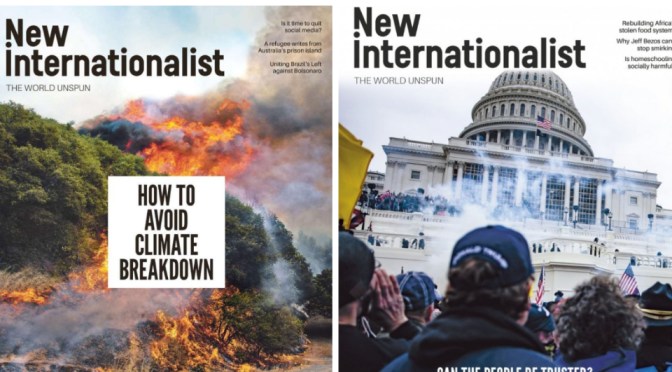
WORLD JOURNALISM: NEW INTERNATIONALIST – NOV ’22

New Internationalist – NOVEMBER-DECEMBER 2022:

TAKE BACK THE LAND

The land beneath our feet is what sustains us – from it we can produce food, construct shelter and build livelihoods. But, it’s also a cultural marker and a source of identity. Its control has been a long-favoured tool of colonizers, wealth hoarders and polluters, while its fiercest protectors – often Indigenous peoples – are criminalized, violated and dispossessed. This edition hears from struggles to take back the land in Brazil, Bangladesh, Kenya and North America. We also launch our new series ‘Decolonize how?’ which will explore what people are doing to dismantle the impacts – and current realities – of British-linked colonialism.

Bali Views: How A 90-Year-Old Man Fights Pollution

Each year, just about 30,000 metric tonnes of plastic pollution enter Indonesia’s waters. How does one man plan to clean it up?

In Indonesia, the ocean plays a critical role in people’s livelihood; from their food to their careers. But that important life source is under threat from overwhelming amounts of plastic. Unfortunately, this pollution is fueled from one of Indonesia’s most popular tourist destinations, Bali.

This, combined with plastic from the rest of the world, washes up on beaches, gets hooked by local fishermen, and damages marine ecosystems. This film follows Wayan, a 90-year-old Balinese fisherman using all his resources and knowledge to tackle this growing problem, one net of trash at a time. This is Voice Above Water, a production from Turning Tides Films.

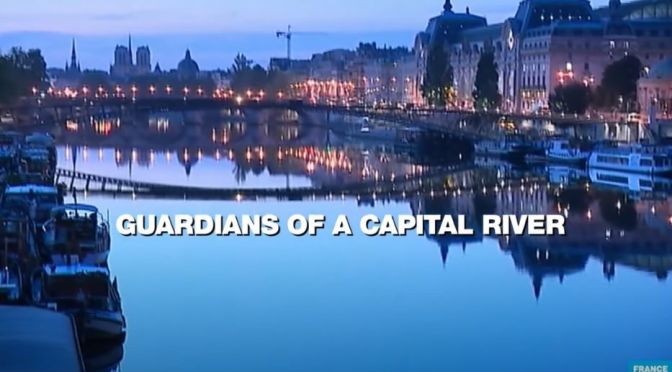
Views: Guardians Of The River Seine In Paris, France

The River Seine is the beating heart of Paris. The banks of the river attract 8 million visitors each year, making it one of the busiest places in the French capital. We meet those who take care of the Seine seven days a week, from the technicians checking water quality to members of the river patrol, who respond to emergency call-outs and use radar to explore the river’s depths.

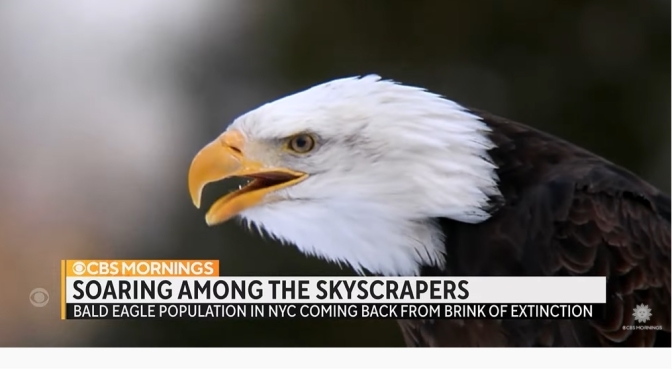
Nature View: Bald Eagles Soar In New York City

Bald eagles were nearly extinct in New York City due to environmental factors such as pollution and pesticides. Michael George spoke to an urban park ranger sergeant who participated in the two-decade effort to bring the birds back to the city.

The bald eagle is a bird of prey found in North America. A sea eagle, it has two known subspecies and forms a species pair with the white-tailed eagle, which occupies the same niche as the bald eagle in the Palearctic. 

Habitats: The Destruction Of Paraguay’s Rainforests

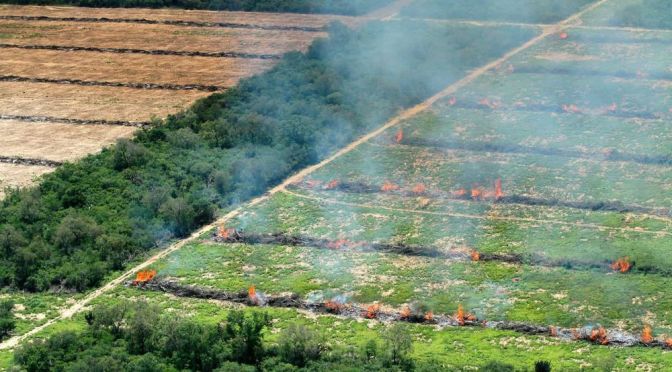
Paraguay might be one of the world’s first countries to lose its rainforest because of a confluence of factors including inequality, corruption, drug trafficking, and climate change. The South American nation offers a stark warning for what the planet stands to lose if it doesn’t act to protect its natural resources.

Paraguay is a landlocked country between Argentina, Brazil and Bolivia, home to large swaths of swampland, subtropical forest and chaco, wildernesses comprising savanna and scrubland. The capital, Asunción, on the banks of the Paraguay River, is home to the grand Government Palace and the Museo del Barro, displaying pre-Columbian ceramics and ñandutí lacework, the latter available in many shops. 

Views: The Eden Project – World’s Largest Indoor Rainforest, Cornwall, UK

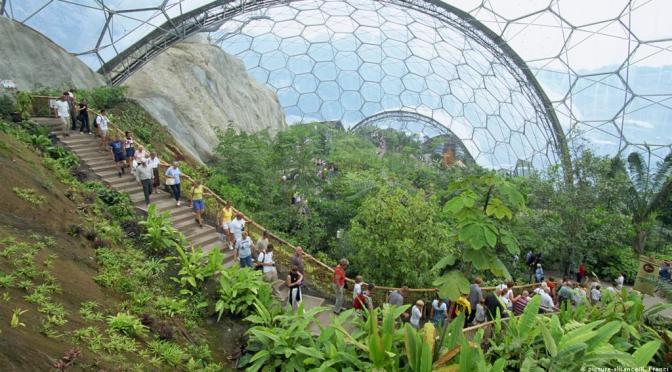
There’s a rainforest in Europe? Apparently, yes – and it’s called the Eden Project! It houses the world’s largest covered rainforest, beneath a giant dome.

But it’s not an amusement park, but rather an educational centre and environmental organisation. The concept: Only those who experience and engage with the beauty of nature can also protect it. That’s why 100,000 plants from all over the world have been brought here, where they cover an area of some 50 hectares.

Not only the sheer number of plants is impressive, the building itself is, too: Two geodesic domes span the site as greenhouses – like massive soap bubbles sticking together. Our Euromaxx reporter Hendrik Welling visits the record-breaking Eden Project and to explore its biotopes and rainforest.

Wildfires: The Alder Creek Giant Sequoia Graveyard

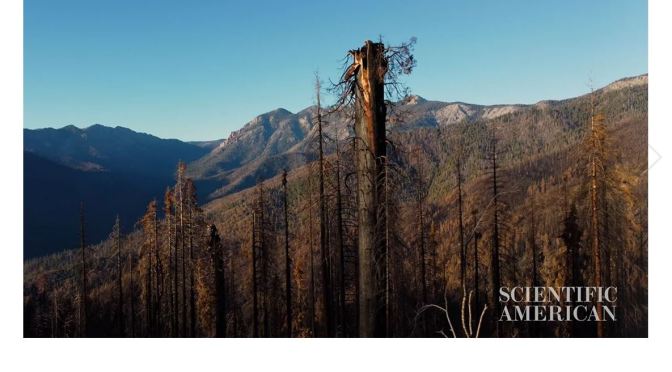
On a dead still November morning in the Sierra Nevada, two researchers walk through a graveyard of giants. Below their feet: a layer of ash and coal. Above their heads: a charnel house of endangered trees.

This is Alder Creek Grove, a once idyllic environment for a majestic and massive specimen: the giant sequoia. It is now a blackened monument to a massive wildfire—and humankind’s far-reaching impact on the environment. But these two researchers have come to do more than pay their respects.

Linnea Hardlund and Alexis Bernal, both of the University of California, Berkeley, are studying the effects of record-breaking fires such as the one that destroyed large swaths of Alder Creek Grove in the hopes that their findings will inform forest management that might preserve giant sequoias for future generations.

So far, those findings are grim: mortality in Alder Creek Grove is near 100 percent. Of the mighty trees that stood watch for thousands of years, only charred skeletons remain. About a century of aggressive fire suppression and a warming, drier climate have created a perfect environment for unprecedented fire.

On August 19, 2020, it came to the Giant Sequoia National Monument. The SQF Complex was two fires—the Castle and Shotgun fires—that burned for more than four months, affecting nearly 175,000 acres. And a preliminary report on the Castle Fire estimated that 10 to 14 percent of all living giant sequoias were destroyed.

Hardlund, who is also at the nonprofit Save the Redwoods League, and Bernal fear that, without scientifically informed intervention, such fires will continue to return to the Sierra Nevada—leaving the once proud guardians of the forest a memory and another casualty of our ecological failure.