

‘Editor’s Picks’ Podcast (October 16, 2023) – A selection of three articles read aloud from the latest issue of The Economist. This week, will Israel’s agony and retribution end in chaos or stability? Also, the backlash against green policies (09:58) and a disastrous workplace experiment (16:15).
Tag Archives: Economics
Opinion: Free Markets Are Fading, Democracy Dims In Africa, Bitcoin Origins
‘Editor’s Picks’ Podcast (October 9, 2023) – A selection of three essential articles read aloud from the latest issue of The Economist. This week, are free markets history? Also, why Africans are losing faith in democracy (10:25) and we investigate whether bitcoin originally leaked from an American spy lab? (17:25)
Special Report: ‘Homeland Economics’ (October 2023)


Homeland Economics
Governments across the world are rediscovering industrial policy. They are making a big mistake, argues Callum Williams
- Governments across the world are discovering “homeland economics”
- Attempts to make supply chains “resilient” are likely to fail
- “Homeland economics” will make the world poorer
- New industrial policies will make the world more unequal
- Green protectionism comes with big risks
- New industrial policies will not help economic stability
- Video: Busting globalisation myths
- Sources and acknowledgments
Opinion: An Antidote To Aging, A Bigger And Better EU, Japan’s ‘Toilet’ Culture
‘Editor’s Picks’ Podcast (October 2, 2023) – A selection of three essential articles read aloud from the latest issue of The Economist. This week, the search for the antidote to ageing, why a bigger EU is a better EU (11:30), and Japan’s world-leading toilet culture (25:30).
Opinion: Ukraine’s Long War, Asia Trade Evolves, A Disgraced UK Comedian
‘Editor’s Picks’ Podcast (September 25, 2023) – A selection of three essential articles read aloud from the latest issue of The Economist. This week, how to win a long war in Ukraine, what Asia’s economic revolution means for the world (11:05) and why a disgraced comedian is the symbol of a cruel, misogynistic and politically vacant era in Britain (18:52).
Preview: Foreign Policy Magazine – Fall 2023
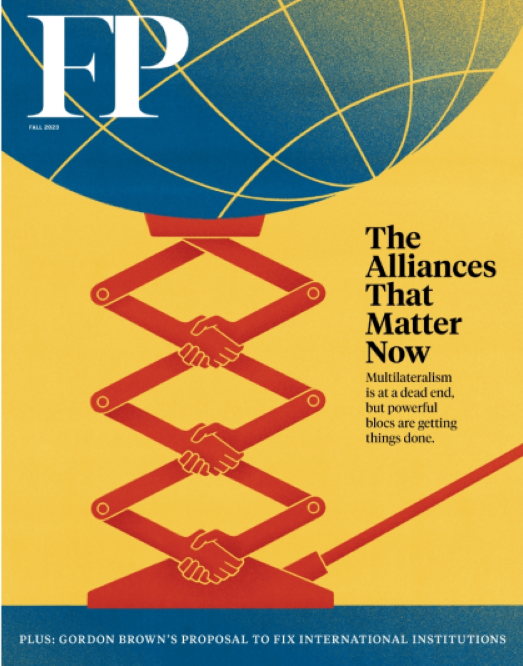

The G-7 Becomes a Power Player

Russia’s war and China’s rise are turning a talking shop into a fledgling alliance of democracies.
By G. John Ikenberry, a professor of politics and international affairs at Princeton University.
Time and again over the last century, the United States and the other liberal democracies in Europe, East Asia, and elsewhere have found themselves on the same side in grand struggles over the terms of the world order. This political grouping has been given various names: the West, the free world, the trilateral world, the community of democracies. In one sense, it is a geopolitical formation, uniting North America, Europe, and Japan, among others. It is an artifact of the Cold War and U.S. hegemony, anchored in NATO and Washington’s East Asian alliances.
Vivek Ramaswamy’s Foreign Policies Raise Eyebrows in Washington

The GOP’s rising star offers up a grab bag of ideas cribbed from Eminem to Richard Nixon.
By Jack Detsch
End American dependence on Taiwan’s semiconductor factories. Declare economic independence from China. Give India an AUKUS-like submarine deal. And stage a dramatic visit to Moscow to broker a deal to end Russia’s full-scale invasion of Ukraine.
REVIEWS: ‘Warfare After Ukraine – Battlefield Lessons’ (The Economist)
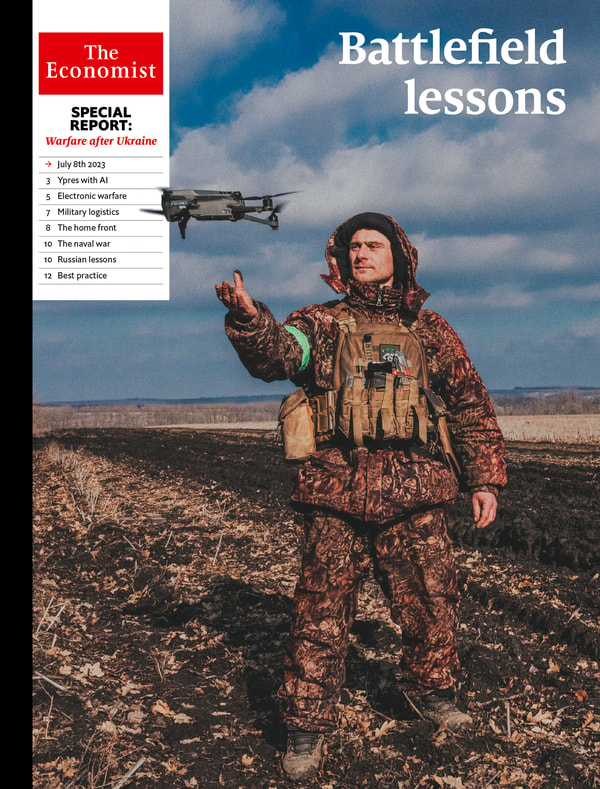

Like the first world war, but with high technology

The war shows how technology is changing the battlefield. But mass still counts, argues Shashank Joshi
The latest in the battle of jamming with electronic beams

Jamming is knocking drones and missiles out of the sky
Preview: Foreign Policy Magazine – Summer 2023
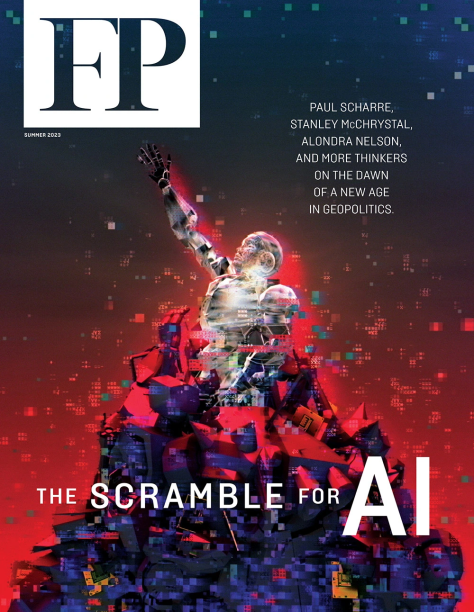
AI Is Winning the AI Race
Success isn’t just staying ahead of China.
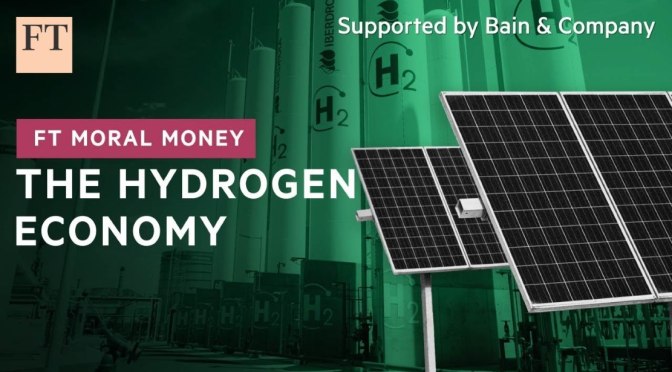
Green Energy: Potential & Economics Of Hydrogen

Video timeline: 00:00 What is Hydrogen 00:50 Green Hydrogen 02:50 Current uses of hydrogen 04:10 The concerns 05:00 The Hydrogen rainbow 05:51 Emerald Hydrogen 07.35 The investors 10:50 The policymakers 13:40 Green steel 17:35 Cleaning up aviation 22:15 The hydrogen economy of the future
From southern Spain to Swedish Lapland, we meet those at the forefront of this fast-growing space – all seeking a share of the billions to be made in the emerging hydrogen economy.
#hydrogen #greenhydrogen #EmeraldHydrogen #steel #hydrogeneconomy #zerocarbon #emission

Japan Culture: How Five Ancient Crafts Survived

Video timeline: 00:36 Soy Sauce 08:16 Wagashi 19:27 Mochi 27:12 Bonsai Scissors 37:45 Black Vinegar
We saw how soy sauce is aged in century-old wooden barrels, how vinegar is fermented using an ancient method, and how sweets that only aristocrats and emperors could eat 400 years ago are prepared today.
 Boomers Daily