‘Editor’s Picks’ Podcast (October 2, 2023) – A selection of three essential articles read aloud from the latest issue of The Economist. This week, the search for the antidote to ageing, why a bigger EU is a better EU (11:30), and Japan’s world-leading toilet culture (25:30).
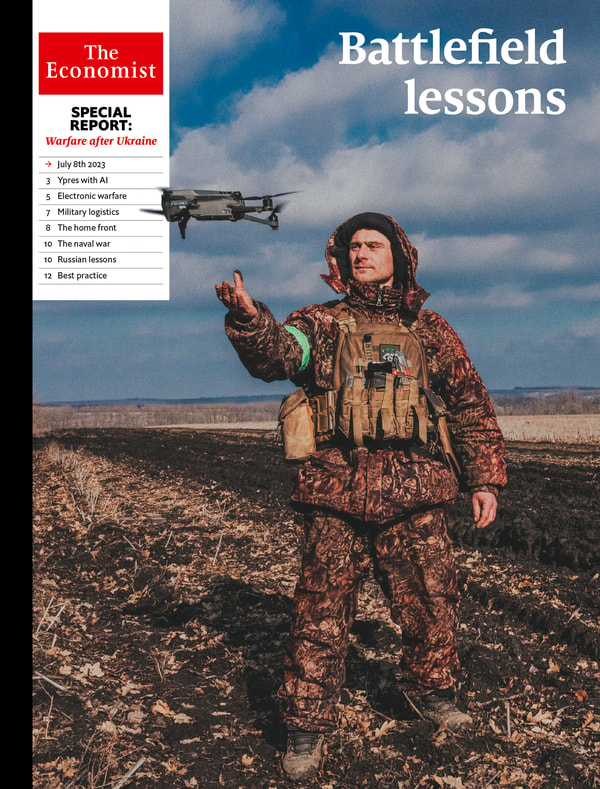
‘Editor’s Picks’ Podcast (September 25, 2023) – A selection of three essential articles read aloud from the latest issue of The Economist. This week, how to win a long war in Ukraine, what Asia’s economic revolution means for the world (11:05) and why a disgraced comedian is the symbol of a cruel, misogynistic and politically vacant era in Britain (18:52).
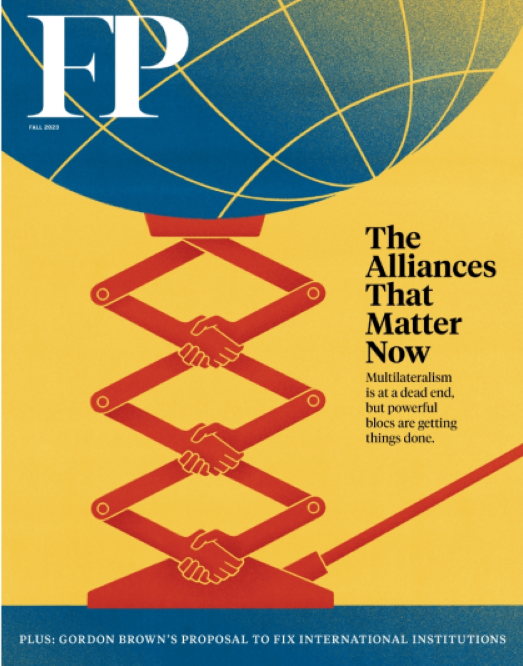
Foreign Policy Magazine – Fall 2023: The new issue features The G-7 Becomes a Power Player – Russia’s war and China’s rise are turning a talking shop into a fledgling alliance of democracies; Vivek Ramaswamy’s Foreign Policies Raise Eyebrows in Washington – The GOP’s rising star offers up a grab bag of ideas cribbed from Eminem to Richard Nixon and more…
Russia’s war and China’s rise are turning a talking shop into a fledgling alliance of democracies.
By G. John Ikenberry, a professor of politics and international affairs at Princeton University.
Time and again over the last century, the United States and the other liberal democracies in Europe, East Asia, and elsewhere have found themselves on the same side in grand struggles over the terms of the world order. This political grouping has been given various names: the West, the free world, the trilateral world, the community of democracies. In one sense, it is a geopolitical formation, uniting North America, Europe, and Japan, among others. It is an artifact of the Cold War and U.S. hegemony, anchored in NATO and Washington’s East Asian alliances.
End American dependence on Taiwan’s semiconductor factories. Declare economic independence from China. Give India an AUKUS-like submarine deal. And stage a dramatic visit to Moscow to broker a deal to end Russia’s full-scale invasion of Ukraine.
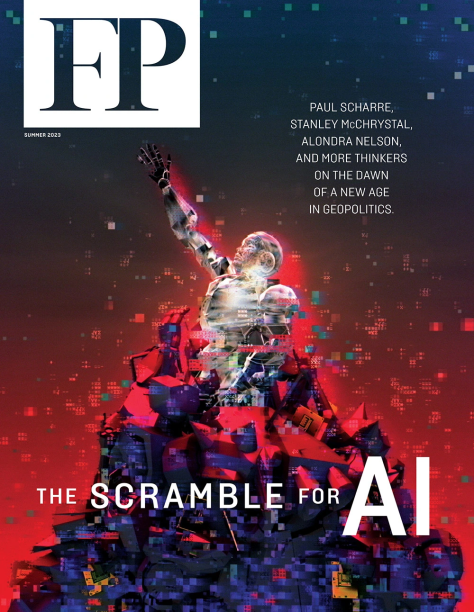
Foreign Policy Magazine – Summer 2023: Artificial intelligence is suddenly everywhere. It seems as though no conversation about jobs, education, health care, technology, or politics happens without an inevitable question about how AI could disrupt it all.
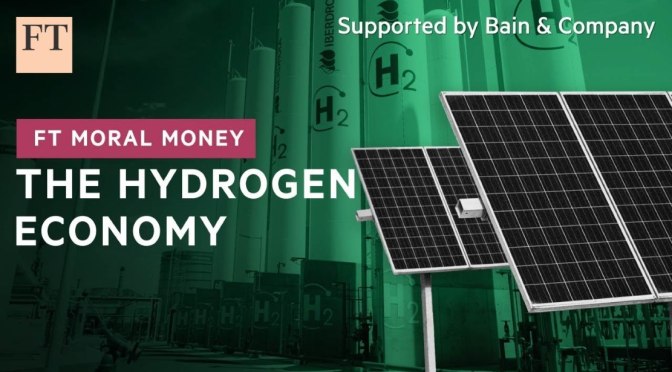
Financial Times (June 13, 2023) – In this film, the FT’s Simon Mundy explores how hydrogen – the lightest, most abundant element in the universe – could play a crucial role in the global push for net zero carbon emissions.
Video timeline:00:00 What is Hydrogen 00:50 Green Hydrogen 02:50 Current uses of hydrogen 04:10 The concerns 05:00 The Hydrogen rainbow 05:51 Emerald Hydrogen 07.35 The investors 10:50 The policymakers 13:40 Green steel 17:35 Cleaning up aviation 22:15 The hydrogen economy of the future
From southern Spain to Swedish Lapland, we meet those at the forefront of this fast-growing space – all seeking a share of the billions to be made in the emerging hydrogen economy.
Insider Business (May 19, 2023) – These Japanese crafts are among the oldest in the world. But most of them are disappearing. In this video, we will tell you the stories of five artisans who are among the last to keep their ancient methods alive.
We saw how soy sauce is aged in century-old wooden barrels, how vinegar is fermented using an ancient method, and how sweets that only aristocrats and emperors could eat 400 years ago are prepared today.
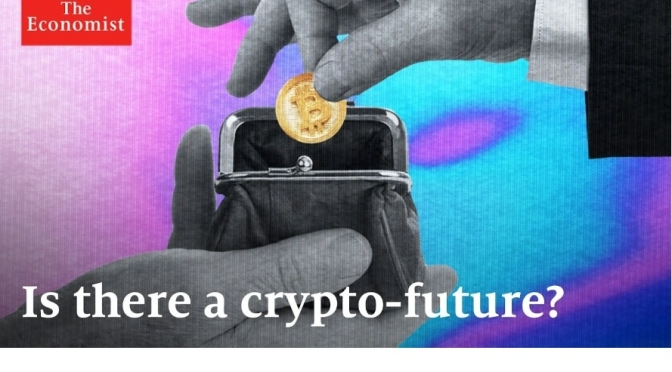
The Economist (May 18, 2023) – The financial revolution once promised by cryptocurrencies has been knocked off course by regulators and allegations of fraud. So what does the future hold for crypto?
Video timeline: 00:00 – The crypto party is over 01:06 – The history 03:30 – What is crypto? 04:38 – Uses around the world 06:07 – Layer 2 solutions 07:12 – Web3 08:51 – Data and privacy 10:04 – What is the future of crypto?
The Economist – Special Reports (May 20, 2023): The fight over payments systems is hotting up around the world. There may be surprising winners, says Arjun Ramani.
The fight over payments systems is hotting up around the world. There may be surprising winners, says Arjun Ramani
Payment is one of the most fundamental economic activities. To buy anything, you need something the seller wants. One option is barter, but that is beset by friction (what are the chances of having something your counterparty wants at any exact moment?). Early forms of money, from cowrie shells to beads to metal coins, offered a solution: they were always in demand to settle transactions.









 Financial Times

 The Economist (May 18, 2023) – The financial revolution once promised by cryptocurrencies has been knocked off course by regulators and allegations of fraud. So what does the future hold for crypto?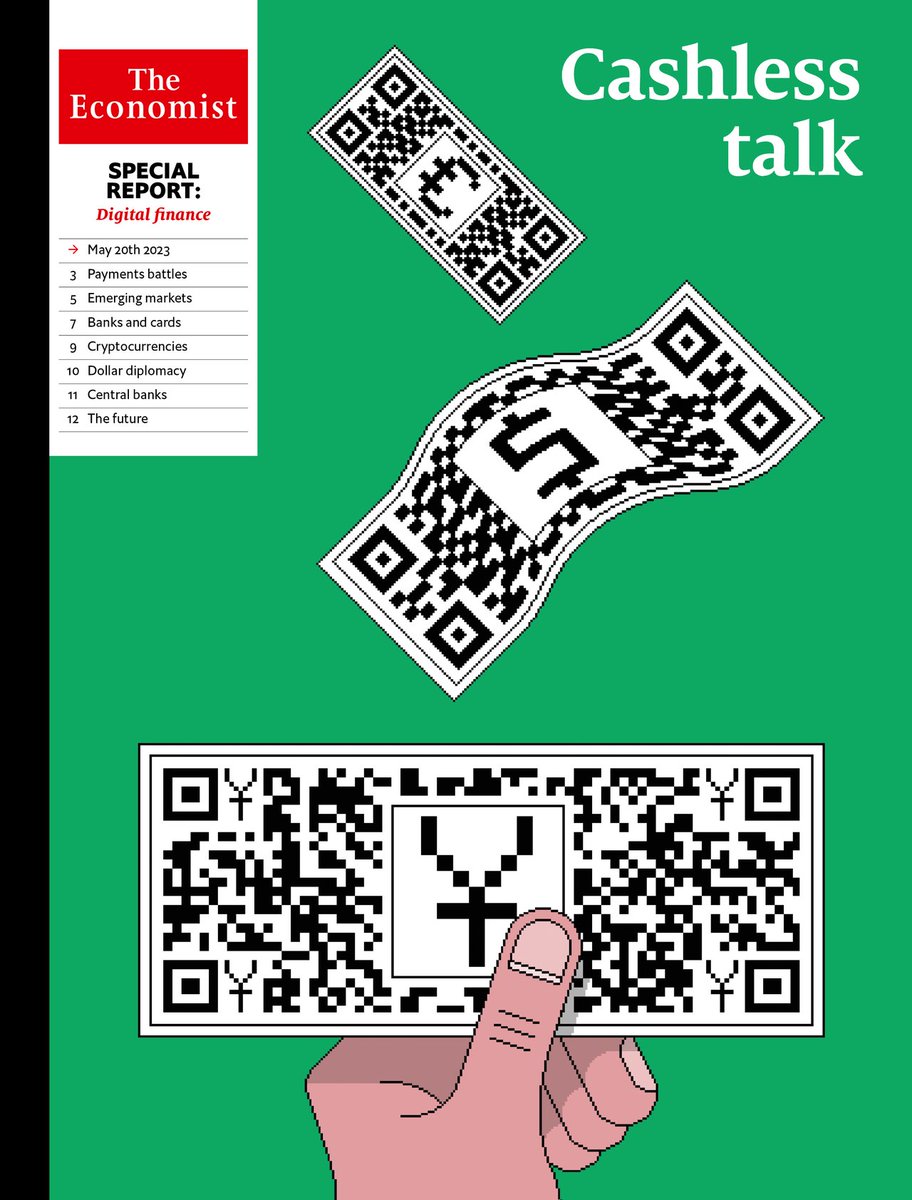

 Boomers Daily