
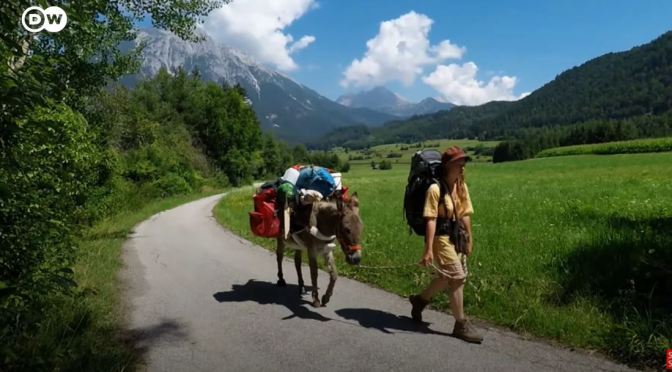
Hiking over the Alps with a donkey had been Lotta Lubkoll’s childhood dream. Following a tragic loss, she decided to make it come true: Together with Jonny the donkey, she hiked over the alps from Munich, Germany to Italy’s Adriatic Coast. The trek – around 600 kilometers – lasted 80 days, and turned the two travelling companions into the best of friends. That was just the beginning: In December of 2020 they set off again, to Portugal. Find out why a donkey is the ideal travel partner!
Tag Archives: DW Videos
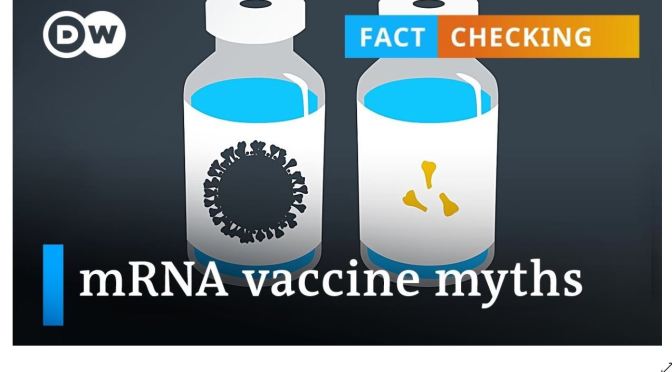
Covid-19: mRNA Vaccines Do Not Change Your DNA
With so many myths about COVID-19 vaccines regarding their impact on our health, many people don’t know what to believe. In our fact check, find out what you need to know about the mRNA vaccines — as we expose the myths and reveal the facts.
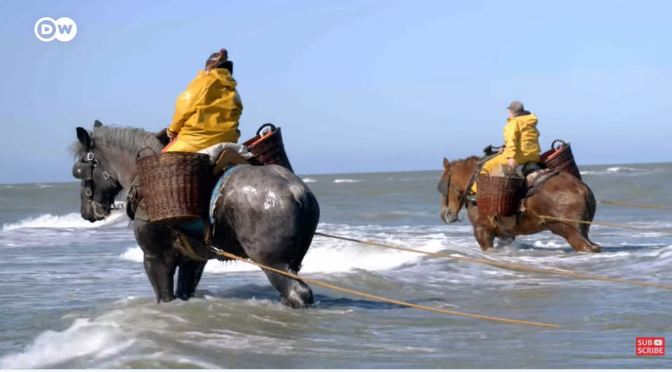
Views: The Horseback Fisherwomen Of Belgium
The tradition of horseback fishing for fish and shrimp goes back to the 16th century. Large Belgian Draft horses trawl across the beach with fishing nets attached to their saddles. In Oostduinkerke, at the Belgian coast, this 500-year-old shrimping tradition has remained unchanged, except in 2015, when a small but significant change occurred: for the first time ever, 2 women joined the ranks of what was long considered a “man’s job”. We met up with the women who brave the waves on Belgians weighing up to 1 ton every day.

Covid-19: Vaccination Is Key To Curbing Mutants
Almost 2 billion doses of Covid-19 vaccine have been administered worldwide to date. But is it enough to wipe out Sars-CoV-2? Of course, those shots are not evenly spread across all continents. In terms of sheer numbers,
North America and Europe managed about 370 million shots each. South America with Covid-stricken countries like Brazil has a lot of catching up to do. Africa and its more than 1.3 billion people only received 34 million doses so far while Asia is storming ahead with more than 1 billion shots. But that doesn’t mean Asia is fully vaccinated. Far from it.
There are huge gaps, like in Vietnam, a country that has long been praised for its response to the pandemic. Now it is faced with new outbreaks and a new variant.
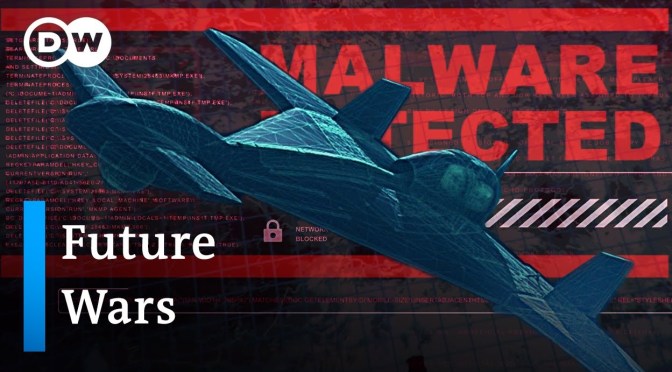
Analysis: The Future Of Modern Warfare (Video)
The world is entering a new era of warfare, with cyber and autonomous weapons taking center stage. These technologies are making militaries faster, smarter, more efficient. But if unchecked, they threaten to destabilize the world. DW takes a deep dive into the future of conflict, uncovering an even more volatile world.
Chapters 00:00 – Introduction 02:37 – The Cyber Nuclear Nightmare 17:05 – Flash Wars And Autonomous Weapons 30:12 – Trading Markets And Flash Crashes 31:45 – Time To Act
Where a cyber intrusion against a nuclear early warning system can unleash a terrifying spiral of escalation; where “flash wars” can erupt from autonomous weapons interacting so fast that no human could keep up. Germany’s Foreign Minister Heiko Maas tells DW that we have already entered the technological arms race that is propelling us towards this future. “We’re right in the middle of it. That’s the reality we have to deal with.” And yet the world is failing to meet the challenge. Talks on controlling autonomous weapons have repeatedly been stalled by major powers seeking to carve out their own advantage. And cyber conflict has become not just a fear of the future but a permanent state of affairs. DW finds out what must happen to steer the world in a safer direction, with leading voices from the fields of politics, diplomacy, intelligence, academia, and activism speaking out.

Reviews: EU Approves Insects As ‘Food’ (Video)
Insects have long been a staple food in Asia. In Europe, not so much. But diets are changing, with ever more people trying to avoid meat – for health or moral reasons, or because raising farm animals is less and less sustainable. Now, the European Commission has officially declared mealworms to be food. It’s a game changer for insect farmers, many of whom have so far operated under temporary license. Insects are rich in protein: Up to 70 percent of their entire mass is protein. In addition to that, they’re also rich in healthy Omega-3 fatty acids, like fish. Some insects, especially the mealworm, have over 14 percent of fatty acids – that’s seven times as much as fish.
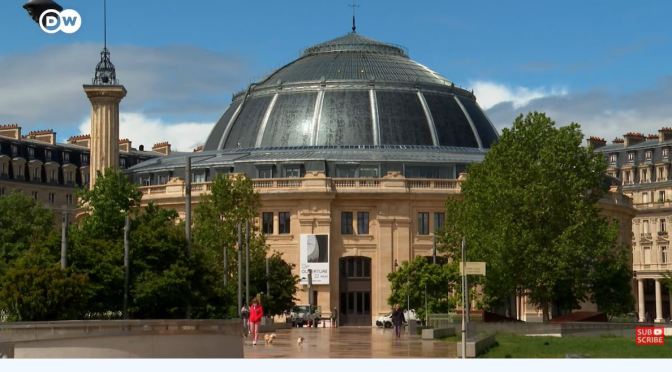
Art & Architecture: ‘The Pinault Collection’ – Paris
French billionaire François Pinault is not only one of the richest men in the world, he’s also an art collector of international renown. Now, he’s opening a museum for contemporary art in Paris. The new palace of art is located inside the former Bourse de Commerce, which has been redesigned by star architect Tadao Andō.
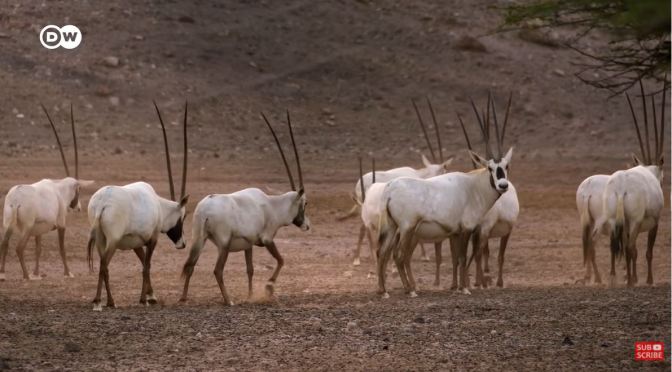
Views: The Endangered Species Refuge Of ‘Sir Bani Yas Island’ – Abu Dhabi, UAE
The Arabian oryx is a beautiful, almost luminously white antelope. But, after being over-hunted by humans in the 20th century, it only narrowly escaped extinction. Today, on the desert island of Sir Bani Yas, the endangered animals find refuge. Part of an archipelago west of Abu Dhabi, Sir Bani Yas is home to a large wildlife reserve, where animals from Arabia, Asia and Africa roam freely. You can watch cheetahs hunting, and imagine how the Bedouins once lived, under open desert skies. Established in the 1970s, extensive ecological measures turned Sir Bani Yas into a man-made “paradise for wild animals.” Now, the reserve stands for the region’s desire for a sustainable future. It’s also a great place to see the magnificent Arabian oryx running free, once more.
Sir Bani Yas Island is part of the Al Gharbia region of the United Arab Emirates. It’s dominated by the Arabian Wildlife Park, with its roaming giraffes, cheetahs and gazelles. Multiple archaeological sites across the island include the ruins of an ancient Christian monastery. Salt dome hills define the island’s desert interior. The coast features beaches, sea kayak routes and a shipwreck.

Tourism: Venice Re-Opens To Much Smaller Crowds
Before the pandemic, the Italian city of Venice was overrun with tourists – so much so, it was looking for ways to restrict their numbers. Now though, it’s got the opposite problem. Empty streets and waterways, in a city that very much depends on tourism revenue. DW’s Max Zander reports on how Venice is looking to strike the right balance, as it re-opens for business.
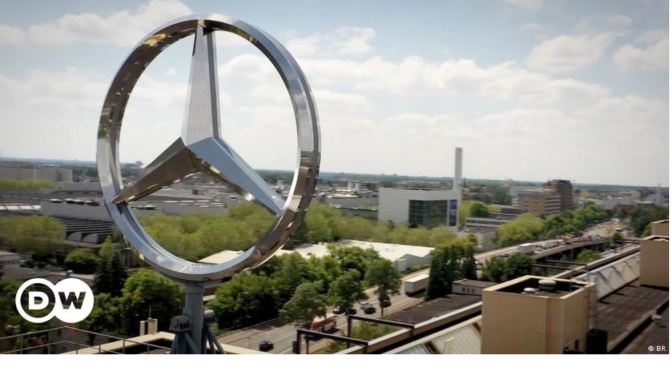
Analysis: The Politics Of Germany’s Auto Industry
The German automotive industry has long played a key role in the country’s prosperity. It employs hundreds of thousands and enjoys cozy relationships with politicians.
But the COVID-19 crisis threw a wrench in the works. What’s next? The prosperous German auto industry has long been lagging when it comes to innovating new automotive technologies. Then came the COVID-19 pandemic. Now, the industry is turning to decision-makers for help. But just how far will policymakers go to help the car companies?
Arguing that the COVID-19 pandemic has hit them hard, the auto industry is demanding the postponement of stricter CO2 limits and a purchase premium for new vehicles. They maintain that nothing less than the prosperity of the whole country is at stake. But is Germany’s success really dependent on the auto industry? And how much blame does industrial policy bear for the failures of the automotive companies?
 Boomers Daily