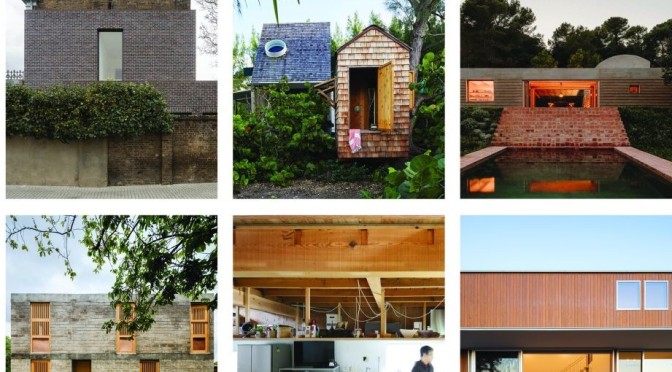
House 101 by Atelier tho.A. Photograph: Anh Chuong
The Architectural Review – The 15 shortlisted projects include houses from all over the world, from the UK, Ireland and Spain, to Mexico, Vietnam, New Zealand and The Bahamas.
Casa Ter by Mesura. Photograph: Salva-López
The private house occupies a unique position in both the history of architecture and human imagination. Beyond its core function of shelter, it is an object of fantasy, a source of delight, a talisman and a testing ground.
Bass Coast Farmhouse by John Wardle Architects. Photograph: Trevor Mein
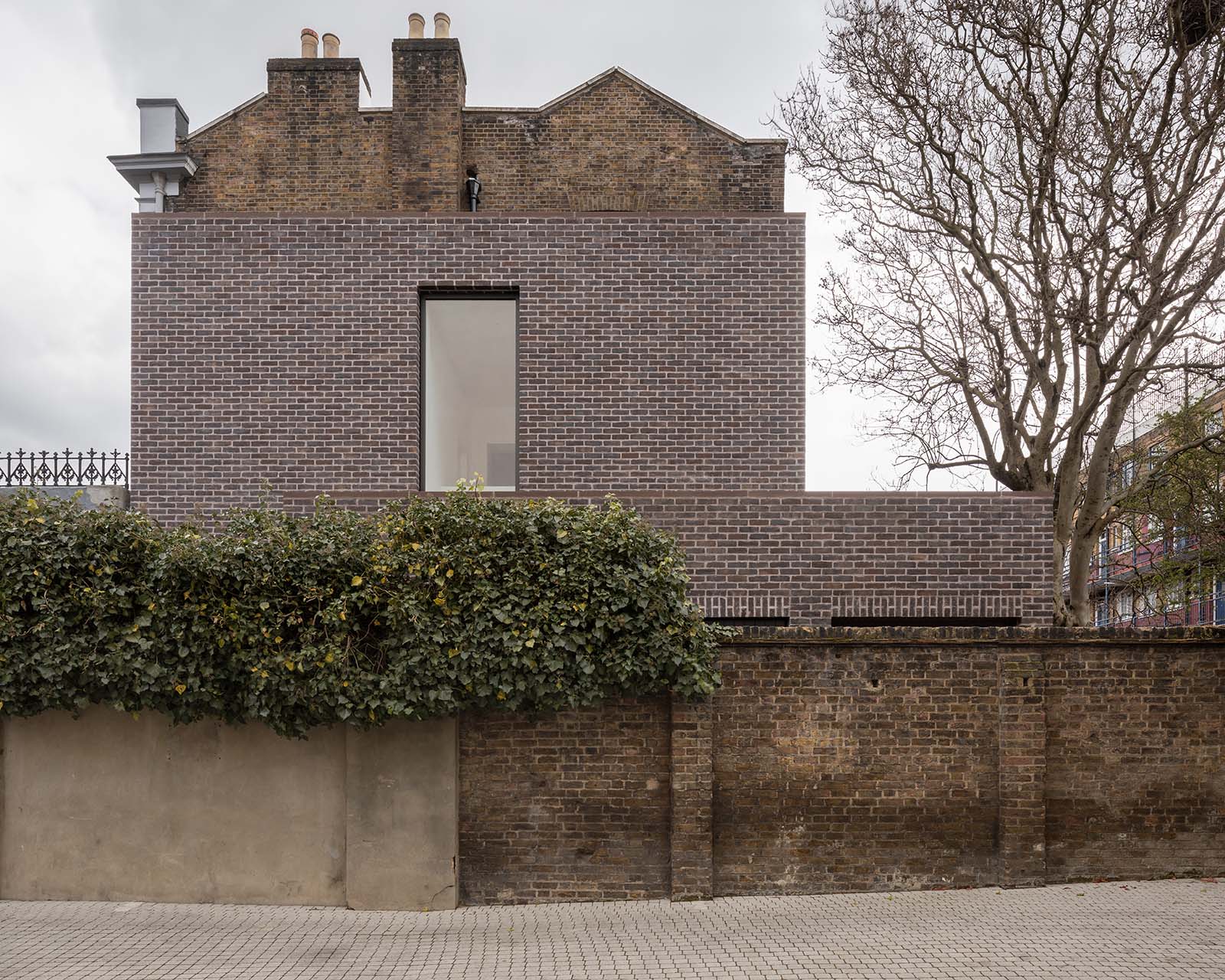
Blockmakers Arms by Erbar Mattes. Photograph: Ståle Eriksen
Brillhut by Brillhart Architecture. Photograph: Bill Abranowicz
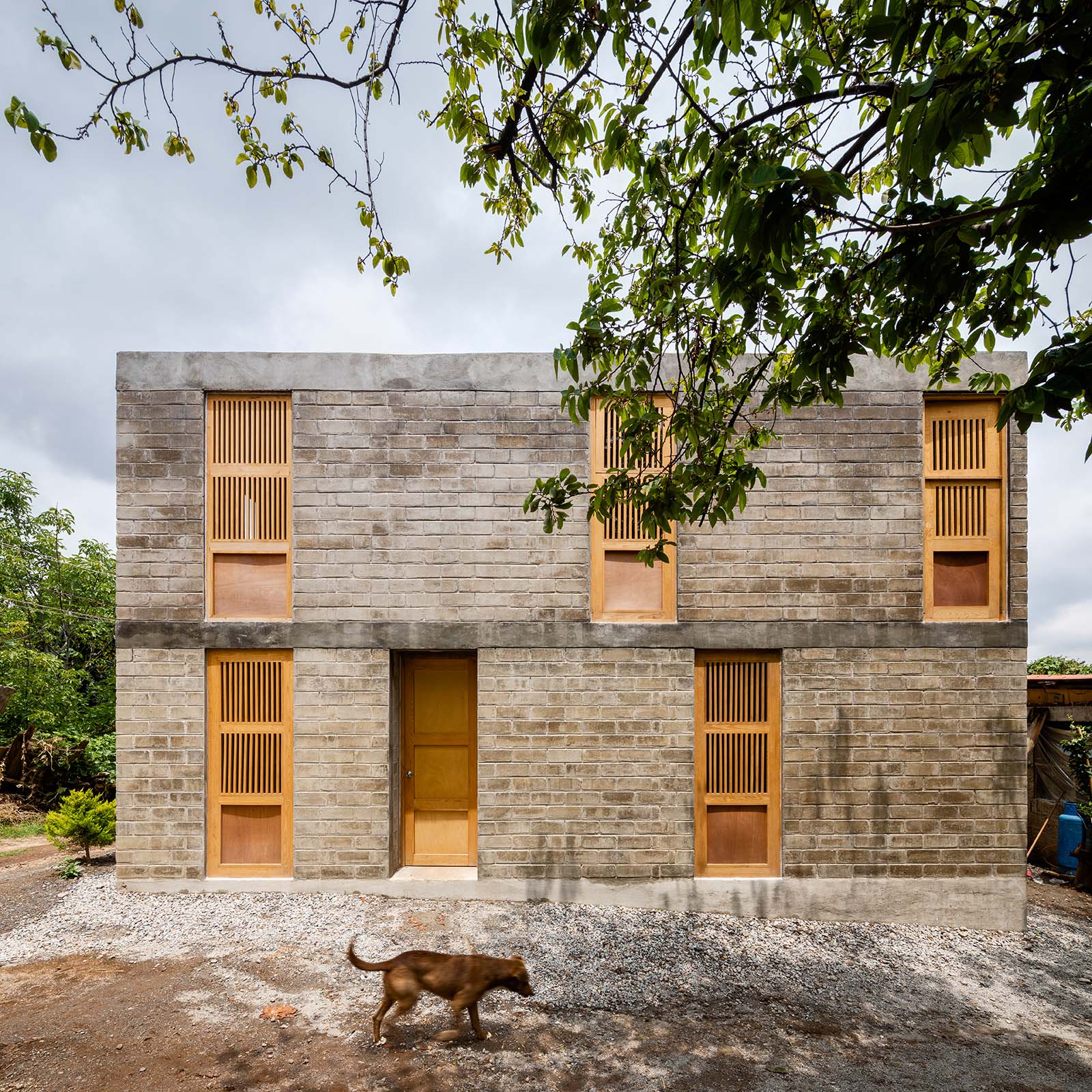
Casa Eva by Fernanda Canales Arquitectura. Photograph: Rafael Gamo
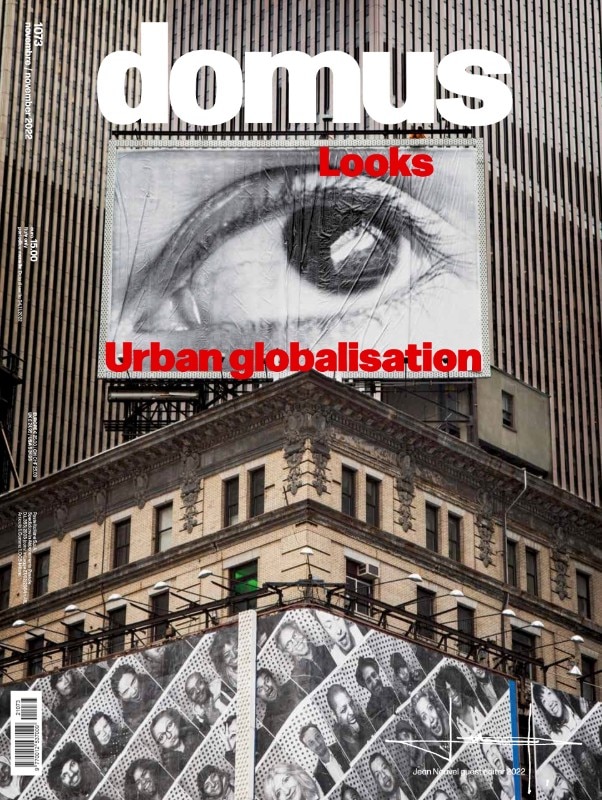
The November issue of Domus, the latest edited by Guest Editor Jean Nouvel, focuses on urban globalization and its relationship with architecture. In his concluding Editorial, the French Pritzker Prize winner tackles the issue by writing about the right to live well that is being challenged by a world that is cloning itself.
“Living well is fundamental to everyone’s life. It is the starting point: without a happy living space, nothing can prosper. Urban globalization is the result of selfishness with no awareness of the immediate future, of a general absence of empathy”. This is followed, again edited by Jean Nouvel, by a selection of fragments from the book Dériville by Bruce Bégout, an essay on the thought of Guy Debord and the imaginative work of the Situationists.
This is followed in the Essays by Tom Avermaete, Professor of the History and Theory of Urban Design at ETH Zurich, and Michelangelo Sabatino, Professor at the College of Architecture of the Illinois Institute of Technology in Chicago, tracing a history of the global in relation to architecture and the city.
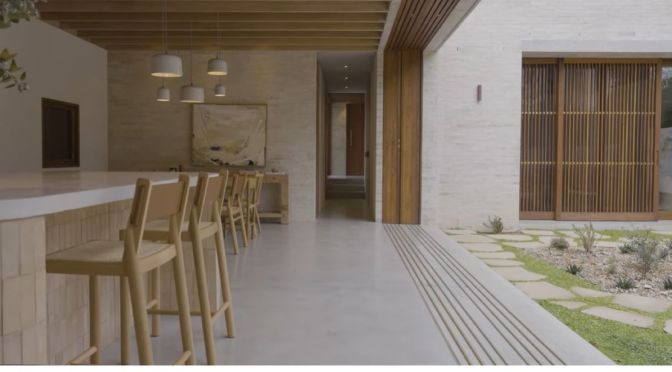
Afforded the freedom of an open design concept, interior design practice Folk Studio crafts Curl Curl House. Showcasing the collaborative work of architectural practice TRIAS, the magical home captures the spirit of the Australian coast.
Video timeline: 00:00 – An Introduction to the Magical Home 00:38 – The Collaboration of Folk Studio and TRIAS 01:51 – Adding Intentional Gestures to the L-Shaped Floor Plan 02:32 – A Beach, Bush and Coastal Palette 02:51 – Watching Visions Come to Life 03:22 – Having the Garden as an Integral Piece of the Design 03:46 – Seeing Green from all Areas 04:11 – The Hit and Miss Brickwork Screens 04:38 – Creating a Sanctuary and an Oasis for the Clients 04:58 – Finding Joy in the Client’s Comfort
Settled into Curl Curl, the coastal suburb of Sydney located just north of the Central Business District, the same-named house reflects its immersive environment. The natural character of the local context sees bush meet coast and a beachside lifestyle cohere with suburban influence. Upon accepting the design project, Folk Studio promptly met with architectural firm TRIAS in order to solidify the creative vision – a residential sanctuary – and ensure that the architecture and interior design of the home work together to form the ideal domestic experience.
Featuring an L-shaped spatial plan, Curl Curl House encloses a collection of communal zones on its ground floor, including a living room on each end. The position of each living room marks a change from the spatial arrangement of a typical house, which sees kitchen, living and dining spaces continue on from one another. Purposefully located, the living rooms function as calming areas within the magical home, removed from the bustle of the communal zones.
Inspired by the Australian beach, bush and coast, the aesthetic palette of Curl Curl House reflects a sense of natural serenity, enhanced by contrasting injections of brickwork that pay homage to the suburban context. Integral to the design of the magical home is the garden space growing along its perimeter. As a result of TRIAS condensing the architecture of the home, the garden space is maximised and enables a natural vista to be accessed from every room of the house.
Hit-or-miss brickwork screens adorn the upper levels of the façade, intercepting the incoming natural light to create shifting visual patterns within the magical home. Achieving a residential oasis, Folk Studio and Trias craft a magical home that serves as an escape from the hectic nature of everyday life. Curl Curl House stands as a residence in which its owners can take pride, rewarded by the sense of careful curation permeating the dwelling.
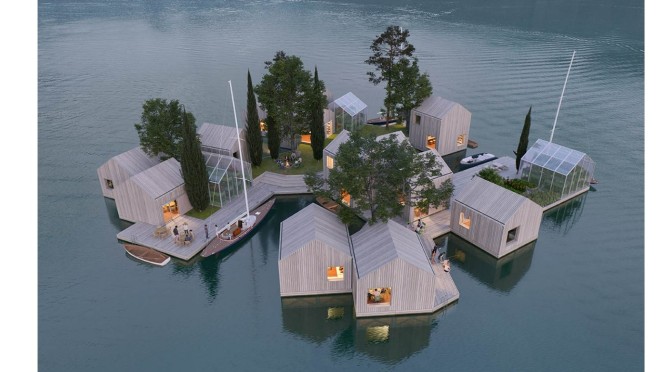
The system is based on simple flat pack modules made from recycled reinforced polymer. These are extremely strong and resilient and can be easily transported and assembled on location
The modules can be assembled in different configurations to provide floating foundations for floating infrastructure, public spaces or housing.
A growing acknowledgement of sea level rise and an increased risk of urban flooding has contributed to a sharp increase in interest in building on water, but current solutions, including polystyrene filled concrete foundations and plastic pontoons are inflexible, difficult to transport and highly unsustainable.
MAST has envisioned a new system of simple of flat-packed modules made from recycled reinforced plastic, that can be easily transported around the globe and assembled into countless configurations, providing a secure floating foundation. The system offers a sustainable and highly flexible solution for building almost anything on the water; from floating houses in Seattle, to floating campsites on Oslo fjord, to saunas on Hobart’s riverfront.
The system was inspired by gabion construction, an ancient technology which utilises mesh cages filled with rubble to create extremely sturdy, low cost foundations. In this case the concept is inverted; and the modular ‘cages’ are filled with locally sourced, up-cycled floatation supporting the weight of any structure built on top. they are also much more adaptable than existing solutions since floatation can be added or adjusted at any time if weight is added or shifted around above.
Land on water will provide a climate resilient and adaptable solution for the construction of new floating buildings worldwide but could also lead to an entirely new type of dynamic and organic off-grid floating community and an alternative to the large master-planned floating cities currently under development which repeat many of the mistakes made by urban planners in the middle of the 20th century.
The Local Project– Following three years of curation, St Vincent’s Place emerges as an award winning home, peppered with art and designed to promote conversation. Crafted by B.E Architecture, the restoration project employs expressive pieces with consistency, enabling the building to be navigated with ease.
Video timeline:00:00 – Introduction to the Award Winning Home 00:21 – A Restoration Project 3 Years in The Making 00:58 – Building Aspects From the Ground Up 01:31 – Compatibility Within the Home 01:46 – A Walkthrough of the Historic Section of the Home 02:03 – The Modern Section of the Home 02:18 – Reinterpretations of the Historic Aspects 02:46 – Encouraging Conversation Through Building and Design 03:36 – A Range of Surprising Features 04:45 – Peaceful Curation and Arrangement 05:09 – A Journey With the Client
Originally owned by a convent, St Vincent’s Place is comprised of three buildings set side-by-side, situated in the Melbourne precinct of Albert Park. The heritage façade – the only historical element that could be retained in the award winning home – represents a significant contribution to the architecture of the area, presenting a combination of stone and delicate black metalwork. Traversing two design styles in a singular project, B.E Architecture dedicates the front of the home to heritage recreation whilst providing a modern extension.
The front of the award winning home captures a formal entrance and living room and upstairs, a master bedroom and dressing room. A studious approach to restorative design is reflected in the treatment of cornices, skirtings and architraves, as well as doorjambs, doors and flooring. In contrast, the back of the building captures a contemporary interior design including a downstairs pool, onsen and steam room, elevated with tiling and considered lighting.
Several features of St Vincent’s Place indicate the designer’s penchant for aesthetic flair. Inspired by pioneering artist Sigmar Polke, sliced agate doors filter natural light with an array of neutral tones. In addition, a large text piece reading ‘Heaven is a Place Where Nothing Ever Happens’ sparks curiosity from its reference, size and impressive incorporation into the award winning home.
“You do feel the magic of how these elements come together here,” says Broderick Ely, Design Director at B.E Architecture. “We curate, we arrange and manipulate these items so it sits very quietly.” Using the even application of decorative elements, B.E Architecture establishes a coherent and award winning home. St Vincent’s Place is structured to gently guide occupants towards its many hidden gems, enabling the mind to wander in unison with the body.
Yongwook Seong created a Sci-Fi themed architecture series (Title: Banff Extraterrestrial Park) by experimenting AI-generated images via Midjourney. The project unfolds from Extraterrestrial 006 visiting Banff and terraforming it to construct a tourist park as part of the Earth revitalization project.
During research, 006 saw Mycelium fungi as an ideal local building material, experimenting it with their stardusts. Sky lounges grow themselves at the extraterrestrial-level strength and stability.
High-Rise Hoodoos became one of the main attractions at Banff Extraterrestrial Park.
Stardust drones are constructing (Ex) terrestrial town. These drones are autonomous builders under the direction of Extraterrestrial Architect.
Yongwook Seong [ joŋuk sʌŋ ] is a designer, holding a Master of Architecture degree from University of British Columbia, Vancouver. His interest lies in various fields including architecture, furniture design, lighting design, visual arts and etc. He lives in Banff, AB, Canada.
Representing a built legacy, Bunker House pays homage to the 18 years that Neil Hipwell – Director of Futureflip – has spent in the construction industry. Crafted by Futureflip itself, the oceanfront super house is a proud expression of design capability, created to last over 100 years.
Video timeline: 00:00 – Introduction to Bunker House 00:29 – Introduction To The Owners & Designers 00:40 – The Location of Bunker House 01:09 – Futureflips Concrete Obsession 01:27 – Bringing In The Natural Light 02:00 – Built to Stand for 100 Years 02:20 – A Partially Underground Home 02:46 – Softening The House Through Landscaping 03:12 – The Furniture Selection Process 03:34 – A House Built for Hosting 03:57 – Focusing On The Outdoor Space 04:27 – Building A Legacy
Located in the Syndey surf town of Gerringong, Bunker House celebrates a concrete materiality, the signature base of a Futureflip project. Textural additions of creeping rosemary and Casuarina glauca visually soften the façade of the oceanfront super house whilst adjacent dragon trees, pandanus trees and cacti connect the garden landscape with its masculine character.
With much of its bulk tucked into its site, Bunker House champions the values of endurance and sustainability. Underground, the thermal climate of the oceanfront super house is controlled by the earth temperature, rendering artificial heating and cooling unnecessary. In the outdoor space, durable King furniture is employed to provide comfort whilst withstanding the harsh waterfront conditions.
The interior design of Bunker House presents a welcoming iteration of the raw aesthetic. King furniture pieces complement the built foundation of the oceanfront super house with neutral tones and pleasant tactility. Recycled messmate custom joinery – applied to the kitchens and bedrooms – balances the exposed concrete envelope with a sense of warmth.
Justifying the Futureflip devotion to concrete, Bunker House embodies a sense of timelessness, combining sustainability with compelling architecture. Clearly legible as a work of mindful craft, the oceanfront super house inspires onlookers to reimagine the application of raw materials.
On a steep slope in Mosman, on Sydney’s Lower North Shore, TKD Architects were asked not just to design a six-bedroom family home that took advantage of the views, but also to take charge of the interior architecture and styling – from the furniture and flooring right down to the artwork, bedding and even the cutlery. All their Shanghai-based clients needed to do was unlock the door and walk into their completely finished home.
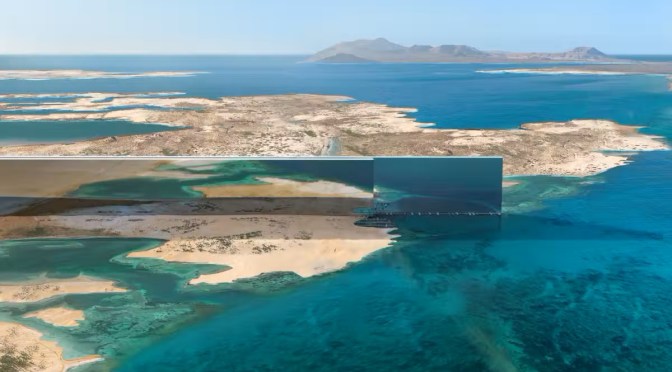
The Line is a proposed smart linear city in Saudi Arabia in Neom, Tabuk, currently under construction, which is designed to have no cars, streets or carbon emissions.
The Line is being described as a one-building vertical city outfitted with exterior mirrors, big enough to house 9 million people — along with everything they need, from parks and waterfalls to flying taxis and robot maids. There are even plans to include an artificial moon for residents to gaze upon.
With its proposed width of only 656 feet, The Line will rely primarily on its height to encompass its residents and a host of modern trappings, such as a high-speed rail to connect sections of the 106-mile city. Saudi Arabian officials claim The Line will be otherwise devoid of roads, cars or emissions and will be powered strictly by clean energy (although details have not been released). Here are a few of most notable proposed features of The Line:
As the soothing colours of its interior spill into the garden space, Turramurra Threads feels deliberately nestled into its outdoor complement. Crafted by Benn + Penna, the calming family house is filled with a sense of peace resulting from its understated design.
Video timeline:00:00 – An Introduction to the Calming Family House 00:30 – Location of the Home 00:43 – The Clients of the Project 01:23 – The Original House 01:51 – The Architects Brief 02:05 – Connecting the House to the Garden 02:25 – Using a Neutral Palette and Natural Materials 03:14 – The Importance of Light in the House 03:45 – The Large Skylight 04:07 – The Arch in the Living Room 04:24 – The New Extension of the Home
Surrounded by charming heritage builds on the northern outskirts of Sydney, Turramurra Threads reimagines an existing Victorian construction. The design brief called for the historic front windows and delicate ceiling detail of the calming family house to be retained whilst an extension be added to the rear, celebrating established architecture in unison with modern amenity.
Featuring the original façade, the calming family house captures a simple spatial plan, directing residents from the old structure into the new. A secondary living space and master bedroom sits perpendicular to the entrance corridor, which leads onto three bedrooms and a study. Beyond, the extension forms a primary living pavilion, opening at its far end to reveal the garden. Rays of sunlight penetrate the calming family house from three points of entry, indicating a studious approach to natural lighting and building materials.
The beams enter from a small pocket garden that serves as a transparent border between the historic and additional architecture and a large skylight positioned on the southern slope of the roof. Enhancing the functionality of a heritage home, Benn + Penna creates an open interior design that engages the garden space. Turramurra Threads is built to embrace the natural surrounds, using its subtle properties to establish a calming family house.
News, Views and Reviews For The Intellectually Curious


















 Boomers Daily