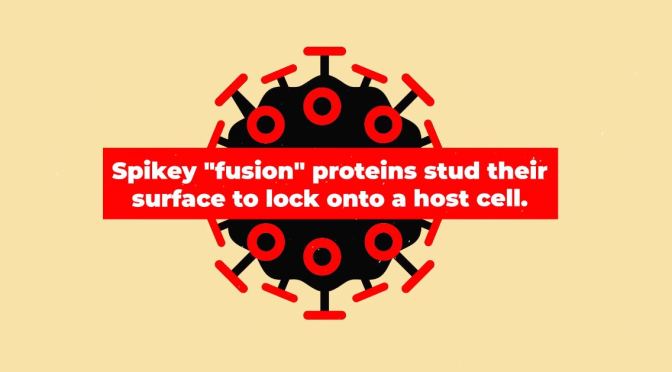
It’s one of the tiniest machines on the planet — about a hundred times smaller than the average cell. It’s so small that no scientist can spot it through a typical light microscope. Only with an electron microscope can we see its spiky surface. It’s not alive, and it’s not what most of us would think of as “dead.” This teensy machine seems to survive in a kind of purgatory state, yet it has traveled across continents and oceans from host to host, and brought hundreds of nations to a standstill. Despite its diminutive size, the novel coronavirus, dubbed SARS-CoV-2, has seemingly taken the world by surprise with its virulence.
Many school districts are still debating whether to go with a virtual, in classroom or hybrid education model for the year, but some families are taking their children’s education into their own hands. Neighbors are banding together to form schooling “pods” with private instructors as a way to secure child care and make sure their kids don’t fall behind in school.
But this trend could deepen the educational divide along racial and class lines.
President Trump changes tact on Coronavirus safety
Re-branding the Washington Redskins
Guests: Axios’ Caitlin Owens, Margaret Talev, and Kendall Baker.
The U.K. and China made big news with promising results in vaccine development for the coronavirus — the US, Russia and at least five other countries are also working on possible vaccines.
But for a vaccine to work effectively, these countries should be working together. Instead, they’re clashing. Countries like the US and Canada have even accused Russia of stealing our vaccine research. Plus:
Pennsylvania, Wisconsin, North Carolina and Georgia are all swing states at the center of the 2020 voting crisis.
And, how the virus will wreak havoc on your fall TV lineup.
Guests: Axios’ Dave Lawler, Stef Kight, and Sara Fischer
Lawmakers are back on the hill negotiating the next trillion dollar relief package for the struggling economy. Meanwhile, COVID-19 cases surge in 40 states. Finally, an update on the clash between protesters and police in Portland, Oregon.
After months in lockdown, restaurants are back. But they’re coming out of hibernation into a strange new world shaped by the coronavirus pandemic. In the first in a new series of films, food writer Tim Hayward and the FT’s Daniel Garrahan visit Lyle’s in east London to see how a Michelin star restaurant has pivoted from fine dining to pizza.
The Economist reviews the world’s top headlines including Blackrock’s earnings, new Covid-19 cases rise in America and other countries, airline industry updates and more.
Contributing Correspondent Gretchen Vogel talks about what can be learned from schools around the world that have reopened during the coronavirus pandemic. Unfortunately, few systematic studies have been done, but observations of outbreaks in schools in places such as France or Israel do offer a few lessons for countries looking to send children back to school soon.
The United Kingdom and Germany have started studies of how the virus spreads in children and at school, but results are months away. In the meantime, Gretchen’s reporting suggests small class sizes, masks, and social distancing among adults at schools are particularly important measures.
Also this week, Sarah talks with Kiristie Thompson, a Ph.D. student in the Georgia Institute of Technology’s Department of Chemistry and Biochemistry, about increasing the efficiency of petroleum processing. If all—or even some—petroleum processing goes heat free, it would mean big energy savings. Around the world, about 1% of all energy use goes to heating up petroleum in order to get useful things such as gas for cars or polymers for plastics. These days, this separation is done through distillation, heating, and separating by boiling point. Kirstie describes a heat-free way of getting this separation—by using a special membrane instead. Read a related Insight.
Probing the superconducting properties of graphene and a bacteria that can use manganese to grow. If you sandwich two sheets of graphene together and twist one in just the right way, it can gain some superconducting properties. Now, physicists have added another material to this sandwich which stabilises that superconductivity, a result that may complicate physicists’ understanding of magic angles.
For decades it’s been thought that microbes that use manganese as an energy source must exist. Now, for the first time, researchers have found evidence that they do. Research Article: Yu and Leadbetter



 Many school districts are still debating whether to go with a virtual, in classroom or hybrid education model for the year, but some families are taking their children’s education into their own hands. Neighbors are banding together to form schooling “pods” with private instructors as a way to secure child care and make sure their kids don’t fall behind in school.
 Lawmakers are back on the hill negotiating the next trillion dollar relief package for the struggling economy. Meanwhile, COVID-19 cases surge in 40 states. Finally, an update on the clash between protesters and police in Portland, Oregon.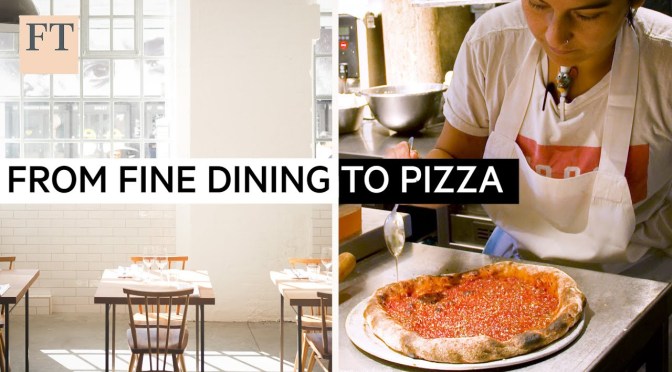
 The Economist reviews the world’s top headlines including Blackrock’s earnings, new Covid-19 cases rise in America and other countries, airline industry updates and more.


 Contributing Correspondent Gretchen Vogel talks about what can be learned from schools around the world that have reopened during the coronavirus pandemic. Unfortunately, few systematic studies have been done, but observations of outbreaks in schools in places such as France or Israel do offer a few lessons for countries looking to send children back to school soon.
 Probing the superconducting properties of graphene and a bacteria that can use manganese to grow. If you sandwich two sheets of graphene together and twist one in just the right way, it can gain some superconducting properties. Now, physicists have added another material to this sandwich which stabilises that superconductivity, a result that may complicate physicists’ understanding of magic angles.
  Boomers Daily