Tag Archives: ChatGPT

Science Focus Magazine – November 2023 Preview

Image

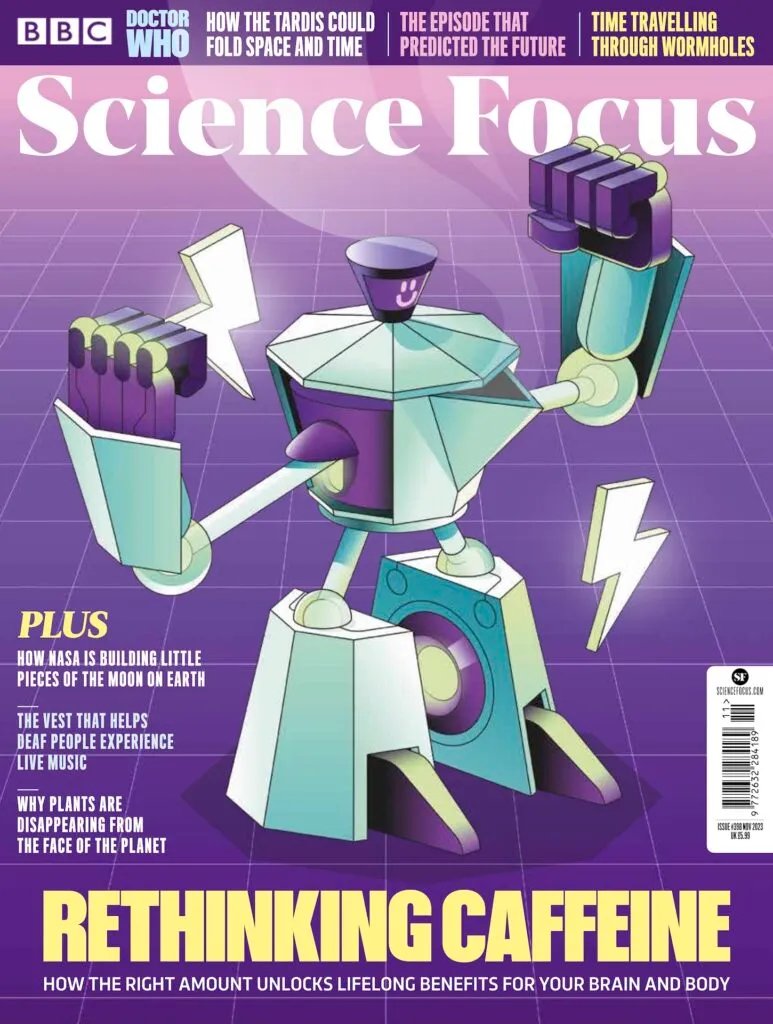
BBC Science Focus Magazine (November 2023) The latest issue features ‘Rethinking caffeine’ – How the right amount unlocks lifelong benefits for your brain and body.

The science of Doctor Who

At 60 years old, Doctor Who, the BBC show following the adventures of the regenerating Time Lord, continues to be highly enjoyable fiction. But it’s science fiction. The Gallifreyan takes science seriously… so we take a closer look at some of the science of Doctor Who, from time travel and the TARDIS to invading Cybermen and rogue planets.

How to make the Moon on Earth

The expense and prestige involved in sending landers and rovers to the Moon means you can’t afford for them not to work when they get there. But the lunar landscape is like nothing here on Earth. So how, and where do you test equipment that’s bound for the Moon?

World Economic Forum: Top Stories – Oct 14, 2023

World Economic Forum (October 14, 2023) – This week’s top stories of the week include:

0:15 Why engagement in the news is in decline – A massive media survey looked at trust and engagement in the news and found both are in steady decline. Just 48% of people say they are very or extremely interested in the news in 2023 down from 63% in 2017. Trust in the news has fallen 2 percentage points in a year. Now, only 40% say they trust the news most of the time and 36% say they actively avoid the news sometimes or often.

1:53 This robot can help people with disabilities dress – The robot was designed by a team at Carnegie Mellon University (CMU). They used a simulation to teach it how to perform its task. The team used an AI-driven approach called ‘reinforcement learning’. The robot was rewarded each time it correctly placed a shirt further along an arm.

3:25 Company captures and stores CO2 with limestone – Heirloom takes crushed limestone and heats it in a kiln powered by renewable energy. The reaction generates two products. These are CO2, which can be permanently stored underground or in materials like concrete and a powder, which is hydrated with water to make calcium hydroxide. When the calcium hydroxide is spread onto trays, it absorbs CO2 from the air to become limestone and the whole process can begin again.

5:24 How to use ChatGPT more safely – ChatGPT is an AI tool that gives detailed, natural language answers to prompts based on a database of 300 billion words drawn from books and articles. The AI learns from its interactions with you, so here are 5 ways to ensure you’re using it safely.

_____________________________________________

The World Economic Forum is the International Organization for Public-Private Cooperation. The Forum engages the foremost political, business, cultural and other leaders of society to shape global, regional and industry agendas. We believe that progress happens by bringing together people from all walks of life who have the drive and the influence to make positive change.

Research Preview: Nature Magazine – Oct 12, 2023

Volume 622 Issue 7982

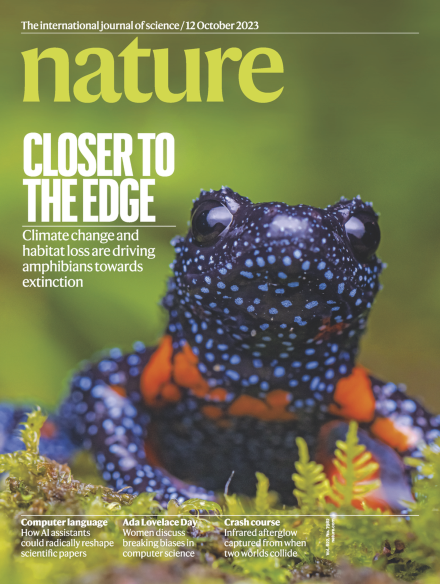
nature Magazine – October 12, 2023: The latest issue features  the results of a comprehensive re-evaluation of the conservation status of amphibians since 2004.

AI’s potential to accelerate drug discovery needs a reality check

Companies say the technology will contribute to faster drug development. Independent verification and clinical trials will determine whether this claim holds up.

Summer storms launch water high into the stratosphere

Thunderstorms can increase the levels of water vapour in the atmosphere, at altitudes as high as 19 km.

How ChatGPT and other AI tools could disrupt scientific publishing

A world of AI-assisted writing and reviewing might transform the nature of the scientific paper.

Arts/Books: Times Literary Supplement – Oct 6, 2023

Image

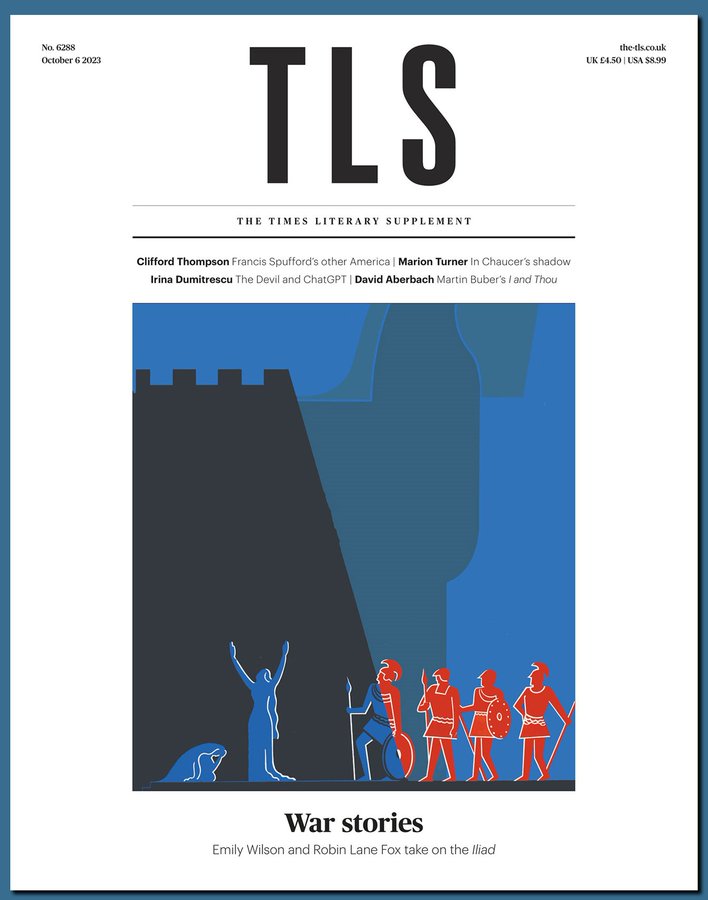
Times Literary Supplement (October 6, 2023): The new issue features War Stories – A review of the Iliad; Frances Sputford’s ‘Other America’; In Chaucer’s Shadow; The devil and ChatGPTand Martin Buber’s ‘I and Thou’…

Politics: The Guardian Weekly – Sept 22, 2023

Image

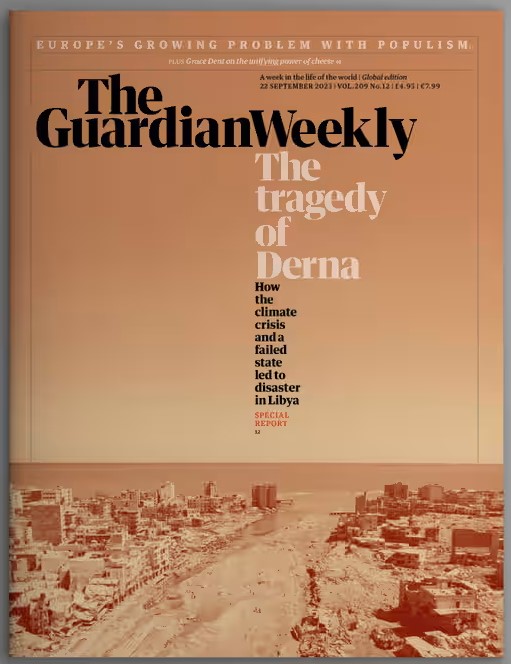
The Guardian Weekly (September 22, 2023) The new issue features How disaster struck Libya. Plus: Populism in Europe, and the unifying power of cheese.

Two separate natural disasters in north Africa have dominated the news recently. But Moroccan emergency responses to an earthquake that killed about 3,000 people seemed rapid and efficient in contrast to the chaos at the deluged Libyan port of Derna, where many thousands more lost their lives after the town was deluged following a double dam burst caused by Storm Daniel.

While logistical and administrative challenges have made access to Derna incredibly difficult, Observer reporter Kaamil Ahmed has gathered the testimonies of several local Libyan journalists who witnessed scenes they are still struggling to process. Diplomatic editor Patrick Wintour explains why the disaster can be seen as a culmination of the climate crisis descending upon a failed state, while Rupert Neate and Peter Beaumont discuss the differing responses to the two situations.

From Europe, Jon Henley previews three upcoming elections that could have profound consequences for the region’s political future. Indeed, as the Guardian launches a new Europe-focused digital edition, editor-in-chief Katharine Viner outlines why now is the right time for us to expand our reporting across the continent.

Politics: The Guardian Weekly – Sept 15, 2023

Image

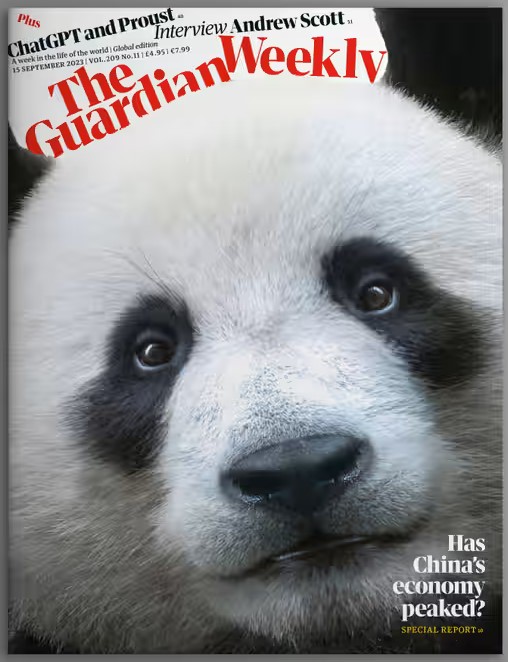
The Guardian Weekly (September15, 2023) The issue features  Amy Hawkins looking under the lid of China’s economy and asks if it has peaked?

Desperate searches for survivors continued in Morocco’s Atlas mountains after last Friday’s 6.8-magnitude earthquake, which killed thousands of people. Peter Beaumont reports from remote villages devastated by the country’s deadliest quake in six decades.

A worse disaster still appeared to be unfolding further along the north African coast in Libya, where up to 10,000 people were feared missing after flooding caused by the collapse of two dams. Details were only just emerging at the time of the Weekly going to press on Tuesday, but you can find the latest updates here.

First there were the bewildering DNA test results, then the long-forgotten fertility blog. Jenny Kleeman tells the remarkable tale of a discovery that would change the lives of two American families for ever.

Also in Features is American author Elif Batuman’s entertaining account of what happened when she asked the AI chatbot ChatGPT for assistance with a quote from Proust, leading her down a digital rabbit hole she never could have foreseen.

Research Preview: Nature Magazine – August 10, 2023

Volume 620 Issue 7973

nature Magazine – August 10, 2023 issue: Algorithm designs 3D shapes to follow specific pathways; Why Indigenous youth need a voice in the climate debate; DNA leaks linked to inflammageing in the brains of mice; JWST spots what could be a quasar from the early Universe….

JWST spots what could be a quasar from the early Universe

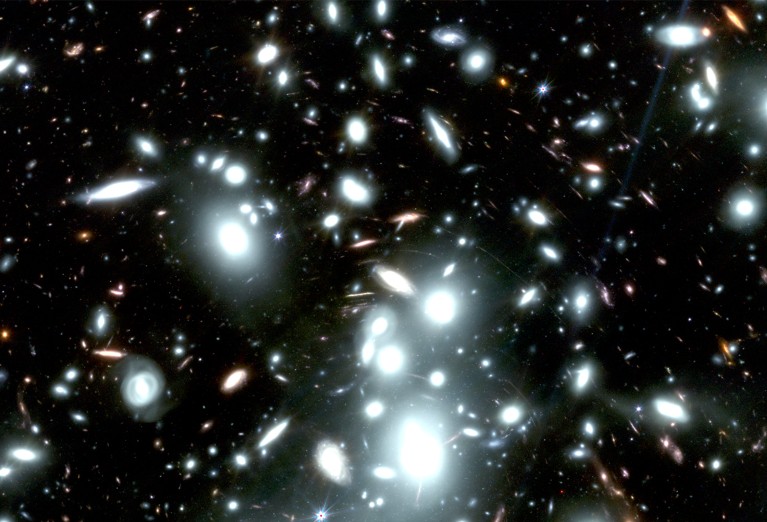
Composite-colour image of the central core of a massive galaxy cluster.

The object’s deep red colour suggests it existed when the Universe was less than 700 million years old.

The James Webb Space Telescope (JWST) has seen what is probably a quasar from the early Universe1.

ChatGPT-like AIs are coming to major science search engines

The Scopus, Dimensions and Web of Science databases are introducing conversational AI search.

A hand holds a phone displaying the OpenAI website ChatGPT.

The conversational AI-powered chatbots that have come to Internet search engines, such as Google’s Bard and Microsoft’s Bing, look increasingly set to change scientific search, too. On 1 August, Dutch publishing giant Elsevier released a ChatGPT-like artificial-intelligence (AI) interface for some users of its Scopus database, and British firm Digital Science announced a closed trial of an AI large language model (LLM) assistant for its Dimensions database. Meanwhile, US firm Clarivate says it’s working on bringing LLMs to its Web of Science database.

Research Preview: Nature Magazine – July 27, 2023

Volume 619 Issue 7971

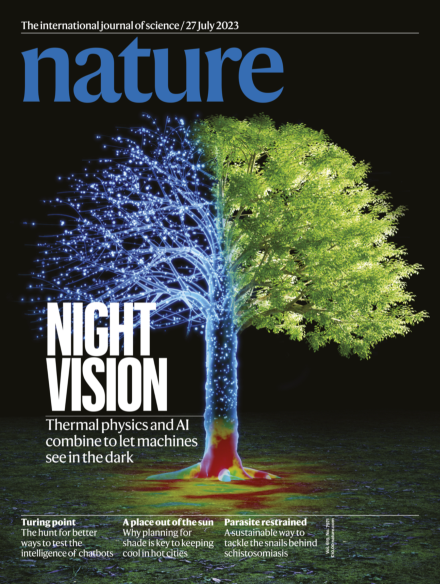
nature Magazine -July 27, 2023 issue: HADAR (heat-assisted detection and ranging) combines thermal physics and infrared imaging with machine learning to discern an object in pitch darkness as though it  is illuminated by broad daylight.

ChatGPT is a black box: how AI research can break it open

Despite their wide use, large language models are still mysterious. Revealing their true nature is urgent and important.

A lethal fungal infection gets a hand from the body’s own defences

Bloodstream infections by a common fungus are less deadly in mice engineered to have lower levels of a protein secreted by immune cells.

Preview: New York Times Magazine – July 23, 2023

Image

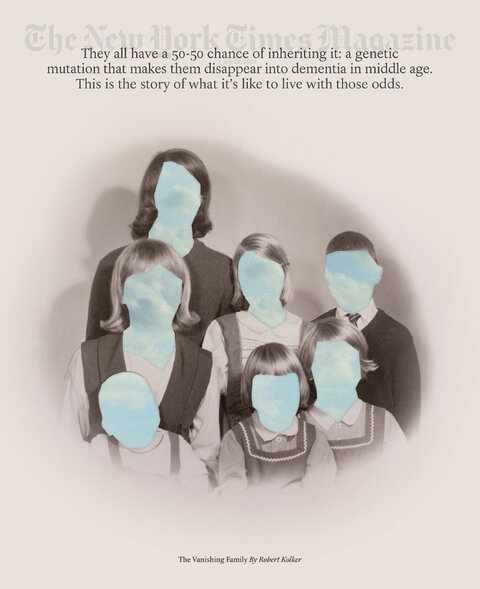
THE NEW YORK TIMES MAGAZINE (July 23, 2023) In this issue, Robert Kolker on a family’s struggle with a genetic mutation that leads to dementia in middle age; Caity Weaver tries to track down Tom Cruise; Jon Gertner on the future of Wikipedia as A.I. feeds off its human input; and more.

The Vanishing Family

They all have a 50-50 chance of inheriting a cruel genetic mutation — which means disappearing into dementia in middle age. This is the story of what it’s like to live with those odds.

By Robert Kolker

Barb was the youngest in her large Irish Catholic family — a surprise baby, the ninth child, born 10 years after the eighth. Living in the suburbs of Pittsburgh, her family followed the football schedule: high school games on Friday night, college games on Saturday, the Steelers on Sunday. Dad was an engineer, mom was a homemaker and Barb was the family mascot, blond and adorable, watching her brothers and sisters finish school and go on to their careers.

Wikipedia’s Moment of Truth

Can the online encyclopedia help teach A.I. chatbots to get their facts right — without destroying itself in the process?

By JON GERTNER

In early 2021, a Wikipedia editor peered into the future and saw what looked like a funnel cloud on the horizon: the rise of GPT-3, a precursor to the new chatbots from OpenAI. When this editor — a prolific Wikipedian who goes by the handle Barkeep49 on the site — gave the new technology a try, he could see that it was untrustworthy. The bot would readily mix fictional elements (a false name, a false academic citation) into otherwise factual and coherent answers. 

My Impossible Mission to Find Tom Cruise

The action star has gone to great lengths to avoid the press for more than a decade. But maybe our writer could track him down anyway?

By CAITY WEAVER

In an interview with Playboy in 2012, Tom Cruise described Katie Holmes as “an extraordinary person” with a “wonderful” clothing line, and someone for whom he was fond of “doing things like creating romantic dinners” — behavior that, he confided, “she enjoys.” It would prove to be his last major interview with a reporter to date. Despite what may be recalled through the penumbra of memory, this sudden silence was not directly preceded by either of Cruise’s infamous appearances on television: not by his NBC’s “Today” show interview (in which he labeled host Matt Lauer both “glib” and “Matt — MattMattMattMatt”), nor even by his appearance on “The Oprah Winfrey Show” (in which he reverse-catapulted himself onto Winfrey’s fawn-colored couch multiple times in a demonstration of his enthusiasm for Holmes).

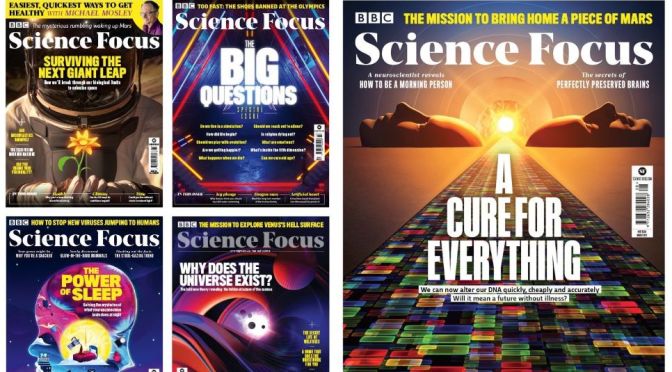
AI Preview: Science Focus Magazine – July 2023 Issue

Image

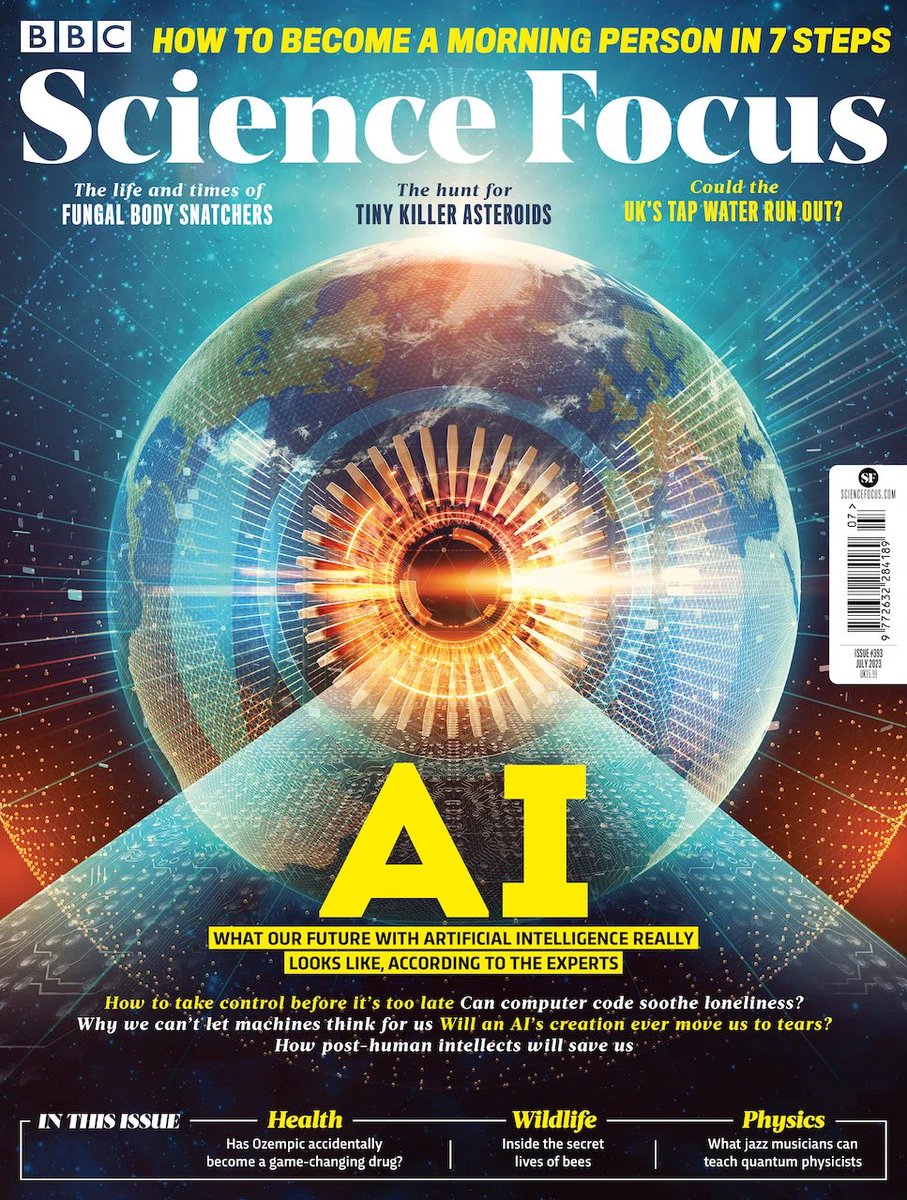
BBC Science Focus Magazine (July 2023) – What our future with Artificial Intelligence really looks like, according to the experts; How to take control of AI before it’s too late, and more…

ChatGPT: Everything you need to know about OpenAI’s GPT-4 tool

© Carol Yepes

OpenAI is back in the headlines with news that it is updating its viral ChatGPT with a new version called GPT-4. But when will this be available, how does it work and can you use it?

AI art’s hidden echo chamber is about to implode. Here’s what that will look like

Artificial intelligence art generators train themselves on art pulled straight from the internet… but what happens when most of the art out there is now made by AI?