

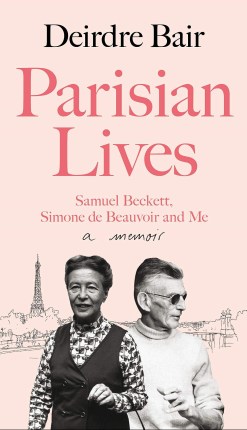
 De Beauvoir and Beckett despised each other – and lived essentially on the same street. While quite literally dodging one subject or the other, and sometimes hiding out in the backrooms of the great cafés of Paris, Bair learned that what works in terms of process for one biography rarely applies to the next. Her seven-year relationship with the domineering and difficult de Beauvoir required a radical change in approach, yielding another groundbreaking literary profile.
Drawing on Bair’s extensive notes from the period, including never-before-told anecdotes and details that were considered impossible to publish at the time, Parisian Lives is full of personality and warmth and gives us an entirely new window on the all-too-human side of these legendary thinkers.
In 1971 Deirdre Bair was a journalist and recently minted PhD who managed to secure access to Nobel Prize-winning author Samuel Beckett. He agreed that she could write his biography despite never having written – or even read – a biography herself. The next seven years of intimate conversations, intercontinental research, and peculiar cat-and-mouse games resulted in Samuel Beckett: A Biography, which went on to win the National Book Award and propel Deirdre to her next subject: Simone de Beauvoir. The catch?



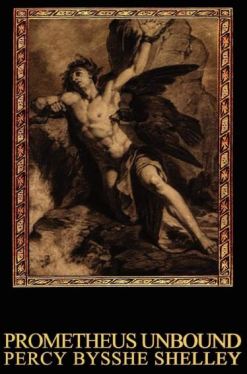 Prometheus Unbound is a four-act lyrical drama by Percy Bysshe Shelley, first published in 1820. It is concerned with the torments of the Greek mythological figure Prometheus, who defies the gods and gives fire to humanity, for which he is subjected to eternal punishment and suffering at the hands of Zeus. It is inspired by the classical Prometheia, a trilogy of plays attributed to Aeschylus. Shelley’s play concerns Prometheus’ release from captivity, but unlike Aeschylus’ version, there is no reconciliation between Prometheus and Jupiter (Zeus). Instead, Jupiter is abandoned by his supportive elements and falls from power, which allows Prometheus to be released.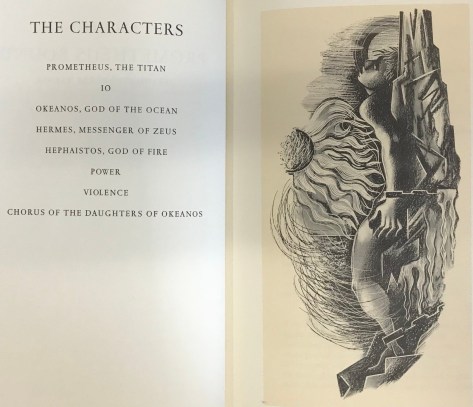
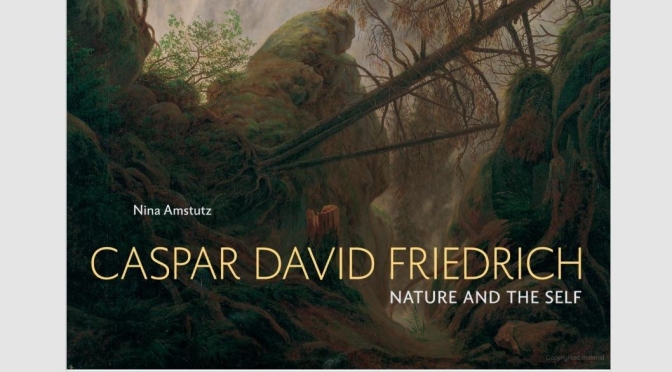
 In this revelatory book, Nina Amstutz combines fresh visual analysis with broad interdisciplinary research to investigate the intersection of landscape painting, self-exploration, and the life sciences in Friedrich’s mature work. Drawing connections between the artist’s anthropomorphic landscape forms and contemporary discussions of biology, anatomy, morphology, death, and decomposition, Amstutz brings Friedrich’s work into the larger discourse surrounding art, nature, and life in the 19th century.
 Author Paul Zollo conducted a series of in-depth discussions with Tom about his career, with special focus on his songwriting. The conversations are reprinted here with little or no editorial comment and represent a unique perspective on Tom’s entire career. Originally published in 2005 (also by Omnibus Press), Tom’s wife Dana has fully approved this updated edition, which retains its foreword by Petty, adds additional interview material, an expanded introduction as well as additional photos from Petty’s last ever live performance. This is, perhaps, as close as you can get to an autobiography by the great man.
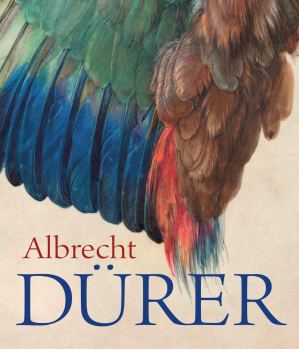 This book showcases more than 100 of Dürer’s drawings including Hare, Self Portrait at the Age of 13, and Melencolia I, along with paintings and prints. Featuring scholarly essays and beautifully reproduced works, this book shows the reader not only how important Dürer’s drawings are to his own oeuvre, but also how he helped drawing become an appreciated medium in its own right.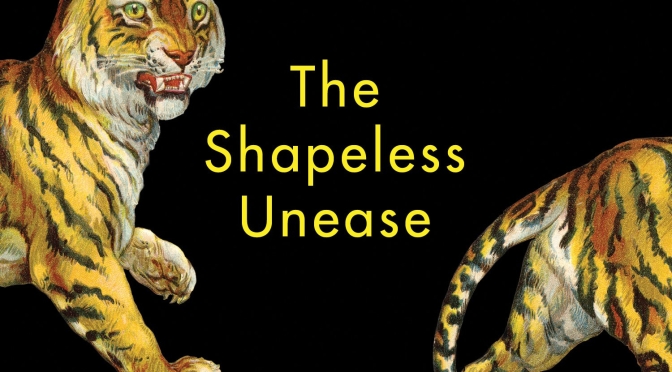
 In 2016, Samantha Harvey began to lose sleep. She tried everything to appease her wakefulness: from medication to therapy, changes in her diet to changes in her living arrangements. Nothing seemed to help.
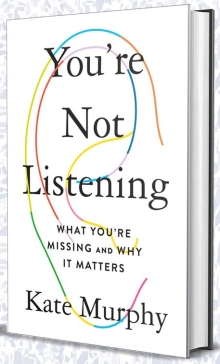 “When you listen and really grasp what another person is saying, your brainwaves and those of the speaker are literally in sync. By looking at brain scans, neuroscientists have found that the greater overlap and similarity of neural impulses between speaker and listener, the greater the understanding. It’s observable, measurable proof of listening, comprehension, and connection. You know it’s happening when you have that “Oh I get it” moment or sense of clarity when someone else is talking. You’re on the same wavelength, even if you don’t necessarily agree.”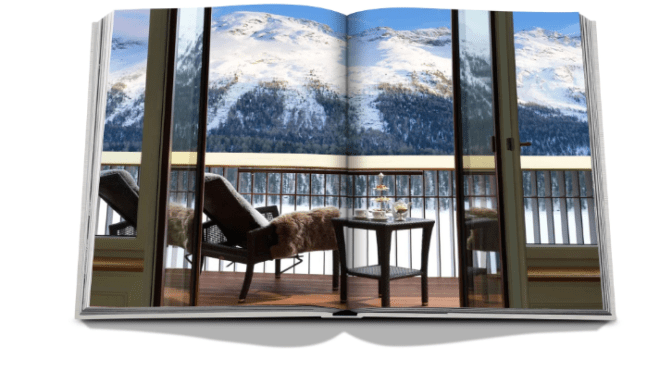
 St. Moritz also takes readers on a majestic tour of its special events, from Winter Olympics to the annual Snow Polo World Cup, as well as the summertime Jazz Festival and the British Classic Car Meeting. In St. Moritz creatives and royals share skiwassers slope-side on the sheepskin benches of El Paradiso, pause to sip champagne on long strolls around its frozen, crystalline lake and enjoy coffee and confections at the centuries old Hanselmann. St. Moritz has never lost its inimitable appeal, and will continue to reign as an elegant hideaway for all those who have come to call it a home away from home.


 Boomers Daily