Tag Archives: Baby Boomers

Housing Trends: “Empty-Nester” Boomers Are Now Downsizing To Luxury “Jewel-Box Homes” (WSJ)

From a Wall Street Journal online article:

The single-level home has high windows and travertine floors throughout. Photo by Amy MIKLER FOR THE WALL STREET JOURNAL
The single-level home has high windows and travertine floors throughout. PHOTO: AMY MIKLER FOR THE WALL STREET JOURNAL

The jewel-box home—small, but loaded with amenities and costly finishes—is luring more home buyers. An analysis by Home Innovation Research Labs, a subsidiary of the National Association of Home Builders, found that the number of new-construction luxury homes at 3,000 square feet or less has increased nearly 20% since 2013—with a corresponding decline in larger-size, high-price homes.

Changing demographics might be driving the trend. More than half of all households now consist of single people or couples, U.S. Census Bureau data shows—with traditional nuclear families accounting for just 20%.

“Empty-nesters want to downsize, but they want luxury homes not starter homes—luxury kitchens, marble surfaces, all the latest and greatest,” said Tim Costello, CEO of Builder Homesite, a consortium whose New Home Source website—an online clearing house for new-construction homes—tracks home buyers’ preferences.

To read more: https://www.wsj.com/articles/luxury-homeowners-put-a-ring-on-jewel-box-homes-11576081060

Culture: “Top 10 Defining Events Baby Boomers Lived Through” (Video)

Ok boomer, these are the moments that marked a generation. For this list, we’ll be looking at the cultural and political moments, events and trends that shaped the Baby Boomer generation, focusing on the US. The exact age range of various generations are debated, but we’ll be following the Pew Research definition, which identifies baby boomers as individuals born between 1946 and 1964. Welcome to WatchMojo, and today we’ll be counting down our picks for the Top 10 Defining Moments for Baby Boomers.

  • 10. The Rise of Television (1946-)
  • 9. The Army-McCarthy Hearings (1954)
  • 8. The Cuban Missile Crisis (1962)
  • 7. The Watergate Scandal (1972-74)
  • 6. Beatlemania (1960s)
  • 5. The Vietnam War (1955-73)
  • 4. The First Moon Landing (1969)
  • 3. Assassination of John F. Kennedy (1963)
  • 2. Woodstock (1969)
  • 1. The Passing of the Civil Rights Act (1964)

Surveys: 54% Of Baby Boomers Now Own Pets; Dogs & Cats Nearly Equal

From a Yahoo online article:

PetsThe percentage of boomers who own a pet grew from 50% to 54% between 2008 and 2018. Among the oldest boomers — those between 70 and 74 — the percentage of pet owners rose from 41% to 45%. In contrast, the percentage of pet owners between the ages of 18 to 39 dropped from 63% to 61% during that time frame. Among consumers 40-54, the percentage of pet owners held steady at 64%.

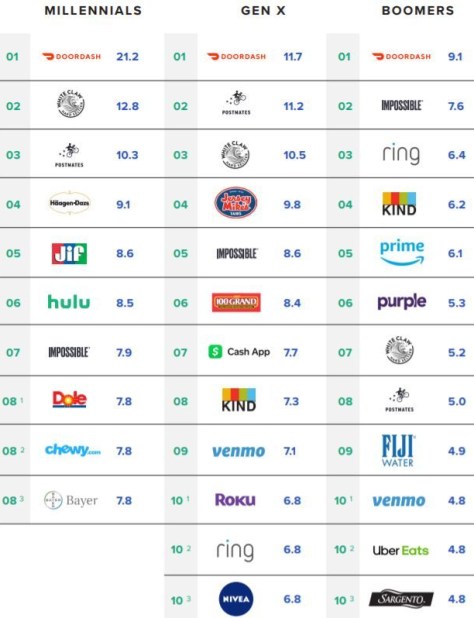

So what type of pet reigns supreme among boomers and seniors? Those over 55 appear to see the value in all types of pets, as the percentage of dog owners grew from 27% to 32% and the percentage of cat owners grew from 27% to 33% between 2008 and 2018. The percentage of owners of pets other than dogs and cats also increased going from 16% to 24% in the 10-year period.

Among boomers specifically, the percentage of dog owners has risen from 34% to 38% in the last decade, and the research showed that boomers are more likely to own dogs than other pets. Boomers are also getting new pets as opposed to simply aging with the pets they already owned. In fact, the data show that 1.4 million boomers own dogs that are less than one year old and another 5.2 million have dogs between the ages of 1 and 3.

To read more: https://finance.yahoo.com/news/baby-boomers-helping-fuel-pet-153954968.html

Healthcare For Seniors: Best Buy To Increase “Digital Health” Service And Insurers Will Pay

From a Becker’s Hospital Review online release:

Best Buy Assured Living“Today, most of the seniors we serve are utilizing easy-to-use mobile phone products and connected devices that are tailored for seniors and come with a range of relevant services,” Best Buy CEO Corie Barry said during an earnings call Nov. 26, according to a transcript from Seeking Alpha
“We also expect to advance our commercial business where the services we provide for seniors are paid for by insurance providers. This includes services such as remote monitoring based solutions that provide meaningful insights to improve timely care and reduce the cost to serve frail seniors,” she said.

Best Buy is known as the largest specialty electronics retailer in the U.S., and a key part of its growth strategy is centered on digital health initiatives.

In the past year, Best Buy has spent roughly $1 billion on acquisitions to expand its healthcare services, according to Forbes. The company’s expansion into healthcare has helped it overcome broader declines in consumer electronic sales, according to Bloomberg.

To read more: https://www.beckershospitalreview.com/strategy/best-buy-s-healthcare-strategy-get-insurers-to-pay.html?oly_enc_id=9129H5611090H0N

Boomers’ Retirement: Find Purpose, Give Back To Your Community And Adapt Slowly (Barron’s)

From a Barron’s online article:

ON-DI669_201912_NS_20191127154025Retirements must evolve because everything won’t work out as planned, says Carolyn Taylor, president of Weatherly Asset Management, an investment-management firm in Del Mar, Calif. One of her clients, who worked in the biotech industry and had a very busy family life, trained before retirement to become a master gardener. As she trained, she found that she enjoyed teaching others and finally became a teacher of gardening, Taylor says.

Retirees who feel they have no purpose are more likely to find themselves at a loss or feeling depressed, says Black. Taking on part-time work, going back to school, volunteering, or participating in philanthropic endeavors can make retirees feel that they’re still making an important contribution.

Bringing the enjoyable aspects of your work into your retirement life can be helpful, says Black. “Maybe you enjoy mentoring young people; perhaps you can find a way to continue doing that into retirement,” she says.

To read more: https://www.barrons.com/articles/retirement-can-be-a-tough-psychological-adjustment-here-are-some-ways-to-adapt-51574941500?mod=hp_minor_pos16

Streaming Services: Baby Boomers Remain Base Of Traditional PayTV But Are Slowly Cutting The Cord

From a Harvard Business Review article:

Harvard Business ReviewBaby boomers remain the base of traditional PayTV.  Even with the quickening decline of bundled TV services, 80 million U.S. households still subscribe to cable, satellite, and fiber-based video services.

Well over half of all older consumers are already subscribing to at least one streaming service, with a quarter of Americans over age 50 having cut the cord to linear services by the end of 2018.

Harvard Business Review Streaming ServicesThe traditional video marketplace is no more. Driven by a combination of technologies including high-speed internet access, billions of mobile devices, and falling prices for high-resolution displays, television as we have known it for decades is undergoing a radical reinvention, one that will reshape the media ecosystem. Just in the last few months, game-changing streaming services have been announced or launched from industry giants including Disney and NBCUniversal, spurred in part by billion-dollar investments from newer entrants such as Netflix, Google, and Apple.
To read more: https://hbr.org/2019/11/for-streaming-services-navigating-generational-differences-is-key


Politics: “Baby Boomers Versus Millennials” Battle Brewing In Great Britain

From a The Atlantic online article:

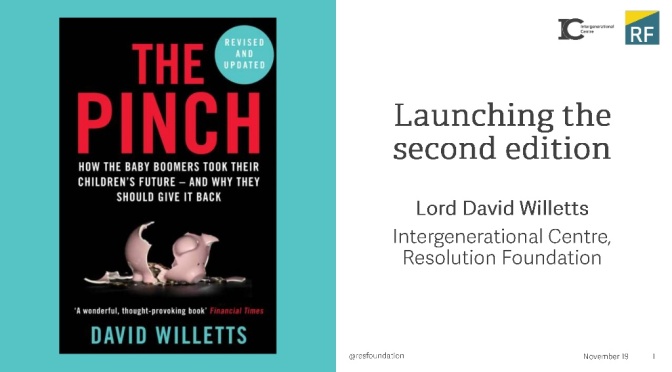
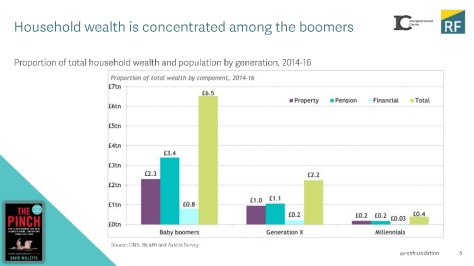
Willetts had stumbled onto one of the great divides of modern politics: young versus old. In Britain, age is now a better predictor of voting intention than social class. Overall, the Boomers voted for Brexit in 2016 and the Conservatives in 2017; their Millennial children voted Remain and Labour. The single biggest error that Theresa May, the prime minister in the lead-up to the 2017 election, made during that process was to float the idea that older people might have to contribute more to the spiraling costs of their own retirement care. The “dementia tax” prompted an immediate, ferocious response, and May backed down.


That is not an isolated example. A guiding principle of politics in Britain, and elsewhere in the West, is: What Boomers want, Boomers get. Working-age benefits, for example, have been frozen since the 2015 budget, but the state pension has consistently risen. (At this election, Britain’s two main parties have both promised to keep increasing pensions; Jeremy Corbyn’s Labour has also pledged £58 billion ($74.7 billion) to Boomer women affected by the rise in the female state pension age from 60 to 66.

generation-pinched-book-launch-for-the-second-edition-of-the-pinch-5-1024


The debate is also about so much more than abstract disagreements over policy and government funding. Caring for the elderly, for example, becomes wrapped up in assertions of “just deserts”—I’ve worked hard all my life and paid my taxes—and fears about money-grubbing children selling off their parents’ houses. It is also, like taxes on inheritance, a subject that prods at many people’s deep desire to pass something on to their offspring.

To read more: https://www.theatlantic.com/international/archive/2019/11/britain-election-boomers/602680/

Housing Market: A “Silver Tsunami” Of 20+ Million Homes Owned By Baby Boomers Will Flood The Market In Next 20 Years

From a Zillow.com online article:

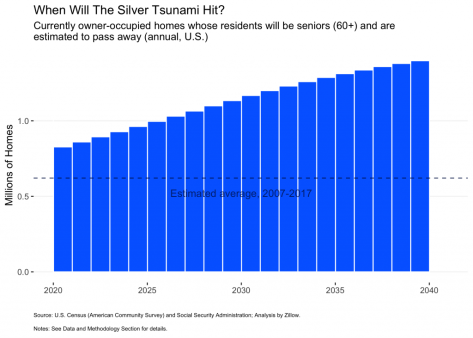
Currently, 33.9 percent of owner-occupied U.S. homes are owned by residents aged 60 or older, and 55.2 percent by residents aged 50 or older. As these households age and begin vacating housing, that could represent upwards of 20 million homes hitting the market through the mid-2030s.

external_ssa_2017-efdfec-1024x731

The massive Baby Boomer generation has already begun aging into retirement, and will begin passing away in large numbers in coming decades – releasing a flood of currently owner-occupied homes that could hit the market. That could help end the last few years’ inventory drought, as well as a more fundamental shortage of homes in certain places.

This Silver Tsunami of homes coming to market could be a good substitute for new home construction, which has been in short supply for the past decade in large part because of difficult-to-overcome challenges faced by builders.

To read more: https://www.zillow.com/research/silver-tsunami-inventory-boomers-24933/