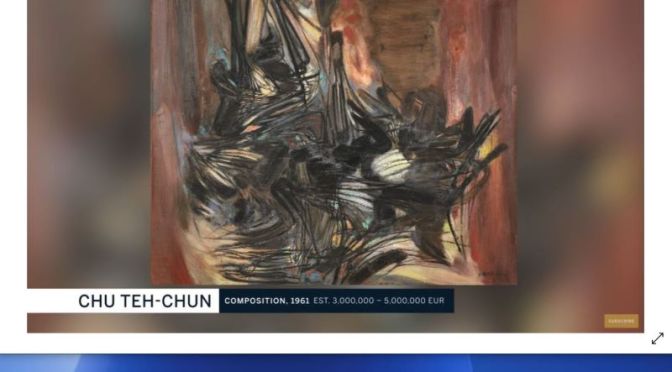
The 1960s were a turning point for Master Chinese Artist Chu Teh-Chun. In this latest Sotheby’s video, discover how he abandoned his traditional figurative style of painting in favour of abstraction. Learn how his painting ‘Composition’, created in 1961, perfectly executes the concept of Chinese painting whilst meeting the style of Western abstraction.
Chu Teh-Chun or Zhu Dequn was a Chinese-French abstract painter acclaimed for his pioneering style integrating traditional Chinese painting techniques with Western abstract art. Chu Teh-Chun enrolled in the National School of Fine Arts, where he studied under Fang Ganmin and Wu Dayu.
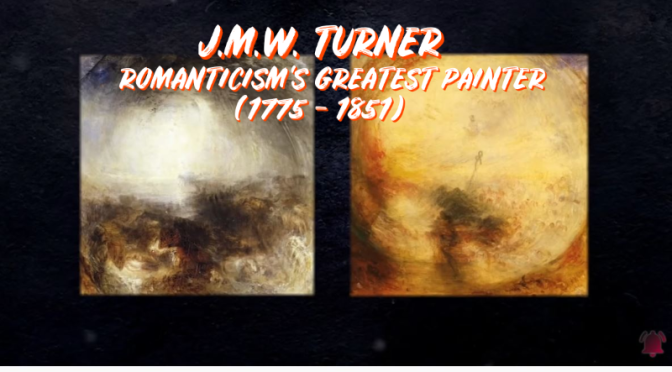
Joseph Mallord William Turner RA, known contemporarily as William Turner, was an English Romantic painter, printmaker and watercolourist. He is known for his expressive colourisations, imaginative landscapes and turbulent, often violent marine paintings.
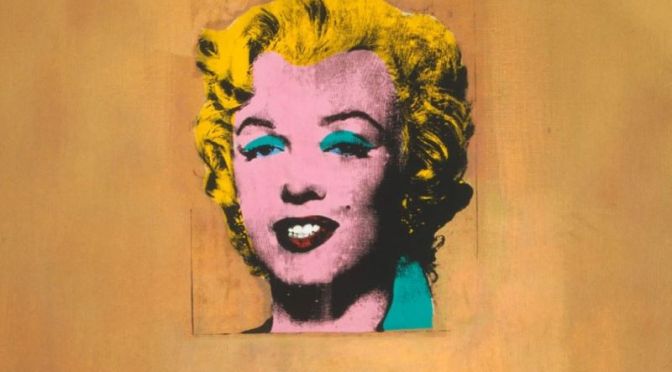
In 1967, Warhol established a print-publishing business, Factory Additions, through which he published a series of screenprint portfolios on his signature subjects. Marilyn Monroe was the first one. He used the same publicity still of the actress that he had previously used for dozens of paintings. Each image here was printed from five screens: one that carried the photographic image and four for different areas of color, sometimes printed off-register. About repetitions Warhol said, “The more you look at the same exact thing, the more the meaning goes away, and the better and emptier you feel.”
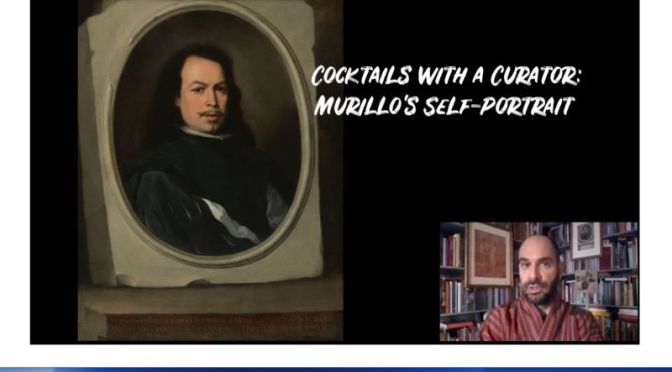
In this week’s episode of “Cocktails with a Curator,” delve into the life and times of Bartolomé Esteban Murillo, one of the most celebrated painters of seventeenth-century Spain. Look closely at his self-portrait for clues about the Seville-born artist—a trompe l’oeil stone frame points to his fascination with the antiquities excavated in his hometown, and the sitter seems to be looking forward, into the future, after surviving a traumatic period when Seville was ravaged by plague. Acquired by Henry Clay Frick in 1904, the painting stayed with the family until 2014, when it was gifted to the museum by Dr. and Mrs. Henry Clay Frick II. This week’s complementary cocktail, the Rebujito, conjures the warm spring days of Seville’s Feria de Abril (April Fair) and goes well with Thanksgiving leftovers.
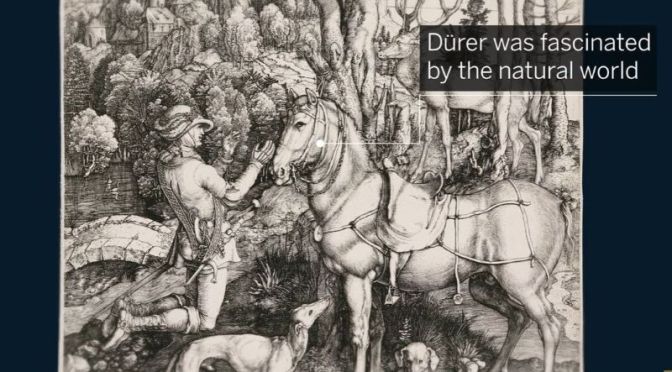
‘Saint Eustace’ by Albrecht Dürer depicts the popular medieval legend of a Roman General becoming a saint. In this episode of Anatomy of an Artwork, discover how Dürer captured the intricate detail of the story through the arduous medium of engraving.
Albrecht Dürer (1471 -1528), sometimes spelt in English as Durer or Duerer, was a German painter, printmaker, and theorist of the German Renaissance. Born in Nuremberg, Dürer established his reputation and influence across Europe when he was in his twenties due to his high-quality woodcut prints.
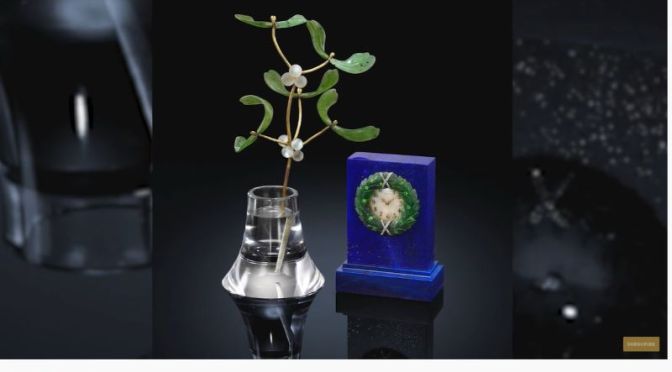
Family firm Fabergé was the most powerful and largest jewelry company of its era. In this video, find out how the brand captured the attention of Royal families in Russia and across Europe, and discover works with true imperial provenance, including the Balletta Vase, which is offered as part of Sotheby’s upcoming sale Fabergé and Vertu: Property from the Brooklyn Museum (2 December | London). Other highlights include Fabergé special singular commissions, including a nephrite and moonstone study of mistletoe, a nephrite and diamond dandelion, and intricately carved agate models of a dog, a billy goat and a diamond-eyed cat.
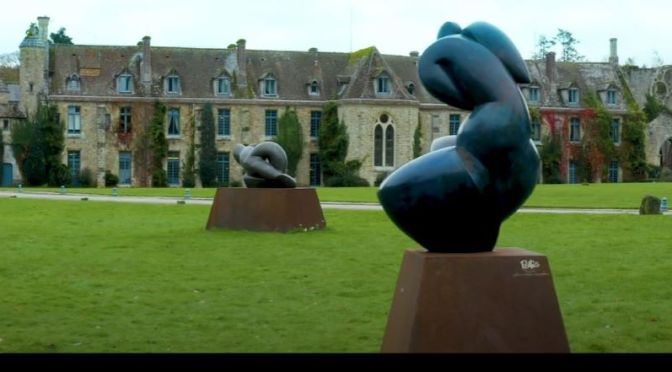
Dominique Pollès, called Pollès, is a French sculptor born in Paris in 1945. He is considered as the inventor of “organic cubism”.
Like Leonard de Vinci in an anatomical search of perfection, of representation of movement,with an almost scientifical or medical glance, Pollès holds the utmost passion of anatomy: he learns about the human body, the complicated hank of muscles, movements of members and all the bodily mechanics.
That’s why in 1964 he starts medicine school and along side goes to the Charpentier Academy where he follows art lessons. In 1966, he encountered sculpture in London where he was invited by his friend Enzo Plazota. This final step teaching him all the bases of sculpture. Pollès then decides to go to live in Italy, in Carrare, an important art place. He moved in 1970 and settled in Pietrasanta where he still lives.
His sculptures, by creating a vision of the moving being, polished and smoothed, break the pureness of aestheticism. He just knows one theme, one model: the female form. According to Pollès, this is the most beautiful one, the most harmonious one. “When we are looking at a feminine body, it is splendid, it is musical”.
His love of women, the sensuality, the complexity, the shapes and passions, brought him to explore the female form. Since the beginning he has created a singularly stylized cubist form; this becoming his signature form. All are cast in bronze by Pollès himself and made in a series of four with one artist’s proof. His masterliness of the patina is considered unparalleled. The world’s recognition of his craft is evidenced by the many awards he has won, the unique places he has shown and the prestigious private collections he is in, including that of Princess Caroline of Monaco.
Pollès was recently honored in an exhibition outside Paris, sponsored by the French Government, called “Sculptors From Rodin to The Present”. He was one of the few living sculptors to be so honored; the others include Abakanowicz, Arman, Saint-Phalle & Wesselmann. Maurice Rheims, a respected Art Critic, and a member of The French Academy, has said “I consider Pollès to be one of the outstanding sculptors of our time.”
His show in the Bagatelle Gardens in Paris in 1998 was a major honor as he was one of only two artists who have ever been allowed to present their work in the Bagatelle. The other artist is Henry Moore. – Galerie Philia is an internationally recognized contemporary design and modern fine arts gallery representing worldwide known designers and artists.
The Galerie Philia attempts in this way to build bridges between different artistic continents in order to enlighten artworks endowed with a marked artistic depth.
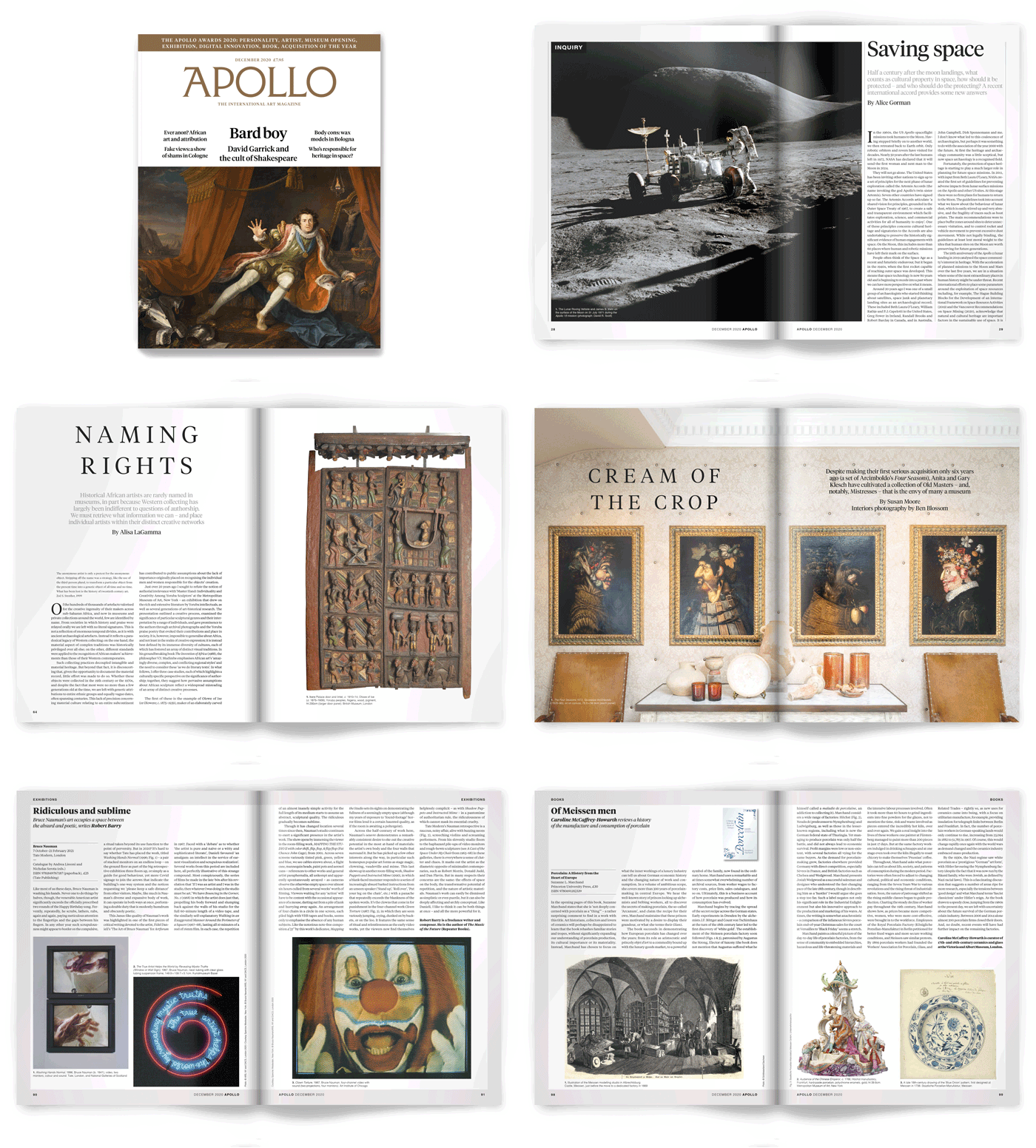
REVIEWS | Robert Barry on Bruce Nauman in London; Mark Evans on Prince Albert’s Raphael Collection in Woking; Imelda Barnard on Haegue Yang in St Ives; Caroline McCaffrey-Howarth on the history of European porcelain; Andrew Hussey on Isidore Isou; Thomas Marks on a collection of recipes by video artists
MARKET | Susan Moore previews December sales in New York and looks back at the autumn season; Emma Crichton-Miller on the enduring appeal of German limewood sculpture
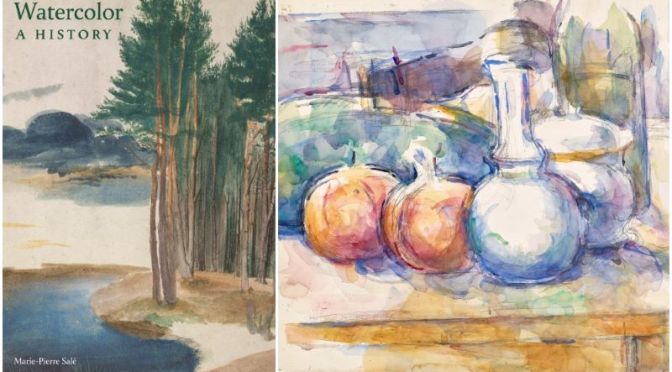
The most comprehensive and best-illustrated history of watercolor painting ever published.
The term watercolor calls to mind atmosphere, luminosity, and immediacy―qualities that derive directly from the quick-drying, translucent nature of water-based pigments. In Watercolor: A History, Louvre curator Marie-Pierre Salé provides an authoritative and beautifully illustrated account of this versatile and widely beloved artistic medium.
Salé’s incisive text traces the development of watercolor from the thirteenth to the twentieth century in Europe and the United States, encompassing every type of work―from plein-air sketches to finished studio pieces―and a wide variety of artists. Here are Dürer’s detailed animal studies, Turner’s landscapes, Cézanne’s tireless explorations, Sargent’s light-dappled sketches, O’Keeffe’s pioneering abstractions.
This handsome volume features more than three hundred full-color illustrations, specially printed on Munken paper to capture the vibrancy and texture of the original works. It is sure to be welcomed by art historians and art lovers alike.
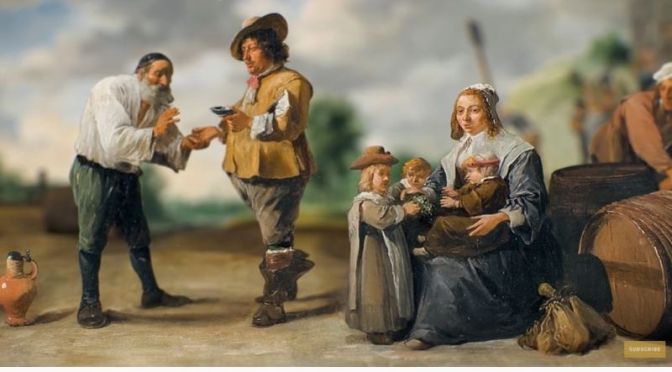
Hear the voice of Downton Abbey star Jim Carter bring to life David Teniers’ monumental depiction of a 17th-century wine harvest. Immerse yourself in Teniers’ unrivalled talent for storytelling as we see grape harvesters unloading their bounty, coopers fixing up wine barrels, a wine merchant sealing a deal, and worse for wear villagers raising their glasses to the temple of Bacchus. Unseen in over a century, ‘The Wine Harvest’ is the finest work by Teniers to come to market in living memory.
David Teniers the Younger or David Teniers II was a Flemish Baroque painter, printmaker, draughtsman, miniaturist painter, staffage painter, copyist and art curator. He was an extremely versatile artist known for his prolific output.
News, Views and Reviews For The Intellectually Curious




 Boomers Daily