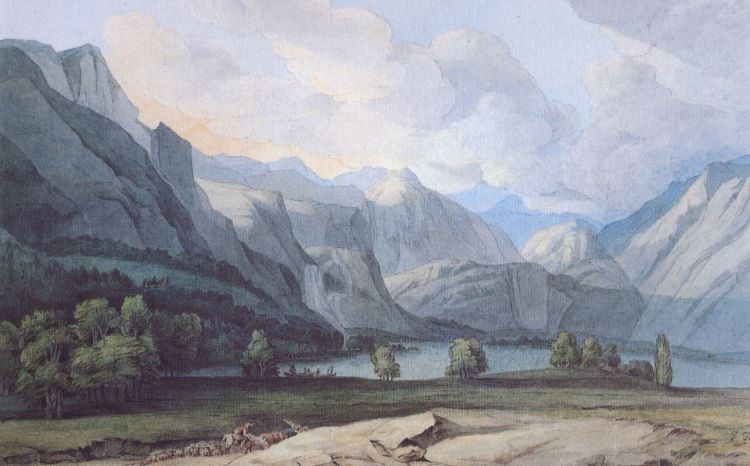
NEWSTATESMAN (August 26, 2020) – Towne (1739-1816) was born on the fringes of London and apprenticed to a coach painter, a skill that demanded the type of precise brushwork that was to become evident in all his later work. He went on to study at William Hogarth’s St Martin’s Lane Academy, Britain’s foremost school of art prior to the establishment of the Royal Academy in 1768. By a quirk of geography, the greatest British landscapist and fellow chronicler of the Lake District, JMW Turner, would be born just 100 yards away in 1775.
In 1780 he made a lengthy drawing trip to the Continent but it wasn’t until 1786 that he visited the Lake District. He proved indefatigable, making 100 drawings and watercolours over the course of two weeks: he often put brief details on the back of his work (“½ past 7 O clock/The sky a Clear warm light/mountains a solemn purple tint/the Lake reflecting the sky, the/Sun in the picture”) and so we know that on 17 August alone, for example, he made seven drawings.
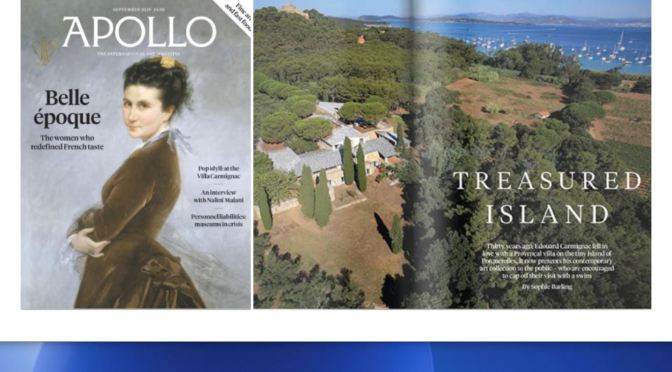
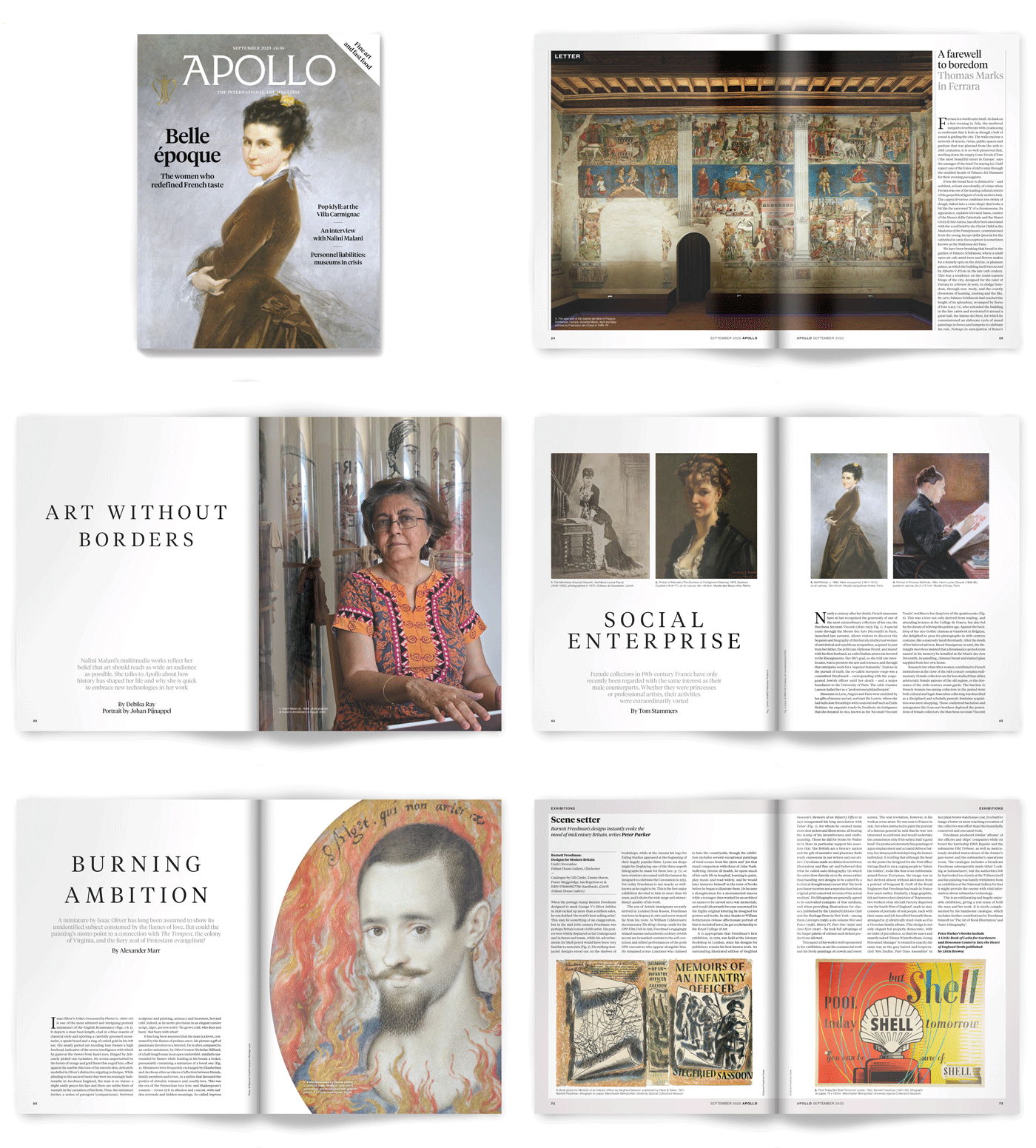
FEATURES | Tom Stammers on women collectors in 19th-century France; Nalini Malani interviewed by Debika Ray; Alexander Marr puzzles over Isaac Oliver’s most mysterious portrait; Sophie Barling visits the Villa Carmignac; Thomas Marks on fast food and fine art
REVIEWS | Peter Parker on Barnett Freedman at Pallant House;Caroline Bugler on Cranach at Compton Verney; Tom Fleming on Bill Brandt and Henry Moore at Hepworth Wakefield; Michael Hall on Edwardian houses; Clare Bucknell on visual traces of the English Civil War; Cora Gilroy-Ware on neoclassical style
MARKET | Jo Lawson-Tancred on museums and online shopping; and the latest art market columns from Emma Crichton-Miller, Susan Moore and Samuel Reilly
In this week’s episode of “Cocktails with a Curator,” Curator Aimee Ng explores the history behind one of the audience favorites at the Frick, Jean-Auguste-Dominique Ingres’s “Comtesse d’Haussonville.” Sometimes referred to as the “poster girl” of The Frick Collection, the subject of this celebrated portrait led a fascinating life, taking piano lessons from Chopin and writing biographies of Lord Byron and the Irish revolutionary Robert Emmet. (She published the books anonymously to avoid a scandal.) This week’s complementary cocktail calls for an ounce of absinthe, an anise-flavored spirit invented in Switzerland, the country of her birth.
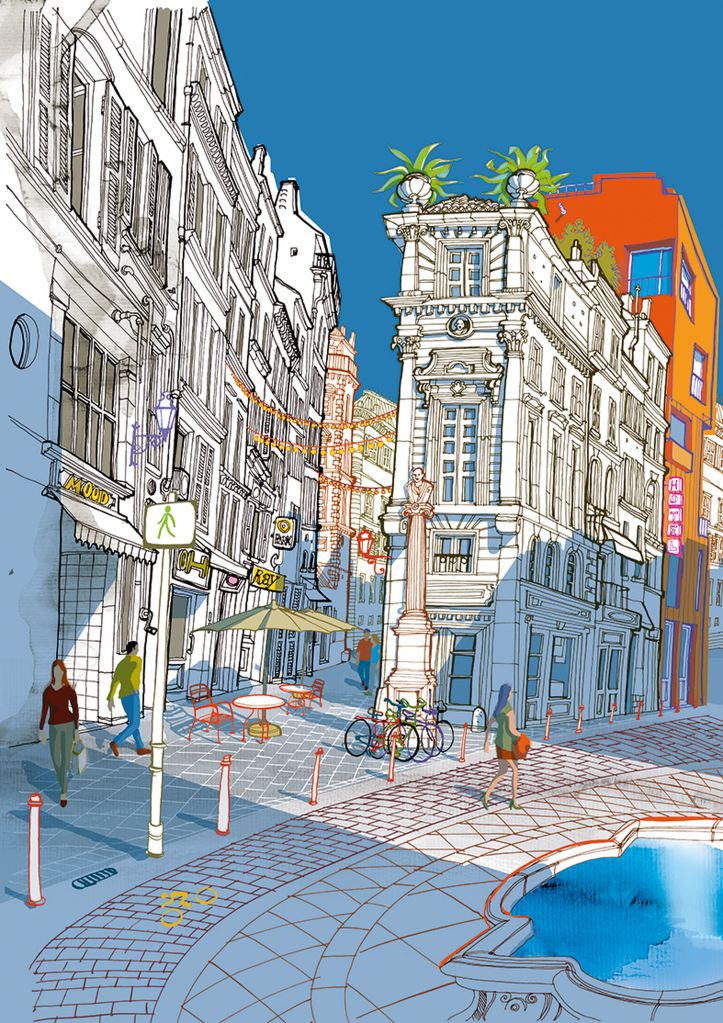
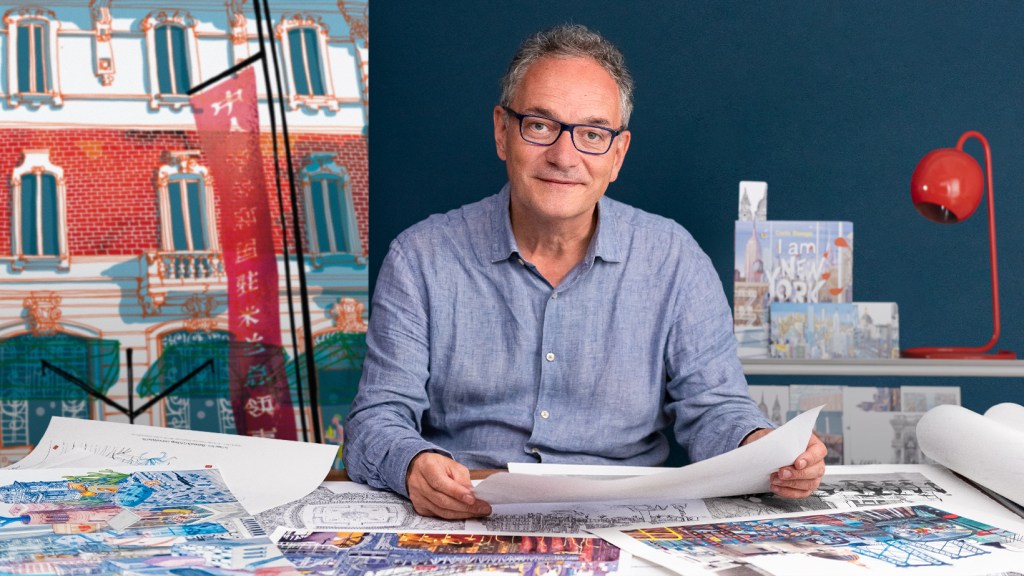
Born in Italy, Carlo has been always deeply passionate about drawing.
After graduating in Architecture at the Polytechnic of Milan, he chose to further his education attending art and design studies. He collaborated with the premier italian designer Bruno Munari, an amazing experience that influenced his way to see the world.
As an editorial and advertising illustrator, Carlo works with major italian magazines and newspapers and with international clients in Europe and in the U.S.
His distinctive style continually wins Italian Illustration awards and the work has been selected by The American Illustration Annual and won the Gold Medal Award in Creative Quarterly’s #15 contest and Awards of Excellence from Communication Arts.
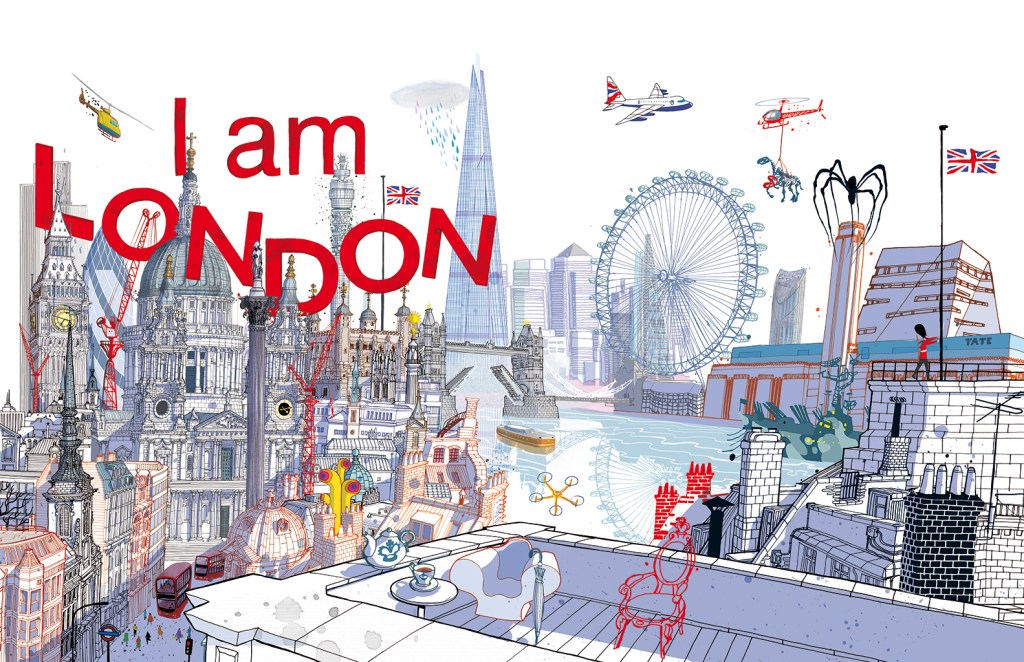
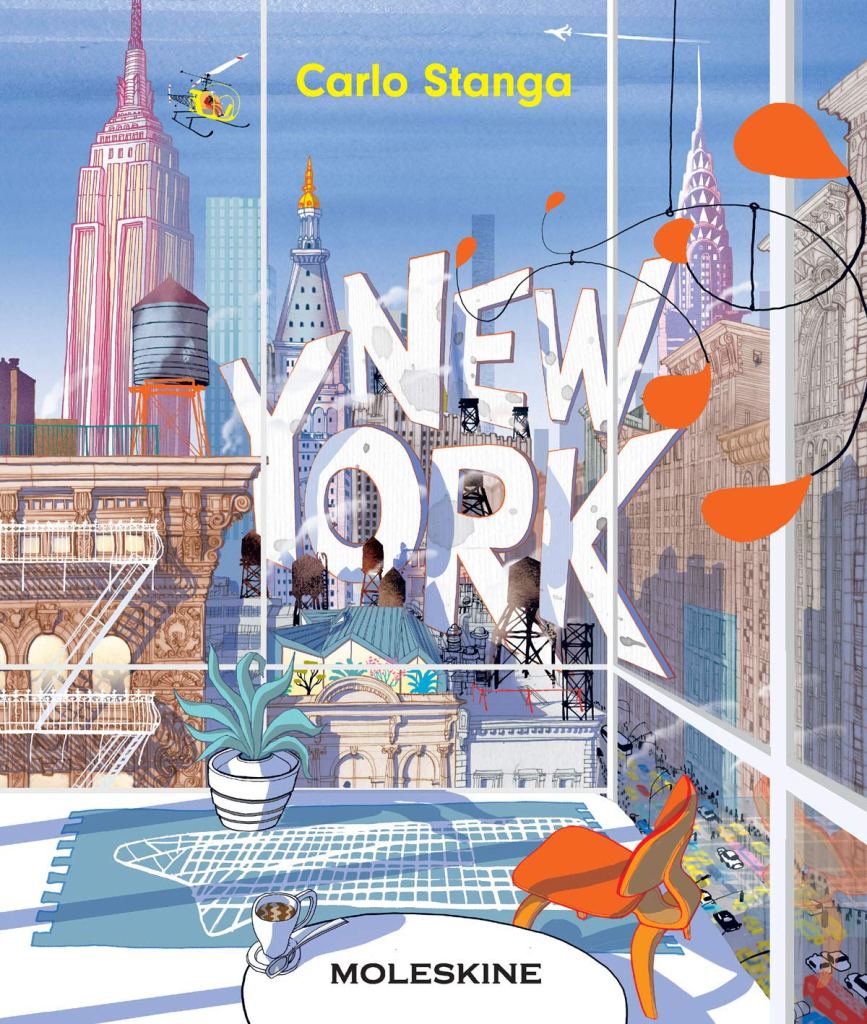
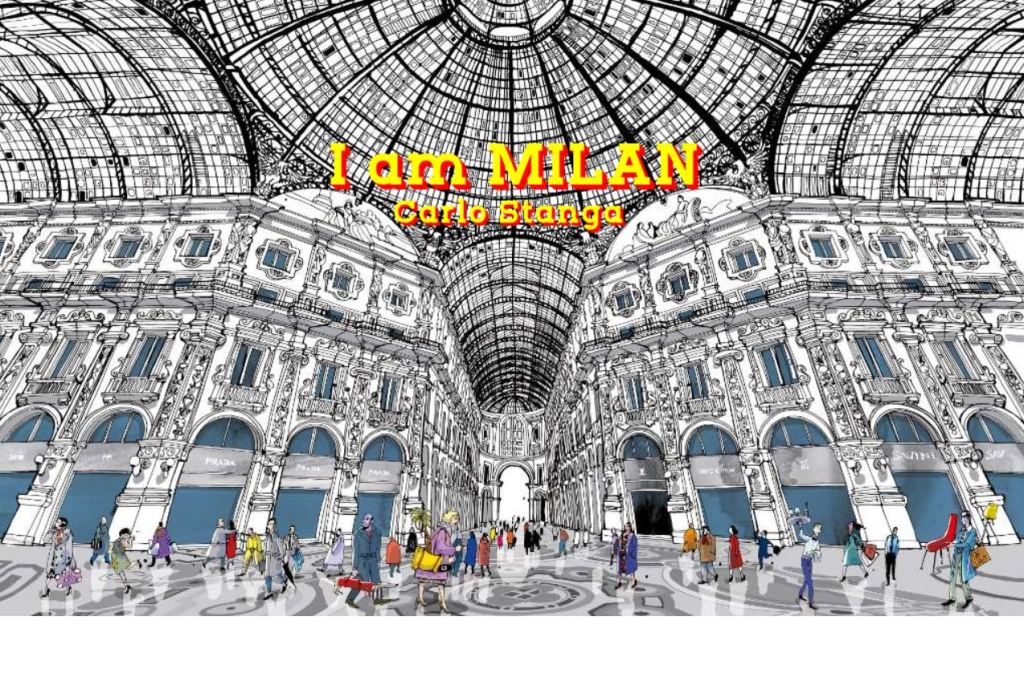
In 2015 he wrote and illustrated I am Milan, followed by I am London and I am New York the first title of a new book collection, published by Moleskine, dedicated to the main cities of the world.
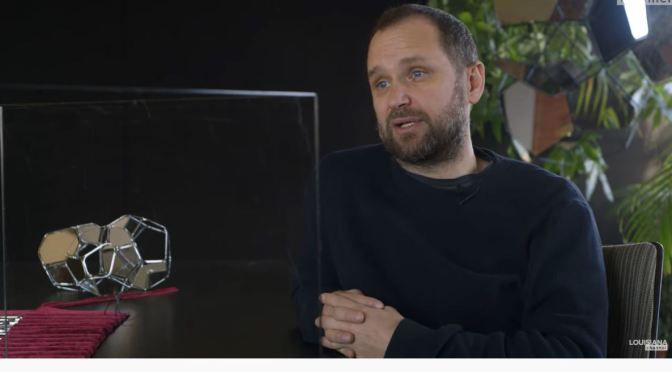
Join us – if you dare – as we follow the acclaimed Argentinian artist Tomás Saraceno into his installations of intricate spider webs inhabited by solitary, social and semi-social spiders, bridging the architectures of each other’s webs.
In the video, Saraceno talks about how spiders mirror human beings and help us understand ourselves and the way we live. “Every day, I try to enter territories, or thoughts, or ways of working, which might challenge ourselves and might challenge how we see the world.”
Observing a spider in its web for more than twenty minutes, Saraceno argues, can completely change your life and way of noticing things, revealing an unseen world. In connection to this, he feels that art and science – as well as other forms of knowledge – combined, can help us “form new alliances between disciplines and lose our comfort zone of operating and seeing and perceiving and being in the world. To try to find new ways to work and to be.”
Tomás Saraceno (b. 1973) is an Argentinian artist. Saraceno is particularly known for his large-scale, interactive installations and floating sculptures, as well as his interdisciplinary approach to art. With his practice, he explores new sustainable ways of inhabiting the environment.
His work has been exhibited at prominent venues all over the world, including the 58th La Biennale di Venezia in Venice, Palais de Tokyo in Paris, and Museo de Arte Moderno in Buenos Aires. Saraceno’s work is also part of international collection such as Bauhaus Museum in Weimar, Walker Art Center in Minneapolis, and SFMoMA in San Francisco.
In 2015, he launched the Aerocene Foundation – an open-source community project for artistic and scientific exploration of environmental issues. Relating to arachnology research, Saraceno is the first person to have scanned, reconstructed and re-imagined spiders’ woven spatial habitats.
For more see: https://studiotomassaraceno.org/about/ Tomás Saraceno was interviewed by Helle Fagralid at his studio in Berlin in November 2019. Camera: Rasmus Quistgaard Edited by Klaus Elmer Produced by Helle Fagralid Cover photo: Tomás Saraceno. ‘Social… Quasi Social… Solitary… Spiders… On Hybrid Cosmic Webs’, 2013. Installation view. Detail. Courtesy of the artist and Esther Schipper Gallery, Berlin Copyright: Louisiana Channel, Louisiana Museum of Modern Art, 2020
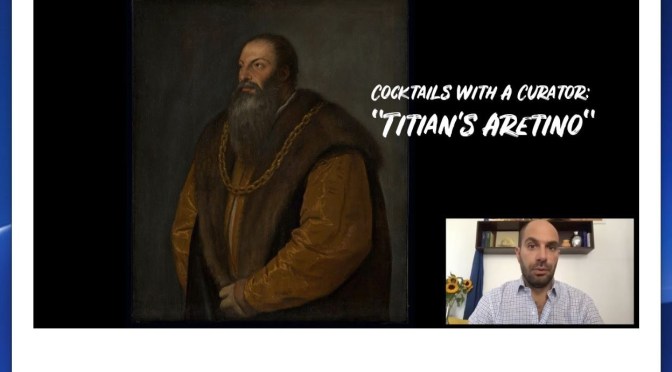
In this week’s episode of “Cocktails with a Curator,” celebrate the 444th anniversary of Titian’s death by delving into the tumultuous life of Pietro Aretino, one of the most celebrated—and reviled—literary figures of the Italian Renaissance. Deputy Director and Peter Jay Sharp Chief Curator Xavier F. Salomon examines Titian’s portrait of Aretino at the Frick and the friendship between the Venetian painter and the acid-tongued writer, known to his contemporaries as the “scourge of princes.” This week’s complementary cocktail is the Bellini, a mixture of Prosecco and white-peach puree created by the Cipriani family in Venice and named for Titian’s teacher, Giovanni Bellini.
Tiziano Vecelli or Vecellio, known in English as Titian, was an Italian painter during the Renaissance, considered the most important member of the 16th-century Venetian school. He was born in Pieve di Cadore, near Belluno. During his lifetime he was often called da Cadore, ‘from Cadore’, taken from his native region.
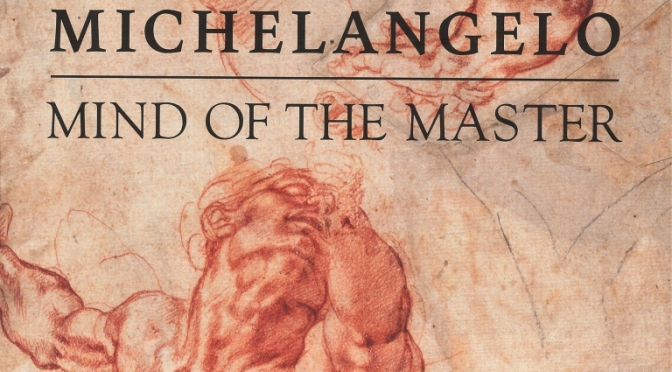
Michelangelo is among the most influential and impressive artists of the Italian High Renaissance. His lifelike sculptures and powerful paintings are some of the most recognizable works in Western art history. He also drew prolifically, making sketch after sketch of figures in slightly varying poses, focusing on form and gesture.
However, remarkably few of these drawings remain today, many of them burned by the artist himself, others lost or damaged over the centuries.
A recent exhibition at the J. Paul Getty Museum, Michelangelo: Mind of the Master, brought together more than two dozen of Michelangelo’s surviving drawings—including designs for the Sistine Chapel ceiling and The Last Judgment—to shed light on the artist’s creativity and working method. In this episode, co-curators of this exhibition, Julian Brooks and Edina Adam, discuss the master and what we can learn from his works on paper.
The theft and recovery of Claude Monet’s Sunrise, the painting that began the impressionist movement.
Impression, Sunrise is a painting by Claude Monet first shown at what would become known as the “Exhibition of the Impressionists” in Paris in April, 1874. The painting is credited with inspiring the name of the Impressionist movement. Impression, Sunrise depicts the port of Le Havre, Monet’s hometown.
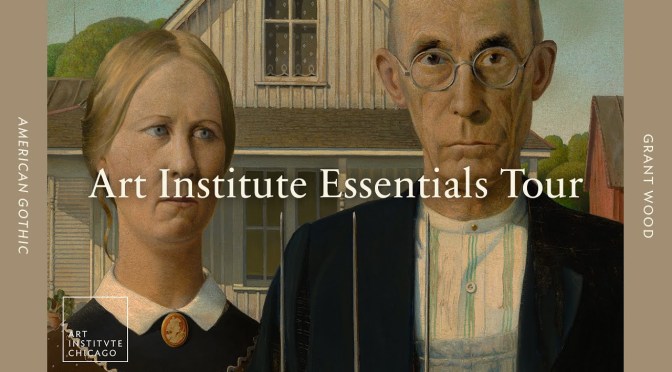
On this episode of Art Institute Essentials Tour, take a closer look at American Gothic, painted by Grant Wood in 1930. One of the most famous American paintings of all time, this double portrait by Grant Wood debuted at the Art Institute in 1930, winning the artist a $300 prize and instant fame. Wood intended this Depression-era canvas to be a positive statement about rural American values during a time of disillusionment.
Grant DeVolson Wood (1891-1942) was an American painter best known for his paintings depicting the rural American Midwest, particularly American Gothic, which has become an iconic painting of the 20th century.
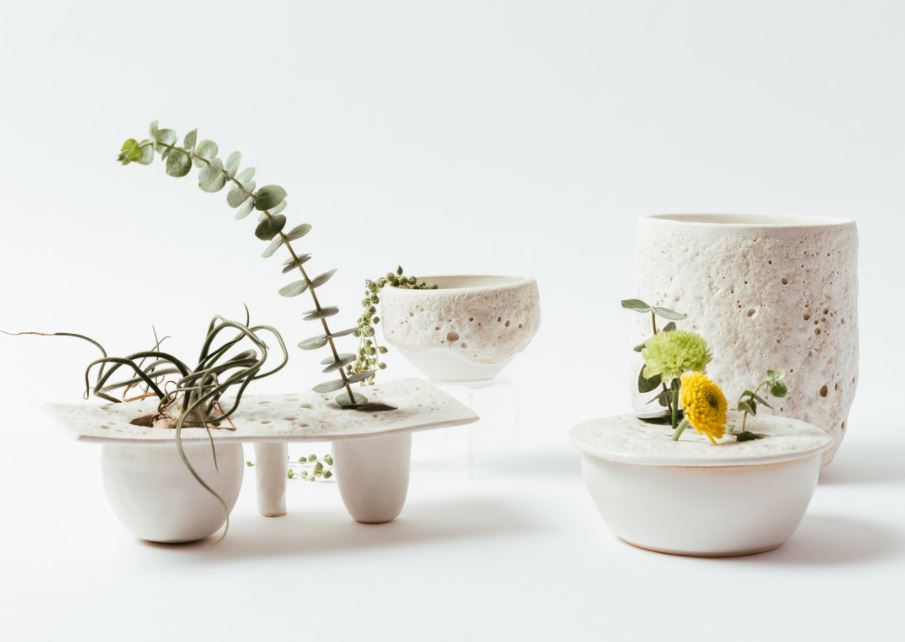
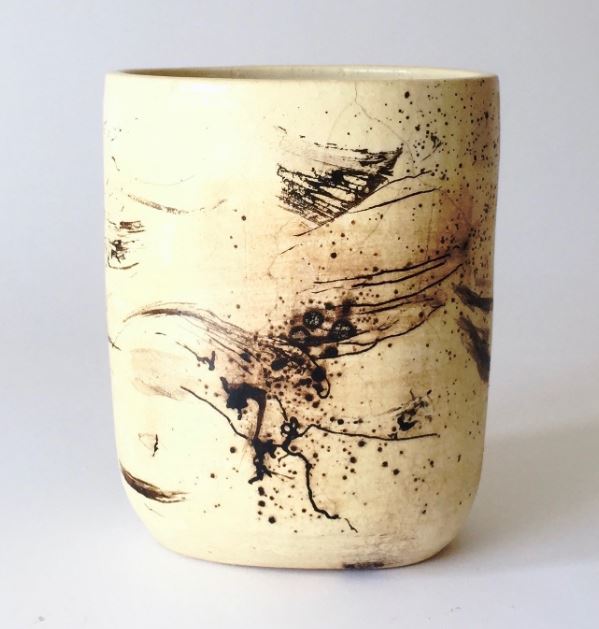
THE MODERN HOUSE (AUG 2020): “I like to make things with unusual textures and I use a lot of heavy glazes, which either bubble or foam up, and I’m interested in the ways the glaze chemistry can make different textures. I’ve been making pieces with a sort of volcanic surface a lot recently, which is achieved by an element in the glaze recipe making tiny explosions in kiln, and then cooling it down very quickly so they set.”
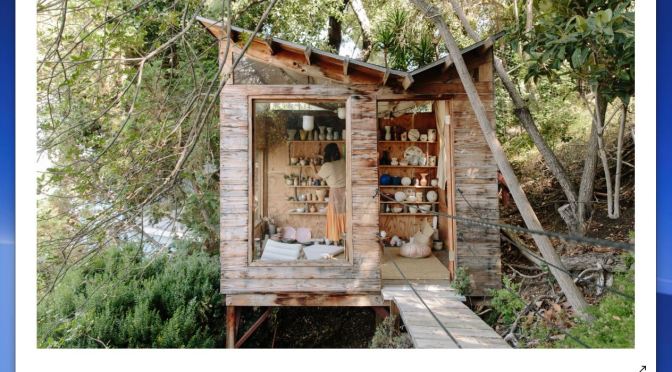
In the first of a new series, Studio Visits, in which we’ll be meeting artists, designers and makers in their place of work, LA-based ceramist Raina Lee invites us into her treehouse studio and gallery space for a talk about her creative process.
Raina, how did you get into ceramics?
“I was a journalist in the tech and video game industry, and I still do some writing now. I happened to be living near a ceramics studio in Williamsburg, Brooklyn, and I decided to take a class. I was enthralled.
“It was so exciting to do something physical and work the clay with my hands – I just fell in love with it. Writing is very abstract and a lot of the time you work on something or pitch an idea and it doesn’t work out, by there’s always a physical end result when making ceramics.”











 Boomers Daily