Tag Archives: Art

Reviews: The Week In Art

This week: our associate editor, Kabir Jhala, and editor-at-large, Jane Morris, have been in Kassel, Germany, to see Documenta, the quinquennial international art exhibition.

They review the show and respond to the escalation of a long-running row over antisemitism and broader racism, which has resulted in a work being removed from the exhibition. Virginia Rutledge, an art historian and lawyer, discusses the dispute over Andy Warhol’s appropriation of a photograph by Lynn Goldsmith of the pop icon Prince. The case will be heard in the US Supreme Court this autumn and has potentially huge implications for artistic freedom. And this episode’s Work of the Week is An Outpost of Progress (1992), a drawing by the late Spanish artist Juan Muñoz, inspired by Joseph Conrad’s short story of the same name.

Documenta 15, Kassel, Germany, until 25 September.

Juan Muñoz: Drawings 1982-2000, Centro Botín, Santander, Spain, 25 June-16 October.
Profiles: British Sculptor Henry Moore (1898-1986)

Henry Moore achieved international fame as a sculptor, despite once being denounced for promoting ‘the cult of ugliness’. And he also remained a most unassuming man, finds Laura Gascoigne, as two new exhibitions of his work prepare to welcome visitors.

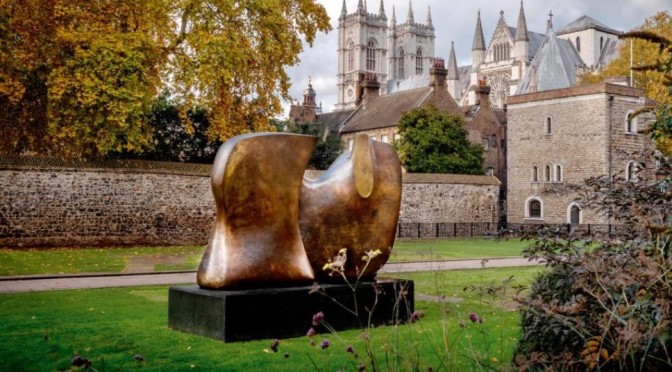
Sculptors are very rarely household names, but no one who lived through the 1960s could be unfamiliar with the name of Henry Moore. At the height of his international success, Moore’s monumental public sculptures in prominent locations — from the 12ft-high Knife Edge Two Piece (1962–65) outside London’s Houses of Parliament to the 26ft-long Reclining Figure (1963–64) outside the Lincoln Centre in New York, US — became such a feature of the urban landscape that they appeared in cartoons in the popular press. For a Modernist abstract sculptor, that was fame.

In the 1950s, Moore added a new subject to his signature themes of the mother and child and the reclining figure. As a young man, his first sight of Stonehenge by moonlight, in 1921, had left an indelible impression; 30 years later, he began a series of large bronze totemic forms recalling prehistoric monoliths.

Henry Moore with three of his Upright Motives c.1955.Photo: Barry Warner

Read more

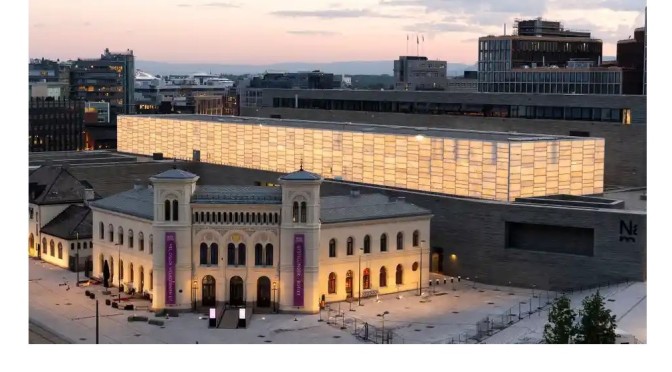
Views: The New National Museum Of Norway, Oslo

The Norwegian capital Oslo is getting a new national museum for classical and modern art, architecture and design. The museum’s collection includes around 100,000 objects, ranging from medieval tapestries to modern design classics and contemporary artworks.

There will be rooms dedicated to, among others, the works of Edvard Munch , including “The Scream,” 19th-century landscape painting, royal robes worn by the Norwegian queens, as well as works by prominent artists, such as Gustav Vigeland, Hannah Ryggen, Claude Monet, Vincent Van Gogh and Ida Ekblad.

Reviews: ‘The Week In Art’

This week: why is Tate rejecting an archive of material relating to Francis Bacon, 18 years after acquiring it?

Our London correspondent Martin Bailey tells us about his recent scoop that Tate is returning a thousand documents and sketches said to have come from the studio of Francis Bacon to Barry Joule, a close friend of the artist, who donated them to Tate in 2004. We then discuss the material with Martin Harrison, the pre-eminent Bacon scholar and editor of the catalogue raisonné of Francis Bacon’s work published in 2016, and to Sophie Pretorius, the archivist at the Estate of Francis Bacon, who went through the Barry Joule archive item by item. Victoria Munro, the director of the Alice Austen House Museum in New York, discusses this still too-little-known photographer, and her documentation of immigration to the United States and the lives of queer women in the 19th and early 20th centuries. And this episode’s Work of the Week is Weißes Bild (1994), a painting by the late Luxembourg-born artist Michel Majerus, now on view at Art Basel—Aimee Dawson, acting digital editor, is at the fair and talks to Giovanni Carmine, curator of the Unlimited section, in which the painting appears.

Sophie Pretorius’s essay Work on the Barry Joule Archive is in the book Francis Bacon: Shadows published by the Estate of Francis Bacon and Thames and Hudson. 

For more on the Alice Austen House Museum, visit aliceausten.org. The podcast My Dear Alice is out in the autumn.

Art Basel, until 19 June.

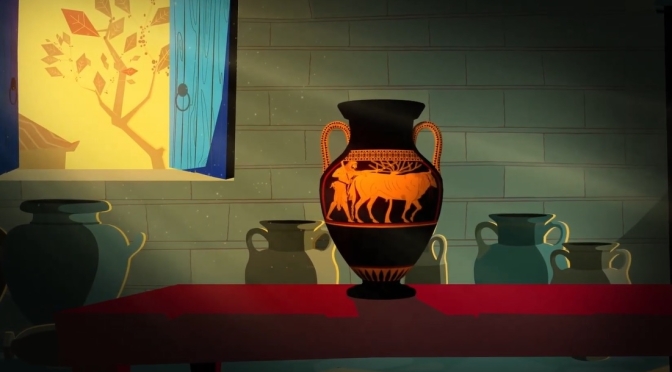
Ceramics: Ancient Athens Red-Figure Vase Painting

In this five-minute animated video, journey back to the 6th-century BCE workshop of the Athenian master Andokides and witness an ancient artist’s moment of creative ingenuity. For generations Athenian vase painters had employed black-figure technique, in which the figure is painted in a mixture of clay and water called slip and details are incised with a sharp tool.

At some point—we don’t know precisely when or why—a vase painter had the idea to reverse the scheme, leaving the figures the color of the clay and painting details with a brush. We now call this red-figure technique. Learn how ancient vase painters created vases in both styles and marvel at the technical virtuosity of the multi-step firing process that contributed to their distinctive, high-contrast look.

Art: 17th Century French Classical Painter Michel Corneille The Elder

This remarkable painting by Michel Corneille the Elder has been hidden away from view for at least the past 110 years and is a truly exceptional rediscovery for French painting of the 17th century. After a recent restoration, the artist’s signature has been re-exposed so that now this impressive work can be confidently attributed to the early  French  Classicist.

This episode of Anatomy of a work of art, discover The Death of Virginia, taken from Roman historian Livy and recounts the death of Virginia, daughter of a centurion in the Roman army. This rediscovery will be one of the highlights of our sale Tableaux Dessins Sculptures 1300-1900, Session I, Including Treasures from the Antony Embden Collection.

Reviews: ‘The Week In Art’

This week, Picasso and the Old Masters: as shows pairing the Spaniard with Ingres and El Greco open in London and Basel respectively.

Ben Luke talks to Christopher Riopelle (curator of Picasso Ingres: Face to Face at the National Gallery) and Carmen Giménez (curator of Picasso-El Greco at the Kunstmuseum in Basel) about the profound influence of historic artists on Picasso’s rupturing of tradition. In this episode’s Work of the Week, The Art Newspaper’s contemporary art correspondent, Louisa Buck, talks to Chris Levine, the creator of Lightness of Being, one of the best known recent portraits of Queen Elizabeth II, as the British monarch celebrates 70 years on the throne. And as the Polish government replaces yet another museum director, what can be done about political interference in museum governance? Ben talks to Goranka Horjan, director of Intercom, the International Committee for Museum Management, and Bart De Baere, chair of the Museum Watch programme at the International Committee for Museums and Collections of Modern Art (Cimam).

Picasso Ingres: Face to Face, National Gallery, London, until 9 October. Picasso-El Greco, Kunstmuseum, Basel, 11 June-25 September.

Art Exhibits: ‘Cezanne’

This video offers a look at Cezanne’s unique approach to color, form, and space through specialized imaging of a few of the artist’s most influential works in the Art Institute’s collection: The Basket of Apples, The Three Skulls, and The Vase of Tulips.

Cezanne May 15, 2022–Sep 5, 2022 https://www.artic.edu/exhibitions/928…

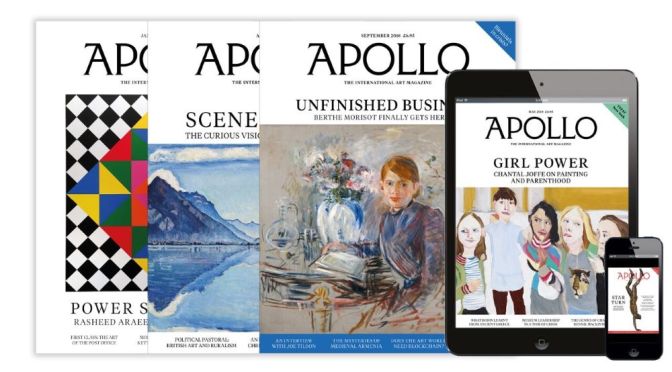
International Art: Apollo Magazine – June 2022 Issue

• Off the grid: a messier side to Mondrian

• Picasso’s obsession with El Greco

• An interview with Isaac Julien

• How Gio Ponti jazzed up Padua

Plus: William Kent’s heavenly ceilings, New York’s terrible new skyscrapers, the market’s obsession with young painters, the artists who channel their inner child, and reviews of Walter Sickert, Raphael and Winslow Homer

Read more

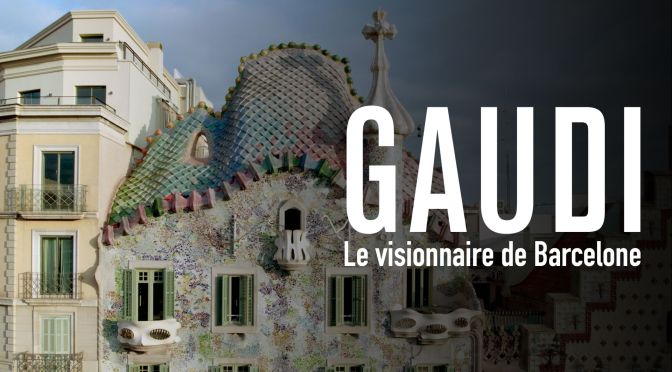
Exhibits: ‘Antoni Gaudí’ At The Musée d’Orsay In Paris

The Musée d’Orsay is hosting the first major exhibition devoted to Antoni Gaudí organized in France in Paris in fifty years. In an immersive museographic experience, it will show the spectacular creations of this unique artist, in particular, presenting sets of furniture never before exhibited in France. It will offer a new vision of the artist as a unique and singular figure, a non-isolated genius who practiced in a Catalonia in the midst of social, political and urbanistic upheaval.

Until July 17th, 2022

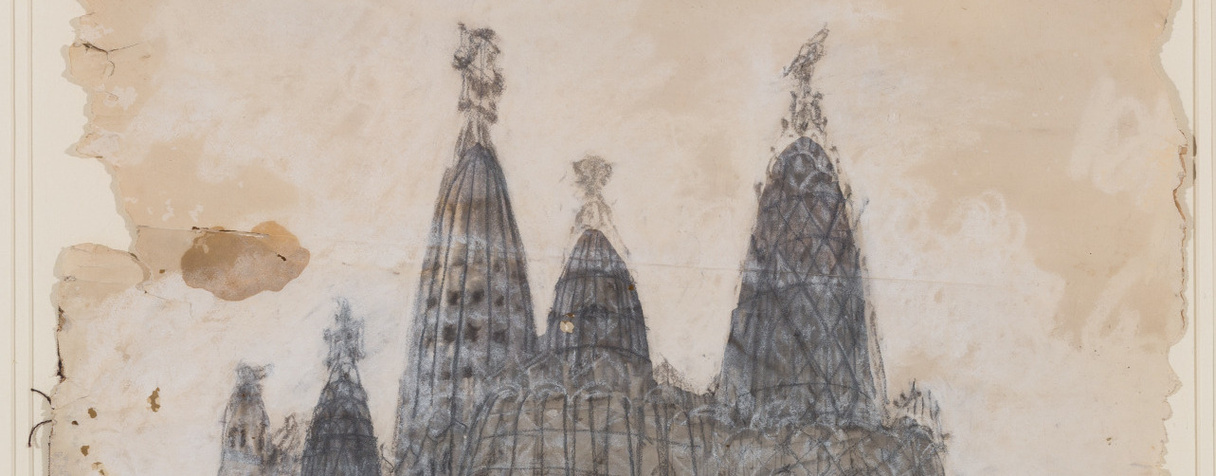
Projet pour l’église de la Colònia Güell, Antoni Gaudí
Antoni Gaudí, Projet pour l’église de la Colònia Güell
©Museu Nacional d’Art de Catalunya, Barcelona / Marc Vidal i Aparicio

The exhibition will focus on showing the architect’s creative process at a time of an exceptional local artistic profusion linked to “Modernism” or the Art Nouveau movement in Spain, supported by distinguished patrons, anxious to distinguish Catalonia, a land of Mediterranean identity. Gaudí’s workshop, his many collaborators, and his sophisticated working techniques will be the guiding line of the exhibition to make the public understand the extraordinary inventive capacity of the architect who defied all the creation of the moment.