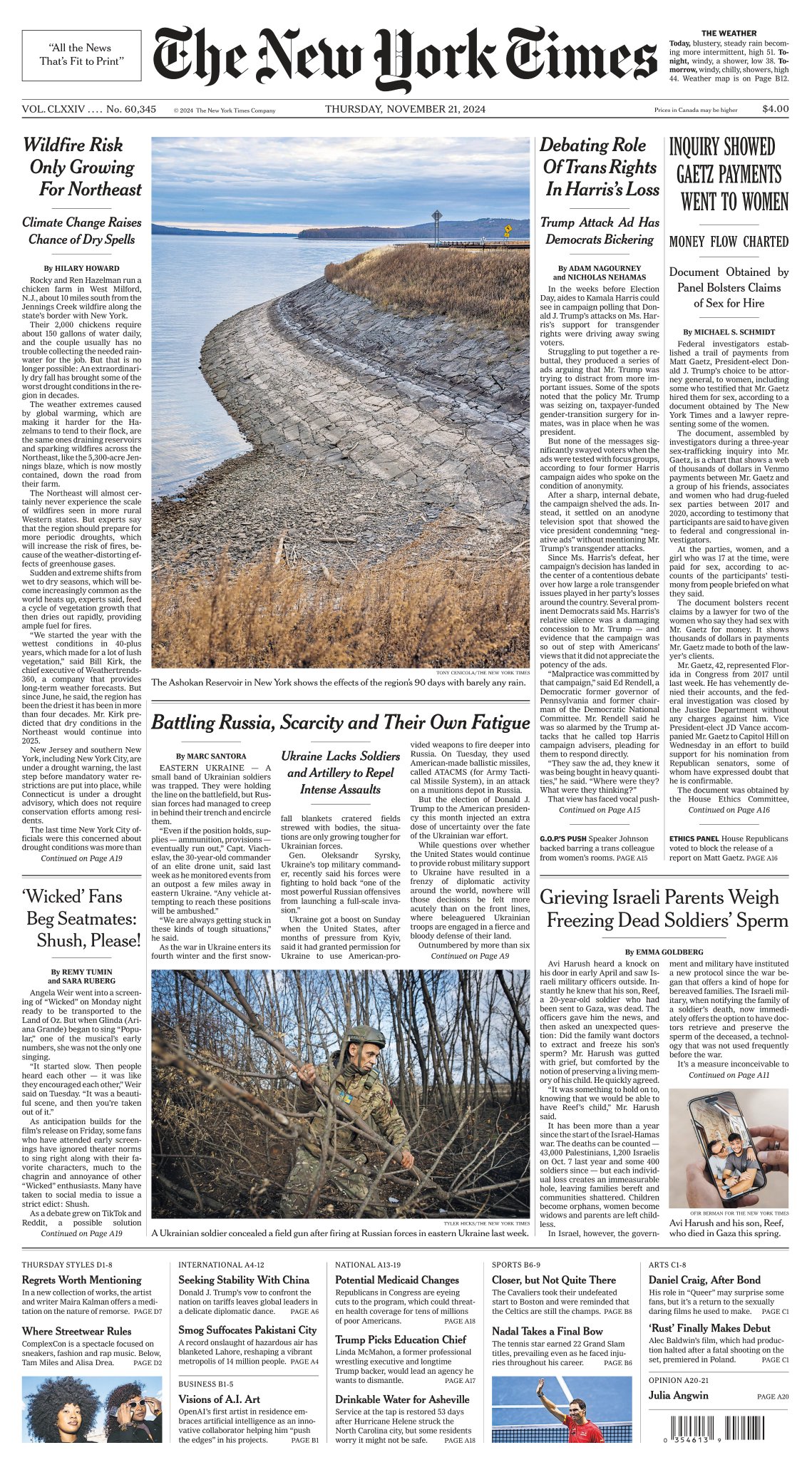
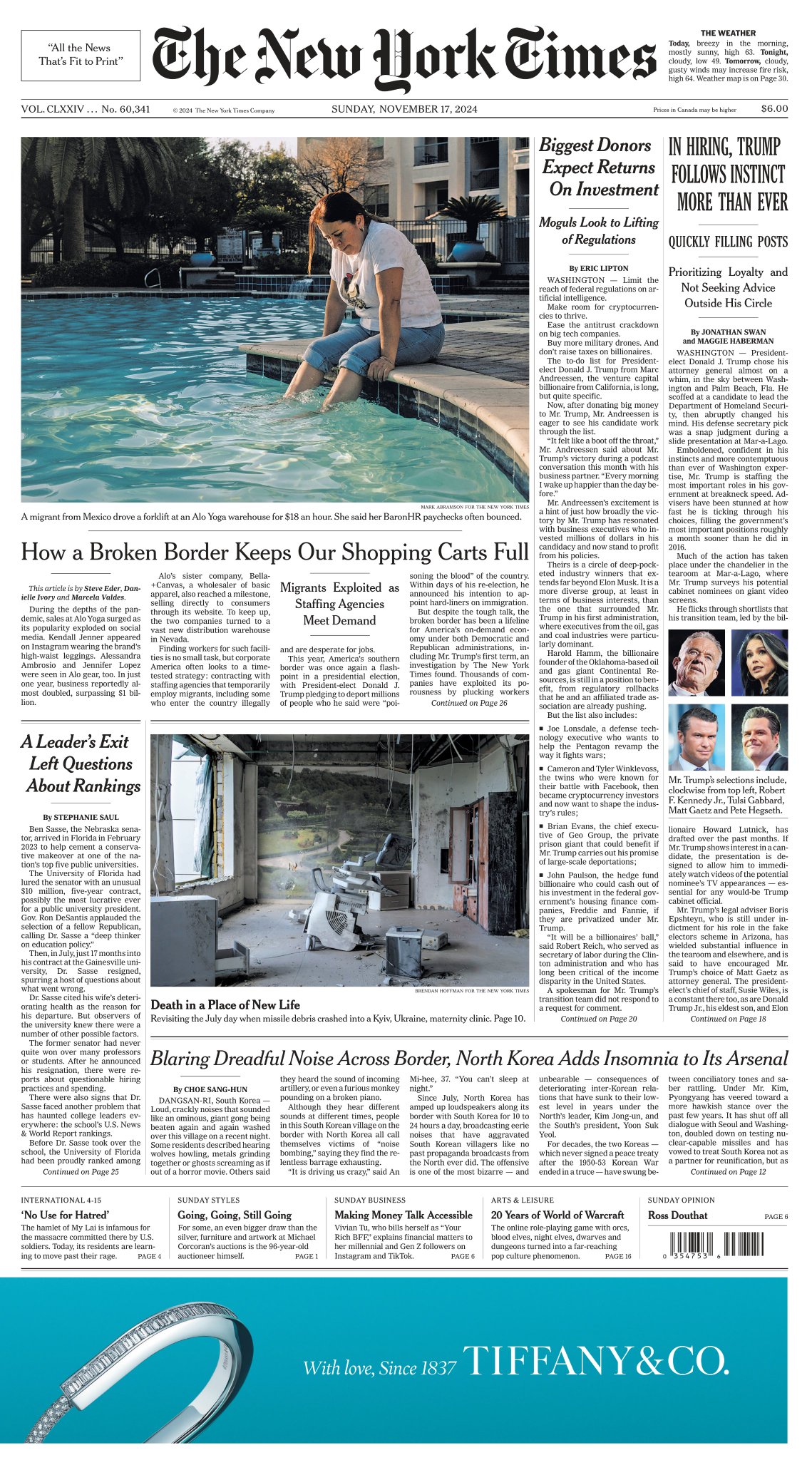
A document prepared by federal investigators bolsters claims by women who say they were hired for sex by Matt Gaetz, President-elect Donald J. Trump’s choice for attorney general, who denies wrongdoing.
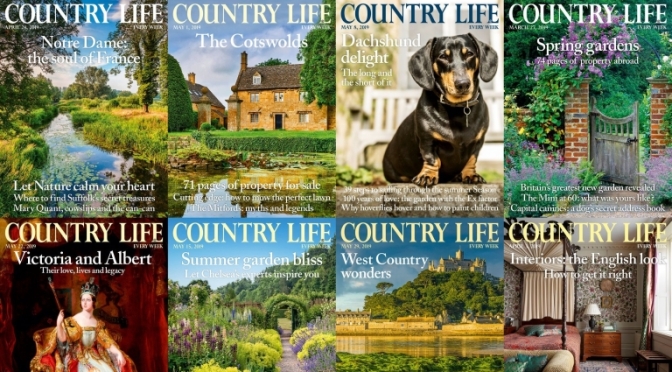
Country Life Magazine (November 20, 2024): The latest issue featuresWinston Churchill – The wit and wisdom of the great man…
‘Let us go forward together’
As we approach the 150th anniversary of Sir Winston Churchill’s birthday, Amie Elizabeth White and Octavia Pollock pay homage to the great man, in his own words.
Entertaining His Majesty
In the second of two articles, John Goodall charts the 1560s and 1620s expansion of Apethorpe Palace in Northamptonshire
Landscape of ‘seamless sameness’
England’s heather moorland and its glorious purple swathe is a wonder of the Western world, suggest John Lewis-Stempel
Why is a raven like a writing desk?
Do you know a Yonerywander from a Vinvertuperator? Engage your inner Edward Lear as Daniel McKay welcomes you into his wacky world of whimwondery
Wibble wobble, wibble wobble, jelly made of paint
Food, glorious food is fuelling the creativity of modern still-life artists discovers Catriona Gray
Sex, lies and sewing machines
The sewing machine rose to be an emblem of domesticity, but its invention is a story of Saints and Singers. Matthew Dennison follows the thread
Interiors
Raze to the ground or renovate? Has the open-plan layout had its day? Cart shed or garage? Giles Kime considers some key architectural conundrums
Wisley reinvented
John Hoyland is captivated by the spectacular transformation of Piet Oudolf’s double borders at the RHS garden in Surrey
Some like it hot
If you like your chili ‘hotter than the hinges of hell’, Tom Parker Bowles has just the dish for you (and there’s not a bean in sight)
Wooden walls restored
John Goodall lauds a decade-long project to rescue a unique painted church at Ursi, Romania
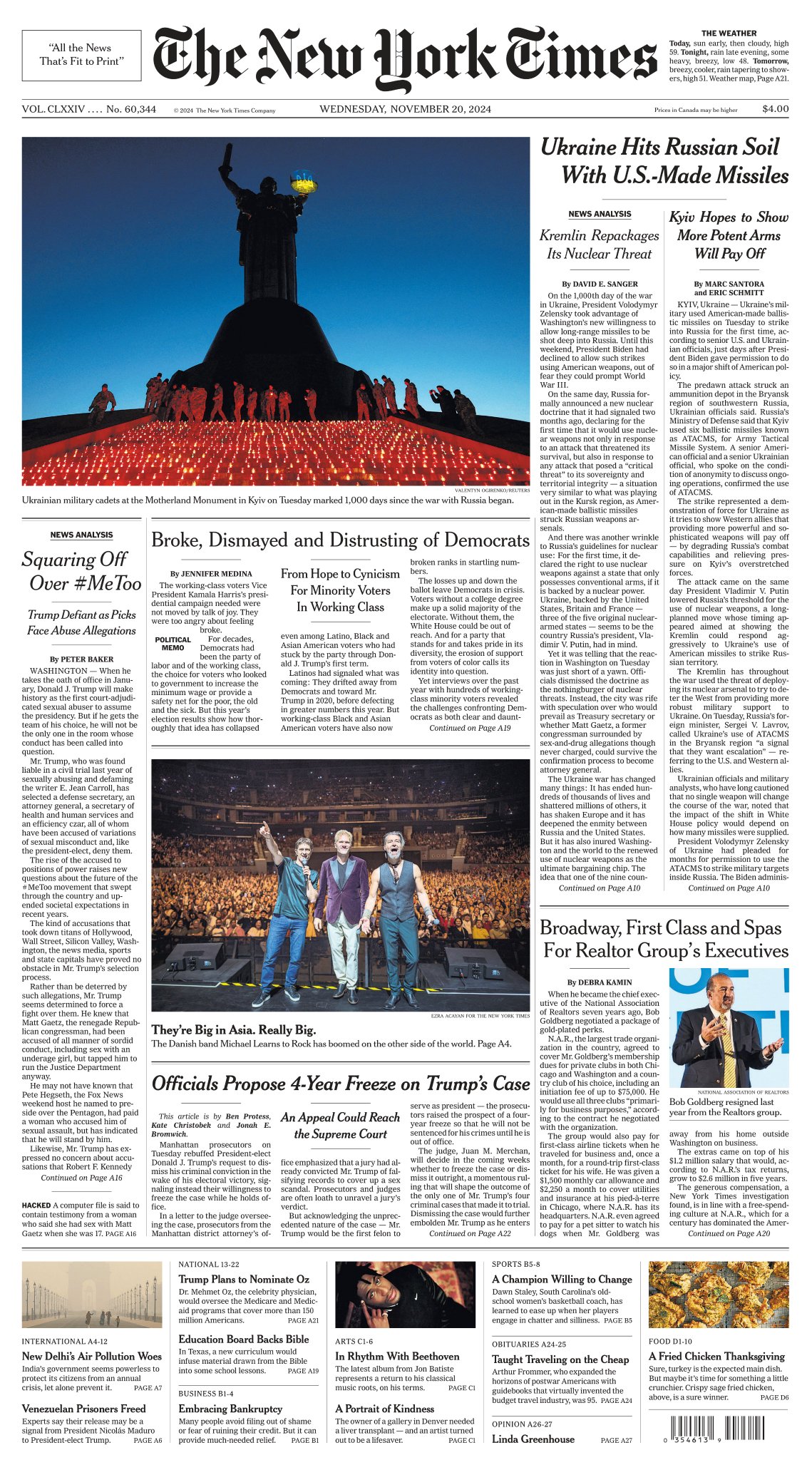
Donald J. Trump, who was found liable for sexual abuse last year, appears determined to force a fight over the role of such allegations in society.
Hacker Is Said to Have Gained Access to File With Damaging Testimony About Gaetz
The computer file is said to contain testimony from the woman who said she had sex with Matt Gaetz, President-elect Donald Trump’s choice to be attorney general, when she was 17.
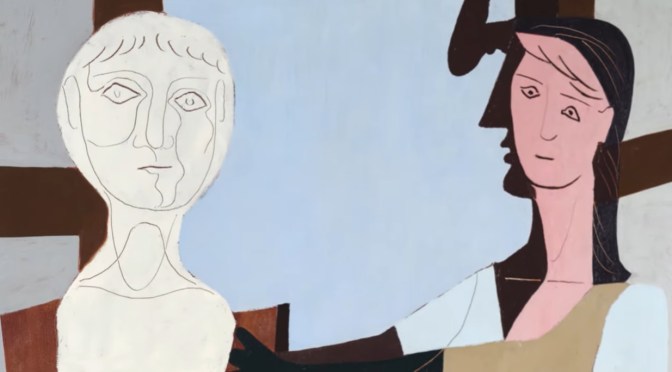
Sotheby’s (November 17, 2024):In late September of 1925, Pablo Picasso, his wife Olga and their young son Paolo returned to Paris from their annual summer holiday in the South of France.
The summers were beginning to blend together for Picasso, who was tiring of the swell set he and Olga socialized with. The home they returned to at 23 rue la Boetie was a changed one. After lengthy negotiations, Picasso had acquired an additional floor of the building to be used as his studio.
He set about immediately modifying the space: removing doors from their hinges, bringing in his copious art supplies (and a limited amount of furniture) and stripping back most of the existing wallpaper. After years of jostling with his elegant and socially aspirational wife for space in their apartment on the floor below he relished a place to colonize as his own.
The Justice Department, Pentagon and intelligence agencies were the three areas of government that proved to be the most stubborn obstacles to Mr. Trump in his first term.
Processed foods are in the cross hairs of Robert F. Kennedy Jr., but battling major companies could collide with President-elect Donald J. Trump’s corporate-friendly goals.
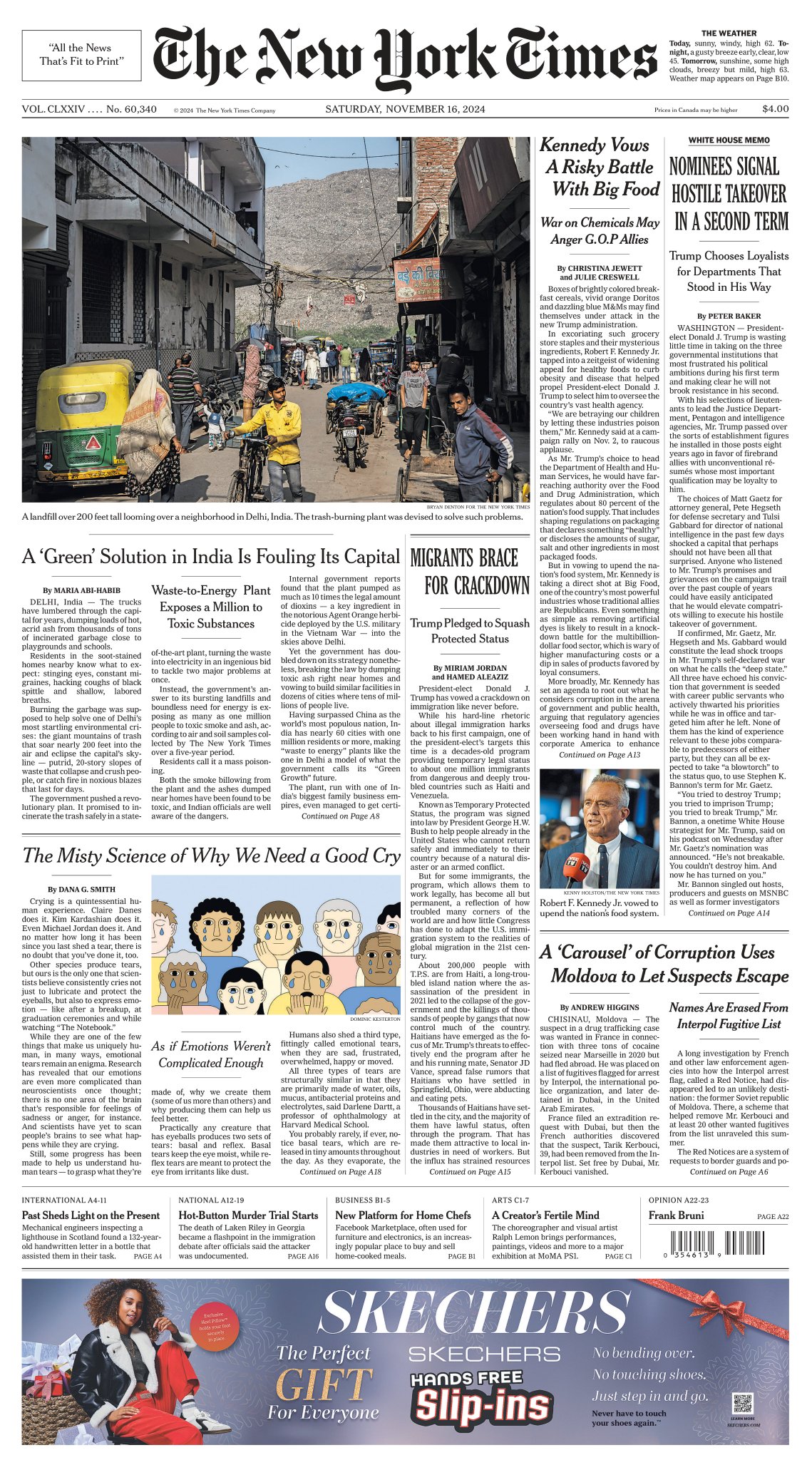
India promised to burn its trash mountains and safely turn them into electricity. But a New York Times investigation found hazardous levels of toxic substances around homes, playgrounds and schools.
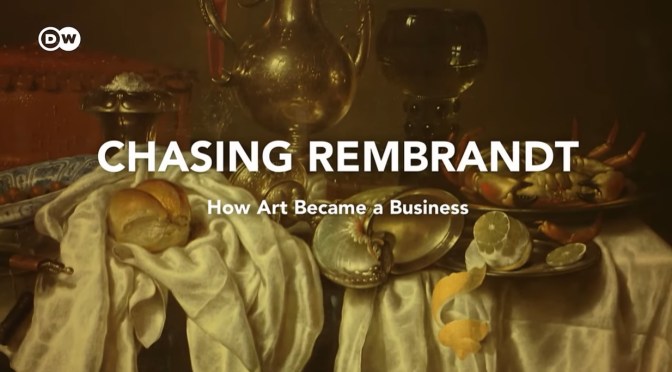
DW Documentary (November 15, 2024): The 17th century was the zenith of painting, in the Netherlands. In no other era were artists so productive. Never before had so many painters tried to make a living from their art. Demand was huge.
People from all walks of life began to enthusiastically collect paintings. New genres were born. And both the art market and the profession of art dealer emerged. Exceptional artists such as Rembrandt van Rijn, Jan Vermeer and Frans Hals created masterpieces that still inspire us today.
One reason for the cultural heyday and its glut of paintings was an enormous surplus of capital, generated by speculative money transactions and trade, which was also based on the exploitation of the colonies and the ideal conditions that shipping found in the Netherlands. The film traces a period in which art, too, became an economic factor. In a way, the 17th century can be seen as the origin of our current art system.
After all, this was when auction houses were first established, leading to emergence of professional art dealers and wealthy collectors. Art was democratized. This documentary film explores an era when business and art entered into a marriage for the first time. How did such an artistic flourishing come about? What art-historical innovations do we owe to this period? And what significance does it have for our view of art and our approach to art today?
The Week In Art Podcast (November 15, 2024):UK museums are at a moment of transformation with a new generation of directors taking the helm at several of the major national institutions in London. So for this landmark 300th episode, we felt it was a good moment to look at the challenges and opportunities for museums now and in the future.
We invited Gus Casely-Hayford of V&A East, Nicholas Cullinan of the British Museum and Karin Hindsbo of Tate Modern to join our host Ben Luke for a wide-ranging discussion.
News, Views and Reviews For The Intellectually Curious







 Artforum Magazine


 Boomers Daily