Tag Archives: Art

Art Insider: An Engineer Reviews Turner’s “Rain, Steam And Speed” (1844)

The National Gallery (March 1, 2024): Is there engineering in art, as well as art in engineering? We look at Turner’s famous depiction of a steam train in ‘Rain, Steam and Speed’ and stormy seas in ‘Dutch Boats in a Gale’ (1801).

Rob Bell from the Institution of Mechanical Engineers gives us an engineer’s take on these two paintings at the National Gallery. The Institution of Mechanical Engineers was founded in 1847 and has over 100,000 members around the world.

Arts Preview: ARTFORUM Magazine – March 2024

March 2024
Paul Pfeiffer, Vitruvian Figure (detail), 2008

Artforum Magazine (March 1, 2024) – The latest issue features THE PURE PRODUCTS OF AMERICA GO CRAZY – Thomas Hirschhorn’s Fake It, Fake It – till you Fake It., 2023; ANTHONY LEPORE; PASSAGES –  PHILL NIBLOCK (1933–2024); TOP TENBRUCE LABRUCE and more…

SALON STYLE

Hurvin Anderson, Shear Cut, 2023, acrylic on paper on canvas, 84 3⁄4 × 92 1⁄4". From the series “Barbershop,” 2006–23.

Hurvin Anderson imagines the barbershop

HURVIN ANDERSON’S “BARBERSHOP” series belongs to a long tradition of painterly fascination with the spaces of social interaction that reflect both the physical realities and ideological aspirations of society at large. Anderson’s exhibition “Salon Paintings” at England’s Hastings Contemporary, organized in collaboration with the Hepworth Wakefield, also in England, and Kistefos Museum in Jevnaker, Norway, brings together a body of work he produced between 2006 and 2023 that portrays, albeit in the loosest sense of the word, men’s hair salons. 

“Time Travel: Italian Masters Through a Contemporary Lens”

“Time Travel: Italian Masters Through a Contemporary Lens”
View of “Time Travel: Italian Masters Through a Contemporary Lens,” 2023–24. From left: Ross Bleckner, Day and Night, Hour by Hour, 2023; Josephine Halvorson, Smiley Face, 2023. Photo: Jason Mandella.

Petzel Gallery | East 67th Street

By Donald Kuspit

“Time Travel: Italian Masters Through a Contemporary Lens,” a group exhibition that featured a selection of Renaissance paintings alongside works created by present-day artists, was a type of paragone, except that the debate was not whether painting or sculpture is the superior art form, but whether these historical pieces—executed at a time when grand themes and exquisite craft, among other criteria, determined their value—are better or worse than objects made by artists now, when such antiquated metrics seem well beside the point.

Previews: The New Yorker Magazine – March 4, 2024

A group of small children hold hands and cross a street in Manhattan.

The New Yorker (February 26, 2024): The new issue‘s cover features ‘Victoria Tentler-Krylov’s “All Clear” ‘ – The artist captures New York’s smallest pedestrians as they make their way through the big city.

INSIDE NORTH KOREA’S FORCED-LABOR PROGRAM

Workers sent from the country to Chinese factories describe enduring beatings and sexual abuse, having their wages taken by the state, and being told that if they try to escape they will be “killed without a trace.”

What a Major Solar Storm Could Do to Our Planet

Electricity shooting from the sun to the earth.

Disturbances on the sun may have the potential to devastate our power grid and communication systems. When the next big storm arrives, will we be prepared for it?

By Kathryn Schulz

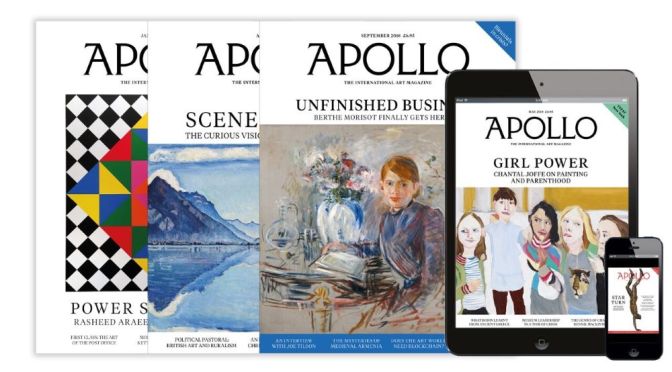
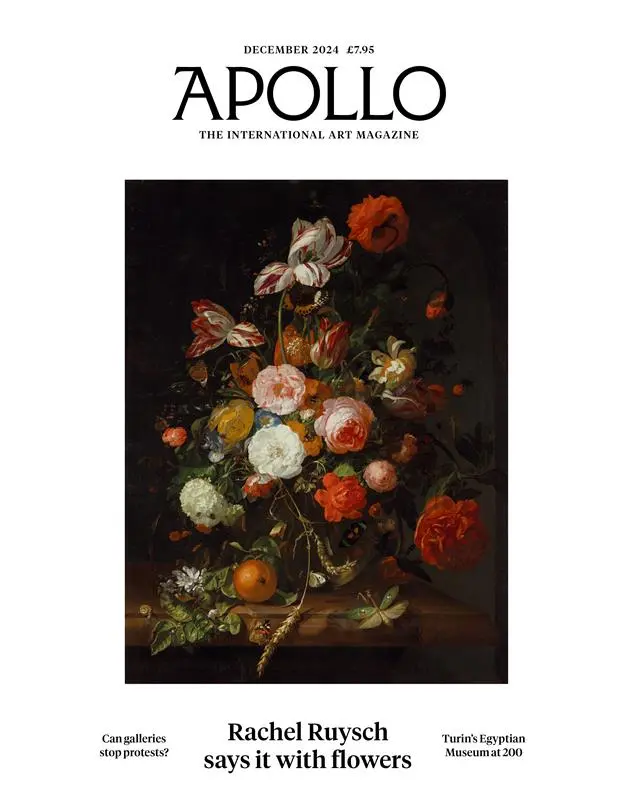
International Art: Apollo Magazine – March 2024

Current Issue | Apollo – The International Art Magazine | Apollo Magazine

Apollo Magazine (February 25, 2024): The new March 2024 issue features ‘How Italy remade Willem de Kooning’; Does the art world need gatekeepers?; Angelica Kauffman’s sentimental side…

In the studio with… Manuel Mathieu

The Haitian-Canadian artist surrounds himself with unlikely objects to spark his imagination, books about drawing, and about 25 different types of tea

The clockwork marvels that tell a tale of two empires

These timepieces are fluttering, chiming embodiments of how Britain and China traded with each other in the 18th and 19th centuries

Reel life – how Zineb Sedira found herself through film

At the Whitechapel Gallery, the French-Algerian unspools personal and political histories through imitation sets and empty stages

Previews: The New Yorker Magazine – Feb 26, 2024

People enjoy a variety of winter activities like skating sledding and skiing.

The New Yorker (February 19, 2024): The new issue‘s cover features Marcellus Hall’s “Winter Wonders” – The artist depicts an array of invigorating, comforting, and delightful cold-weather activities.

Legal Weed in New York Was Going to Be a Revolution. What Happened?

A cannabis leaf growing roots into buildings and piles of paper.

Lawsuits. Unlicensed dispensaries. Corporations pushing to get in. The messy rollout of a law that has tried to deliver social justice with marijuana.

Matt Gaetz’s Chaos Agenda

Matt Gaetz photographed by Mark Peterson  Redux for The New Yorker.

The Florida Republican is among the most brazen and controversial figures in Donald Trump’s G.O.P. He’s also among the most influential.

By Dexter Filkins

Representative Matt Gaetz arrived at the White House in the last days of 2020, amid a gathering national crisis. President Donald Trump had lost his bid for reëlection the previous month, and his allies were exploring strategies to keep him in office. Though only thirty-eight years old, Gaetz, the scion of a political family in Florida’s Panhandle, had become one of the Republican Party’s most prominent and divisive figures. His dark hair styled in a kind of bouffant, his lips often curled in a wry smile, Gaetz bore a resemblance to Elvis Presley, or, in the description of a Florida friend, “either Beavis or Butt-head.” He was quick-witted and sometimes very funny, and he loved to taunt his enemies, who were numerous, especially in his own party. “He’s the most unpopular member of Congress, with the possible exception of Marjorie Taylor Greene, and he doesn’t care,” a fellow-congressman told me. 

Previews: The New Yorker Magazine – Feb 12 & 19, 2024

Pixelated Eustace Tilley magazine cover that appears and disappears.

The New Yorker (February 5, 2024): The new issue‘s cover features Nicholas Konrad’s “Online Profile” – The magazine celebrates its ninety-ninth anniversary..

How Nikola Jokić Became the World’s Best Basketball Player

Nikola Jokić holding a basketball during a game.

He doesn’t run very fast or jump very high, and seems to prefer the company of horses. But he has mastered the game’s new geometry like nobody else.

By Louisa Thomas

The Art World Before and After Thelma Golden

Thelma Golden photographed by Lyle Ashton Harris.

When Golden was a young curator in the nineties, her shows, centering Black artists, were unprecedented. Today, those artists are the stars of the art market.

By Calvin Tomkins

Baruch Spinoza and the Art of Thinking in Dangerous Times

A portrait of Baruch Spinoza by Franz Wulfhagen, 1664.

The philosopher was a champion of political and intellectual freedom, but he had no interest in being a martyr. Instead, he shows us how prudence and boldness can go hand in hand.

By Adam Kirsch

International Art: Apollo Magazine – February 2024

Image

Apollo Magazine (January 29, 2024): The new February 2024 issue features ‘Giants of Indian Miniature Painting’; The Crisis in Italian Paintings and more…

• Holidaying with the Habsburgs

• An interview with Julie Mehretu

• The crisis in Italian museums

• Howard Hodgkin’s Indian miniatures

Plus: Slim pickings for foodies on Valentine’s Day, Parma’s monumental museum complex, and  – and reviews of Impressionists on paper, experimental art in the Eastern bloc, and Africa and Byzantium at the Met

Previews: The New Yorker Magazine- February 5, 2024

A family shares a meal to celebrate Lunar New Year.

The New Yorker (January 29, 2024): The new issue‘s cover features Sarula Bao’s “Lunar New Year” – The artist depicts the joys of gathering with loved ones, around a table of good food

The Rural Ski Slope Caught Up in an International Scam

When the scheme became public Vermonts governor said “We all feel betrayed.”

A federal program promised to bring foreign investment to remote parts of the country. It soon became rife with fraud.

By Sheelah Kolhatkar

As the general manager of the Jay Peak ski resort, Bill Stenger rose most days around 6 a.m. and arrived at the slopes before seven. He’d check in with his head snowmaker and the ski-patrol staff, visit the two hotels on the property, and chat with the maintenance workers, the lift operators, the food-and-beverage manager, and the ski-school instructors—a kind of management through constant motion. Stenger is seventy-five, with white hair, wire-rimmed reading glasses, and a sturdy physique that makes him look built for fuzzy sweaters. 

The Perverse Policies That Fuel Wildfires

We thought we could master nature, but we were playing with fire.

By Elizabeth Kolbert

Ukraine’s Democracy in Darkness

A photo-illustration of Zelensky and the Ukrainian parliament.

With elections postponed and no end to the war with Russia in sight, Volodymyr Zelensky and his political allies are becoming like the officials they once promised to root out: entrenched.

By Masha Gessen

Previews: The New Yorker Magazine- January 29, 2024

A chicken takes a bath on a rainy day in the city.

The New Yorker (January 22, 2024): The new issue‘s cover features Roz Chast’s “Bird Bath” – The artist depicts her favorite antidote for dreary winter weather: a nice, hot bath.

Rules for the Ruling Class

An illustration of a bird walking above other birds.

How to thrive in the power élite—while declaring it your enemy

By Evan Osnos

As a young man in the nineteen-eighties, Tucker Swanson McNear Carlson set out to claim his stake in the establishment. His access to money and influence started at home. His stepmother, Patricia, was an heir to the Swanson frozen-food fortune. His father, Dick, was a California TV anchor who became a Washington fixture after a stint in the Reagan Administration. For fortunate clans like the Carlsons, it was “A Wonderful Time,” to borrow the title of a volume of contemporaneous portraits of “the life of America’s elite,” which included “the Cabots sailing off Boston’s North Shore, and Barry Goldwater on the range in Arizona.”

Sofia Coppola’s Path to Filming Gilded Adolescence

Sophia Coppola sits on a stool under a bright light.

There are few Hollywood families in which one famous director has spawned another. Coppola says, “It’s not easy for anyone in this business, even though it looks easy for me.”

By Rachel Syme

When Eleanor Coppola went into labor with her third child, on May 14, 1971, at a hospital in Manhattan, her husband, the director Francis Ford Coppola, was on location in Harlem, shooting a scene for “The Godfather.” Hearing the news, he grabbed a camcorder from the set and raced over to capture the moment. “When they say, ‘It’s a girl,’ my dad gasps and nearly drops the camera,” Sofia Coppola told me recently, of her birth video. “My mom is there, just trying to focus.” The footage—which has been screened by the family multiple times over the years, and as part of a feminist art installation designed by Eleanor—was the first of many instances in which Sofia would be seen through her father’s lens. When she was just a few months old, Francis cast her in her first official film role, as the infant in the dénouement of “The Godfather,” in which Michael Corleone, the ascendant boss of the Corleone crime family, anoints the head of his newborn nephew as his associates murder rival gangsters one by one.

Museum Tour: ‘European Paintings – 1300 To 1800’ At The Met In New York City

The Met (January 19, 2024): Join curators Stephan Wolohojian, Adam Eaker, David Pullins, and Anna-Claire Stinebring along with their special guests as they guide you through the newly reopened galleries dedicated to European Paintings from 1300 to 1800.

The reconfigured galleries highlight fresh narratives and dialogues among more than 700 works of art from the Museum’s world-famous holdings, which include recently acquired paintings and prestigious loans, as well as select sculptures and decorative art, showcase the interconnectedness of cultures, materials, and moments across The Met collection.