
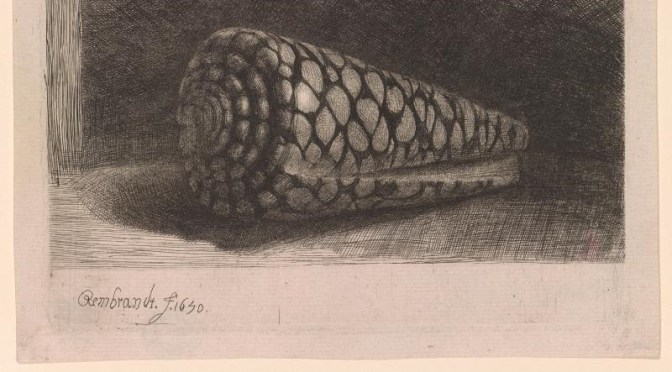
Take a closer look at three touching, humanist drawings by Rembrandt (1606 –1669) in the Morgan’s collection. John Pierpont Morgan loved Rembrandt. He owned 500 prints by Rembrandt, and in 1909 acquired his first drawings by the artist. Today, the Morgan has about 23 drawings in the collection by Rembrandt. A master of the European Baroque, Rembrandt’s paintings are often of grand themes. In his drawings, there is an intimacy and affection that has endeared him to generations of viewers. Listen to Colin B. Bailey, Director of the Morgan, as he shares his perspective on Rembrandt’s facility, creativity, and mastery.
Tag Archives: Art History
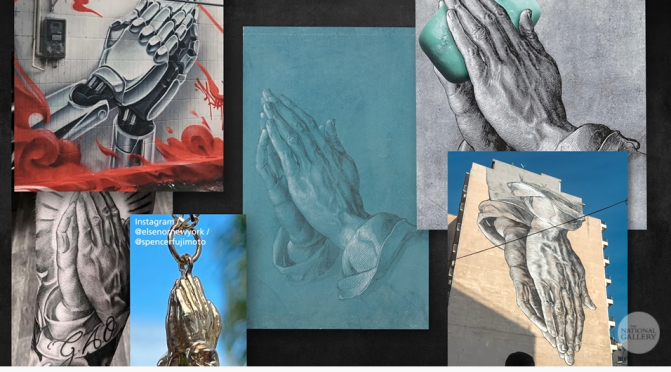
History Of Art: Albrecht Dürer’s Lasting Influence
Even if you don’t know the name, chances are you’ve seen a reproduction of one of his prints. What is it about his work that has made it last? Through paintings, drawings, prints, and letters, our exhibition ‘Dürer’s Journeys: Travels of a Renaissance Artist’ brings to life this art history megastar and the people and places he visited.
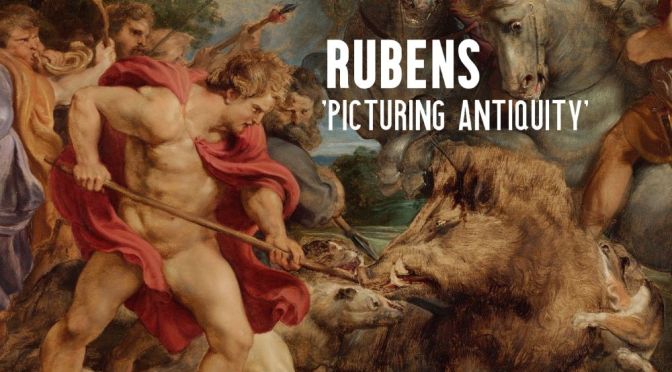
Art History: ‘Rubens – Picturing Antiquity’
“I think it just shows very well how Rubens worked, how he got the inspiration from antiquity, but he transforms it into something completely new and very alive.”
The Flemish Baroque painter Peter Paul Rubens is most famous for his dynamic, colorful renderings of religious scenes and mythological stories. Yet Rubens’s work was also deeply inspired by the art of the past. He was a keen student of classical antiquity, engaging with ancient sculptures, coins, gems, and cameos both at home and in his travels through Italy. His friendships with antiquarians, patrons, and scholars provided a network for vibrant intellectual exchanges that informed the artist’s work.
In this episode, Getty curators Anne T. Woollett, Davide Gasparotto, and Jeffrey Spier discuss their exhibition Rubens: Picturing Antiquity, which explores how Rubens was affected by and, in turn, transformed the classical past in his paintings, drawings, and designs. The exhibition, which received major support from Jo Carole and Ronald S. Lauder and generous support from the Leonetti/O’Connell Family Foundation, is on view at the Getty Villa through January 24, 2022.
For images, transcripts, and more, visit https://blogs.getty.edu/iris/podcast-peter-paul-rubens-and-the-arts-of-antiquity
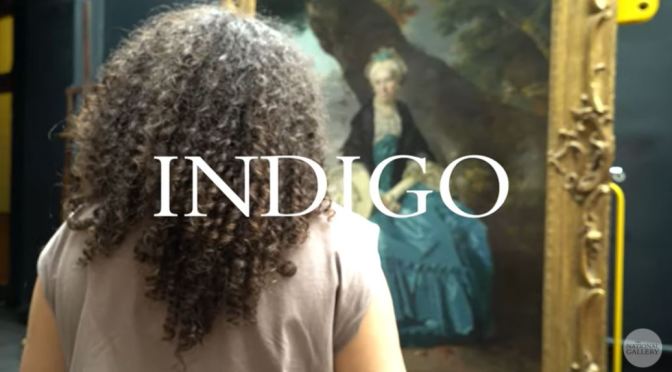
Art & Culture: History Of Indigo (National Gallery)
Our Conservation Fellow, Kendall Francis takes a closer look at indigo, a blue dye and pigment extracted from the leaves of plants, and how it is used and represented in paintings in our collection.
Kendall’s research reveals histories that are not explicitly portrayed in the paintings and highlights the important contributions from a wider range of people, including the enslaved people who cultivated the crops and extracted the indigo against their will. Supported using public funding by Arts Council England.
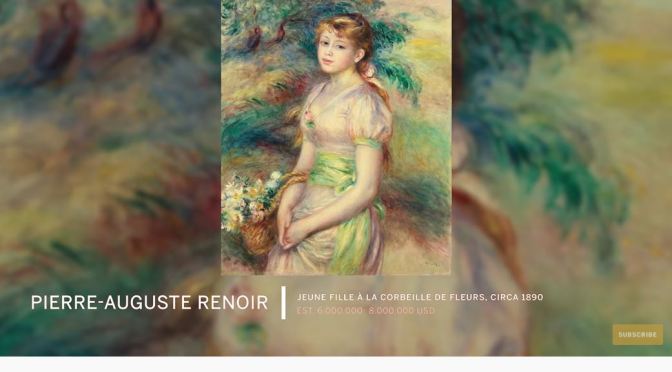
Art History: Auguste Renoir’s ‘Jeune Fille’
In this video, join Thomas Boyd-Bowman in an exploration of Pierre-Auguste Renoir’s Jeune fille à la corbeille de fleurs, a highlight of Sotheby’s Modern Art Evening Auction in November. Painted at one of the finest moments in Renoir’s career, Jeune fille à la corbeille de fleurs radiates with color and embodies the masterful portraiture for which he is best remembered. It was first acquired by the legendary art dealer Paul Durand-Ruel and later purchased by Dr. Albert Barnes of the esteemed Barnes Foundation, only to be returned to Durand-Ruel a few years later. With this extraordinary provenance, this painting exemplifies the triumph of impressionism from the perspective of artist, dealer and collector.
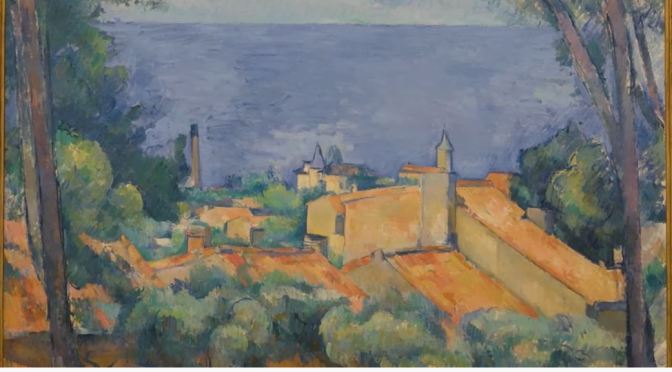
Views: “L’Estaque Aux Toits Rouges” by Paul Cézanne
L’Estaque aux toits rouges by Paul Cézanne is one of the finest views of L’Estaque, the Provençal fishing village where the artist forged a radical new way of depicting the world around him.
Exhibited in 1936 and hidden away ever since, this remarkable piece will finally come back on view as part of The Cox Collection: The Story of Impressionism, taking place at Christie’s New York on 11 November.
While Cézanne is primarily associated with Aix-en-Provence, the village of L’Estaque near Marseille was a place that he returned to again and again when he sought sanctuary. His relationship with the village began when he holidayed there as a child with his mother. Then, in 1870, when Cézanne left Paris to avoid conscription into the army following the start of the Franco-Prussian War, he escaped to L’Estaque.
Learn More: https://www.christies.com/features/ce…
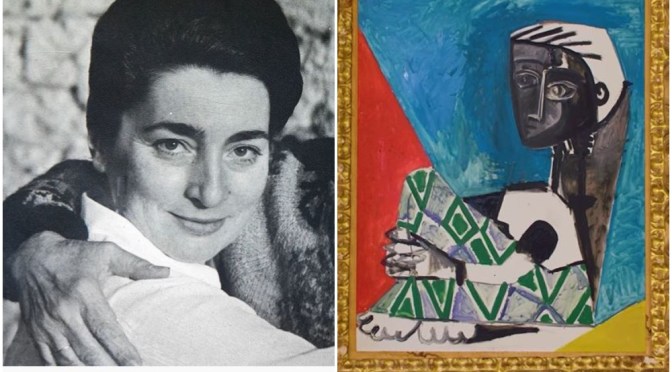
Art: Jacqueline Roque – Picasso’s Ultimate Muse
Picasso’s stunning painting ‘Femme Accroupie’, offered in Sotheby’s upcoming Modern Art Evening Sale (9 October | Hong Kong), is a portrait of his ultimate muse and wife, Jacqueline Roque. In this latest Expert Voices, Sotheby’s Chairman Brooke Lampley tells us of the huge artistic inspiration Jacqueline had on Picasso. Discover how this work was the final summation of an entire series of portraits of her, and how it was inspired by master artists of previous centuries.

Art History: Whistler’s ‘Comte Robert de Montesquiou-Fezensac’
In the final episode of “Cocktails with a Curator,” Deputy Director and Peter Jay Sharp Chief Curator Xavier F. Salomon bids audiences farewell with a discussion of “Arrangement in Black and Gold: Comte Robert de Montesquiou-Fezensac” by James McNeill Whistler, the best-represented artist at the Frick with twenty works in the collection. Whistler met the eccentric poet and aristocrat depicted in the painting in 1885, and they soon became fast friends, with Montesquiou sitting for the portrait in 1891–92, making it the most modern work on display at Frick Madison. This week’s complementary cocktail is the Black Manhattan, a spin-off of the cocktail from the very first episode of “Cocktails with a Curator.” Xavier, Aimee, and Giulio extend their thanks to all those who made this program possible and, of course, to you, the viewers—cheers! To view this painting (or object) in detail, please visit our website: https://www.frick.org/whistlerblackgold

The Arts: Rembrandt And The History Of Mahogany
In the inaugural episode of “Where in the World?,” Curator Aimee Ng explores the history of mahogany, a material hidden beneath the surface of a Rembrandt portrait and sourced oceans away from the famed artist’s homeland.
The Frick’s temporary move to Frick Madison has prompted new ways of looking at our works of art. The reframing of the collection sheds light on the fact that the Frick’s art, although predominantly European, is undeniably linked to the world beyond Europe. In this series, we’re exploring some of these stories, asking “where in the world” we can find new connections to familiar objects.
To view the Rembrandt painting in detail, please visit our website: https://www.frick.org/rembrandtruts

Cocktails With A Curator: Bruegel The Elder’s “The Three Soldiers” (Video)
n this week’s episode of “Cocktails with a Curator,” Deputy Director and Peter Jay Sharp Chief Curator Xavier F. Salomon discusses “The Three Soldiers” by Pieter Bruegel the Elder, one of only a few works by the artist outside Europe. Bruegel is best known for his lively and often comical peasant scenes, but here he takes as his subject three landsknechts, or German mercenary foot soldiers.
Currently on view on the second floor of Frick Madison, this grisaille painting shows a drummer, a standard-bearer, and a fifer outfitted in flamboyant costume (and presumably urging their fellow soldiers into battle). This week’s complementary cocktail is the Radler, a mixture of lemonade and lager favored in German-speaking lands north of the Alps.
To view this painting in detail, please visit our website: https://www.frick.org/bruegel3soldiers
 Boomers Daily