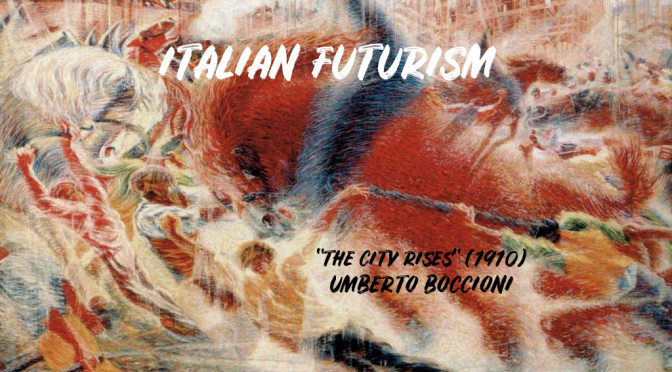
An introduction to Futurism, the dynamic movement that revolutionised Italian art at the beginning of the twentieth century. Obsessed with speed, the Futurists created art that captured the dawning of a new age. Also included is a closer look at Umberto Boccioni a founding member of the group, who died tragically young during the First World War. An extract from the Christie’s Education online course, Modern Art.
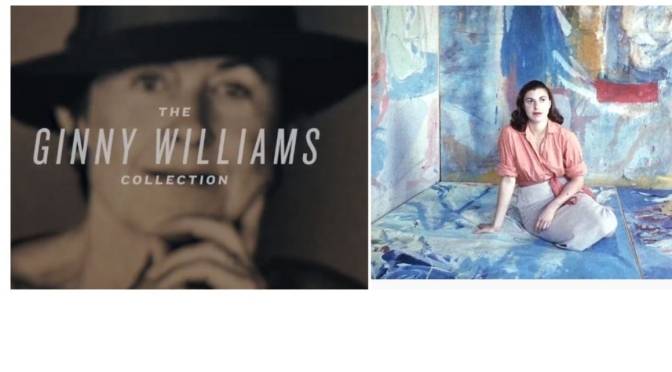
As an early patron and friend of artists including Louise Bourgoeis, Ann Hamilton and Lee Krasner, Ginny Williams was revered for her pioneering support. “Ginny saw the Art World as this wonderful and diverse ecosystem, and she loved all parts of it” Sotheby’s Chariman Amy Cappallazzo fondly recalls, “she had a tremendously rich relationship with so many artists”.
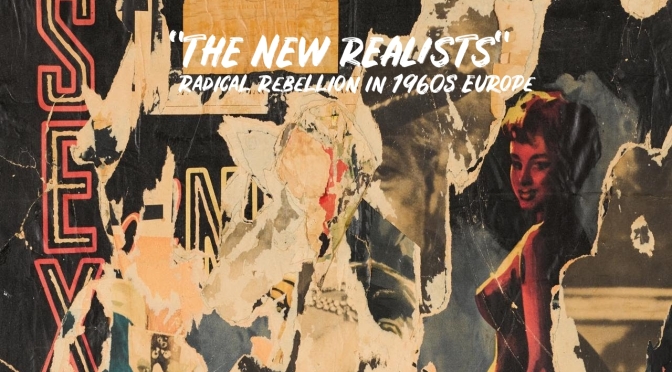
In the 1960s, while America was being wowed by Pop art, Europe had its own answer to bringing life and art closer together. In this episode of Expert Voices, learn about Nouveau Réalism – a groundbreaking movement in which artists created radical and rebellious sculptures and paintings in protest against the rise of consumerism.
Our upcoming Art Contemporain Day Sale (24 June | Paris) features an exceptional private European collection of historical New Realist art, including works by Niki de Saint Phalle, Arman, Daniel Spoerri, Mimmo Rotella and Christo and Jean-Claude.
An extract from the Christie’s Education online course, The Great Masters of European Art 1350–1850. Florence in the 1400s, a city of wealthy guilds and merchants, in particular the Medici family, who commissioned astonishing works of art to show off their success and cultivation.
Here we are introduced to one of the great artists the Medicis favoured: Sandro Botticelli, and his most famous works: ‘Primavera’ and ‘The Birth of Venus’.
Alessandro di Mariano di Vanni Filipepi (c. 1445 – May 17, 1510), known as Sandro Botticelli, was an Italian painter of the Early Renaissance. He belonged to the Florentine School under the patronage of Lorenzo de’ Medici, a movement that Giorgio Vasari would characterize less than a hundred years later in his Vita of Botticelli as a “golden age”. Botticelli’s posthumous reputation suffered until the late 19th century; since then, his work has been seen to represent the linear grace of Early Renaissance painting.
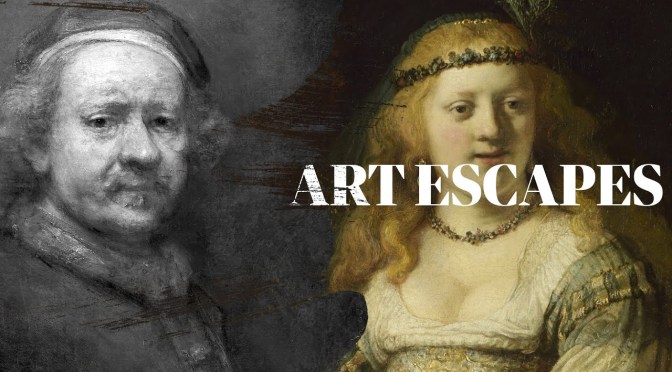
A revealing look at Rembrandt’s most intimate portraits, on display in the locked-down National Gallery in London. The Guardian’s art critic Jonathan Jones reveals his favourite portraits, of vulnerable and unpretentious people the artist had known and loved. Jones asks what we can learn from these great masterpieces, especially during lockdown.
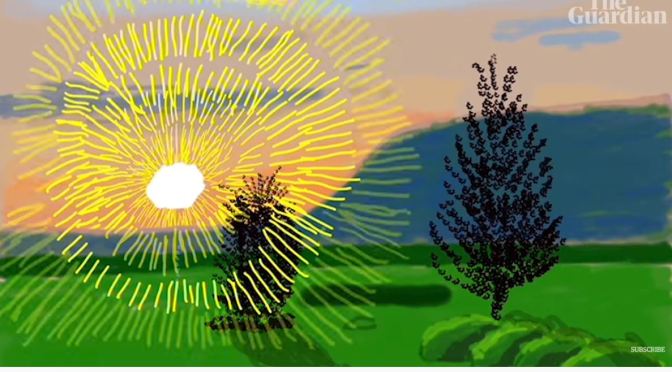
David Hockney created a glorious depiction of a sunrise on his iPad in April and emailed it from his lockdown in Normandy to the Guardian’s art critic Jonathan Jones. He has made pictures from nature every day through this bitter spring as his artistic stand against despair – and what is more hopeful than the sun coming up? Jones describes how the picture reminded him of all the sunrises shut away inside the National Gallery, in London. From Bellini to Monet, Titian to Turner, a private view of some of the greatest masters’ sunrises
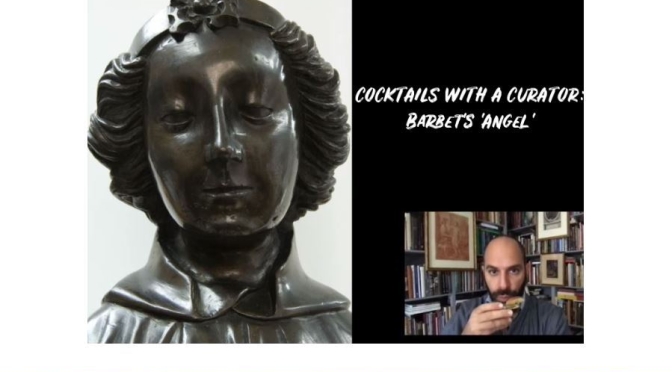
In this week’s episode of “Cocktails with a Curator,” discover the fascinating history of Jean Barbet’s Angel, an incredibly rare bronze from fifteenth-century France whose origins are shrouded in mystery. Xavier F. Salomon, Peter Jay Sharp Chief Curator, discusses the royal cannon-maker who cast the sculpture and the possibility that it once resided in Paris’s Sainte-Chapelle. This week’s complementary cocktail is the Angel Face, customarily garnished with an apple slice.
Painted in 1996, David Hockney’s “30 Sunflowers” is a bold and luscious still life of contemporary times. In this episode of Expert Voices, discover how Hockney was inspired to paint “30 Sunflowers” after a decade hiatus, and hear Hockney himself explain the influence of the Old Masters in this vivid work.
Peter Paul Rubens was among the most influential artists in 17th-century Europe. Despite a childhood marred by a scandal that landed his father in prison, Rubens rose to become not only a prominent court painter in the Spanish Netherlands but also a lauded diplomat who worked across Western Europe.
With countless biographies written about the artist and exhibitions of his work continuing into the present day, the legacy of this Flemish Baroque artist is hard to overstate.
In this episode, Getty curator Anne Woollett discusses the life of Rubens through 17th-century biographies by three authors: Giovanni Baglione, Joachim von Sandrart, and Roger de Piles.
Sir Peter Paul Rubens was a Flemish artist and diplomat. He is considered the most influential artist of Flemish Baroque tradition. Rubens’s highly charged compositions reference erudite aspects of classical and Christian history.
In this episode of “Travels with a Curator,” Xavier F. Salomon, Peter Jay Sharp Chief Curator, brings us to the church of Santa Maria delle Carceri in Prato, Italy, to explore the original home of one of the Frick’s spectacular bronzes, “St. John Baptizing” by Francesco da Sangallo. Discover the family connections that link this important sculpture to the church and retrace the history of the bronze from its creation in the sixteenth century to its acquisition by Henry Clay Frick in 1916.
News, Views and Reviews For The Intellectually Curious

 In the 1960s, while America was being wowed by Pop art, Europe had its own answer to bringing life and art closer together. In this episode of Expert Voices, learn about Nouveau Réalism – a groundbreaking movement in which artists created radical and rebellious sculptures and paintings in protest against the rise of consumerism.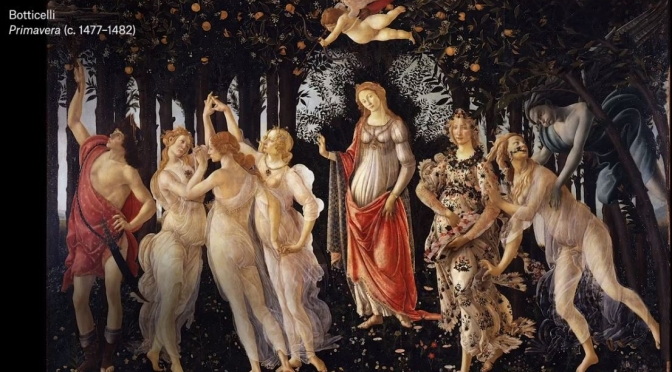
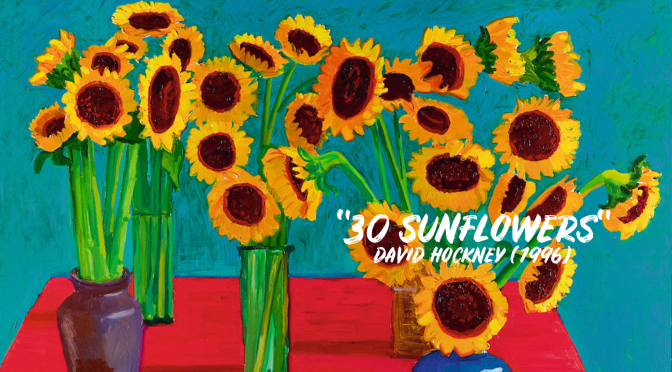
 Painted in 1996, David Hockney’s “30 Sunflowers” is a bold and luscious still life of contemporary times. In this episode of Expert Voices, discover how Hockney was inspired to paint “30 Sunflowers” after a decade hiatus, and hear Hockney himself explain the influence of the Old Masters in this vivid work.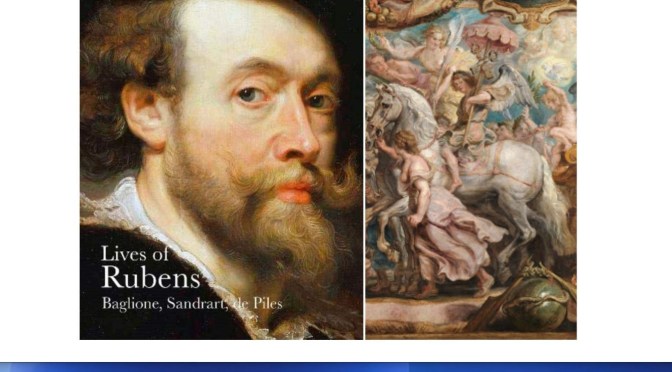
 Peter Paul Rubens was among the most influential artists in 17th-century Europe. Despite a childhood marred by a scandal that landed his father in prison, Rubens rose to become not only a prominent court painter in the Spanish Netherlands but also a lauded diplomat who worked across Western Europe.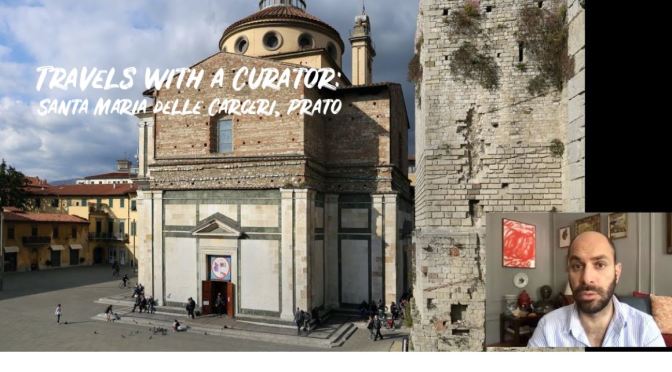
 Boomers Daily