Tag Archives: Art History

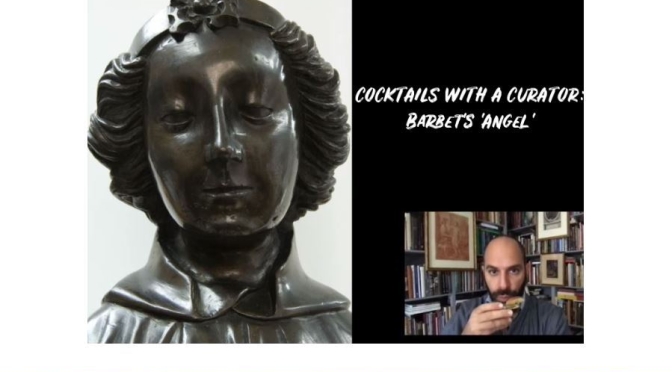
Cocktails With A Curator: Barbet’s ‘Angel’ (The Frick)

In this week’s episode of “Cocktails with a Curator,” discover the fascinating history of Jean Barbet’s Angel, an incredibly rare bronze from fifteenth-century France whose origins are shrouded in mystery. Xavier F. Salomon, Peter Jay Sharp Chief Curator, discusses the royal cannon-maker who cast the sculpture and the possibility that it once resided in Paris’s Sainte-Chapelle. This week’s complementary cocktail is the Angel Face, customarily garnished with an apple slice.

To see this bronze sculpture in detail, please visit our website: https://collections.frick.org/objects/35


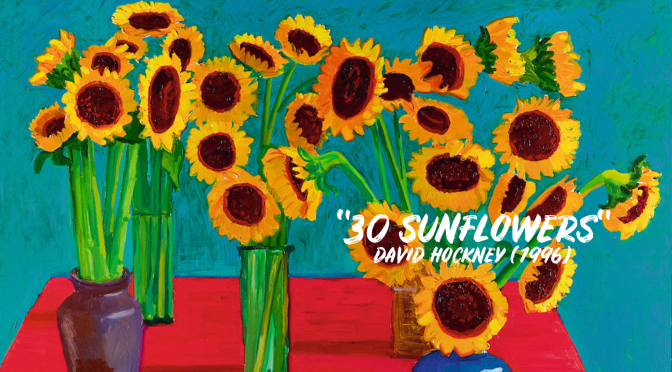
Fine Art: “30 Sunflowers” By David Hockney (1996)

Sotheby'sPainted in 1996, David Hockney’s “30 Sunflowers” is a bold and luscious still life of contemporary times. In this episode of Expert Voices, discover how Hockney was inspired to paint “30 Sunflowers” after a decade hiatus, and hear Hockney himself explain the influence of the Old Masters in this vivid work.

Website

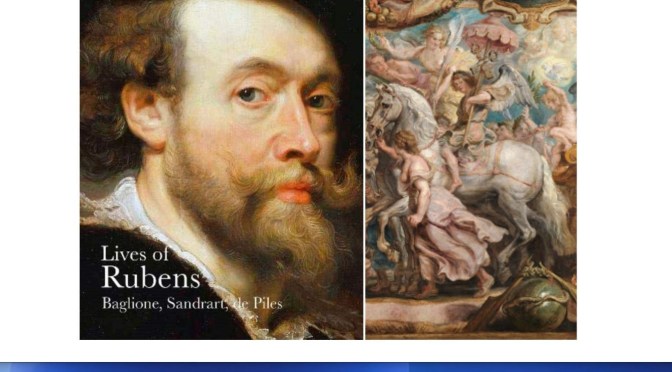
Art: “The Lives Of Rubens” Through 17-Century Biographies (The Getty)

Art + Ideas - Getty PodcastsPeter Paul Rubens was among the most influential artists in 17th-century Europe. Despite a childhood marred by a scandal that landed his father in prison, Rubens rose to become not only a prominent court painter in the Spanish Netherlands but also a lauded diplomat who worked across Western Europe.

With countless biographies written about the artist and exhibitions of his work continuing into the present day, the legacy of this Flemish Baroque artist is hard to overstate.

In this episode, Getty curator Anne Woollett discusses the life of Rubens through 17th-century biographies by three authors: Giovanni Baglione, Joachim von Sandrart, and Roger de Piles.

For images, transcripts, and more, visit getty.edu/podcasts.

Sir Peter Paul Rubens was a Flemish artist and diplomat. He is considered the most influential artist of Flemish Baroque tradition. Rubens’s highly charged compositions reference erudite aspects of classical and Christian history.

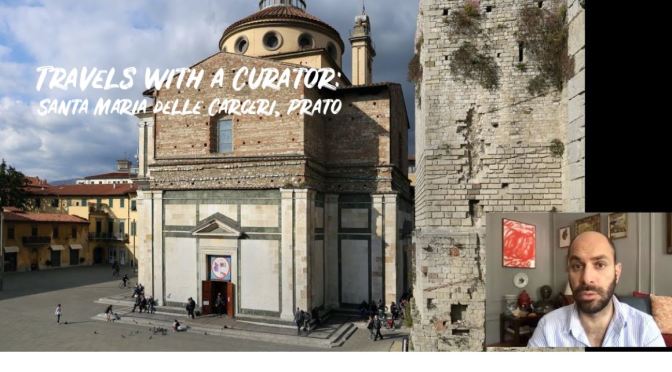
Travels With A Curator: “Santa Maria delle Carceri, Prato” (The Frick)

In this episode of “Travels with a Curator,” Xavier F. Salomon, Peter Jay Sharp Chief Curator, brings us to the church of Santa Maria delle Carceri in Prato, Italy, to explore the original home of one of the Frick’s spectacular bronzes, “St. John Baptizing” by Francesco da Sangallo. Discover the family connections that link this important sculpture to the church and retrace the history of the bronze from its creation in the sixteenth century to its acquisition by Henry Clay Frick in 1916.

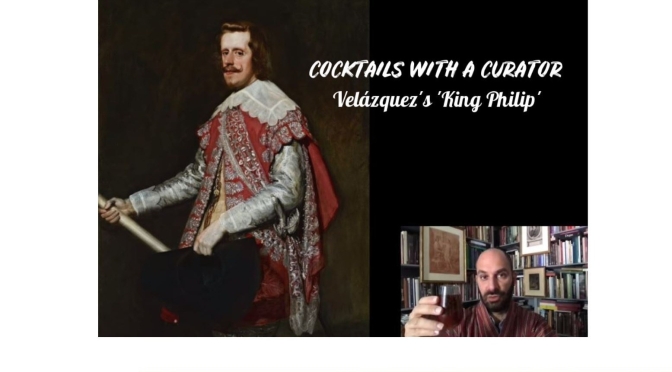
Art: “Cocktails With A Curator – Velázquez’s ‘King Philip'” (The Frick)

In this week’s episode of “Cocktails with a Curator,” join Xavier F. Salomon, Peter Jay Sharp Chief Curator, as he discusses the sole Velázquez painting at the Frick, “King Philip IV of Spain,” while enjoying a Fitifiti, the popular Spanish cocktail. Examine the extraordinary details and painterly skills that illustrate why the artist is regarded by many (including Xavier) as the greatest European painter who ever lived, and why this work was Henry Clay Frick’s favorite

Read more

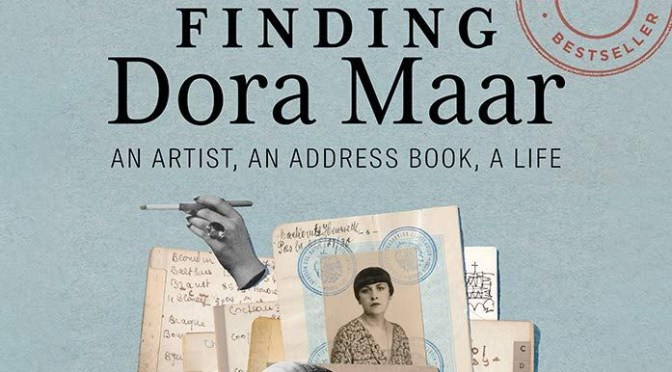
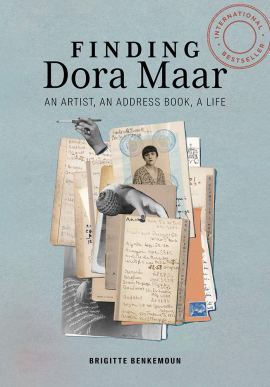
New Art History Books: “Finding Dora Maar – An Artist, An Address Book, A Life” – Brigitte Benkemoun

Finding Doram MaarIn search of a replacement for his lost Hermès agenda, Brigitte Benkemoun’s husband buys a vintage diary on eBay. When it arrives, she opens it and finds inside private notes dating back to 1951—twenty pages of phone numbers and addresses for Balthus, Brassaï, André Breton, Jean Cocteau, Paul Éluard, Leonor Fini, Jacqueline Lamba, and other artistic luminaries of the European avant-garde.

After realizing that the address book belonged to Dora Maar—Picasso’s famous “Weeping Woman” and a brilliant artist in her own right—Benkemoun embarks on a two-year voyage of discovery to learn more about this provocative, passionate, and enigmatic woman, and the role that each of these figures played in her life.

Longlisted for the prestigious literary award Prix Renaudot, Finding Dora Maar is a fascinating and breathtaking portrait of the artist.

Brigitte Benkemoun is a journalist and writer. She is the author of La petite fille sur la photo (2012) and Albert le Magnifique (2016). Jody Gladding is a poet and translator. She has translated some thirty books from French, including, most recently, Roland Barthes’s Album: Unpublished Correspondence and Texts (2018), Michel Pastoureau’s Yellow: The History of a Color (2019), and Jean Giono’s Occupation Journal (2020).

Read more or purchase

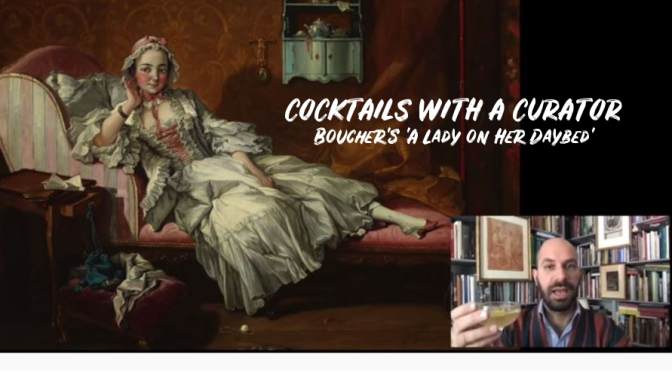
Cocktails With A Curator: Boucher’s ‘A Lady On Her Daybed’ (Frick Collection)

In this episode of “Cocktails with a Curator,” Xavier F. Salomon, Peter Jay Sharp Chief Curator, examines the life and work of French painter François Boucher, with a focus on “A Lady on Her Daybed.” Discover why Boucher was said to epitomize the taste of the eighteenth century.

This week’s complementary cocktail has a kick: the potent French 75, named after the powerful French 75mm field gun.

Read more

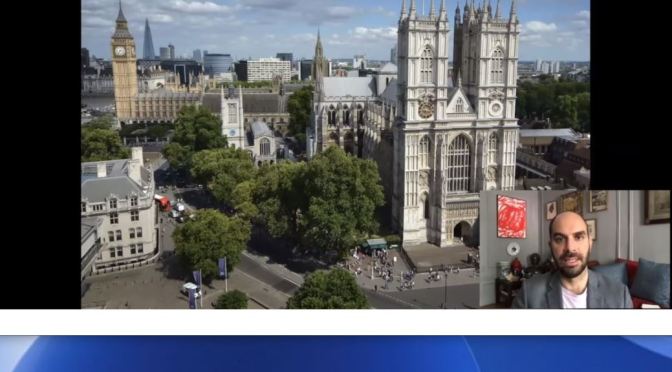
History: “Travels With A Curator: Westminster Abbey, London” (The Frick)

In this episode of “Travels with a Curator,” we visit the world-famous Westminster Abbey in London, with Xavier F. Salomon, Peter Jay Sharp Chief Curator. Xavier shares connections between Westminster Abbey and the Frick through an examination of the life of General John Burgoyne, a playwright, parliamentarian, and military officer buried in the Abbey’s north cloister. Sir Joshua Reynolds’s portrait of Burgoyne was acquired by The Frick Collection in 1943.

To see this painting in detail, please visit our website: https://collections.frick.org/objects.

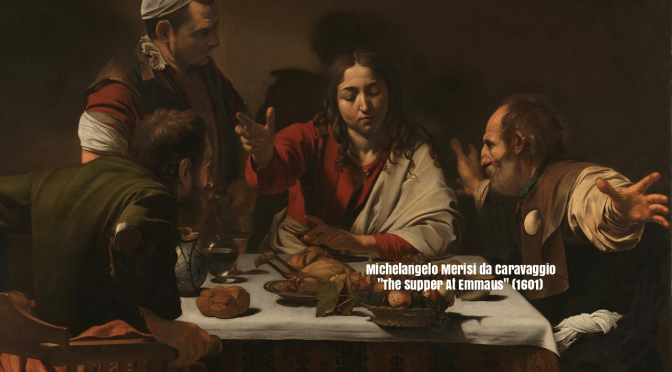
Art History: “The Lives of Caravaggio” (The Getty)

Art + Ideas - Getty PodcastsMichelangelo Merisi da Caravaggio is one of the most admired painters of the late 16th and early 17th centuries. Known for his powerful, dramatically lit compositions, Caravaggio depicted violence and the human form with a degree of realism unprecedented at the time. He was among the most famous painters in Rome—but not only because of his skill as an artist.

Michelangelo Merisi da CaravaggiCaravaggio was also notorious for his wild life and shocking temper. After being sentenced to death for murder, he fled Rome and died in exile at age 38 . Three biographies written in the decades after his death constitute nearly all that is known about the enigmatic artist.

In this episode, Getty curator and expert on Italian painting Davide Gasparatto discusses Caravaggio and the role these early biographies, by Giulio Mancini, Giovanni Baglione, and Giovanni Pietro Bellori, played in defining Caravaggio’s legacy.

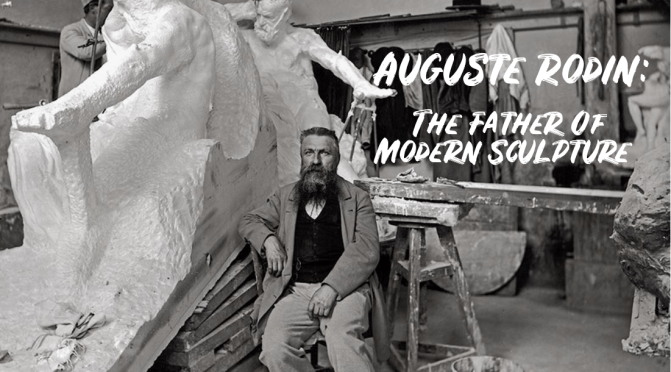
Art History: “Auguste Rodin – The Father Of Modern Sculpture”

From Christie’s online magazine (May 2020):

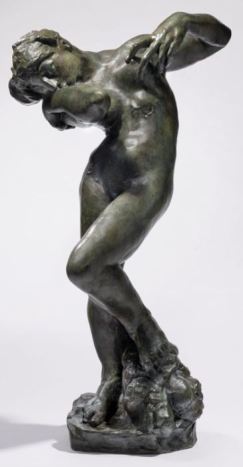
Auguste Rodin (1840-1917) Meditation, small model, type I version

Rodin travelled to Italy in 1875, a trip described by the late art historian Kirk Varnedoe as, ‘one of the seminal events in modern art’.

Here, in his mid-thirties, he fell under the spell of the Renaissance master, Michelangelo. His monumental, exaggerated nude figures would have a deep and lasting influence on the artist. ‘My liberation from academicism was via Michelangelo,’ Rodin later recalled. ‘He is the bridge by which I passed from one circle to another.’

Auguste Rodin (1840-1917) is renowned for breathing life into clay, creating naturalistic, often vigorously modelled sculptures which convey intense human emotions: love, ecstasy, agony or grief. Breaking the rules of academic convention and classical idealism, Rodin ushered in a new form of highly expressive sculpture that went on to influence generations of artists that followed.

Christie's logo

Read full article at Christie’s