Situated on a sweeping two-acre lot, this 452-square-foot abode is just right for two.
In order to create a small yet comfortable vacation home for a young couple, the multidisciplinary workshop TACO, or Taller de Arquitectura Contextual, sited it in the corner of a two-acre lot, then employed built-in elements for an “intuitive” interior layout.
Rough stucco mixed with artisanal paint conveys warmth and texture, while precisely placed apertures connect the interior to the remote setting. “The objective was to achieve a reflective and contemplative place that links the occupant with the surrounding wild landscape,” said the firm.
Fitzroy Park, London N6 A stunning 6,200 sq ft space, this remarkable and sprawling house rises up through its surrounding landscaped gardens. Described by the Architects’ Journal as having a “beguilingly cave-like relationship to the outside world”, it is a bold vision of contemporary architecture in which the natural world has been thoroughly entwined with the design.
Recline by the pool, listen to the artificial stream winding its way through the gardens, meander across the footbridge: this home was conceived for those long, dreamy summer days.
“The brief here was to make something that would fit very well into nature” explains Thorsteinsson in the video interview, which was shot by Dezeen at White City House in London on the day of the AHEAD Europe ceremony. “We wanted basically to have continuity between nature, the interior and exterior,” he continued.
Design Group Italia chief design officer Sigurdur Thorsteinsson explains how The Retreat at Blue Lagoon Iceland immerses guests in nature in this video produced by Dezeen for the AHEAD Awards.
The 62-room resort hotel is embedded in the lava formations and turquoise geothermal pools of Iceland’s Blue Lagoon complex, which is situated within the UNESCO Global Geopark.
The Retreat at Blue Lagoon Iceland was awarded in the Resort Hotel category at the AHEAD Europe hospitality awards, which took place in London in November.
Design Group Italia handled the project’s interiors, in collaboration with Icelandic firm Basalt Architects who were responsible for the architecture of the resort.
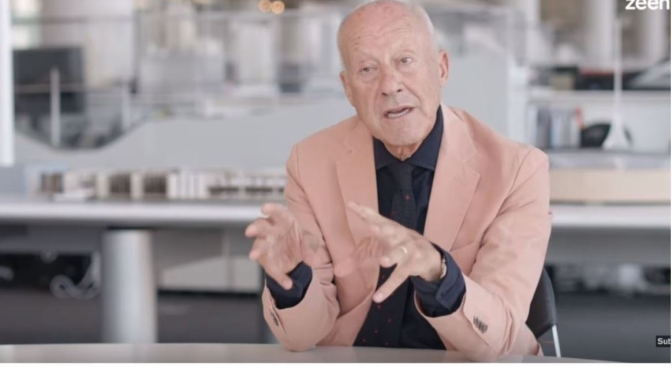
“High-tech is something to do with the expression of the technology – the means by which the building stands,” the award-winning architect told Dezeen in an exclusive interview at his London practice.
British architect Norman Foster reflects on his first high-tech building and how it shaped offices to come, in this exclusive video produced by Dezeen. Named after the electronics manufacturer that commissioned the building,
Reliance Controls was an industrial facility located in Swindon in Southwest England. Completed in 1967, the building was the last to be designed by Team 4, an architecture practice comprising Foster, Richard Rogers, Su Brumwell and Wendy Cheesman, before the group disbanded. The single-storey rectangular shed, which was designed to house the company’s factory and offices, was one of the first buildings labelled as high-tech – a style of architecture that Foster defines as a celebration of a building’s functional components.
Reliance Controls was the first building to dissolve the traditional boundaries between factory workers and office workers. “There was only a glass screen that would separate the assembly line for electronics from those who are managing the sales force,” said Foster. “They would all share the same kitchen and dining facilities, the same bathrooms. That we take for granted now but at that time it was it was really revolutionary – unheard of.”
“The Academy Museum gives us the opportunity to honor the past while creating a building for the future—in fact, for the possibility of many futures. The historic Saban Building is a wonderful example of Streamline Moderne style, which preserves the way people envisioned the future in 1939. The new structure, the Sphere Building, is a form that seems to lift off the ground into the perpetual, imaginary voyage through space and time that is moviegoing. By connecting these two experiences we create something that is itself like a movie. You go from sequence to sequence, from the exhibition galleries to the film theater and the terrace, with everything blending into one experience.”
Renzo Piano, Architect
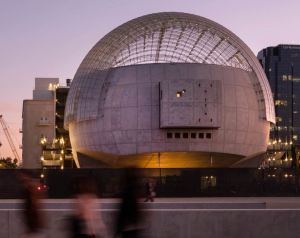
When it opens in the heart of Los Angeles, at the intersection of Wilshire Boulevard and Fairfax Avenue, the Academy Museum of Motion Pictures will be the world’s premier movie museum.
Situated on the famed “Miracle Mile,” the museum will preserve and breathe new life into the former 1939 May Company department store, now re-named the Saban Building. Celebrating its history and imagining new possibilities, the additions to the building that date from 1946 have been removed and replaced with a spherical building that features the 1,000-seat David Geffen Theater and the Dolby Family Terrace with views towards Hollywood. The revitalized campus will feature more than 50,000 square feet of gallery space, two theaters, cutting-edge project spaces, an outdoor piazza, the rooftop terrace, an active education studio, a restaurant, and store.
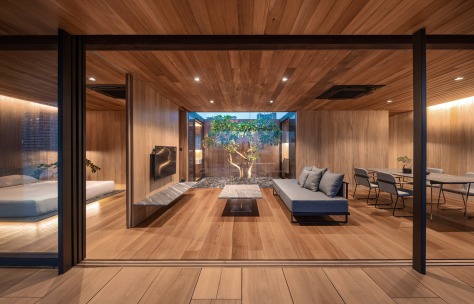
The project’s owner runs a 5-story apartment. In the past, the rooftop was only used to keep water tanks, leaving a lot of empty space. The owner, therefore, wished to build a small house there for his own use. The rooftop location is an interestingly unique context that sets this project apart from other housing designs. Instead of a normal ground, this house has a concrete courtyard. Trees are replaced with vertical lines of tall buildings in the Lat Phrao district.
Our idea was not to make this house feel like a building, but to free it from form. We wanted it to be just a borderless box that emerges out of nowhere in the sky, as if the thickness of the wall and roof were non-existent, but still able to make holes in the ceiling to install curtains, air conditioners, and embed lights. Our intention was to give an illusion to onlookers that the entire ceiling was in the same straight line even though we featured a drop ceiling and a slope that was intentionally used to make the wall and ceiling look thin.
“The jury was unanimous in celebrating this inventive solution to reconfiguring a dilapidated Japanese colonial house.
A dynamic whole in constant flux, the house in unusually in tune with the differing and sometimes contradictory needs of a young family. Every space can be negotiated and adapted, encouraging the house to be an incubator for positive difference in the family unit.
Sensitivity abounds, both in the design process and the outcome. Local craftspeople were drafted in when needed; recycled elements were mixed freely with new. The result has a uniquely sloppy fit for its inhabitants, a fit that can evolve freely over time.
Ladders to the roof level encourage ongoing hide and seek. Internal space leaks into a garden, itself an outdoor room. Light penetrates in unexpected ways, and occasional views of the sky offset the otherwise congested urban setting.
Against the background of rapid development in Taipei, this project has the potential to be a ‘prototype’ that may help reevaluate the existing stock of Japanese houses.”
From Atlantis in The Spy Who Loved Me to Nathan Bateman’s ultra-modern abode in Ex Machina, big-screen villains tend to live in architectural splendor. The villain’s lair, as popularized in many of our favorite movies, is much more than where the megalomaniac goes to get some rest.
Instead, the homes of the villains are places where evil is plotted and where, often, the hero is tested and must prove him/herself. Like evil itself, the abodes of movie villains are frequently compelling and seductive. From a design standpoint, they tend to be stunning, sophisticated, envy-inducing expressions of the warped drives and desires of their occupants.
Lair, the first title in Tra Publishing’s Design + Film series, celebrates and considers several iconic villain’s lairs from recent film history. The book, strikingly designed in silver ink on black paper, explores the architectural design of these structures through architectural illustrations and renderings, photographs, essays, film analyses, interviews, and more.
Most notable is Toogood’s sensitive approach to materials. She offers two different, equally alluring solutions to the exterior cladding and the internal finishes. Both external cladding options, raw galvanised steel and dark charred timber, are suggestive of industrial or agricultural structures, making it something of a thrill to see them in a domestic setting. The building clad in raw galvanised steel will have a refined, cream-coloured interior, whilst the structure clad in dark charred timber will have an exposed plywood interior finish.
Faye Toogood’s beguiling design for Cube Haus Commissions proposes a sanctuary that suits both rural and urban contexts. With a simple pitched-roof, single-storey form, it evokes the sort of ordinary, often-ignored buildings that have been built across Britain for centuries. But this being the work of Toogood, a revered designer across multiple disciplines, the scheme that she has created is far from being artless.
“If one imagines a list of the greatest, most influential houses of the twentieth century, it seems highly likely that the mid-century period will dominate,” writes Bradbury in the book’s introduction, going on to name such famous edifices as the three famous glass houses by Philip Johnson, Ludwig Mies van der Rohe, and Lino Bo Bardi, respectively; Richard Neutra’s Kaufmann House; and Luis Barragán’s Cuadra San Cristóbal. “One could, of course, go on.…” he writes.
In the design world, is there any style that’s having more of a Renaissance moment than midcentury modern? It’s everywhere, from luxury hotels to high-end residential interiors to mainstream furniture lines from the likes of CB2 and Anthropologie, and it’s showing little sign of slowing down. In the midst of this revival, writer Dominic Bradbury, who has contributed to Architectural Digest, has compiled what might just be one of the most comprehensive books ever to be published on the subject.

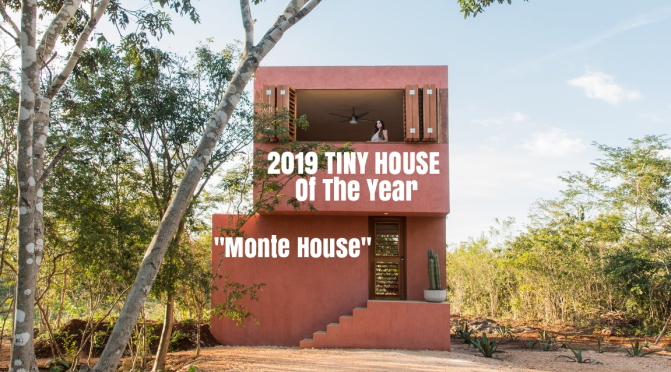
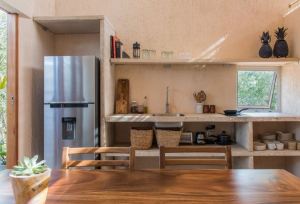 Situated on a sweeping two-acre lot, this 452-square-foot abode is just right for two.
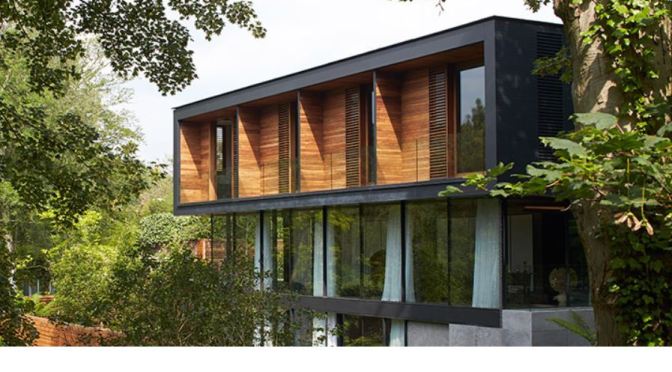
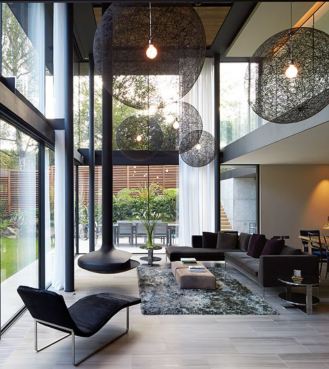 A stunning 6,200 sq ft space, this remarkable and sprawling house rises up through its surrounding landscaped gardens. Described by the Architects’ Journal as having a “beguilingly cave-like relationship to the outside world”, it is a bold vision of contemporary architecture in which the natural world has been thoroughly entwined with the design.
 Recline by the pool, listen to the artificial stream winding its way through the gardens, meander across the footbridge: this home was conceived for those long, dreamy summer days.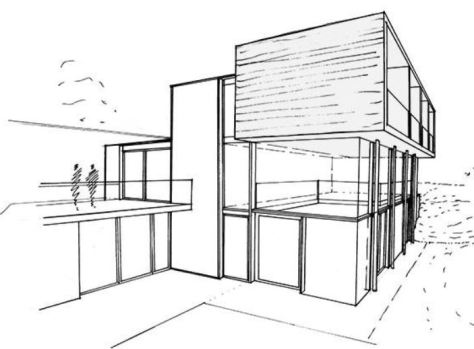


 British architect Norman Foster reflects on his first high-tech building and how it shaped offices to come, in this exclusive video produced by Dezeen. Named after the electronics manufacturer that commissioned the building,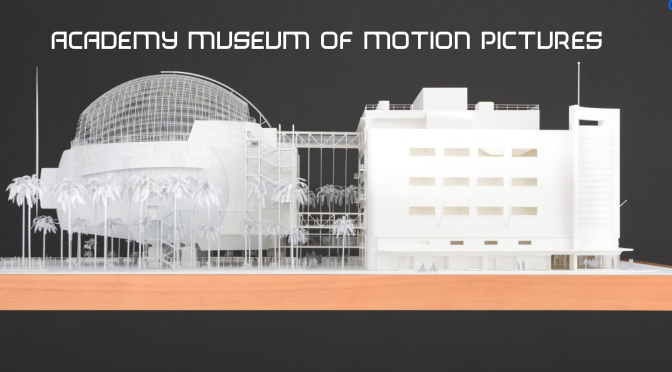
 “The Academy Museum gives us the opportunity to honor the past while creating a building for the future—in fact, for the possibility of many futures. The historic Saban Building is a wonderful example of Streamline Moderne style, which preserves the way people envisioned the future in 1939. The new structure, the Sphere Building, is a form that seems to lift off the ground into the perpetual, imaginary voyage through space and time that is moviegoing. By connecting these two experiences we create something that is itself like a movie. You go from sequence to sequence, from the exhibition galleries to the film theater and the terrace, with everything blending into one experience.”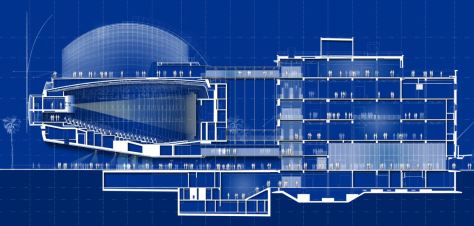
 Situated on the famed “Miracle Mile,” the museum will preserve and breathe new life into the former 1939 May Company department store, now re-named the Saban Building. Celebrating its history and imagining new possibilities, the additions to the building that date from 1946 have been removed and replaced with a spherical building that features the 1,000-seat David Geffen Theater and the Dolby Family Terrace with views towards Hollywood. The revitalized campus will feature more than 50,000 square feet of gallery space, two theaters, cutting-edge project spaces, an outdoor piazza, the rooftop terrace, an active education studio, a restaurant, and store.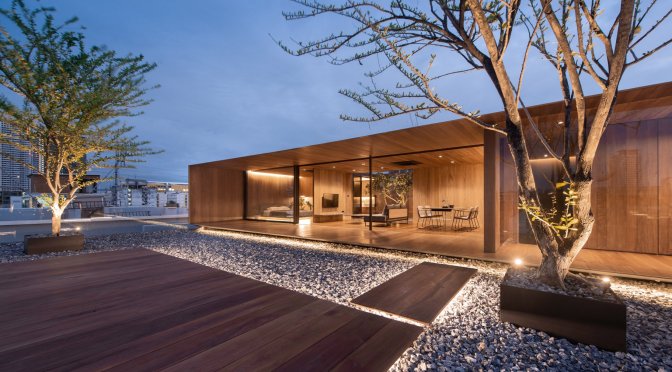
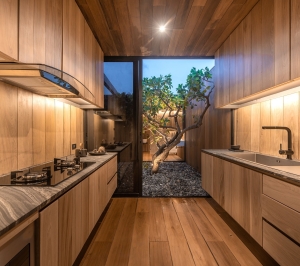 Our idea was not to make this house feel like a building, but to free it from form. We wanted it to be just a borderless box that emerges out of nowhere in the sky, as if the thickness of the wall and roof were non-existent, but still able to make holes in the ceiling to install curtains, air conditioners, and embed lights. Our intention was to give an illusion to onlookers that the entire ceiling was in the same straight line even though we featured a drop ceiling and a slope that was intentionally used to make the wall and ceiling look thin.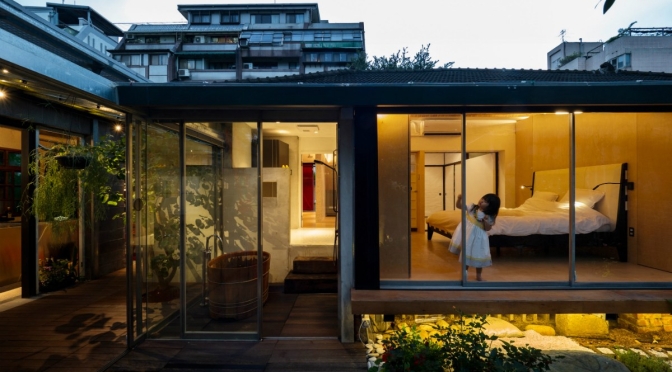
 “The jury was unanimous in celebrating this inventive solution to reconfiguring a dilapidated Japanese colonial house.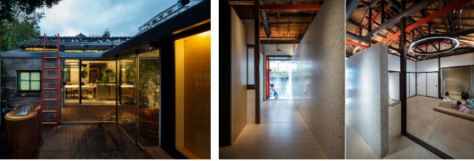

 Instead, the homes of the villains are places where evil is plotted and where, often, the hero is tested and must prove him/herself. Like evil itself, the abodes of movie villains are frequently compelling and seductive. From a design standpoint, they tend to be stunning, sophisticated, envy-inducing expressions of the warped drives and desires of their occupants.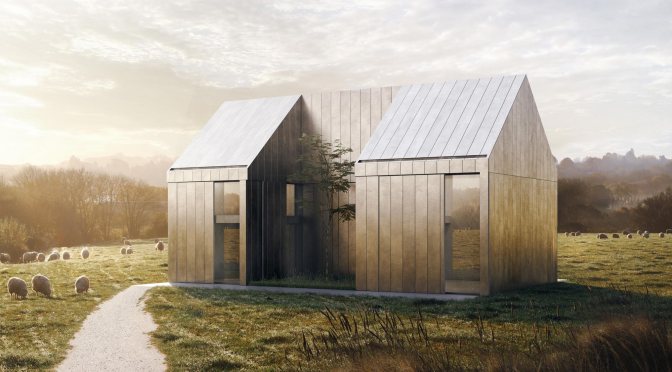
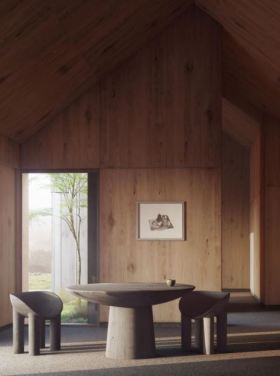 Most notable is Toogood’s sensitive approach to materials. She offers two different, equally alluring solutions to the exterior cladding and the internal finishes. Both external cladding options, raw galvanised steel and dark charred timber, are suggestive of industrial or agricultural structures, making it something of a thrill to see them in a domestic setting. The building clad in raw galvanised steel will have a refined, cream-coloured interior, whilst the structure clad in dark charred timber will have an exposed plywood interior finish.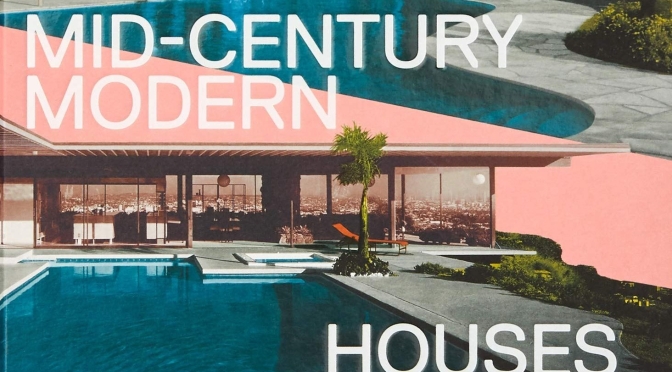
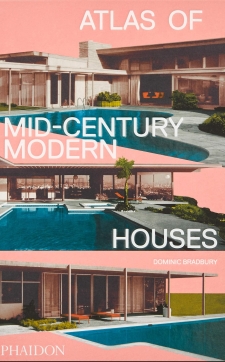 “If one imagines a list of the greatest, most influential houses of the twentieth century, it seems highly likely that the mid-century period will dominate,” writes Bradbury in the book’s introduction, going on to name such famous edifices as the three famous glass houses by Philip Johnson, Ludwig Mies van der Rohe, and Lino Bo Bardi, respectively; Richard Neutra’s Kaufmann House; and Luis Barragán’s Cuadra San Cristóbal. “One could, of course, go on.…” he writes.
 Boomers Daily