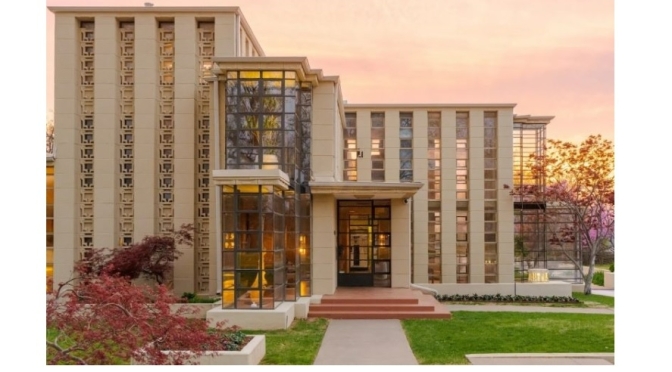
Sotheby’s International Realty – Frank Lloyd Wright’s Westhope is a masterpiece. In every project Wright undertook, the goal of enhancing and elevating human experience was always foremost. Tulsa’s Westhope was added to the National Register of Historic Places in 1972.
The mansion, constructed in 1929 is one of only three Wright-designed structures in Oklahoma and one of only a handful of homes constructed at this scale. It is made with alternating piers of square glass windows and cement “textile” blocks. A limited number of such concrete block homes were built in between Wright’s better-known Prairie and Usonian houses, making Westhope a remarkable rare jewel. It is one of the largest residences Wright ever built.
Architectural Digest waxed poetic about the beauty of Westhope in a 2022 article: True to Wright’s nature-inspired “organic architecture” ethos, furniture, built-in cabinets, and drawers at the home are all constructed of similar wood, achieving the visual and spatial harmony for which his signature aesthetic is known. Built for Wright’s cousin, Tulsa Tribune publisher Richard Lloyd Jones, it is awash in natural light. Its walls seamlessly integrate concrete blocks with 5,200 glass panes arranged in pillar-like forms, creating a vertical pattern streaming pretty natural light into the interior while keeping all who enter visually connected to the ever-changing landscape.
The home’s distinctly public and private spaces make it perfect for entertaining and eminently livable. At slightly more than 10,000 square feet, there are 5 bedrooms, 4.1 baths and a large reception area which flows into the dining room. The home’s placement on the 1.5 acre grounds is classic Frank Lloyd Wright. He nestled it perfectly among the trees and added a lovely pool and outdoor living spaces. To purchase Westhope is to become the steward of a living masterpiece, a timeless treasure, an iconic residence awaiting its next great chapter.
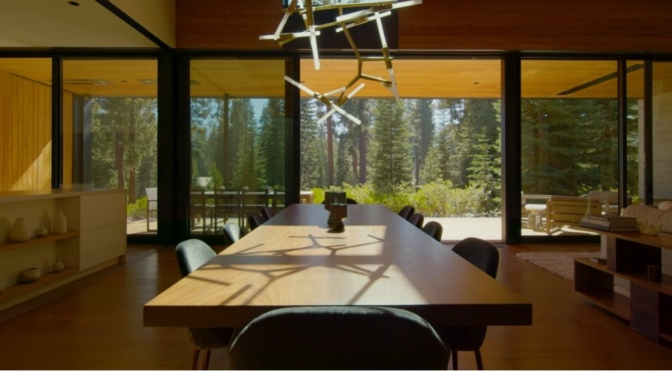
The Local Project – (May 2, 2023) – Tucked into an alpine environment, Forest House by Faulkner Architects is a cabin in the woods surrounded by thick pine trees, Fir trees and basalt rock.
Video timeline:00:00 – Introduction to the Cabin in the Woods 00:22 – The Site and Surrounding Landscape 00:38 – Saving the Landscape Around the Home 00:55 – The Clients and the Initial Brief 01:44 – A Concealed Entry 02:00 – A Walkthrough of the Home 02:38 – An Experience Space 02:58 – Working with the Sun 03:25 – A Focus on Sustainability 03:49 – The Materials Used 04:09 – A Reflection of the Surrounding Landscape 04:35 – The Most Exciting Space and its Successes
Desiring to save and protect the landscape, the architects saved 95 per cent of the trees on the property by leaving the front land largely untouched. As the clients delivered a simple brief with an open mindset, the architects were able to create a cabin in the woods that respected its surrounds and did not fall to the arbitrary aesthetics of larger homes in the area. Due to its nature-rich location, the home remains neutral and respective by allowing the landscape to breathe and embrace its structure.
As the house tour moves inside, the front of the home opens into the living, dining and kitchen areas. Tucked behind the kitchen is a small family room, while an addition of a hidden office allows for further separation of spaces where the clients can find a place to work, study and rest. Additionally, the master suite has been left on the main level, while the three ensuite guest rooms are positioned upstairs for increased separation of private and public spaces. Described as a cabin in the woods that is an atmospheric exercise in form and light, the architects began the process of designing Forest House by looking to the sun.
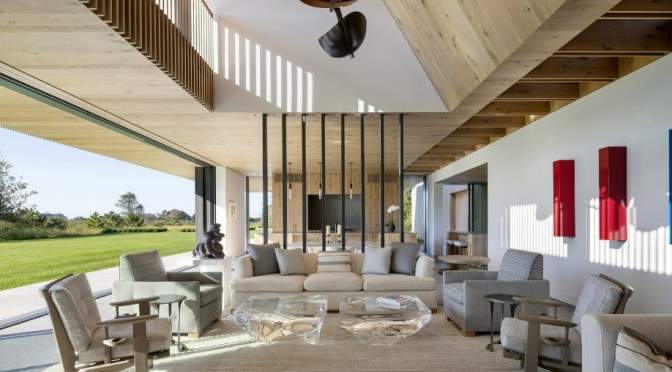
The Local Project – (April 28, 2023) – Inside an heirloom home, unification lies at the centre. In designing Wainscott Residence, Bates Masi + Architects considers the fabric of the area and the immediate and future needs of the house.
Video timeline:00:00 – Introduction to the Heirloom Home 00:22 – The Salt Box 00:47 – Acknowledging the Culture of Place 00:57 – The Brief 01:40 – A Walkthrough of the Heirloom Home 02:06 – The Art Cube 02:39 – Intertwining Domestic and Vacation Living 02:58 – The Future Needs of the Materials 03:41 – The Interiors Palette 04:07 – Unifying the Home and Immersing in its Surrounds 04:55 – Coming Together to Form One Voice
Its structure and materiality connect the residing family to the landscape, art and heritage of the area, whilst also bringing them together through considered multigenerational living. Bates Masi + Architects thoughtfully responds to the needs of the future home’s inhabitants, who came with a desire to display a significant art collection inside an heirloom home, to maintain views of the landscape and to house their two adult children as the family grows.
This forms the basis of the residence’s distinct structure, which is made of three individual volumes that operate just as seamlessly separately as they do together. Wainscott Residence reveals what lies inside an heirloom home. It is inherently linked to the surrounding landscape, dominated by picturesque green lawns, trees and a distant skyline that give a fresh, vibrant feel that is echoed in the coveted art collection. The southern aspect connects to the surroundings; every south-facing room opens up to the outside, with the doors pocketed into the walls so that the house can be completely unified with the landscape.
The Local Project – (April 25, 2023) – Overlooking the city of Los Angeles, Sheats-Goldstein Residence by John Lautner and James Goldstein is an iconic and action packed home that ignites the idea that a residence is an expression of its owner.
Video timeline:00:00 – Inside the Iconic and Action Packed Home 00:49 – A Reflection of Mentality and Personality 01:16 – A 1972 Purchase of Amazing Design and Views 02:14 – The First Step in the 45-year long Renovation Process 03:14 – No Separation between Inside and Outside 03:42 – John Lautner’s Dislike of Box-like Forms 04:09 – A Focus on the Natural Elements 04:43 – The Addition of Tropical Vegetation 05:30 – A James Turrell Skyspace 06:05 – The Continuation of John Lautner’s Legacy 06:45 – Two Rebels Working in Cohesion 07:21 – Preserving History and Hard Work
Built and designed to reflect James’s life and experiences, the house asserts a dominance over the landscape with its frameless glass walls, hidden wonders and angled corners and turns. After buying the residence in 1972, James sought the help of John Lautner to re-model the home after observing the previous owner’s undesirable changes to the original design. Part of James’s wish was to return the structure’s lost character through dramatic improvements.
After John’s passing and having resided in the home for 45 years, James has continuously worked on adding to character of the iconic and action packed home, with respect to John’s original vision. Opposed to building anything that resembled a box or came to a 90-degree angle, John Lautner designed the home with angular walls, built-in furniture and open plan floor spaces. Wanting the residence to feel natural, the use of concrete floors is used to help imbue the feeling of openness, while carpets used within the home are designed to look like small stones and deepen the natural impression.
Additionally, the frameless glass wall that occupies the living room continues to unite the indoor and outdoor spaces and enables views of the tropical foliage and vegetation that surround the building. Spanning across over 1.5 hectares of hillside, the home’s landscape is saturated with thick foliage and vegetation that holds hidden walkways, ponds and open grassy areas. Additionally, the unique character of the iconic and action packed home is further emphasised with the James Turrel skyscraper. Tucked into the lower hillside of the home, the building acts as a form of art, allowing for one to sit back and delve into the appreciation of light and shadow.
The Local Project – (April 21, 2023) – Imbued with a sense of calm and tranquillity, Tonkin Zulaikha Greer Architects creates a dream home that encourages contemplation. A neutral approach to materiality is complemented by an extensive art collection and sculptural furnishings, inspiring stillness and a sense of wonder for what lies beneath the structure’s outward façade.
Video timeline:00:00 – Introduction to the Art Lovers Dream Home 00:29 – The Location of Almora House 00:44 – The Clients and The Brief 01:15 – The Organisation of the Home 01:55 – A Walkthrough of the Home 02:59 – An Enduring, Timeless and Maintenance Free Home 03:37 – Where The Spatial Richness is Derived From 04:11 – The Most Enjoyable Project for the Architect 04:46 – Favourite Parts of the Home
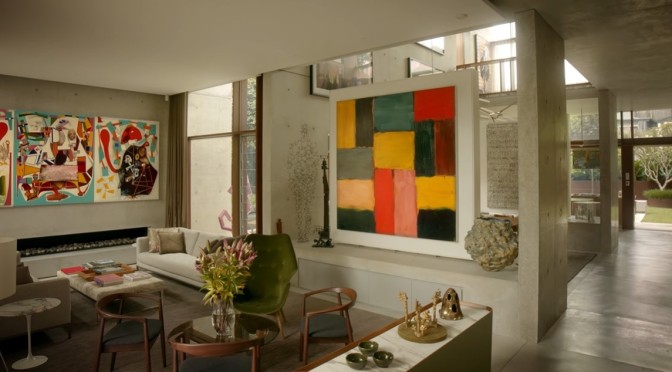
Located in the coastal refuge of Balmoral Beach in Sydney’s Mosman, Almora House is a collection of unique spaces. The clients have resided in the house for over twenty years and have come forward with the brief to design an enduring, timeless, maintenance-free dream home that would accommodate their extensive art collection. Almora House presents a distinctive shape that encourages a soft contemplation.
The form of the house itself is organised around a spine that runs almost north-south — the structure stretching its way along this spine, with a series of rooms that push out into the garden, creating small courtyards. Various features throughout the home also encourage contemplation, particularly the bookshelf. Housed in the upstairs library, the bookshelf’s rear side is made of slightly frosted glass, becoming an alluring abstract composition seen from the dining room. The spine design of the dream home creates an effortless sense of flow in its layout. Inside the front door, there is a guest bathroom and bedroom that open into a courtyard.
As you walk south along the spine, the first of the living rooms, a dining room with double-height ceilings and a kitchen unfurl to the left. Beyond the kitchen is an informal room with four glass walls that open into the garden. Upstairs are the master bedroom and powder room, a study and a gallery. Thoughtful choices surrounding materiality also create a dream home that embodies a poignant sense of calm and introspection. Glass is used to welcome the serenity of the surrounding greenery into the home.
A concrete frame is used as a neutral material that showcases the art within the home and inspires calm. Almora House reveals itself to incite tranquillity, stillness and retrieve from the constant movement of daily life. Tonkin Zulaikha Greer Architects perfectly balances an appreciation of practicality, art and craftsmanship to create a dream home that acts as a container of curiosities and a hub for the calm moments integral to being present in our fast-paced, modern world.
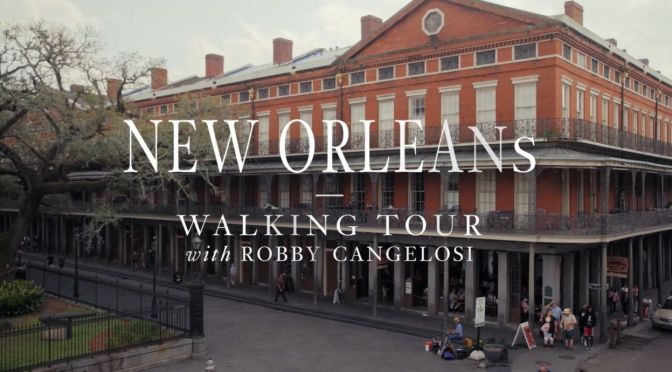
Architectural Digest (April 20, 2033): Today on AD, architect Robby Cangelosi leads us on an insightful walking tour of New Orleans, exploring the fascinating history of its neighborhoods and buildings from its origins to the present day.
The Local Project – (April 18, 2023) – Located in the established suburb of Glen Iris, the modern dream house by Pandolfini Architects responds to the desire for a home built of hard-wearing materials and to tell the story of the client’s most recent travels.
Video timeline:00:00 – Introduction to the Ultra Modern Dream House 00:28 – Main Components of The Brief 01:00 – The Composition of the Home 01:42 – Contrasting of the Pavilions 02:17 – The Car Workshop 02:32 – Glass Links and Palette Cleansers 03:03 – The Theme of Discovering New Things and Surprising Moments 03:55 – The External Raw Materials vs. The Internal Materials 04:38 – Effortless and Simple Materials
Reinterpreting the story of floating down rivers, going around bends and discovering new landscapes, the form of the modern dream house creates a journey through distinct architectural and material choices. Composed of three main pavilions, Glen Iris House holds the private wing at the front, a middle pavilion for the dining and living areas, and the last pavilion, which hosts a car workshop that is inherent to the storytelling of the home.
The desire for hard-wearing materials struck a chord with Pandolfini Architects, therefore, raw elements were employed for the exposed form of architecture along the exterior façade. Providing beauty to the home’s shape, bricks have been laid vertically and then rotated 45 degrees to create a strikingly complex surface that the light dances across. As the home faces west, the addition of copper screens has been employed to mediate the natural illuminance that comes inside, providing dappled light throughout the bedrooms.
Similarly, in each pavilion, the glass links provide the opportunity to cleanse the palette so that one can transition seamlessly between zones. Additionally, the links offer a connection to the surrounding landscape of the modern dream house. Used to contrast the brick pavilion, the living barn – the middle pavilion – uses exposed concrete ribs to form the shape of the interior design. Containing materials such as American Oak timber, travertine and soft hard-plaster walls, the living room barn has been broken up with structural elements so that each space can shine independently.
Additionally, a curved breakfast nook formed out of travertine adds to the middle pavilion’s internal structure, while a sculptural fireplace sits between the living and dining rooms and delineates the spaces. Continuing with the theme of discovery, the architect has created surprising moments throughout the interior with timber batten walls and concealed doors that open up to other corridors or into new areas that are not expected. Though arches are present throughout the modern dream house, the choices were not premeditated and instead have evolved naturally throughout the design process. Furthermore, the hard and dense materials used for the exterior of the home are complemented by the arches to insert a playfulness and respite over the home’s form. Providing a contrast to the internal materials, which are softer and more refined, only three materials were used for the home’s exterior.
With bush-hammered concrete, terracotta brickwork and copper, Pandolfini Architects chose the materials due to their hard-bearing nature and ability to age with the property. Incredibly proud of how the materials have come together, Pandolfini Architects recognises the joint effort with the builders, interior designer and the clients who helped to create their own modern dream house.
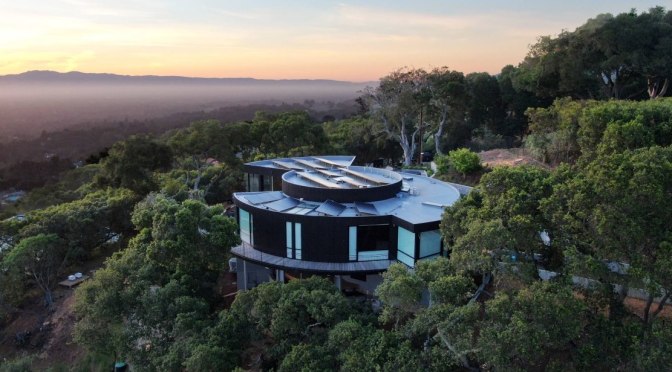
The Local Project – (April 14, 2023) – Working within the existing footprint of a round home, Feldman Architecture reimagines a disjointed circular structure into an innovative futuristic house. By connecting the residence to its lush surroundings and opening up spaces, the possibilities of an ocular form are realised.
Video timeline:00:00 – Introduction to the Innovative Futuristic House 00:23 – The Original Home and the Vision 01:07 – A Walkthrough of the Home 01:36 – Blurring the Lines between Inside and Outside 01:58 – The Original Story of the Home 02:21 – Functioning like a Sun Dial 02:42 – Curves All Around 03:00 – Creating the Curves with a Compass 03:31 – The Materials and the Shape 04:29 – A Unique Experience for the Client and the Architects
Nestled within the picturesque San Francisco hills, Feldman Architecture renovates an introverted round structure into an innovative futuristic house that thrives in its distinctive shape, location and views. Integral to the building’s remodelling is reworking the internal spaces to make them more functional and connected to the outdoors. The edge of the house wings out towards views of the landscape and it is also anchored to the land on the west side.
To make the most of its unique position, the garage was expanded to act as a base for the house and the stairwell was moved so that it takes you directly to the upper level. Upon entering, you see a framed view of the kitchen and then immediately turn into the open plan living. Here, there is a living and dining with tall ceilings, which open out to cascading views. Suddenly, there is a blurring of the indoors and outdoors, typical of Californian architecture. The rooms within the home follow an organic theme reminiscent of the structure’s circular shape.
The rigid flow of the old house has been transformed – the innovative futuristic house welcomes a nice sense of symmetry in the redesign of the kitchen and skylight as an oculus hub in the centre of the home. This skylight functions like a sundial and moves about at different points in time, reflecting a constant interplay with light. A thoughtful selection of materials are chosen to soften the powerful geometry of the home. In terms of finishes and materiality, the residence is very minimalist.
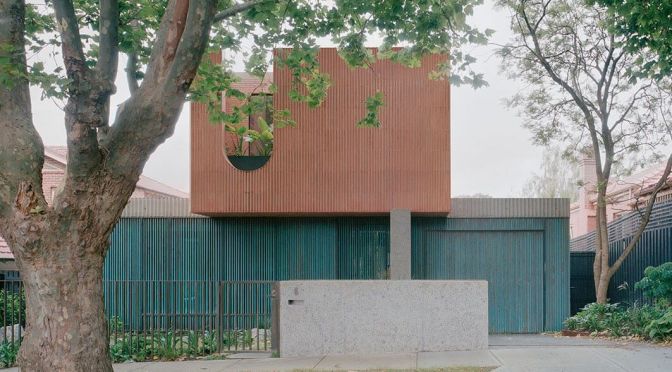
The Local Project – (April 12, 2023) – Located in Brunswick, Victoria, Brunswick House by Placement is a showcase of how a narrow home can contain a lot of graceful design aspects within its walls. Sitting on a small block, the house offers a north-to-south-facing layout, with neighbours flanking on either side.
Tasked to rectify a defunct terrace typology that is common to the area, the architect has employed a refined sense of detail from entrance to the back courtyard. To retain certain aspects of the original home, Placement has chosen to maintain the main bedroom with its original fireplace. While the house tour continues on, small design elements help to reignite the home’s historical character through a modern lens.
Placement has a sense of release and decompression to unveil the house by designing a double-height ceiling that leads into the dining area. When responding to the home’s narrow site, the architect had to find a way to welcome light into the centre of the building. This crucial design element was answered by the use of a central courtyard, which has been finished with large glass windows to allow for light to flood the living spaces. Moving from the dining area, two hallways are revealed, one which accesses the bathroom and another that works as a galley kitchen, and at the end of both hallways sits the living room and rear garden.
An additional mezzanine level is built above the hallways, designed to be used as a multipurpose room, second bedroom or office space. However, the space ultimately helps to zone out the separate dining and living areas. Employing bricks as the main material element within the narrow home, they are laid in a stack bond to accentuate the verticality in the space. Selecting the Nubrik artisan by Brickworks for its tactility and textural quality, the architect has used brick to help define the interior detailing and works alongside the timber joinery. In doing so, the timber is employed to do the heavy lifting of the interior spaces as the joinery creates a seamless transition between living, dining and the mezzanine level by creating overlapping lines.
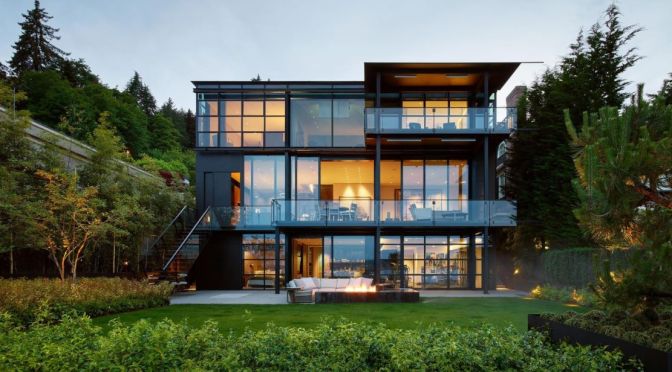
The Local Project – (April 6, 2023) – Located in Seattle, Washington, Leschi Inventors House by Olson Kundig is an inventors dream house with room for the owner to live and experiment.
Video timeline:00:00 – Introduction to the Inventors Dream House 00:23 – The Pacific North-West 00:37 – Liquid Light 00:48 – An Inventors Brief 01:36 – The Caterpillar Yellow 01:58 – A Walkthrough of the Home and the Experimental Spaces 02:25 – The View 02:56 – A Cantilevered Home 03:09 – The Mechanical Room 03:41 – Blurring the Boundaries Between Living and Experimenting 04:16 – The Materials 05:27 – Little Surprises at the Hands of the Craftsmen 06:14 – It’s About ‘How Things Work’
Following a brief that asked for a representation of the client’s characteristics, the architect has focused on supplying a home that allows the owner to create, workshop and experiment on different levels. Additionally, the architect responds to the home’s location, climate and consistent rain by employing materials that become one with the land as well as work with the wet weather Seattle is known for.
At the start of the inventor’s dream house tour, a big yellow front door has been created to greet visitors. Specifically chosen to be the exact same colour as Caterpillar’s heavy machinery, the door opens to reveal the unique interior of steel and concrete. On the front door, the owner’s experimental characteristics can be appreciated with a lock usually seen and used within a bank vault. As one continues through the inventors dream home and passes by the staircase made of industrial level steel, the welcoming of a double-height living space showcases the union between domains for experimentation and living.
As such, the use of black granite counters with an inbuilt Bunsen burner on the island table allows for the owner to do their own research within the comfort of their home with views over Lake Washington. To connect to the surrounds, giant glass panel doors have been installed across one wall of the living space – once opened, the living room becomes a deck space in which the owner can enjoy all year round. The main living quarters cantilever off a thick steel pipe, which also services the living room’s fireplace.
Upstairs, a loft has been stationed to be a think space for the inventor, while located on the ground floor is the mechanical room. Seen as the most important room within the inventors dream house, the undercroft of the home showcases an expression of all the mechanics and systems to the home, while also becoming celebration of everyone involved in the process. In the materiality palette of the inventors dream house, the architect uses weathered steel on the exterior as well as the interior – the cladded elements within the home have been waxed to allow for the steel to remain in its natural finish as it came out of the factory.
Additionally, concrete covers the floor to further allow for the owner to experiment with ease. Matched with the light and dark walls is the cabinetry, which is created from a dense particle board that has been stained and finished with a flat clear lacquer over the top. Designed to be a union between an assembly of pieces, the inventors dream house is finished and made to evolve in the wet weather so to become one with its surrounds.
News, Views and Reviews For The Intellectually Curious






 Boomers Daily