

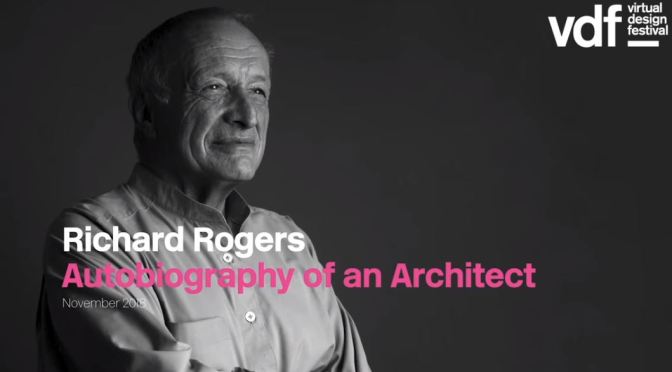
In the second talk as part of our Virtual Design Festival collaboration with Architects, not Architecture, architect Richard Rogers discusses his reluctance to enter the Centre Pompidou competition and liking the Lloyd’s building. The idea behind Architects, not Architecture is for architects to discuss their path, influences and experiences.
In his lecture in November 2017, Rogers explained that he’d been told he couldn’t use buildings for his talk, as the main rule of the series is that architects aren’t allowed to discuss their projects. “I said: That’s like saying I can’t use my two hands,” Rogers said.
“Architecture is part of me. And architecture is not just about buildings, it’s about spaces and places.” Born in Florence, Rogers moved to England with his family and studied at the Architectural Association School in London, where he founded Richard Rogers Partnership with Su Rogers, now Rogers Stirk Harbour + Partners, in 1977.
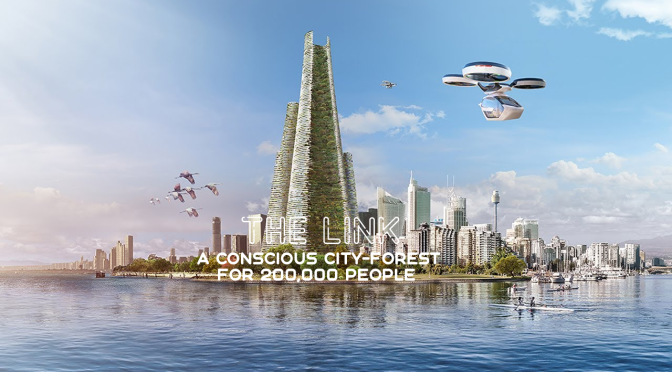
With its 300 floors THE LINK will reach the maximum height of 1200 meters. The project combines sustainability with population density, and it aims to build up a zero-energy city-building. The city-forest is made of 4 main towers, connected one each other, equipped with green areas on each level, natural light and ventilation. 100% green transport systems. The vertical city allows its residents to get into a healthier lifestyle, in connection with natural elements, re-thinking the traditional concept of community and society.
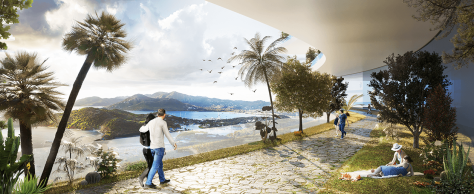
 Architecture firm Luca Curci Architects presents THE LINK, a vertical city for 200,000 people. The project aims to rise above the challenge of population density by successfully combining vertical expansion with economic innovation. A self-sustainable city-forest, that will absorb CO2, produce oxygen for cleaner air and increase urban biodiversity. With interconnected communities’ programs. No suburbs. Less poverty oriented.
Using an urban operating system with an AI (Artificial Intelligence), the vertical city will be able to manage the global city temperature, levels of CO2 and humidity, will control the global lighting system, and will storage extra energy produced by solar panels and other renewable energy resources.
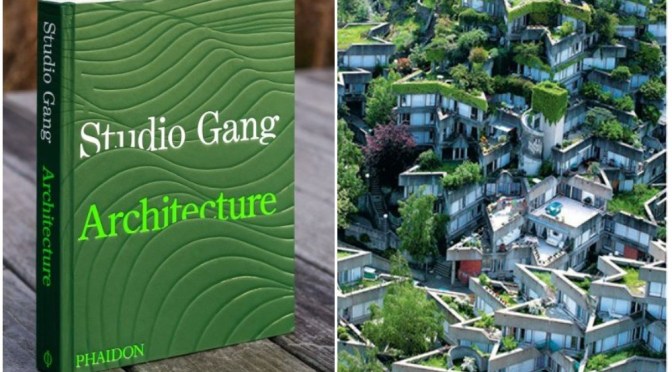
 The most in-depth exploration of one of the most important, innovative, and creative architecture practices working today.
For the last twenty years Studio Gang, led by Jeanne Gang, has created bold, visionary architecture that engages the urgent social and environmental challenges of our time. This first comprehensive monograph brings together 25 signature projects-from the award-winning Aqua Tower and Writers Theatre to highly-anticipated upcoming buildings for the American Museum of Natural History and O’Hare International Airport-to reveal the resonant concepts and design approach that connect them. With a rich variety of visual materials and short essays by Jeanne Gang, the book elegantly captures the creative sensibility and trajectory of an architecture driven by pressing twenty-first-century questions.
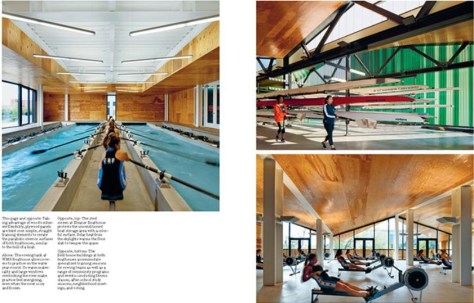
Studio Gang is an international architecture and urban design practice founded and led by Jeanne Gang. A recipient of the National Design Award in Architecture and numerous other honors, the Studio works as a collective to create projects that foster interaction and connection. Their research-based, interdisciplinary approach has produced award-winning buildings across scales and typologies as well as publications and exhibitions that push design’s ability to effect positive change.
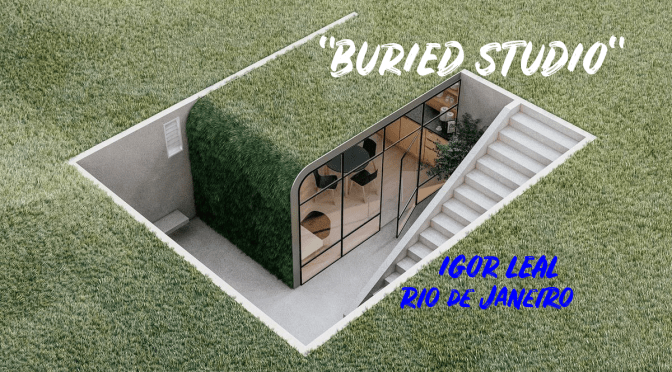
It is a project for the construction of a work environment (home office) in a backyard of a residential land. The space has approximately 47.00m² and has a work environment and meetings with a bench for pantry, bathroom and external environment.
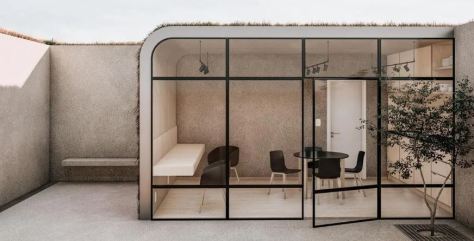
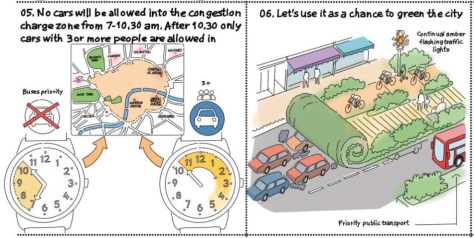
Its formal composition sought, through a solution of operative topography and the construction of a winding green roof, to integrate the new projected environment to the large existing lawn in the surroundings.
“Undoubtedly, the most significant project that’s really propelled and changed my career is the National Museum of African American History and Culture on the Mall. I was a young architect, but I was given the task to design and deliver this project. That was my role and my office’s role in the project. I didn’t do many things between that time, because it consumed so much but I learned so much. And when it opened with Barack Obama, before he left the White House, it kind of felt like something had been achieved. It was a kind of euphoric moment for me”
This is the Life Story of Sir David Adjaye OBE RA
Adjaye Associates was established in June 2000 by founder and principal architect, Sir David Adjaye OBE. Receiving ever-increasing worldwide attention, the practice has studios in London, New York and Accra and completed work in Europe, North America, the Middle East, Asia, and Africa. Two of the practice’s largest commissions to date are the design of the Smithsonian Institution’s National Museum of African American History and Culture on the National Mall in Washington D.C. and the Moscow School of Management (SKOLKOVO). Further projects range in scale from private houses, exhibitions, and temporary pavilions to major arts centres, civic buildings, and masterplans. Renowned for an eclectic material and colour palette and a capacity to offer a rich civic experience, the buildings differ in form and style, yet are unified by their ability to generate new typologies and to reference a wide cultural discourse.
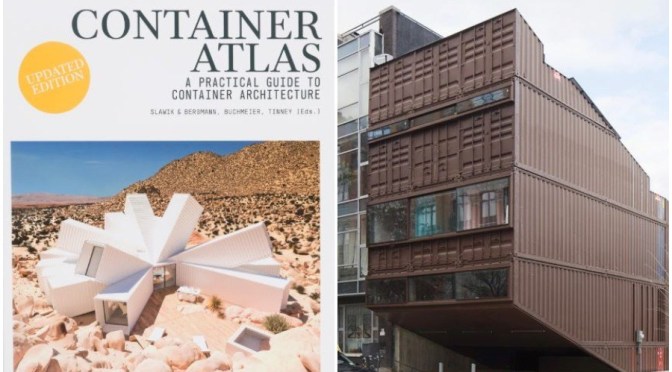
Container Atlas seeks out luxurious remote hideaways, urban dwellings, community centers, and more, all showing how the humble container can put the fab into pre-fab.

Container architecture has become an essential part of our twenty-first century surroundings, with it being used to create modular structures for pavilions, brand showrooms, retail premises, and even residential homes. Ten years after the first publication of Container Atlas, this eagerly anticipated follow-up charts how this movement has evolved into an essential part of today’s architectural vocabulary. Container Atlas serves as a practical and inspirational reference not only for architects and engineers, but also for all creatives eager to learn about the rich and diverse language of container architecture and modular building.
Architect and Professor Han Slawik and his team have established themselves as international experts in the field of container architecture. He is the author of the first edition of Container Atlas and has returned to the subject with refreshed insights into this burgeoning movement.
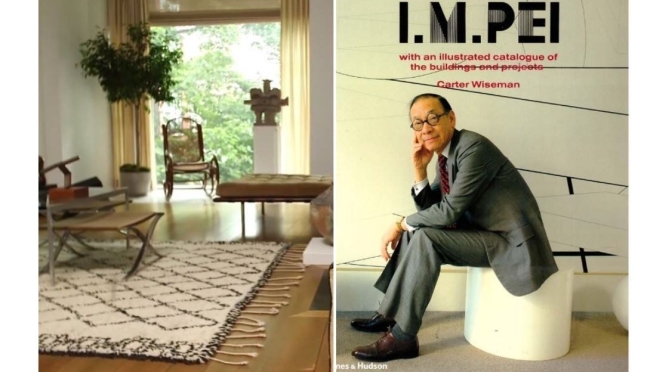
When Ieoh Ming Pei, one of the most lauded architects of the past 50 years, was first asked to renovate The Louvre in Paris, his reaction was unequivocal: ‘You cannot touch the Louvre, it’s sacrilege.’
His solution was both revolutionary and simple — he built a glass pyramid in the centre of the forecourt that concealed a subterranean entrance way. Scorned at the time as a modernist intrusion on the 16th- and 17th-century building, the Pyramid is today celebrated as a statement of bold, high-tech futurism, and indicative of an architect who made his reputation by creating buildings at the intersection of art, history and culture.
Depot Boijmans Van Beuningen (in Rotterdam, Netherlands) is the first art storage facility in the world that offers access to a museum’s complete collection. The Depot has a different dynamic to that of the museum: there are no exhibitions, but you can browse amongst 151,000 artworks, alone or with a guide, and get behind-the-scenes glimpses of – among other things – conservation and restoration.
The design – a reflective round volume – responds to its surroundings, Rotterdam’s Museumpark in which it will be completed in 2020, doors will open in 2021.


 Boomers Daily