From an Art Review online article:
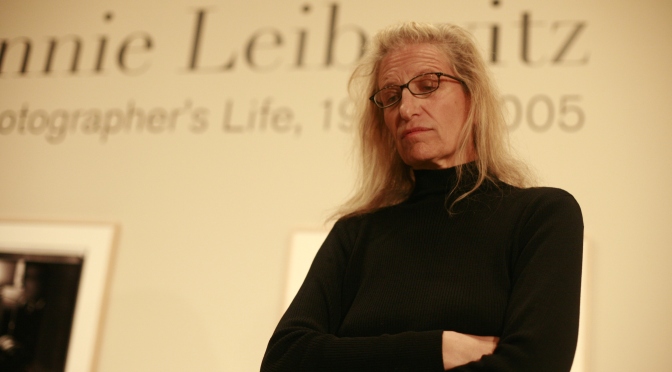
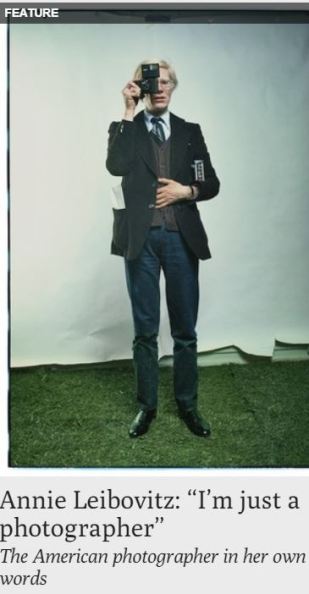 I chose to call myself a portrait photographer because labels were always being thrown on me. When I was at Rolling Stone I was a ‘rock-and-roll photographer’, at Vanity Fair I was a ‘celebrity photographer’. You know, I’m just a photographer. I realised I wasn’t really a journalist. I have a point of view and, while these photographs that I call portraits can be conceptual or illustrative, that keeps me on the straight and narrow. So I settled on this brand called ‘portraits’ because it had a lot of leeway. But I don’t think of myself that way now: I think of myself as a conceptual artist using photography.
 I remember going to the Factory in 1976 and watching Andy Warhol work. I’d been there before, earlier in the 70s, photographing Joe Dallesandro and Holly Woodlawn, and then Paul Morrissey. Warhol was a fixture of New York. It was just shocking when he died, because he was everywhere. I don’t know how he did it, but he was out at everything. You felt that if he was at a place you were at, then you were at the right place.
Warhol had things everywhere in the Factory – silkscreens all over the place, and tables of artwork – and things were always going on. I think Fran Lebowitz was there for Interview magazine, and [Warhol] was photographing the sisters from Grey Gardens [1975]. I was just a fly on the wall: there were people milling around doing all kinds of things, it was a pretty active place.
To read more: https://artreview.com/features/ara_winter_2019_annie_leibovitz/

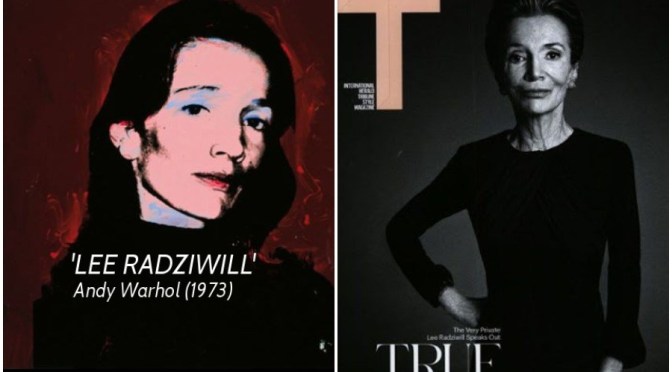
 Lady when her husband John F. Kennedy was elected President.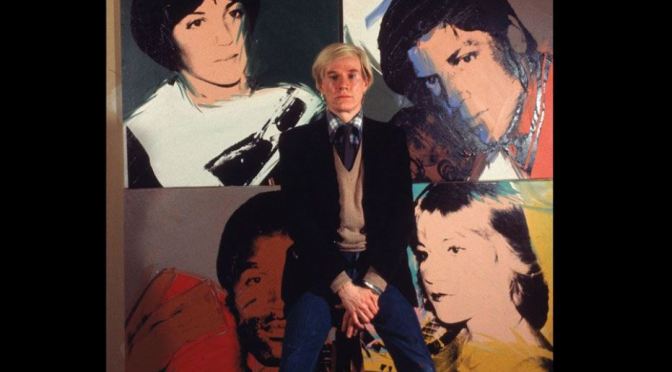
 ‘The sports stars of today are the movie stars of yesterday,’ proclaimed the artist. It was true; thanks to rapid advances in TV broadcasting, sporting champions in the 1970s were starting to achieve the same level of popularity as other entertainers.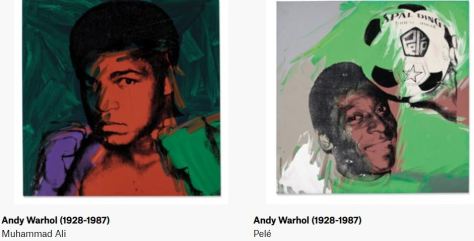

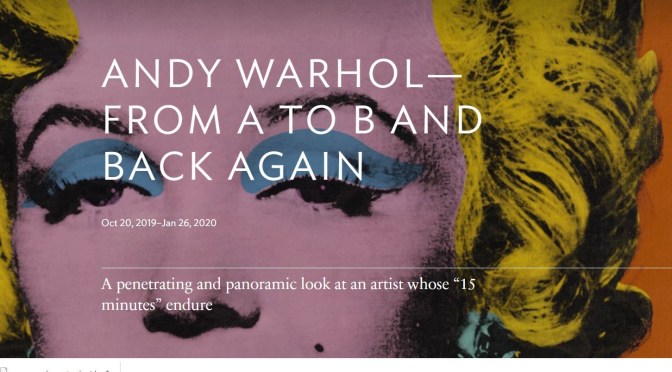
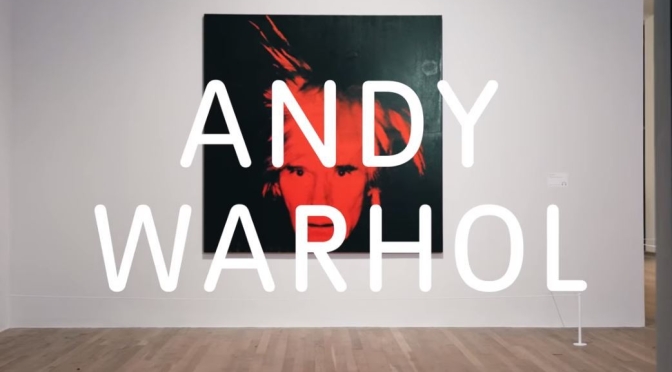
 Warhol, with obvious self-deprecation, described his philosophy as spanning from A to B. As this exhibition decidedly proves, his thinking and artistic production ranged well beyond that, but his true genius lies in his ability to identify cultural patterns and to use repetition, distortion, and recycled images in a way that challenges our faith in images and questions the meaning of our cultural icons.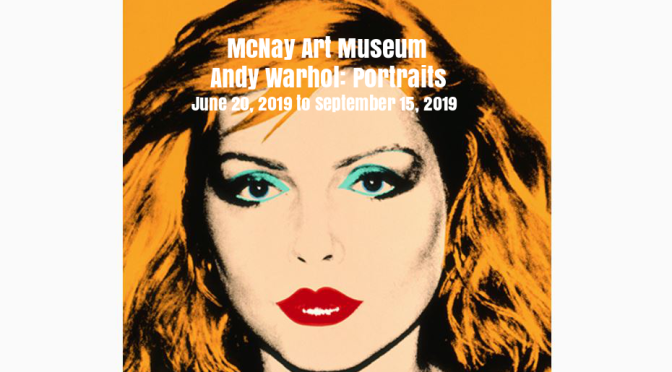
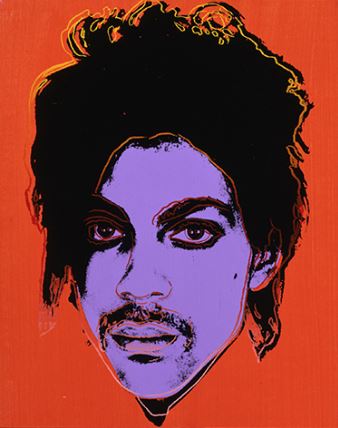 Andy Warhol: Portraits features over 120 paintings, prints, photographs, and films that depict the artist’s favorite genre: the portrait. This exhibition presents a snapshot of New York’s art and social scene from the 1960s through the 1980s through portraits of Warhol’s friends and patrons, movie stars and musicians, and celebrities of the day that range in style from the pristinely-idealized to the heartbreakingly-raw. Personalities who populated Warhol’s inner circle are represented; some widely recognized names include Joan Collins, Debbie Harry, Dennis Hopper, Mick Jagger, Robert Rauschenberg, and Andy Warhol himself. The presentation takes a multi-dimensional approach to the work, exploring the formal, conceptual, social, and political implications of portraiture, identity, and fame. Andy Warhol: Portraits invites the viewer into Warhol’s world, by examining the artist’s personal life, studio process, and use of a variety of mediums.
 Boomers Daily