

Tag Archives: Analysis
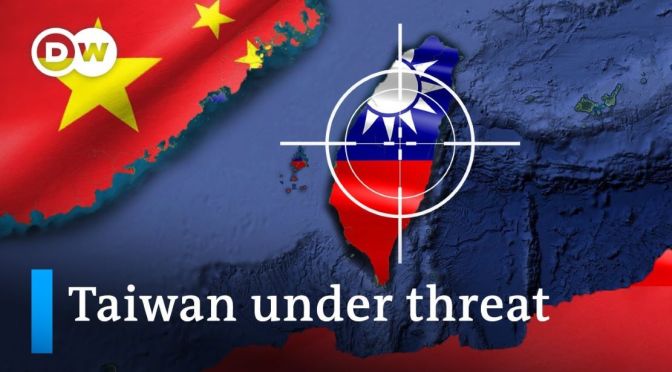
Analysis: How Taiwan Is Facing Threat From China
Taiwan is a democracy with a strong human rights record and a high standard of living. But despite the country’s economic strength and elected government, the island state struggles to receive international recognition. Even in terms of corruption, Taiwan’s track record is better than that of some European states.
The problem is that Beijing regards democratic Taiwan, which seceded from the mainland in 1949, as a renegade province rather than an independent state. China is trying to isolate it internationally. Many fear that China has plans to attack Taiwan in the near future: The President of the People’s Republic of China, Xi Jinping, has made it clear that his country is prepared to claim the island by military means. Beijing has been adopting this threatening stance for decades.
Thus far, the goal has been to annex the island to the mainland at some undefined point in the future. China’s historically questionable worldview would see this as reunification; from Taiwan’s perspective, it would be annexation. Both countries are highly armed – a war would inevitably cost many people their lives.
The film throws open a window on a nation that has been in a state of existential threat for decades; a country that is home to people who will defend their freedom at all costs – and also those who yearn for an imminent annexation with China.

Economic Analysis: Are Cities Or Suburbs Better?
CNBC Marathon reviews why a cost-of-living crisis is unfolding across America’s housing infrastructure. CNBC explores what that means for apartments in the cities and houses in the suburbs. Inflation data shows that costs for items such as rent and groceries are increasing quickly across the Sun Belt and coastal cities.
Chapters: 00:00 Introduction 00:39 How to make the suburbs more affordable (Published April. 2022) 13:22 How suburban sprawl shapes the U.S. economy (Published Feb. 2022) 26:34 Are major cities still worth it? (Published May 2022)
Now years removed from the darkest days of the pandemic, people are asking: Is a return to the city worth it? Metropolitan regions have sprawled in recent years, raising budget concerns and quality-of-life issues for the people who remain downtown. Meanwhile the absence of commuters is slowing the recovery in leisure and hospitality. About 46% of renters in the U.S. are struggling to make ends meet, according to Harvard University researchers.
Builders say conditions for renters will get worse before they get better. A snarled supply chain, a labor shortage, and rising interest rates are worsening what some call a “throwaway” development pattern. Several real estate industry experts have ideas about how to make housing more attainable. Some of the most popular ideas include mixed-use districts and master-planned communities.
America’s suburbs are sprawling again. Over the 20th century, real estate developers built large tracts of single-family homes outside of major cities. The builders were following mortgage underwriting standards first introduced by the Federal Housing Administration in the 1930s. Over the century, those guidelines created housing market conditions that explicitly shut out many minorities. Experts say it is possible to update these old building codes to create equity while fixing some, but not all of the problems of American suburbia. CNBC Marathon brings together the best of CNBC’s coverage on the U.S. housing crisis and how life in the suburbs impacts city living.
World Hunger: Is Biofuel Feeding A Food Crisis?
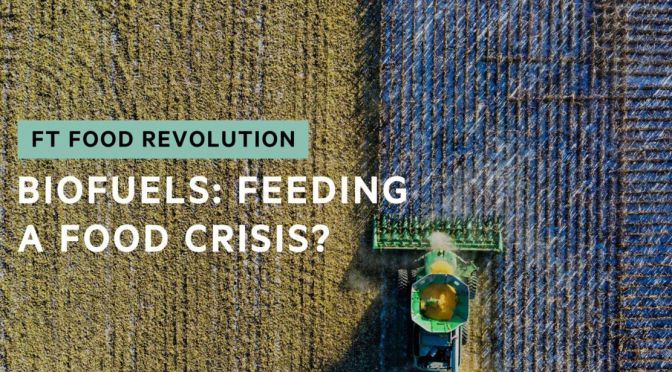
The UN’s World Food Programme has described 2022 as “a year of unprecedented hunger”, with millions of people in dozens of countries facing famine. At the same time, significant amounts of farmland are being used to produce so-called biofuels. But could a global food crisis change that?
Biofuels are liquid fuels produced from renewable biological sources, including plants and algae. Biofuels offer a solution to one of the challenges of solar, wind, and other alternative energy sources. These energy sources have incredible potential to reduce our dependence on fossil fuels and yield environmental and economic benefits. But many of these sources have a limitation: they can’t replace liquid fuels such as jet fuel, gasoline, and diesel fuel that are critical to our transportation needs. That’s where biofuels could help.
Green Tech: New Ocean Wave Energy Companies
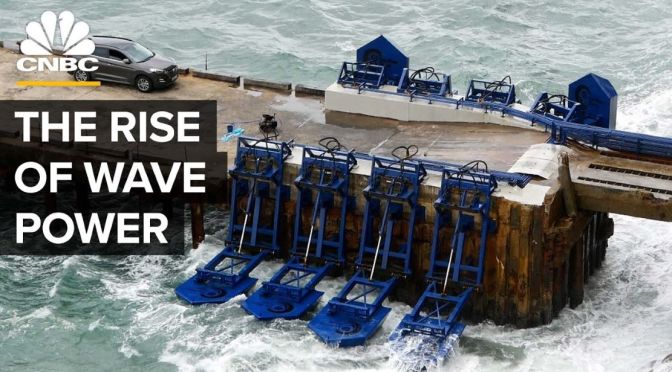
The ocean’s waves are immensely powerful. Harnessing that energy for grid-scale electricity production would be a major boon to the clean energy industry, but building durable, powerful, and cost-effective wave energy converters has proven difficult.
Chapters: 1:46 The challenges 4:05 Wave energy in the U.S. 4:49 (Subchapter) CalWave 6:05 (Subchapter) Oscilla Power 7:34 (Subchapter) C-Power 9:00 Wave energy in Europe 11:51 The future
Now though, an influx of federal funding is helping many U.S. companies gear up to test their latest wave energy technologies, giving many in the industry hope that wave power will see massive growth over the next few decades.

Technology: The Rise Of Touchscreens In Cars
Most cars now have touch screens in the middle of the dashboard. Some tech heavy cars – such as those by companies like Tesla and Rivian – rely nearly entirely on them. They’re also cheaper to make and maintain. But some people hate them. They say they are less safe, confusing, unnecessary, and take longer than a simple button or switch.
But touch screens in cars aren’t going away. Some innovations, such as those by suppliers such as Harman and Continental, may blend some of the best of the old with entirely new possibilities, while managing risks.
Documentary: Lebanon’s Historic Economic Crisis
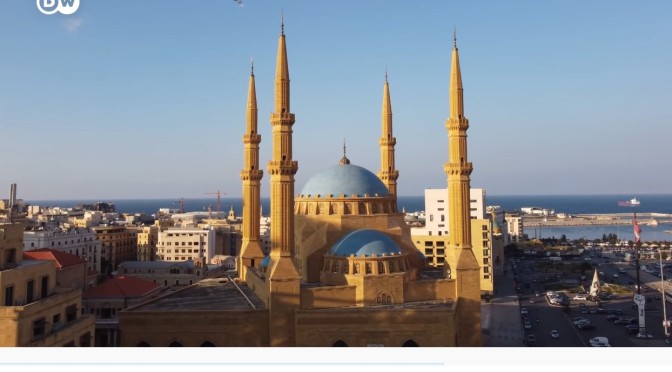
Lebanon is now going through the worst economic crisis in its history. 80 per cent of the population lives below the poverty line. In one year, food prices have jumped 500 per cent due to galloping inflation. Lebanon was long regarded as the Switzerland of the Middle East.
But those days are gone. A series of crises have plunged the nation into the abyss. And its people are suffering. For Riad, who runs a grocery store in the suburbs of Beirut, business has become hellish. Every morning, calculator in hand, he changes the labels of his products according to the day’s exchange rate. An operation made all the more complex by the fact that his store is plunged into darkness, due to a lack of electricity.
The Lebanese government no longer provides more than two hours of electricity per day in the country. It is impossible for the population to heat, light or use their refrigerators. Taking advantage of the situation, a network of private generators has emerged. The Lebanese pound, the local currency, has lost 90 per cent of its value.
The only people unaffected are those paid in dollars. The greenback, which can be exchanged for a small fortune against the local currency, has created a new privileged social class in the country. A salesman in an international pharmaceutical company, Joseph lives like a king in a ruined Lebanon. Thanks to his new purchasing power, he repaid his mortgage in two months, instead of… twenty years!
In a bankrupt state, plagued by corruption, six out of ten Lebanese now dream of leaving the country. In Tripoli, in northern Lebanon, Mohammed and his son set out for Germany by sea. Even though the trip was cut short off the Turkish coast, the young father is still ready to take all possible risks to reach the European Eldorado.
Droughts: The ‘Shrinking’ Of The Colorado River

- “Tier Drops,” by Lisa Owens Viani.
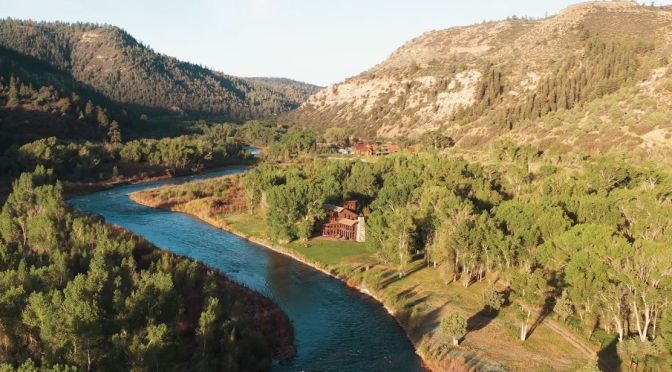
Regulations and apportioning that were set up 100 years ago are under pressure as the Colorado River shrinks. As climate change accelerates and record-breaking drought worsens, cities, tribes, and industries must prepare for a future with less water. (Online August 10)

The Coming Crisis Along the Colorado River
It’s past time to get real about the Southwest’s hardest-working river.
About 40 million people rely on the Colorado River as it flows from Wyoming to Mexico. But overuse and climate change have contributed to its reservoirs drying up at such a rapid rate that the probability of disastrous disruptions to the deliveries of water and hydroelectric power across the Southwest have become increasingly likely. Now the seven states that depend on the river must negotiate major cuts in water use by mid-August or have them imposed by the federal government.
Those cuts are merely the beginning as the region struggles to adapt to an increasingly arid West. The rules for operating the river’s shrinking reservoirs expire in 2026, and those seven states must forge a new agreement on water use for farmers, businesses and cities.
Future Of Work: Office Design Is Changing Cities
The pandemic and hybrid working have changed the very idea of the office. This is not only changing the design and purpose of offices, but the look of cities too.
Chapters 00:00 – The office: a shifting concept 00:57 – What do future offices look like? 02:30 – The office as a social destination 03:20 – The rising demand for flexible work 04:06 – How should hybrid employees be managed? 06:01 – Will hybrid work worsen gender inequality? 06:36 – How will flexible working reshape cities?
Hydrogen Energy: Can It Lower Industry Emissions?
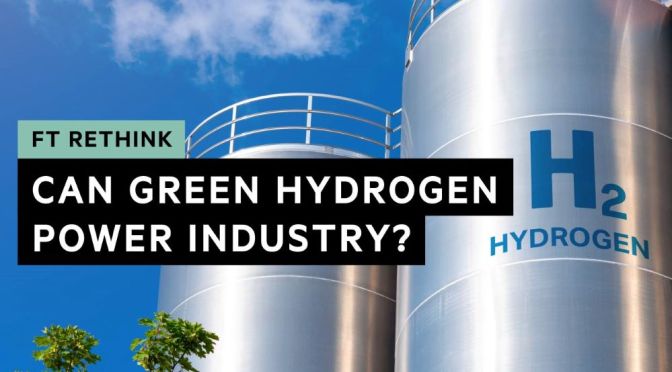
Heavy industries must decarbonise dramatically to reach net zero. Replacing fossil fuels with green hydrogen, created with renewable energy, is one way to reduce emissions. Examples of green hydrogen being used in various industries are emerging, but as the FT’s Sylvia Pfeifer reports, this carbon-free innovation faces a major challenge to scale up.
 Boomers Daily