

MIT Technology Review (August 17, 2024): The 125th Anniversary issue features ‘Greetings from the Future’ – Personalized AI, Genetically-Engineered Immunity and Digital Immortaility. We’ll see it all in the next century.

MIT Technology Review (August 17, 2024): The 125th Anniversary issue features ‘Greetings from the Future’ – Personalized AI, Genetically-Engineered Immunity and Digital Immortaility. We’ll see it all in the next century.
BARRON’S MAGAZINE (August 17, 2024): The latest issue features..
The chair will lay the groundwork for the Fed’s next phase of monetary policy. It will be the highest-stakes event for the economy and markets this fall.
A 65-year-old retiring today can expect to spend an average of $165,000 in healthcare expenses throughout retirement, up nearly 5% from last year, according to Fidelity.
The vice president’s speech in Raleigh puts her squarely to the left of President Joe Biden, Barron’s ideas editor writes.
Economists and policy makers at the Federal Reserve symposium will probe the effectiveness and transmission of monetary policy, which took unorthodox turns in the past 15 years.


The Economist Magazine (August 15, 2024): The latest issue features Footloose and fancy degree: How countries compete for talent…
We relaunch our presidential-election model for a transformed race
The superpower faces more adversaries, new technologies and less-confident allies
The country’s forces should be careful not to overreach
The challenge for neuroscientists is how to test them

The Guardian Weekly (August 15, 2024) – The new issue features Has mass tourism gone too far? – Why holiday hotspots have had enough. Plus: America’s Kamala and Tim show
1
Spotlight | On the road: Kamala Harris and Tim Walz re-energise Democrats
The US vice-president and her running mate have hit the ground running in their campaign for the White House. Can they keep the momentum going, asks Lauren Gambino.
2
Technology | The fragile world of underwater internet cables
Deep-sea wires are the veins of the modern world. What if something were to happen to them? Jonathan Yerushalmy investigates.
3
Feature | Beautiful, bruising and complex female friendships
Ahead of her new book examining women’s friendships, the Observer’s Rachel Cooke reflects on two pivotal ones of her own, as well as some notable literary attachments.
4
Opinion | The Olympics showed France’s far right what true patriotism is all about
Despite a febrile political backdrop, the Paris Games reminded a nation of what it means to be proud of one’s country, says French sports writer Philippe Auclair.
5
Culture | The second act of Sam Neill
He is one of the world’s most famous actors, but the New Zealander – whose cancer is thankfully in remission – can still go to Starbucks without anyone recognising him, finds Zoe Williams.
‘Nature Magazine – July 24, 2024: The latest issue features Mobile Stone – Scottish origin for Stonehenge’s altar hints at societal organization in Neolithic Britain…
A snake family that includes many venomous species arose in Asia, despite fossil evidence pointing to an African origin.
Athletes can achieve greater speed with just the right ‘pumping’ motion, modelling shows.
Microbe found in cat poo could be harnessed to deliver large, complex proteins across the blood–brain barrier.

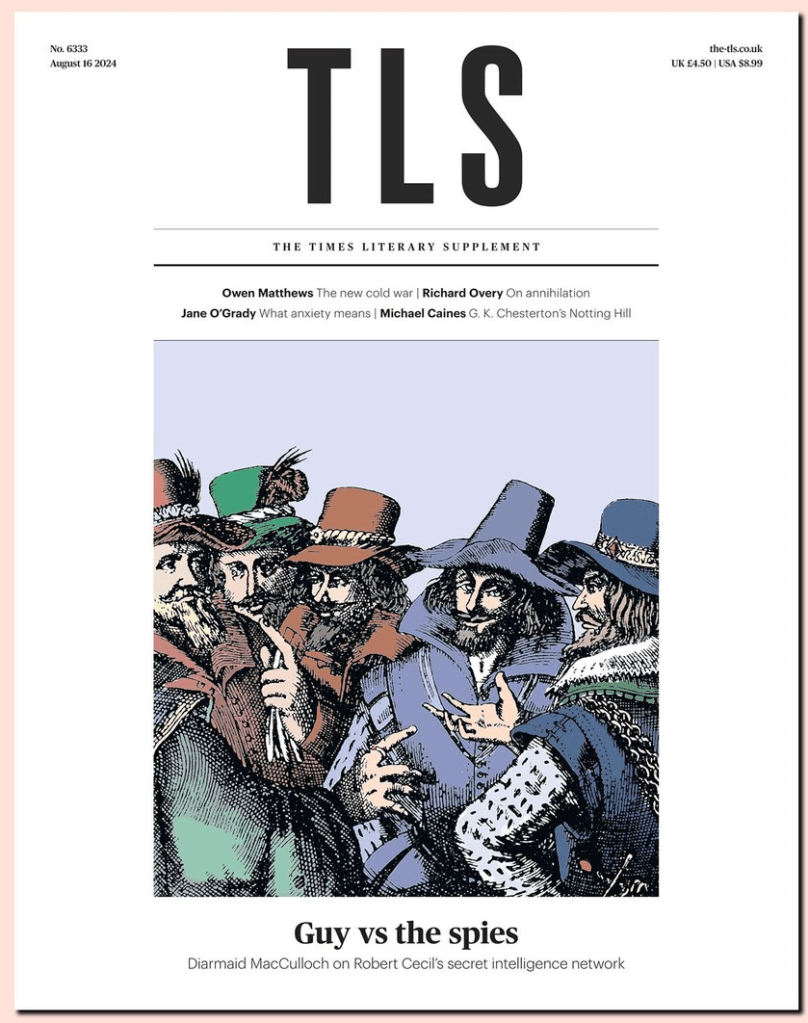
Times Literary Supplement (August 14, 2024): The latest issue features ‘Guy vs the Spies’ – Robert Cecil’s secret intelligence network; The new Cold War; On annihilation; What anxiety means; G.K. Chesterton’s Notting Hill…
Harvard Business Review (August 12, 2024) – The latest issue features Embracing Gen AI at Work: How to get what you need from this new technology…
In this article, NFL great Tom Brady and Nitin Nohria, of Harvard Business School, present a set of principles that people in any realm can apply to help teams successfully work together toward common goals.close
When our society talks about success, we tend to focus on individual success. We obsess about who is the “greatest of all time,” who is most responsible for a win, or what players or coaches a team might add next season to become even better.
Let’s say you’re leading a meeting about the hourly pay of your company’s warehouse employees. For several years it has automatically been increased by small amounts to keep up with inflation. Citing a study of a large company that found that higher pay improved productivity so much that it boosted profits, someone on your team advocates for a different approach: a substantial raise of $2 an hour for all workers in the warehouse. What would you do?
History has shown that technological innovation can profoundly change how business is conducted. The steam engine in the 1700s, the electric motor in the 1800s, the personal computer in the 1970s—each transformed many sectors of the economy, unlocking enormous value in the process. But relatively few of these and other technologies went on to become direct sources of sustained competitive advantage for the companies that deployed them, precisely because their effects were so profound and so widespread that virtually every enterprise was compelled to adopt them. Moreover, in many cases they eliminated the advantages that incumbents had enjoyed, allowing new competitors to enter previously stable markets.
BARRON’S MAGAZINE (August 10, 2024): The latest issue features..
Long-term investors shouldn’t be spooked by a one-day rout or the market’s churning. The S&P 500 and Nasdaq are still up more than 11% on the year.
Adding defensive stocks can allow investors to stay invested while protecting themselves if the economy goes into recession.
Robo-advisors continue to pull in new assets, but the revolution has hit a snag. Plus, our latest ranking of best robos.
Behind China’s export push is increased competition and slowing growth at home, and a move by its leaders to use exports to boost the economy.

Controversy over intentional burial by Homo naledi extends to new publishing models
Mammoth study in Chinese villages shows antibiotics that kill Helicobacter pylori reduced cancer risk
A stripped-down HIV genome can interfere with normal virus replication