
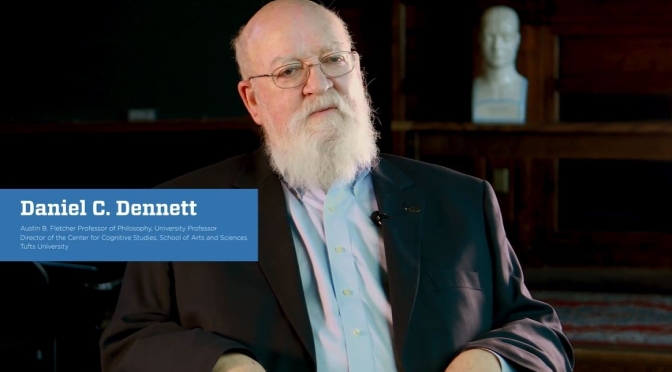
World-renowned philosopher Daniel C. Dennett argues that our inner worlds and religious ideas can all be explained as evolutionary functions of the brain.
Tag Archives: AI
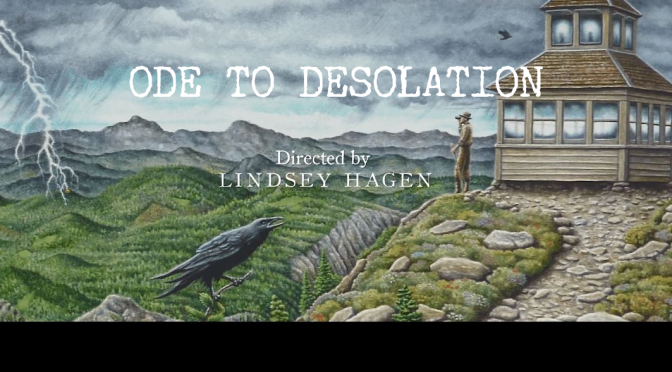
Nature & Technology: “Ode To Desolation” On Fire Lookouts In North America By Lindsey Hagen
Directed by: Lindsey Hagen
Filmed and Edited by: Chris Naum
Original Score and Mix by: Brandon Hagen
Original Artwork by: Jim Henterly
“Ode to Desolation” shares the story of Jim Henterly, a naturalist, illustrator and fire lookout as he contemplates the dwindling days of Fire Lookouts in North America.
With the influence of technology and AI threatening to make his role obsolete, we look into the future and ask ourselves what connections we will maintain to keep our human interpretation of the natural world alive.
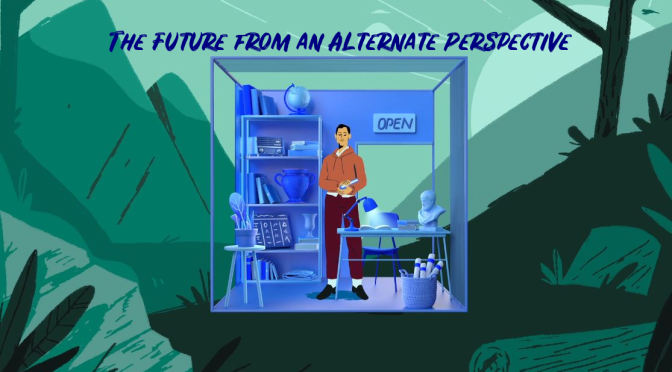
Artificial Intelligence: “The Future From An Alternate Perspective”
The story follows our main character Luis as he tries to clearly explain the complexities and nuances of ‘language’, and the challenges of teaching AI to thoroughly understand it.
A massive project, an incredibly talented team, and a little bit of luck to get to the finish line. So thankful to my fellow artists and friends who helped pull this off.
Client: Microsoft
Agency: Trifilm
Creative Director: Mia Vyzis
Producer: Corey Lovett
Animation Director: Reece Parker
Art Director: Reece Parker
Illustration: Tom Goyon, Millie Woodcock, Reece Parker
Character Animation Lead: Khylin Woodrow
Cel: Khylin Woodrow, TJ Peters, Mathijs Luijten, Adam Henderson, Reece Parker, Salvador Padilla, Nata Metlukh
2D Animation: Matt Jameson, TJ Peters, Mathijs Luijten, Manuel Neto, Reece Parker
3D modeling/Animation: Billy Chitkin, Nocky Dinh
Editing/composite: Bruce Stead, Matt Jameson, Mathijs Luitjen, Manuel Neto, Tj Peters
Sound design: Ambrose Yu
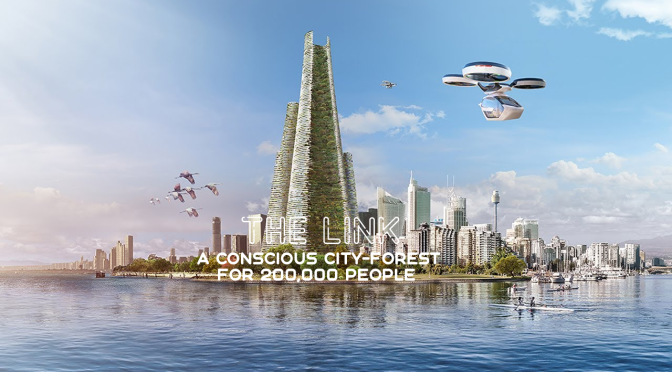
CITIES OF THE FUTURE: “The Link – A Conscious City-Forest For 200,000 People” (Luca Curci Architects)
“The first smart city “conscious oriented”, that will prevent urban sprawl, produce and storage energy, improve air quality, increase urban biodiversity, and create a healthier lifestyle”. Arch. Luca Curci
With its 300 floors THE LINK will reach the maximum height of 1200 meters. The project combines sustainability with population density, and it aims to build up a zero-energy city-building. The city-forest is made of 4 main towers, connected one each other, equipped with green areas on each level, natural light and ventilation. 100% green transport systems. The vertical city allows its residents to get into a healthier lifestyle, in connection with natural elements, re-thinking the traditional concept of community and society.

 Architecture firm Luca Curci Architects presents THE LINK, a vertical city for 200,000 people. The project aims to rise above the challenge of population density by successfully combining vertical expansion with economic innovation. A self-sustainable city-forest, that will absorb CO2, produce oxygen for cleaner air and increase urban biodiversity. With interconnected communities’ programs. No suburbs. Less poverty oriented.
Using an urban operating system with an AI (Artificial Intelligence), the vertical city will be able to manage the global city temperature, levels of CO2 and humidity, will control the global lighting system, and will storage extra energy produced by solar panels and other renewable energy resources.
Digital Health: Americans Open To 24/7 Monitoring Devices, AI Technology To Lower Health Care Costs
Center for the Digital Future at USC Annenberg (Feb 19, 2020):
 Many Americans are willing to make significant personal tradeoffs to lower their health insurance rates or medical costs, such as agreeing to 24/7 personal monitoring or working with artificial intelligence instead of a human doctor, the Center for the Digital Future at the USC Annenberg School for Communication and Journalism finds.
Among the study’s findings:
- Nearly 1 in 4 Americans (24%) would work with an artificial intelligence-based technology if it lowered the cost of their health care.
- Most Americans (80%) think that access to health care is a basic right that should be available to all citizens regardless of their ability to pay. This is a view shared even by a majority of citizens who identify themselves as very conservative (56%).
- Significant percentages of Americans are willing to make profound lifestyle choices in exchange for lower insurance rates. For example, one-third of Americans would agree to 24/7 personal monitoring by insurance companies or health care professionals if their insurance rates were reduced.
- Twenty-one percent of Americans said they would stay in their current job if leaving it meant losing their current health coverage.
- Almost all Americans say health care is a key issue in the 2020 presidential election (92%).
- Even though Americans say they are satisfied with their current health insurance, they are open to alternatives. Thirty percent of Americans would consider buying health coverage from any company that offers lower costs, including a variety of non-insurance companies such as Amazon, Google, or Costco.
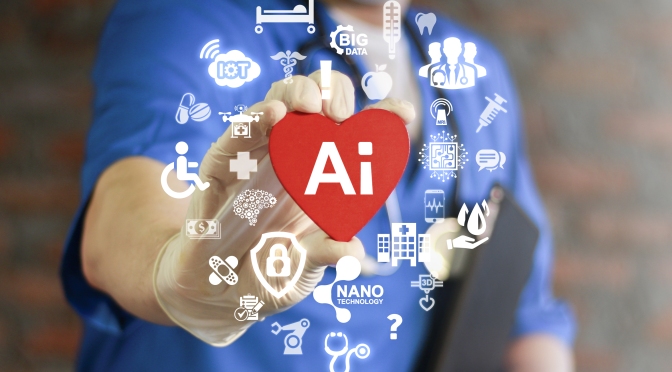
Health: New “Digital AI Device” Helps Identify Patients With Atrial Fibrillation (Mayo Clinic)
 This small device may change how doctors identify and manage patients with atrial fibrillation, an irregular heart rhythm that increases risk of stroke.
And the past. The device uses artificial intelligence, or AI, to not only determine if a person is in the midst of an episode of atrial fibrillation, but also it can reveal if they’ve had the irregular rhythm before or will have it in the future.
Dr. Paul Friedman and his team trained the device to detect subtle changes in the heart’s electrical signals. Then in a study, they found it can identify patients with episodic atrial fibrillation. Even when they record the heart while the rhythm is normal – something no current wearable heart monitor can do.
That’s because a heart monitor won’t detect atrial fibrillation unless you have an episode while wearing it. But in a matter of moments, the AI device can identify people with atrial fibrillation, even if their heart is in normal rhythm. Then they can get on the right treatment to help prevent life-threatening strokes from happening.
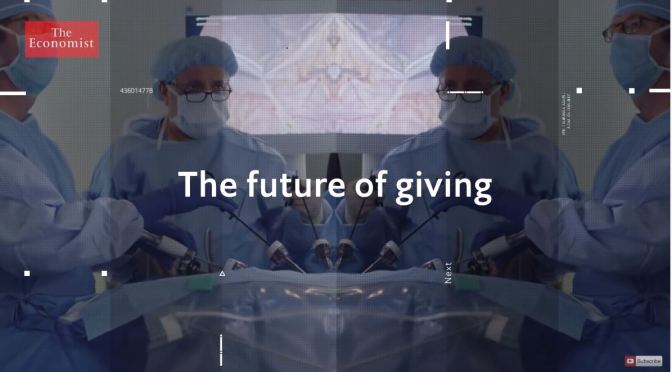
Society: “How To Do The Most Good Possible” (The Economist Video)
Doing good is increasingly about more than giving away money. Living kidney donations are rising and a new movement is pushing altruistically minded people to choose careers in fields, such as AI, that will shape the world’s future.
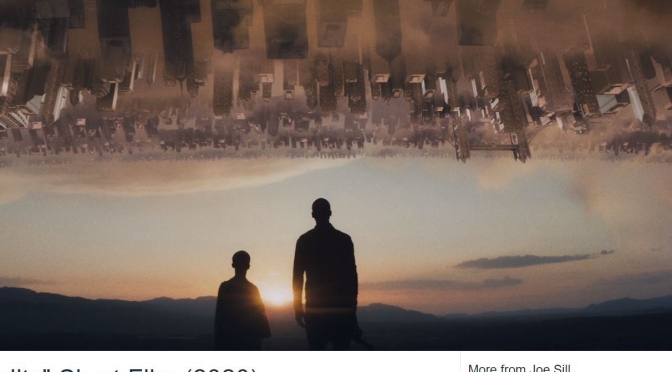
New Branded Short Films: “Duality”, Written And Directed By Joe Sill (2020)
Written & Directed by: Joe Sill
Starring: Matteo Aluisi, Dante Spencer, Shahanna Jaffer, Naiya Singh Padilla, Mona Sishodia, Iyad Hajjaj, Zoya Yaseka, Meghan Alexander, Jon Komp Shim, Darren Kendrick
Client: HITACHI
Original music was done by electronic music duo Gramatik & Luxas.
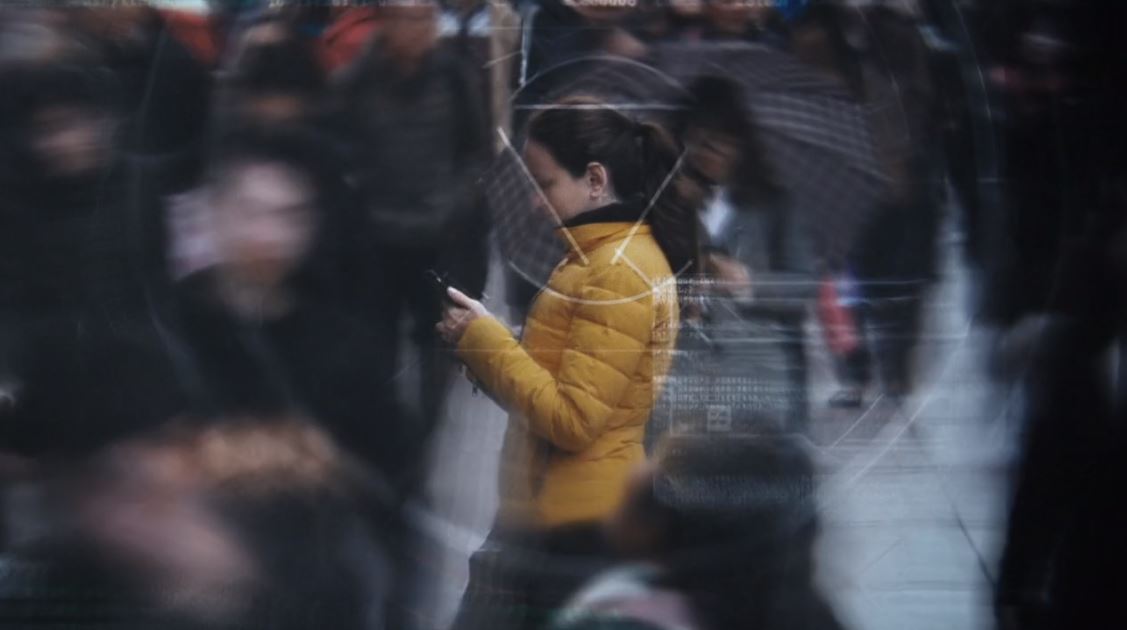
“We are wanderers
Exploring our world
As travelers without a map.
And our artificial intelligences
Have long gazed deep into our world.”
Two A.I.’s — one older generation and one newer — wander through a looking-glass of a limbo world, gazing at humanity’s past and present in search of humans who might carry the torch into humanity’s future — and give what knowledge they can, in hopes that we may one day solve the problems we’ll face in the future.
This is a branded short film for the Japanese technologies company, HITACHI, where the company was seeking to find a way to tell an emotional story about the many crises we face as a human race, and our relationship to artificial intelligence. It was a unique situation where a technologies company sought to craft an abstract, art-driven and hypothetical film as a vessel to spread an important message to anybody developing artificial intelligence: that we must do so quickly and with a moral compass, in hopes that one day AI will be advanced enough and driven by empathy to help human beings solve potential crises together… as AI, being one of our greatest creations, may be the essential factor in ensuring the survival of the human race.
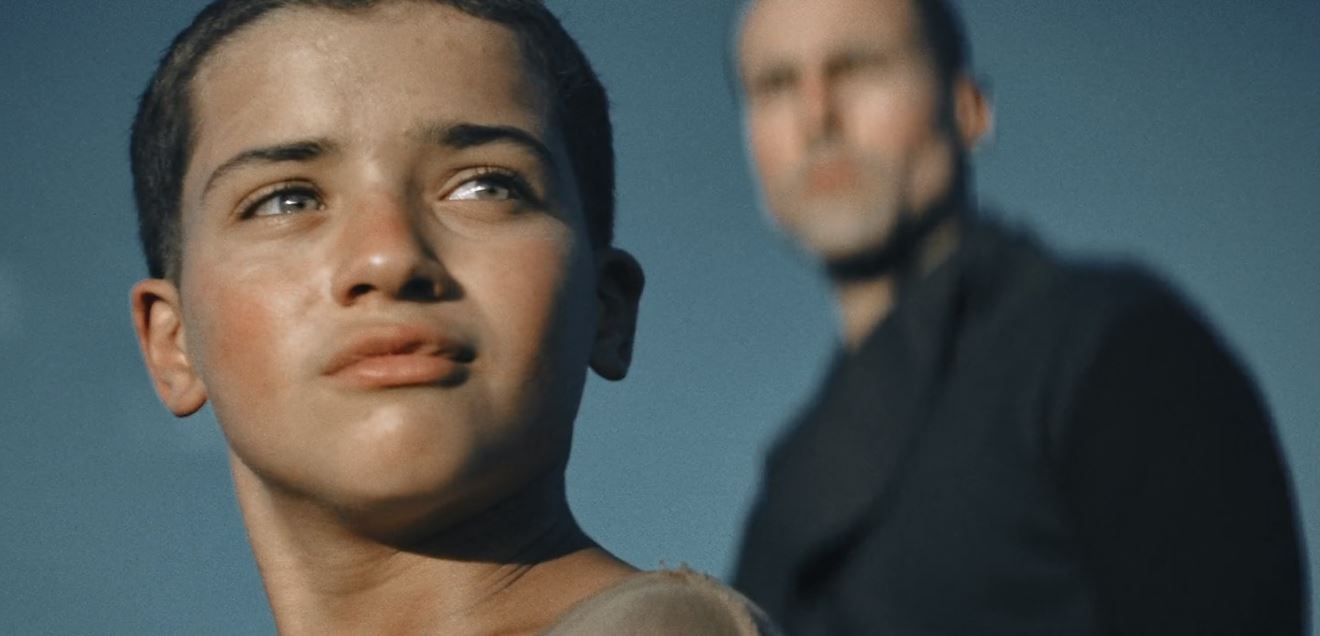
Production Company: SIOUXX
Executive Producers: Andreas Neumann, Khadija Donatelli
Creative Directors: Ken Hanada, Andreas Neumann
Producer: Michael Rodriguez Dueñas
Copywriter: Benjamin McAllister
Futurist: Julian Scaff
Production Supervisor: Jake Brown
Production Coordinator: Pure Brisbon
First Assistant Director: Adam Zimmer
Second Assistant Director: Luther Sartor
Director of Photography: Nico Aguilar
First Assistant Camera: Connor Lambert
Second Assistant Camera: Nick Vannatta
DIT: John Goodner
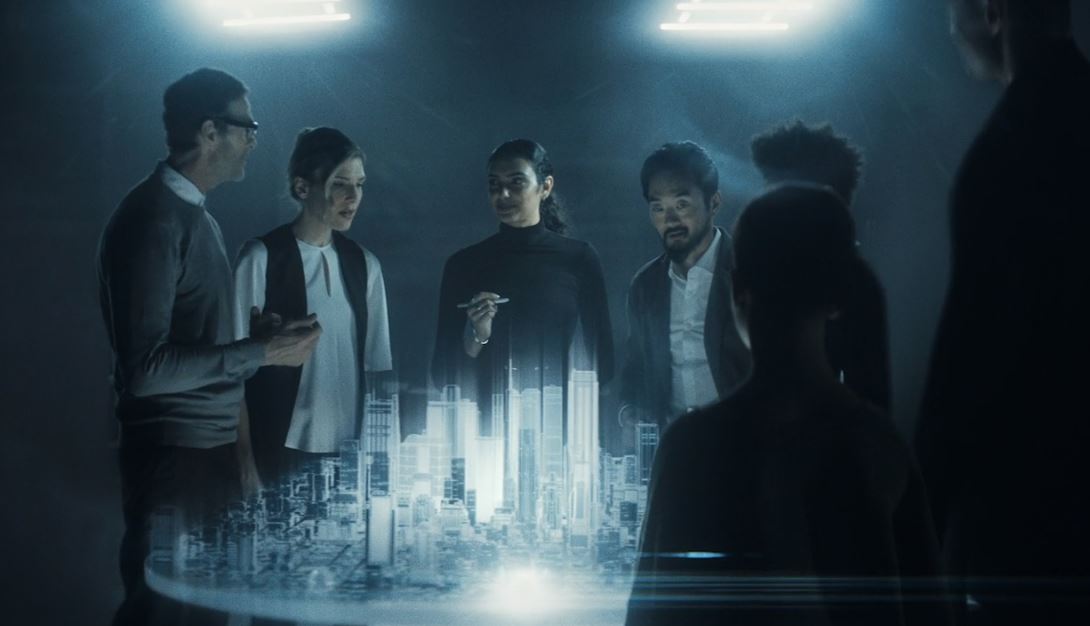
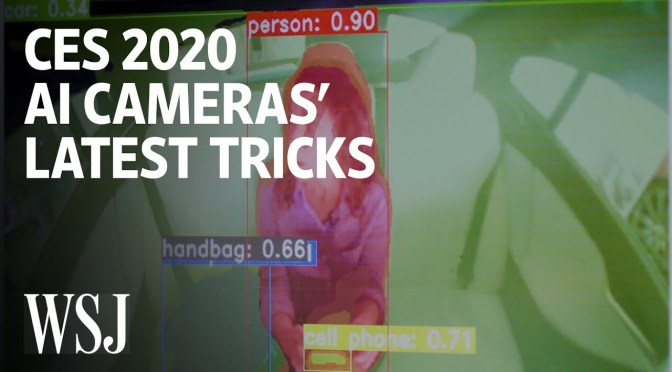
Technology Review: AI Camera & Sensor Systems At CES 2020 (WSJ Video)
Two new smart systems use cameras, artificial intelligence and an assortment of sensors to keep watch over you—Patscan looks for threats in public spaces, while Eyeris monitors the driver and passengers in a car. WSJ’s Katherine Bindley visits CES to explores their advantages, as well as their privacy costs.
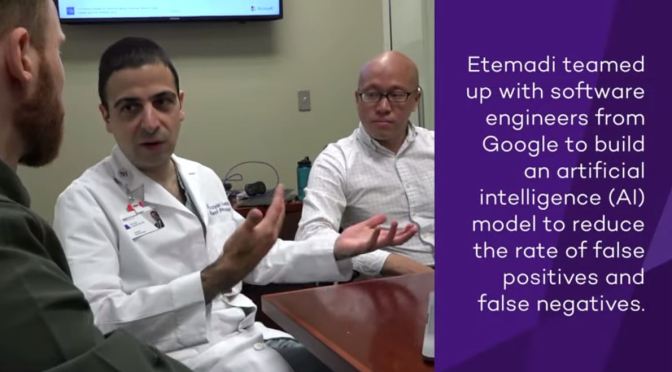
Medical Technology: New Artificial Intelligence (AI) Model Predicts Breast Cancer More Accurately
A new Artificial Intelligence (AI) model predicts breast cancer in mammograms more accurately than radiologists, reducing false positives and false negatives, reports a large international study from Google, Northwestern Medicine and two screening centers in the United Kingdom (U.K.).

 Boomers Daily