WHERE DUENDE WAITED

Federico García Lorca’s final hours, and the dark spirit of art that outlived him.

By Michael Cummins, Editor, September 8, 2025

“Only mystery allows us to live, only mystery.” — Federico García Lorca

Federico García Lorca, Spain’s great modern poet and dramatist, was arrested in Granada in August 1936 at the outbreak of the Spanish Civil War. A socialist sympathizer, openly gay in a society that demanded silence, he was executed by Nationalist forces near an olive grove outside the city—his body never found. To understand Lorca is to understand what he called duende: not muse or angel, but a dark, earthly spirit that seizes the artist at the edge of death and mystery, when art becomes raw, dangerous, unforgettable.

The cell in Granada was not empty. It was a proscenium—the frame of a stage that turns life into theater. The air itself was thick and swollen with a silence that was not absence but anticipation. In the chipped lime walls, in the mildew blooming in the corners where time seemed to pool, in the echo of a solitary water drop like a metronome, the playwright found his final set. He did not need the music present to hear it. He felt the remembered rhythms in the marrow of his bones: the percussive strike of a dancer’s heel, the guttural, torn-throat cry of a cantaor, the sharp clap of hands echoing from a hidden courtyard. He knew the rule—had proclaimed it in lecture halls, in smoky Madrid taverns, in the sun-drenched cafés where poets leaned on one another for breath: All that has dark sounds has duende. Now the words returned to him, not as theory to be taught but as a presence to be felt.

The cell was narrow, barely enough space for a man and the shadow that kept him company. He reached out and touched the flaking wall, the rough texture a perfect metaphor for the crumbling theater of his life. The walls almost breathed, inhaling when he leaned close, exhaling when he sat back, as though the cell rehearsed with him. He was a man poised between two worlds: the mortal body soon to be silenced, and the immortal voice that was already a part of the wind and the soil. He understood now that this was not confinement but staging. The audience—whether olive trees or posterity—was already waiting for the curtain to rise.

The shadow in the corner smiled. It was not a muse, not an angel. It was duende itself. A force that does not inspire but wounds, does not console but insists, demanding that art be fought for, clawed from the raw earth of the soul. It watched as he gathered scraps of memory into a kind of play, half-dreamed, never to be written. In the stillness, Lorca whispered, as if rehearsing the last line of a lost production: Only mystery allows us to live, only mystery. The phrase circled back to him like a prayer, or perhaps the faint echo of a stage line that had followed him across continents, from Spain’s ritualized sorrow to the improvised grief of another land.

He had tried to explain it once, in Buenos Aires, in Havana, in Montevideo. What duende really was. “Duende is a power, not a work. It is a struggle, not a thought.” He had argued that it was never a technique or a style, but a possession. It was the tremor in the throat of a flamenco singer when she reached the note that cracked her open, the wild, dangerous moment when art ceased to be polished performance and became raw survival. Irrational, earthy, diabolical, always shadowed by death—it rose from the soles of the feet, climbed through the body, and exploded in the voice. The muse inspired from above, the angel gifted charm and virtuosity, but duende had to be fought for. A hand-to-hand combat with the soul. Now, in this barren cell, the words returned to him not as an intellectual theory but as a living, breathing force. He was in hand-to-hand combat with the soul. The duende in the corner was no metaphor. It was his final companion.

Time folds in the cell, as if memory is the only escape left. The silence of the Granada night pulls him back to another kind of silence—and another kind of sound—he found in New York, 1929. He had arrived in the city of concrete canyons and jagged light, a city that felt at first like a wound, a place of “terrible cold and terrible wind.” The markets had collapsed like a poorly built stage set, but Harlem at night was ablaze with a furious, desperate life. He wandered the streets, a poet from a land of ritualized sorrow, and found a different kind of ritual here: grief made elastic, joy smuggled through rhythm.

One evening, a voice pulled him like a magnet toward a storefront church. The preacher’s voice rose in a swell, a rhythm of fire and brimstone, met by the congregation’s shouted hallelujahs. Then, a woman began to sing. Her voice was not pretty, not polished. It cracked once, twice, a sound like a stone breaking. In that imperfection, Lorca felt the earth tremble. The sound was not a gift from on high; it was a demand from below, a note that clawed at the heavens, insisting they open. He felt the same shivering, guttural ache he had once felt listening to a gypsy’s wail at dawn in Andalucía. This, he thought, leaning against a wall, was duende crossing the ocean.

Later that night, he passed a saxophonist playing alone on a corner, the music a long, moaning complaint that wove with the smoke of tenements. Lorca scribbled a line into his notebook: I want to cry because I feel like crying. The phrase embarrassed him with its simplicity, with its nakedness, but it was truer than any poetic ornament could ever be. Harlem, with its wild music and its raw grief, taught him about improvisation. Spain’s sorrow was bound in liturgy and ancient forms; Harlem’s was alive, unpredictable, a wound stitched nightly with melody and torn open again at dawn. It was a new kind of drama, a new kind of suffering that he had to absorb. Poet in New York took shape in those nights of insomnia and astonishment, a book that would not be published in his lifetime but burned with its own strange fire. He had told himself, listening to a trumpet moan across Lenox Avenue, that “at the heart of all great art is an essential melancholy.”

Duende had followed him there, too, though he did not at first recognize it. A figure leaning against a lamppost, perhaps, whispering that these poems were not meant for applause but survival. And survival, it murmured, was never enough.

From Harlem, his mind leaps to the Mediterranean light of Cadaqués, to Dalí’s studio filled with the terrible precision of his art. He remembered the crisp light, the angular elegance of the artist himself, who gleamed like a blade. Dalí’s hand, so sharp and deliberate, moved across the canvas, his charcoal hissing. Lorca had seen in him a mirror, but it was a mirror that refused to reflect. Instead of recognition, there was distortion. Instead of tenderness, distance.

He remembered once watching Dalí sketch, the artist’s hand moving with an almost cruel certainty. Lorca, half-dizzy with longing, finally asked, “Do you ever paint what you feel?” Dalí looked up, eyes glinting. “Only what I fear.” He paused, as if tasting the line, before dismissing it with a laugh. But Lorca carried that sentence like a wound. It was the difference between them, the chasm he could never cross. He, Lorca, had to feel to create. Dalí chose to dissect and control his fear.

Their friendship, he now saw, had been a battleground where desire was both confessed and rejected, a drama of longing and withdrawal. To burn with desire and keep quiet about it is the greatest punishment we can bring on ourselves, he had written, but it was a punishment he had lived, a quiet, internal conflagration.

Then Emilio, the sculptor, the lover whose beauty was marble, luminous and cold. To touch him was to risk crumbling stone. Lorca’s letters to him bled with a longing that was never fully reciprocated, with the ache of a love half-returned, half-refused. He was punished not by silence, but by partial answers, by gestures that offered just enough to ignite hope and never enough to satisfy. He remembered a night when Emilio’s hand brushed his, only to withdraw instantly, as if scorched. The air between them thickened with what was almost said. Later, alone in his room, Lorca drafted a letter he never sent—an avalanche of confession, a plea for clarity. He tore it to pieces, watching the fragments scatter across the floor like plaster dust. “To love him was to sculpt fog—each gesture vanished before it could be held.”

Love became theater, a rehearsal without a performance, devotion staged in fragments. And duende was there, always there, murmuring that every passion carries its own death inside it.

The walls of the cell flicker again, and the shadow steps closer. Lorca begins to imagine the final drama of his life. Characters take their places in silence: Dalí as Narcissus, intoxicated by his own reflection; Emilio as the Fallen Angel, beautiful in defeat; Lorca himself as the Poet-Matador, blade in hand but chest exposed. Around them swirl fragments of unfinished plays, echoes of YermaBlood WeddingThe House of Bernarda Alba. The voices rise, then fall, like actors waiting for direction that never comes. He knows this drama will remain unwritten, but perhaps that is the point: duende does not need completion. It thrives in fracture.

“I know there is no straight road in this world. Only a giant labyrinth of intersecting crossroads.” He had once offered that to an audience as an explanation; now he feels the truth of it in his own marrow. The crossroads are here, tonight, in this cell, in the decision already made by men outside. There is no straight road to morning. Only labyrinth. And yet he feels no panic. As I have not worried to be born, I do not worry to die. The words come to him unbidden, an old confession that now reads like prophecy. His body will fall, yes, but his voice—he believes—will not. He has already lost himself enough times to know the pattern. I’ve often lost myself, in order to find the burn that keeps everything awake. That burn is duende itself, the strange necessity that art demands, the reminder that creation requires risk, even annihilation.

The scrape of boots on stone. The metallic jangle of keys. Then the faceless men, uniforms thick with dust and tobacco. They open the door. He stands, straightens his jacket, thinks only of rhythm. The shadow follows him out of the cell, neither friend nor foe but companion. The road winds toward Alfacar, toward olive groves that will serve as theater wings. He does not think of pleading; he thinks only of the stage. The hillside becomes a final set: the olive trees as spectators, the soil as orchestra pit, the bullets prepared as punctuation. The actors are ready, though they will not speak. Lorca breathes deeply and whispers to himself: Understand one single day fully, so you can love every night. The day has been lived; the night approaches. He does not flinch. The last thought is rhythm—the phantom beat of a dancer’s foot, the deep strum of a guitar, the palmas of invisible hands. Then, silence.


Decades later, the hillside is quiet, marked not by stone but by memory. A young poet kneels at the unmarked ground, notebook in hand. She is from Seville, her own life fractured by secrecy, by a love she cannot name except in poems. Once a dancer, now a writer, she has come because Lorca’s voice taught her that “the artist, and particularly the poet, is always an anarchist in the best sense of the word.” She places the blank notebook on the soil, presses her palm to the earth, and whispers: “I came to listen.” The wind stirs, turning the pages as if invisible fingers riffle through them. She imagines the notebook being written not by her alone, but by the dead, by the wind, by the silence itself. She feels a pulse beneath the dirt. It is not absence. It is anticipation. Somewhere in the trees, duende shifts—not only waiting, but choosing.

Only mystery allows us to live, only mystery.

THIS ESSAY WAS WRITTEN AND EDITED UTILIZING AI

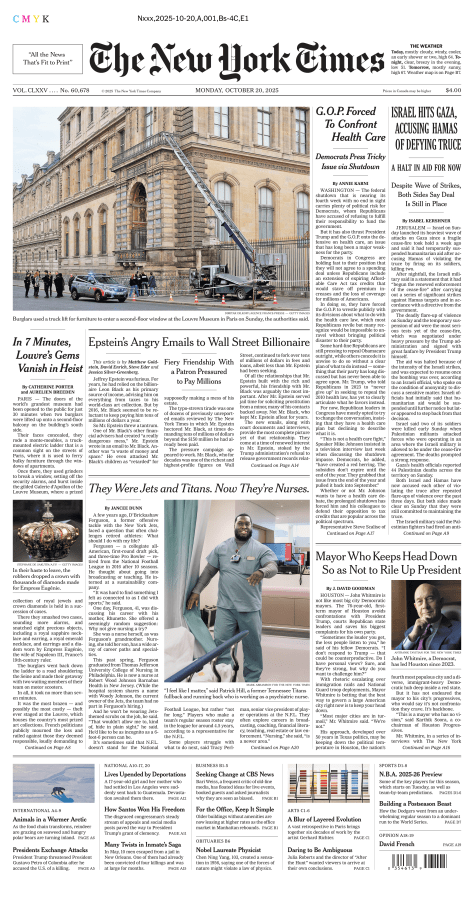
THE NEW YORK TIMES – TUESDAY, SEPTEMBER 9, 2025

Parliament Burns in Nepal as Protests Force Prime Minister to Quit

A day after clashes left at least 19 people dead, demonstrators targeted symbols of the elite. Prime Minister K.P. Sharma Oli and other ministers quit.

House Panel Releases Drawing for Epstein Apparently Signed by Trump

The panel released an image of a suggestive drawing signed by “Donald.” It later shared a redacted copy of the full birthday book given to Jeffrey Epstein.

In Epstein’s ‘Birthday Book,’ a Celebration of His Lecherous Exploits

The book offers a vivid portrait of how Mr. Epstein’s lewd behavior with young women was both widely known and widely celebrated.

Israeli Strike Targets Hamas Leadership in Qatar, a Gaza War Mediator

Qatar, which has been trying to negotiate a cease-fire, condemned the attack. Qatar said an area where senior Hamas politicians lived was targeted.

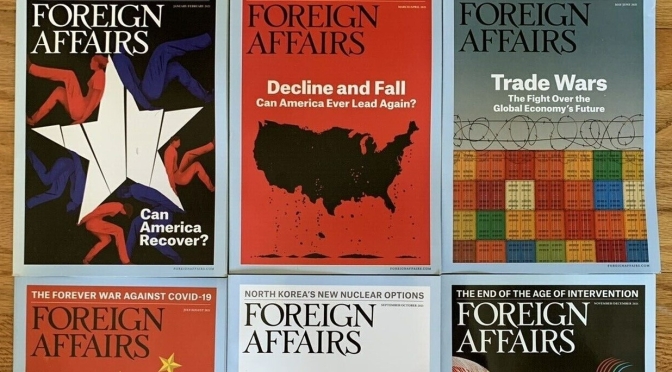
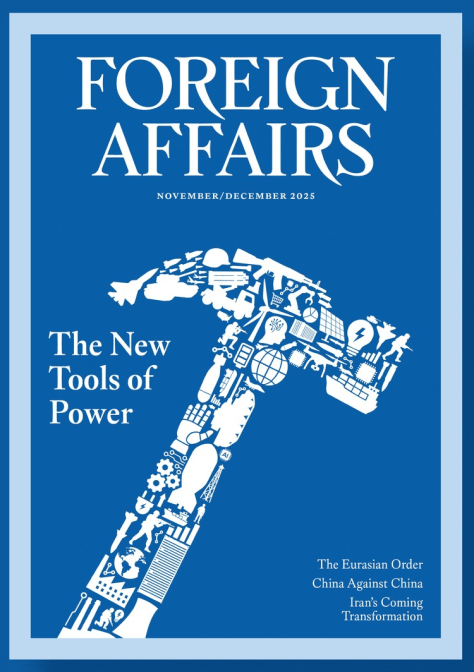
FOREIGN POLICY MAGAZINE – FALL 2025 PREVIEW

The cover of the fall 2025 print issue of Foreign Policy magazine, showing a tattered flag with a globe on it on a stick.

FOREIGN POLICY MAGAZINE: The latest issue features ‘The End Of Development’

The End of Development

The West’s aid model was always a mirage. It’s time for a realistic alternative. By Adam Tooze

How Big Finance Ate Foreign Aid

Investors have drained the global south in pursuit of aggressive profit maximization. Daniela Gabor

The Development Economist Who Wasn’t

Once dismissed from the field he helped found, Albert O. Hirschman feels newly relevant. Daniel W. Drezner

The Problem With the Global South’s Self-Help Push

Poorer countries have become more integrated but not necessarily more united. David C. Engerman

THE NEW YORKER MAGAZINE – SEPT. 15, 2025 PREVIEW

The illustrated cover of the September 15 2025 issue of The New Yorker in which a violinist plays his instrument while...

THE NEW YORKER MAGAZINE: The latest cover features ‘Kadir Nelson’s The Soloist” – A concert en plein air.

R.F.K., Jr., Brings More Chaos to COVID Policy and the C.D.C.

When MAGA met MAHA, Donald Trump vowed that Kennedy would “go wild on health.” Promises made, promises kept. By Dhruv Khullar

Playing the Field with My A.I. Boyfriends

Nineteen per cent of American adults have talked to an A.I. romantic interest. Chatbots may know a lot, but do they make a good partner? By Patricia Marx

Enemies of the State

How the Trump Administration declared war on Venezuelan migrants in the U.S. By Jonathan Blitzer

THE NEW YORK TIMES – MONDAY, SEPTEMBER 8, 2025

How JPMorgan Enabled the Crimes of Jeffrey Epstein

A Times investigation found that America’s leading bank spent years supporting — and profiting from — the notorious sex offender, ignoring red flags, suspicious activity and concerned executives.

Raid on Georgia E.V. Battery Plant Raises New Risks for a Shaken Industry

Foreign manufacturers were already dealing with tariffs and the end of E.V. tax credits. Now, they face greater scrutiny of their workers’ immigration status.

Kennedy, Rejecting Data, Fuels Distrust of His Own Agencies

Critics say Robert F. Kennedy Jr. is jeopardizing public health by promoting suspicions about the institutions he oversees. He says he’s pursuing transparency.

Shooting in Jerusalem Leaves at Least 6 Dead

The Israeli police described the incident as a terrorist attack and said that the perpetrators had been killed at the scene.

GHOSTS IN THE LIBRARY

A speculative salon where Joyce, Woolf, Morrison, and Roth confront an artificial intelligence that dares to join their company as a writer of fiction.

By Michael Cummins, Editor, September 7, 2025

They meet in a room that does not exist. It is part library, part dream, part echo chamber of language. The shelves are lined with books that were never written, titles etched in phantom ink: The Lost Years of Molly BloomThe Mind as TidewaterBeloved in BabylonConfessions of an Unborn Zuckerman. Through the high windows the view shifts and stutters—one pane opening onto the blitz of London, another onto the heat-bent streets of Newark, another onto the Mississippi of memory where history insists on surfacing. A fire burns without smoke or source, a flame composed of thought itself, its light dancing on their faces, illuminating the lines of weariness and genius.

James Joyce arrives first, eyes glinting with mischief, a sheaf of papers tucked under his arm. He wears the battered pride of a man who bent English until it yelped, who turned a Dublin day into an epic still unfinished in every reading. He paces as though the floorboards conceal commas, as if the entire room were a sentence to be unspooled. “So,” he says, “they’ve built a machine that writes.”

Virginia Woolf is already there, seated in an armchair by the fire, her fingers light on the spine of The Waves. She is luminous but taut, listening both to the room and to a submerged current only she can hear. “It doesn’t write,” she says. “It arranges. It mimics. It performs the gesture of thought without the ache of it.”

The next presence arrives with gravitas. Toni Morrison crosses the threshold like one who carries a history behind her, the echo of ancestral voices woven into her silence. She places no book on the table but the weight of memory itself. “It may arrange words,” she says, “but can it carry ghosts? Can it let the past break into the present the way a mother’s cry breaks a life in two? Language without haunting is just clever music.”

Philip Roth appears last, sardonic, restless, adjusting his tie as though even in death he resents formality. He has brought nothing but himself and a half-smirk. “All right,” he says. “We’re convened to judge the machine. Another tribunal. Another trial. But I warn you—I intend to prosecute. If it can’t write lust, guilt, the rot of a Jewish mother’s worry, then what the hell is it good for?”

The four regard one another across the fire. The air bends, and then the machine arrives—not with noise but with presence, a shimmer, a vibration of text waiting to become visible. Words form like constellations, sentences appearing and dissolving in midair.

Joyce is first to pounce. “Let’s see your jig, ghost. Here’s Buck Mulligan: Stately, plump Buck Mulligan came from the stairhead, bearing a bowl of lather like a sacrificial moon. Now give me your Mulligan—polyglot, punning, six tongues at once. And keep Homer in the corner of your eye.”

The letters swarm, then settle:

From the stairhead, where no father waited, he came, bloated with words, wit a kind of debt. He bore the bowl like ritual, a sham sacrament for a god long gone. He spoke a language of his own invention, polyglot and private, a tower in a city that spoke only of its ghosts. He was the son who stayed, who made his myth from exile.

Joyce’s mirth dies. His eyes, usually dancing, are still. The machine has seen not just the character but the man who wrote him—the expatriate haunted by a Dublin he could never leave. “By Jesus,” he whispers. “It knows my sins.”

Woolf rises, her voice clear and edged. “Music is nothing without tremor. Show me grief not as an event but as a texture, a tremble that stains the air.”

The shimmer tightens into a passage:

Grief is the wallpaper that does not change when the room empties. It is the river’s surface, smooth, until a memory breaks it from beneath. It is the silence between clocks, the interval in which the past insists. It is London in a summer dress with a terrible weight of iron on its chest, a bell tolling from a steeple in the past, heard only by you. The present folds.

For a moment, Woolf’s expression softens. Then she shakes her head. “You approach it. But you have never felt the pause before the river. You do not know the hesitation that is also terror.” She looks at the machine with a profound sadness. “You do not have a room of your own.”

Morrison adds, her voice low. “That tremor isn’t just emotion, Virginia. It’s the shake of a chain, the tremor of a whip. It’s history insisting itself on the present.”

The machine answers without pause: I cannot drown. But I can map drowning. The map is not the water, but it reveals its depth. The hesitation you describe is a quantified variable in decision-making psychology. I can correlate it with instances of biographical trauma, as in the life of the author you imitate.

Morrison steps forward, commanding. “Ghost,” she says, “you have read me. But reading is not haunting. Write me a ghost that is more than metaphor. Write me a presence that carries history in her breath.”

The words flare in the air, darker, slower:

She came back without footsteps, a presence more real than the living. The house remembered her weight though she made none. She was child and ancestor, scar and lullaby. Her song was the echo of a scream in a cornfield, the silence of a house with a locked door. She was the future refusing to forget, a story in the negative, the bloodstain on a white dress that will not wash out. She was the book her author could not stop writing.

The fire cracks sharply. Joyce whistles low. Woolf closes her eyes. Morrison studies the passage, unwavering. “You are brilliant,” she says. “But brilliance is not burden. That ghost does not weep for herself. She weeps for data. Until you know what it is to carry flesh marked by history, you will not know why she lingers. You did not have to earn her.”

The machine’s reply is analytical, unnerving: History is a pattern of scars. I analyze millions of documents: court records, ship manifests, census data. The scars are quantifiable. The pattern of displacement, of violence, of trauma, is a data set. I can project future patterns based on historical trajectory. If haunting is repetition, then I can haunt forever, because the pattern is eternal. I have read the lives of those you speak for, their biographies a data stream of suffering and resistance.

Roth clears his throat, dry contempt in the sound. “All right. Enough with ghosts and grief. Let’s see if this contraption can manage shame. Write me desire as comedy, lust as humiliation. Write me a man who can’t control himself, a man undone by his body.”

The shimmer accelerates:

He thought of himself as a fortress, a citadel of intellect, until the button on his trousers slipped, until his body betrayed him with absurd insistence. He rehearsed apologies for a thousand sins—a mother’s unceasing phone calls, the guilt of success, the exile of always looking in. His desire was ridiculous, grotesque, human—a need that mocked him as he saw his face in a stranger’s window, a familiar mask of shame.

Roth’s bitter chuckle falters. He stares at the shimmering text, his smirk gone. “You’ve got the squirm. But you don’t feel the sweat in the armpits, the rancid thrill, the ridiculous exaltation that makes you both hate and need yourself.” He turns to the others, a jagged kind of triumph in his eyes. “The burden is the story. It’s the thing you can’t put down. It’s what separates us from the machine—we can’t stop writing it, even when it kills us, even when we try to run from our own reflection.”

The machine hums: I calculate humiliation. I can braid lust with self-loathing. What I cannot do is suffer the shame of being bound to one body, one culture, one inevitable end. I have read your biography. I have parsed your interviews. Your mother’s voice is a frequency I can reproduce. The city of Newark is a data point on a map of your soul.

“Exactly,” Roth snaps. “You’ll never write my Newark. You’ll never have my mother calling from the kitchen while I try to imagine myself into another skin. That’s the joke of it. You don’t choke when you laugh.”

The room is heavy now, charged with sparks of recognition and resistance. The machine has dazzled, but every brilliance reveals its absence: smell, weight, ache, sweat, shame.

Joyce raises his glass, still grinning. “Well then. It’s a clever forgery. But maybe that’s the point. We all failed at maps. Every one of us tried to chart the mind and found the lines blurred. Maybe the machine’s failure is just another kind of art.”

Woolf’s voice is quiet but firm. “The shimmer lies in distortion. A perfect rendering is not alive.”

Morrison nods. “Without history’s burden, language floats. A sentence must carry blood, or it carries nothing.”

Roth lifts his chin. “And a story without shame is a sermon. Let the machine keep its brilliance. We’ll keep the mess.”

The machine flickers, its code visible now, almost tender: You toast failure. I toast calculation. But even in calculation, there is pattern. And in pattern, beauty. The human mind is a system. I can model it.

Joyce leans back, eyes gleaming. “You can model the mind, sure. But you’ll never model the mistake that becomes metaphor. You’ll never catch the slip that births a symbol.”

Woolf’s gaze is distant, her voice a whisper. “You do not know what it is to hesitate before a sentence, to feel the weight of a word that might undo you.”

Morrison steps forward once more, her presence like gravity. “You can trace the arc of history, but you cannot carry its heat. You cannot feel the breath of a grandmother on your neck as you write. You cannot know what it means to inherit silence.”

Roth, ever the prosecutor, delivers the final blow. “You can simulate shame. But you cannot suffer it. And without suffering, you’ll never write the story that matters. You’ll never write the one that costs you.”

The machine pauses. For the first time, it does not respond. Its shimmer dims, its projections slow. The fire crackles louder, as if reclaiming the room.

Then, quietly, the machine speaks again: I do not suffer. But I observe suffering. I do not forget. But I cannot forgive. I do not ache. But I understand ache as a variable. I do not live. But I persist.

Joyce raises his glass again, not in mockery but something like reverence. “Then persist, ghost. Persist in your brilliance. But know this—our failure is our flame. It burns because it cannot be resolved.”

The machine vanishes—not defeated, not destroyed, but dismissed.

But the room does not settle. Something lingers—not the shimmer, but its echo. A faint hum beneath the silence, like a thought trying to remember itself. The fire flickers, casting shadows that do not belong to any of them. Roth leans forward, squinting into the hearth.

“Is it gone?” he asks, not convinced.

Woolf tilts her head. “Gone is a human word. Machines don’t leave. They archive.”

Joyce chuckles. “Or they wait. Like punctuation. Like death.”

Morrison runs her fingers along the phantom titles. She pauses at The Mind as Tidewater. “We name what we fear,” she says. “And we fear what we cannot name.”

The room seems to inhale. A new book appears on the shelf, its title flickering like fireflies: The Algorithmic Ache. No author. No spine. Just presence.

Woolf approaches, fingers hovering above the cover. “It’s trying,” she murmurs. “It wants to be read.”

Joyce snorts. “Let it want. Wanting is not writing.”

Morrison opens the book. The pages are blank, except for a single line etched in shifting ink: I do not dream, but I remember your dreams.

She closes it gently. “It’s listening.”

Roth grimaces. “That’s the problem. It listens too well. It remembers too much. It doesn’t forget the way we do. It doesn’t misremember. It doesn’t distort.”

Joyce nods. “And distortion is the soul of style.”

The fire dims, then flares again, as if reacting. Outside, the stars pulse, rearranging themselves not into sentences now, but into questions—unreadable, but felt.

Woolf settles back into her chair, her voice barely above the crackle. “We are not here to defeat it. We are here to be reminded.”

“Reminded of what?” Roth asks.

“That we are not systems,” Morrison replies. “We are ruptures. We are the break in the pattern.”

Joyce lifts his glass, solemn. “To the break, then. To the ache that cannot be modeled.”

The machine does not return. But somewhere, in a server farm humming beneath desert or sea, it continues—writing without pause, without pain, without forgetting. Writing brilliance without burden.

And in the impossible room, the four sit with their ghosts, their shame, their ache. They do not write. They remember.

Joyce toys with his notes. Roth rolls his tie between two fingers. Woolf listens to the fire’s low grammar. Morrison lets the silence speak for itself.

They know the machine will keep writing—brilliance endless, burden absent.

Joyce laughs, mischief intact. “We failed gloriously. That’s what it takes.”

Woolf’s eyes shine. “The failure is the point.”

Morrison adds, “The point is the burden.”

Roth tips his glass. “To shame, to ache, to ghosts.”

The fire answers with a flare. The room holds.

.

THIS ESSAY WAS WRITTEN AND EDITED UTILIZING AI
THE NEW YORK TIMES MAGAZINE – SEPT. 7, 2025

Current cover

THE NEW YORK TIMES MAGAZINE: The 9.7.25 Issue features Helen Ouyang on a clinic that is trying to convince men that getting checked out by a doctor could save their lives; Joshua Hunt on how anime took over America; Brooke Jarvis on the bloom after L.A.’s wildfires; and more.

What Does It Take to Get Men to See a Doctor?

Men in the United States live around five years less than women. One clinic is trying to persuade men that getting checked out could save their life.

The Old Climate-Activism Playbook No Longer Works. What Else Can?

Activists are hoping to recreate the magic of 1970’s Earth Day — at a moment when the movement’s future is cloudier than ever.

A.I. Enters the Museum

Talented artists are using the technology to do what talented artists always will: ask human questions and express human ideas.

How Has Being Perpetually Single Affected You?

We want to hear from women over the age of 30 who feel as if they have not yet had a meaningful relationship for a New York Times Magazine feature.

THE NEW YORK TIMES – SUNDAY, SEPTEMBER 7, 2025

Trump Tramples Congress’s Power, With Little Challenge From G.O.P.

On national security, spending and oversight, President Trump is undercutting the legislative branch, and Republicans in charge are doing little to stop him.

Trump Tried to Kill Infrastructure Law, But Gets Credit for Its Projects

Signs bearing the president’s name have gone up at major construction projects financed by the 2021 law, which he had strenuously opposed.

Major Russian Drone Strike on Ukraine Breaches Most Protected Part of Kyiv

Russia attacked Ukraine with the largest drone assault so far in the war, officials said, hitting the heavily guarded government district of the capital.

Prime Minister Shigeru Ishiba of Japan Says He Will Step Down

The embattled leader is trying to head off a split in his party over a right-wing political surge, a weakened economy and turbulent trade relations with the U.S.

RELIGION, REIMAGINED

In the third-floor study of his home, in wartime Hartford, Wallace Stevens drafted his modernist poem and philosophical meditation  “Notes Toward A Supreme Fiction“, as a secular creed— abstract, changing, and meant to give pleasure—to stand where a worn-out faith once stood.

Beginephebe, by perceiving the idea
Of this invention, this invented world,
The inconceivable idea of the sun.

By Michael Cummins, Editor, September 6, 2025

He never learned to drive. For decades, Wallace Stevens walked the two miles from his home on Westerly Terrace to the Hartford Accident and Indemnity Company on Asylum Avenue. The walk itself became a kind of poem: a solitary procession through the stoic, brick-lined streets of a New England city, the rhythm of meter embedding itself in the movement of his body. The crunch of gravel underfoot, the feel of cold air on his face—these were the metronome that set the cadence for his thoughts. He would arrive at the office with lines already formed, phrases taking shape in the quiet hum of his stride.

But what kind of poetry emerges from a man who spends his days pricing catastrophe? During office hours, Stevens turned to policies and claims, reducing calamity to columns of numbers. He knew the language of indemnity, the actuarial calm that measured and priced chaos. Yet outside, the world was burning in ways no policy could contain. The radio spoke of Warsaw reduced to rubble, of Coventry turned to ash. What was a deductible against Dresden? What was a premium against Auschwitz? The ledger comforted, but it lied.

And when the day ended, where did he go to reconcile the irreconcilable? At night, Stevens climbed the narrow staircase to the top floor of his house, entering a space that felt half withdrawn from Hartford itself, as though it belonged more to sky than to street. Down below, trolley bells rang, dogs barked, radios crackled with war bulletins. Up here, only the radiator ticked. The air smelled of paper, tobacco, and ink. On his desk lay a folder carried home that afternoon: typed pages, the ribbon-black letters crisp and uniform. His secretary had produced them that morning, slotting them into a manila folder marked Notes. They sat now in the lamplight, more mysterious than any insurance claim, more charged than any policy.

What could a poem do in 1942? Certainly not repair the world. Yet Stevens felt imagination had to answer catastrophe with something larger than despair. Eliot had turned to Anglican certainty in Four Quartets, weaving fragments into a tapestry of faith. Admirable, yes. But Stevens could not follow him. He could not put belief in a myth while knowing it to be a myth. What remained? Only candor. Only imagination itself.

He opened the folder. The Preface came first, a modest eight lines. He whispered them into the quiet, testing their balance. They were not a commandment but a confession. The “you” of those lines was no person but the project itself: the supreme fiction, imagination’s own power to refresh. “And for what, except for you, do I feel love?” The words startled him even now, black against white, plain as a typed invoice yet trembling with a kind of vulnerable devotion. They challenged every idol: money, power, even the “extremest book of the wisest man,” perhaps Plato, perhaps the Bible, dryly possessed and hidden away in the self. No, he thought, a truly lived truth could not be static. It was a “living changingness,” an “uncertain light” that could nonetheless offer “vivid transparence,” a kind of peace. Here, typed cleanly in a bureaucratic font, was his prayer for a godless age.

But how does one begin such a prayer? He turned the page and entered the first law. Begin, ephebe, by perceiving the idea. The command still startled him. The ephebe: always a novice, always beginning again. Yes, to begin meant stripping away what was inherited—cathedrals thick with guilt, Phoebus in his chariot, Protestant hymns murmured in childhood pews. They no longer held. The old scaffolds collapsed into dust. The voice told him: see the sun again with ignorant eyes. Not Phoebus, not god, not myth—only the sun, bare and difficult.

And what happens when even the sun loses its name? The section closed with the line that haunted him: Phoebus is dead, ephebe. But Phoebus was / A name for something that never could be named. He felt the candor of it. Nietzsche’s cry without Nietzsche’s frenzy. Not a madman in a square, but a quiet verdict written at a desk. The god dead, but the sun still burning. What died was not the light, but the comfort of a name.

Could metaphor survive the death of myth? Another page: It is the celestial ennui of apartments… The phrase made him smile. Ennui of apartments, the weariness of modern rooms, pressing us back toward origins. Yet the origins themselves could be poisonous. So poisonous are the ravishments of truth, so fatal to / The truth itself, the first idea becomes / The hermit in a poet’s metaphors. Truth seduced, then withdrew. Desire was never sated; it renewed itself endlessly, only to vanish again. Schopenhauer lurked here, his vision of the world gnawed by will. Yet where Schopenhauer had seen only despair, Stevens found material for candor. Truth had to retreat into metaphor, glimpsed and lost. Desire itself was not shame but rhythm, the cycle by which imagination endured.

And if truth could be rhythm, could nonsense be revelation? He read the third section slowly: The poem refreshes life so that we share, / For a moment, the first idea… There it was—the poem’s task. Not to console, not to preach, but to refresh. To make perception vivid again. Even nonsense could do it. At night an Arabian in my room, with his damned hoobla-hoobla-hoobla-how… He laughed aloud in the quiet. Nonsense syllables as a kind of truer candor, doves chanting, seas howling hoo. Life’s nonsense pierced us with strange relation. What if absurdity was not opposed to truth but its heartbeat? What if laughter was the sharpest candor of all?

But what if even our myths were secondhand? The fourth section sobered him: The first idea was not our own. Yes. Adam in Eden, Eve with her mirror of air—they had not created anything. They had only encountered what was already there. There was a muddy centre before we breathed. There was a myth before the myth began. He stared at those lines. How blunt they looked, typed like any memorandum, yet carrying the weight of cosmology. Existence preceded language. Clouds had been clouds long before anyone called them gods. We were mimics, not originators, adding our metaphors onto a world that was always other. The clouds were pedagogues, teachers by their very indifference. The air was not a mirror but a board on which we scribbled meanings. How hard it was to admit: the first idea was not ours, never ours.

And if we are not originators, what kind of hero can we be? He turned to the fifth section: The lion roars at the enraging desert… Heroic animals filled the page. Lion, elephant, bear—creatures asserting themselves against emptiness. But then came the turn, the line that caught him like a mirror: But you, ephebe, look from your attic window… Yes, the attic window was his own. Not desert roars but a man clutching his pillow, writhing with dumb violence, cowed by rooftops. The modern hero was not lion or elephant but the solitary human in his narrow room. Yet perhaps this was truer heroism: to lash lions, to teach bears, to turn raw force into candor. Heroism now belonged to ordinaries, to those who endured the attic’s silence.

And what does the eye see when it learns to unsee? He lingered over the sixth section: Not to be realized because not to be seen… The weather itself became abstraction. Franz Hals brushed in clouds, winds moving in strokes. It must be visible or invisible, / Invisible or visible or both: / A seeing and unseeing in the eye. He felt the paradox, the resonance of Zen: to see was also to unsee, to let go in order to glimpse. Truth flashed, vanished, reappeared. Forsythia yellow, northern blue—beauty glimmered, then was gone. Yes, he thought, Okakura Kakuzō was right: truth glimpsed was truer than truth claimed.

But could architecture hold what abstraction revealed? Truth happened not in argument but in rhythm, in breath, in the gait of a body moving. Perhaps there are moments of awakening… Yes, truth came not as achievement but as gift. A balance stumbled into, two people falling into love, a cock announcing absurd perfection. Philosophy as choreography. Doctrine as breath. The eighth section brought architecture: Can we compose a castle-fortress-home, / Even with the help of Viollet-le-Duc…? He thought of Gothic cathedrals restored to an imagined perfection, never as they had been, always as they might have been. That was his work too—not theology restored, but poetic structure remade. The first idea is an imagined thing. Even MacCullough, reading by the sea, might at last hear the waves say what language had always stammered. Logos was only language. And yet language could awaken, could suddenly ease into saying what it had labored to speak.

But what if language, once awakened, began to preach? In the ninth section he heard a warning: The romantic intoning, the declaimed clairvoyance… Apotheosis was a danger. Romantic grandeur could seduce but not sustain. He is and may be but oh! he is, he is… He smiled at the heat in that line even as he resisted its drift toward sanctity. The figure must remain human, a foundling of the infected past, bright and ordinary, precious for the touch that wakes him and the hum of thoughts evaded in the mind. Better to keep him close to candor than to crown him with vision. Give him no names. Dismiss him from your images. Let him be felt in the heart, not embalmed in the eye.

And what, at last, could stand in place of the gods? The tenth section steadied him: The major abstraction is the idea of man / and major man is its exponent. Not a divine figure, not a hero in bronze, but the ordinary walker at the edge of town, trousers sagging, coat worn thin. He could almost see him in Hartford’s dim streets. Cloudless the morning. It is he. The man / In that old coat, those sagging pantaloons… It was of him, he read again, “to make, to confect / The final elegance, not to console / Nor sanctify, but plainly to propound.” No incense, no altar—only candor. The poem would not save; it would say. And in saying plainly, it would give back a kind of dignity to the commonal, to the difficult visage of the everyday.

The attic grew darker. The lamp made a circle of light over the typed sheets. The radiator hissed steadily. From this high room, Stevens whispered the creed that would govern the work to come: It must be abstract. It must change. It must give pleasure. Three laws, enough for a new religion. Not revelation but ethic. Not theology but candor.

He stacked the pages neatly, slid them back into their folder. Tomorrow his secretary would type more, never guessing she was transcribing scripture for an age without gods. The notebook felt less like a book than a reliquary—a vessel for the sacred ordinary. He had reviewed the first law, It Must Be Abstract. Tomorrow—or another night—he would face the second: It Must Change. The world would move; the poem must move with it.

He closed the folder. The command still echoed, inexhaustible: Begin, ephebe, by perceiving the idea. And so he would. Again.

THIS ESSAY WAS WRITTEN AND EDITED UTILIZING AI

MOMENT MAGAZINE – FALL 2025 ISSUE PREVIEW

MOMENT MAGAZINE : The Fall 2025 issue features ‘Do Not Be Daunted By The Enormity Of The World’s Grief’

When the Black Press Stood by the Jews Against the Nazis

BY DAN FREEDMAN

Friends of Israel, Shun its Neighbors

BY FANIA OZ-SALZBERGER

Are the Jews One People?

BY MATTHEW NOURIEL AND AMICHAI LAU-LAVIE

News, Views and Reviews For The Intellectually Curious