Category Archives: Urban Planning

Reviews: The Best 15 Books About Cities In 2023

Green Earth by Kim Stanley Robinson
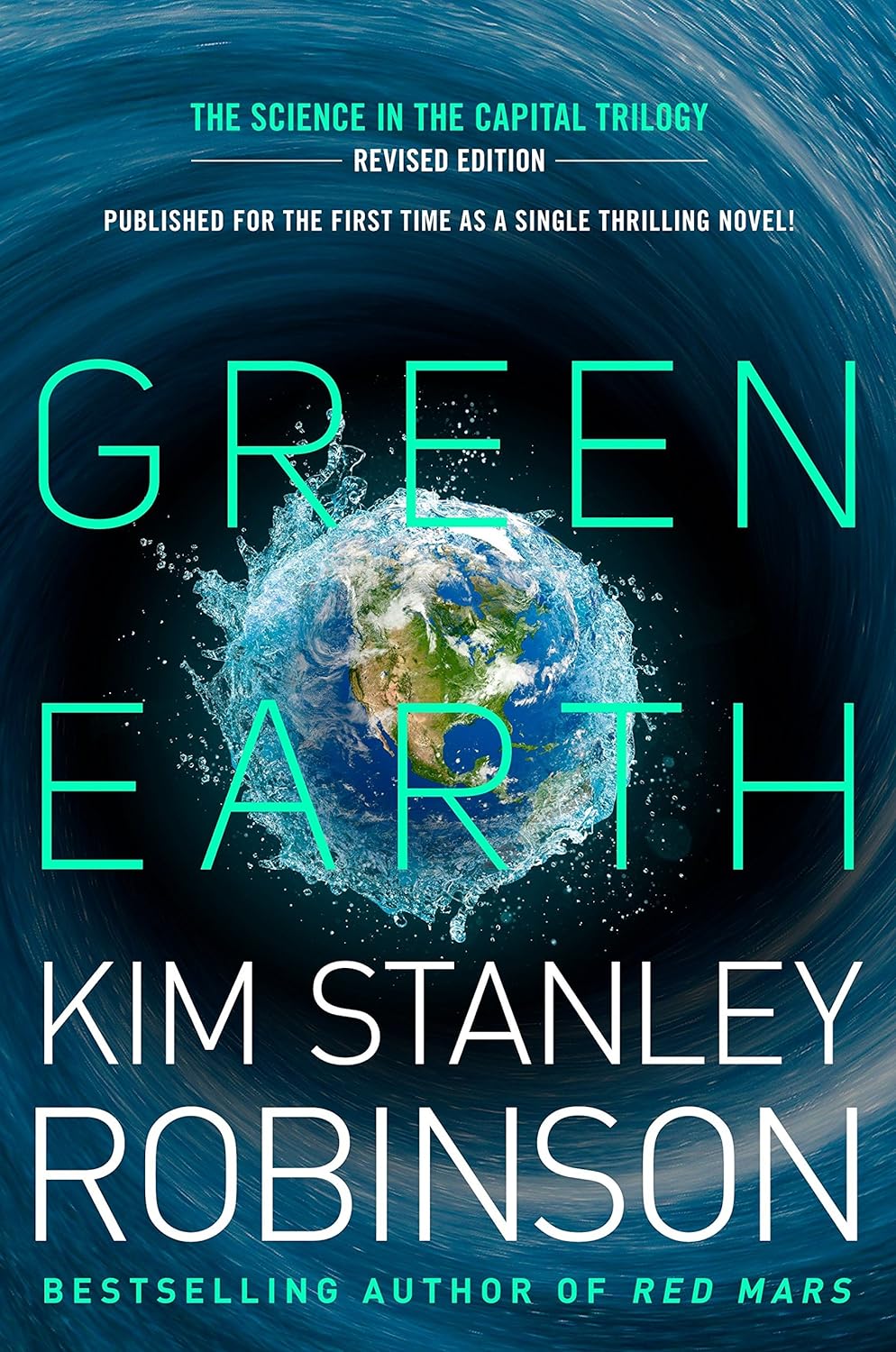
Green Earth book cover


Kim Stanley Robinson is credited with helping create the genre of climate fiction, and his book Green Earth is yet another example of that. Set in Washington, DC, Robinson draws from his own personal experience living and working in the capital city. “What I like about DC is that there is kind of an electricity in the air, a human electricity,” Robinson told CityLab. “You walk the streets, you see people from all over the world. To go to the world capital and settle there is a statement. It’s an attempt to wrest control of one’s fate.” But where the fictional part of the story begins is in its characters — when he portrays federal bureaucrats as a positive force for good.

Biourbanism: Cities as Nature by Adrian McGregor
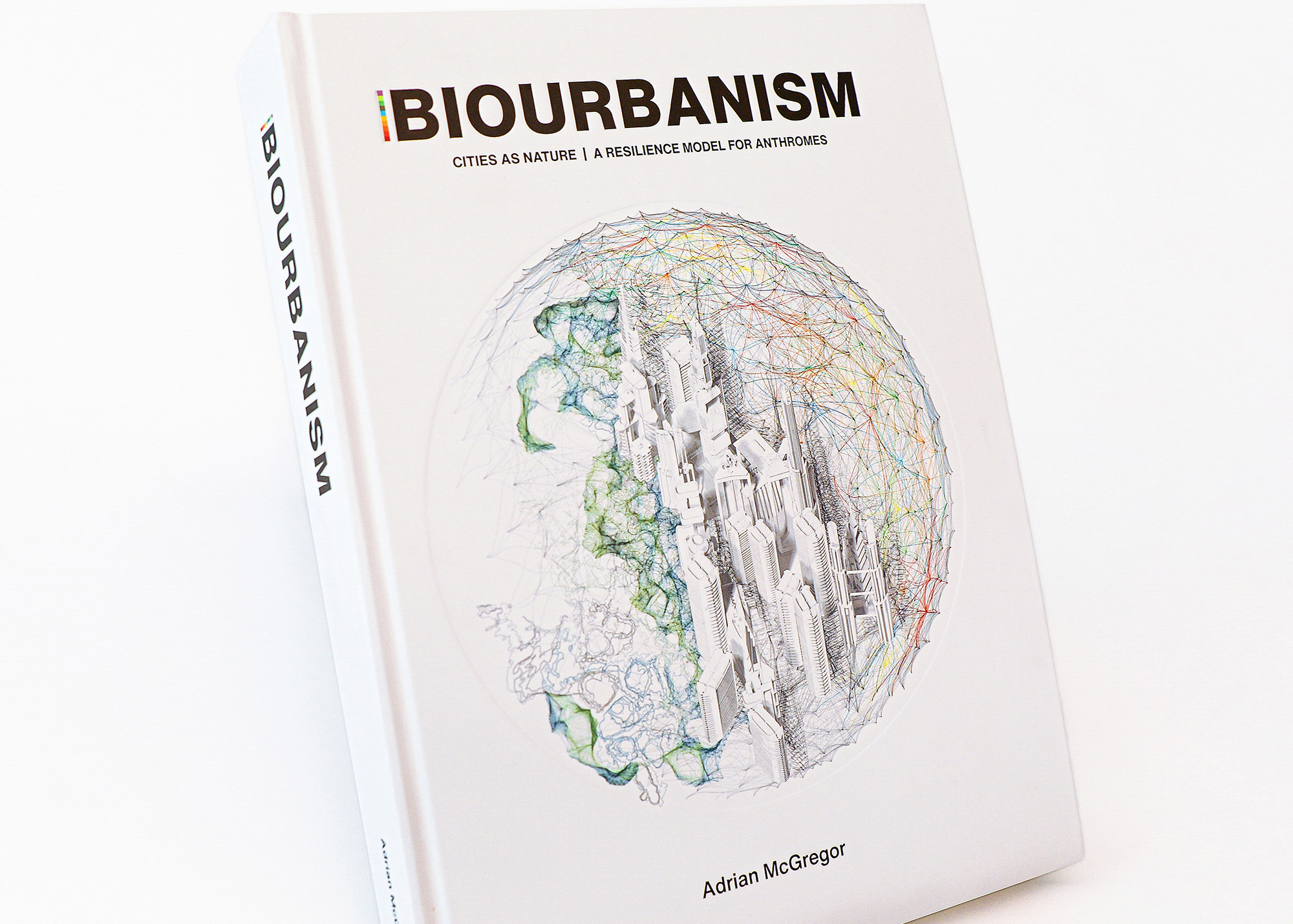
Biourbanism book ov


“If we can understand that cities are part of nature — even if they don’t really look like nature — that means we’ve got to change how we plan with them, how we work with them, and what our future looks like on spaceship Earth,” Adrian McGregor says. That’s the premise of Biourbanism: Cities as Nature, which looks at how effective urban planning and design can be achieved by viewing cities through a natural lens. McGregor sees cities as instrumental to lead the fight against the climate crisis. “There’s a policy gap between a federal government making decarbonization commitments and actual city policy,” he says. “They’re not really thinking clearly about where the emissions are coming from and therefore how to target them.”

Paved Paradise: How Parking Explains the World by Henry Grabar
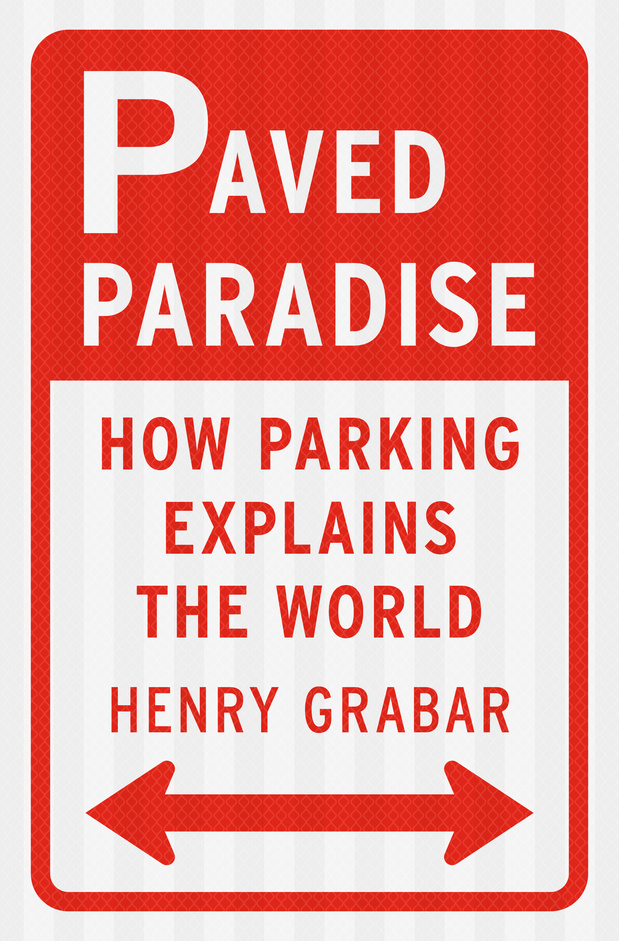
Paved Paradise book cover

Journalist Henry Grabar has a pretty simple solution for better city living: parking reform. The act of parking, for so many, is an aggravating experience. “You’re more likely to be killed over a parking space than you are to be killed by a shark,” Grabar told CityLab. In his book Paved Paradise, he argues that the key to happier residents is transforming parking policies to make them smarter and more convenient, and by undoing some of the privileges given to drivers in order to help boost multimodal transportation. “It’s very hard to overrule the instinctive feeling that parking ought to be available when I want it, where I want it, for the price I want to pay, which is zero,” Grabar said. “A lot of smart parking policy deviates from those assumptions, like charging for coveted street parking in busy locations, or trying to encourage people to park in a garage a few blocks away and then walk a bit.”

Built From the Fire by Victor Luckerson
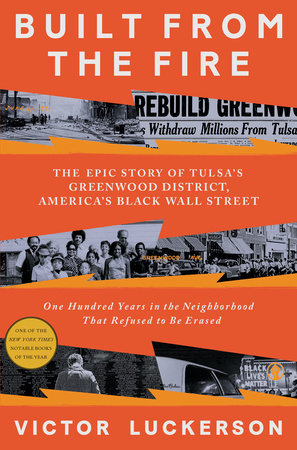
Built from the Fire by Victor Luckerson: 9780593134375 |  PenguinRandomHouse.com: Books


What happened after the Tulsa race massacre? It’s a question often lost when thinking about the violence that saw one of the wealthiest historic Black American neighborhoods burned down, and its residents killed or chased out. Built From the Fire seeks to tell the story of Greenwood from start to end, past the initial tragedy that wiped out Black Wall Street and the destructive urban renewal plans and physically divisive highways that followed. For Victor Luckerson, who moved to Tulsa and embedded himself in Greenwood’s community and archives in order to tell the story right, the policies and actions of local government officials did as much damage, if not more, to the neighborhood’s heritage than the initial conflagration. “I would say the massacre was more devastating in the short term, and urban renewal more devastating in the long term,” he says.

There Goes the Neighborhood by Jade Adia

There Goes The Neighborhood book cover

It’s not just heartbreak and bad grades that teens are facing — now, it’s gentrification too. Author Jade Adia found inspiration in the Los Angeles youth that came out to protest against police brutality after the murder of George Floyd, and wrote There Goes the Neighborhood with those young people in mind. Her debut young adult novel tells the story of 15-year-old Rhea, who devises a plan to save her best friend’s family from eviction, as gentrifiers threaten to upend her neighborhood in South Los Angeles. “I wanted to tackle the topic [of gentrification] in the most accessible way possible,” Adia told CityLab, “by putting young people and their experiences on the front lines of the conversation.”


READ MORE

Design: A Tour Of Löyly Public Sauna In Helsinki

Architectural Digest (May 9, 2023) – Today Architectural Digest brings you to Finland’s capital Helsinki to tour Löyly, a remarkable public sauna designed to blend in with nature.

Perched on the city’s rugged coastline, architects Anu Puustinen and Ville Hara designed Löyly to resemble a rock formation on the shore. Sustainability and community are at the heart of this unique space – using only FSC-certified materials to create a unifying holistic environment for current and future generations.

  • Director: Meg Sutton
  • Director of Photography: Hannu Pyyhtiä

Earthquake Engineering: The Golden Gate Bridge Is Preparing For ‘The Big One’

The B1M (April 26, 2023) – The Golden Gate Bridge in San Francisco is getting a huge earthquake upgrade.

IT’S the world’s most recognisable bridge and an icon of America. Defying incredible odds during its four years of construction, the Golden Gate has stood for over 80 years, and remains a critical piece of infrastructure — not just a pretty sight.

Today, it’s almost impossible to imagine San Francisco without this engineering marvel on its skyline. But that is now a very real possibility thanks to a threat that has loomed large over California for decades — a massive earthquake known as ‘The Big One’.

The iconic Golden Gate Bridge may not survive this unless it’s given some serious upgrades. Fortunately, that’s just what it’s getting with a huge seismic retrofit project that should see it stand for many more decades to come.

“It’s vitally important that we protect this icon, not just so people can come and take photos, but so our region can continue to function after a major seismic event,” Paolo Cosulich-Schwartz, director of public affairs for The Golden Gate Bridge, Highway and Transportation District, said.

Urban Views: World’s Best Public Housing In Vienna

Monocle Films (December 14, 2022) – The world is urbanising fast. But how do you accommodate people in cities in a way that offers dignity, affordability and a sense of community? Vienna may have a solution. Explore the enduring legacy of the city’s ‘Gemeindebau’ apartment blocks in the latest episode of our Design Tours series.

World Economic Forum: Top Stories – Dec 9, 2022

World Economic Forum (December 9, 2022) – This week’s top stories of the week include:

  • 0:15 The world’s most expensive cities – This list of the most expensive cities is based Worldwide Cost of Living 2022 report that compares 200 products and services in more than 170 cities. Prices in big cities have risen by an average of 8.1% in the past year. Their fastest rise for 20 years. Driven by the knock-on effects of the pandemic and Russia’s invasion of Ukraine, some of these most expensive cities have high wages and taxes, while another has an average rent of about 92% of the median worker’s pre-tax salary. Watch to know which cities are the most expensive to live in.
  • 1:36 The era of the megalopolis has begun – Today 60% of people live in urban areas, and by 2100 it’s forecast to be 85%. We are entering the era of the megalopolis. Cities around the world are merging as they grow and spread, forming supercities connected by urban sprawl. The largest megalopolis is in China – it’s known as the Greater Bay Area. But what are megapolis?
  • 2:53 Scientists develop a universal flu vaccine – Scientists have developed a universal flu vaccine. It’s effective against all 20 known strains of flu and could help us fight off dangerous new strains before they develop into a pandemic. The new vaccine could be in use within 2 years.
  • 3:53 This device will heat our homes sustainably – Heat pumps run on electricity rather than fossil fuels and are 3 times more efficient than gas boilers. They capture thermal energy from the air outside and use that energy to warm your home.

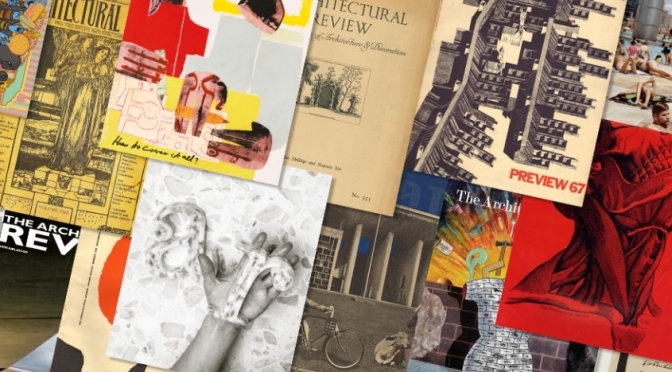
Cover: The Architectural Review – December 2022

xindex-magazines-1497-1600x1066.jpg

The Architectural Review December 2022 issue: Whether it’s a house, a room or a collection of objects, homes are the imprint of the people who inhabit them. Described as the ‘detritus of life’ by Sam Johnson-Schlee in this issue’s keynote, the remnants of our daily lives can say much about who we are, while the possessions we choose to display around us say more about how we want to be seen.

Charles Jencks and Maggie Keswick | Anupama Kundoo | Margarete Schütte-Lihotzky | João Batista Vilanova Artigas | Laurie Simmons | Kochi Architects Studio | Ekar Architects | Atelier Tho.A | Chat Architects | Fernanda Canales Arquitectura | Brillhart Architecture

Very few people have the resources to realise the house of their dreams, yet the results can be extraordinary. From the London home of Charles Jencks and Maggie Keswick, which is a manifestation of their postmodern fantasies, to the local materials and construction techniques of Anupama Kundoo’s Wall House in Auroville, this issue revisits houses designed by architects for themselves, and sometimes their families. Also celebrated are the winning projects of the 2022 AR House Awards, featuring innovative and intriguing dwellings from Mexico, Japan, Thailand, Vietnam and the Bahamas.

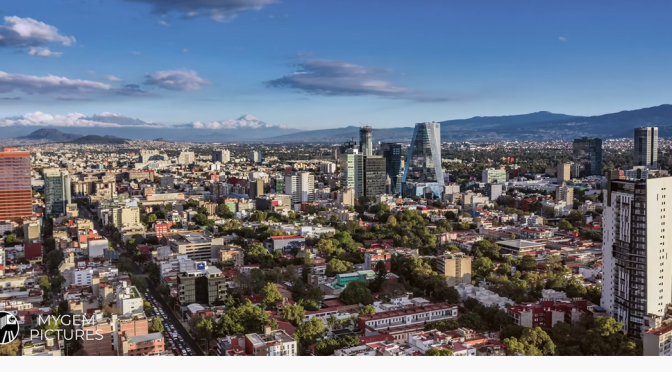
Engineering: Why Mexico Has So Few Tall Buildings

The B1M – TAKE a look at Mexico’s cities and you might spot some similarities.

You’ll see it’s a country that clearly knows a thing or two about urban sprawl, with hardly a skyscraper in sight. But look closely and you’ll find that skyscrapers do exist, just not really in any great numbers.

That’s because it’s one of the toughest places on Earth to build tall and engineers must grapple with the extremes of the elements, unforgiving ground conditions, congestion and the absence of some key resources.

Now though, after decades of building outwards instead of upwards, skyscrapers in Mexico are seriously on the rise and construction crews are managing to meet some immense challenges.

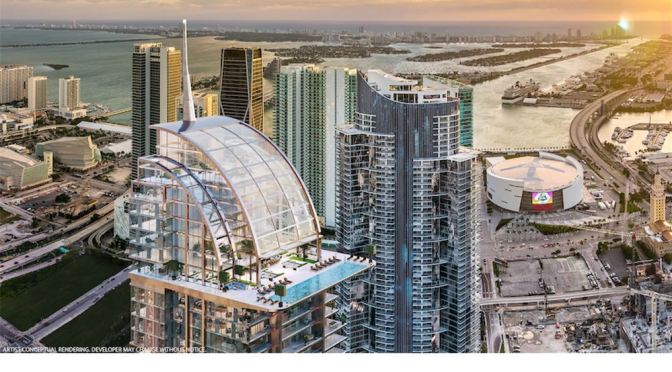
Cities: The Skyscraper Boom In Miami, Florida

Miami’s skyscraper boom is happening on the frontlines of the climate crisis.

Miami, city, seat (1844) of Miami-Dade county, southeastern Florida, U.S. A major transportation and business hub, Miami is a leading resort and Atlantic Ocean port situated on Biscayne Bay at the mouth of the Miami River. The Everglades area is a short distance to the west. Greater Miami, the state’s largest urban concentration, comprises all of the county, which includes the cities of Miami Beach (across the bay), Coral GablesHialeah, North Miami, and many smaller municipalities and unincorporated areas; together, these make up the southern section of Florida’s “Gold Coast.” 

Analysis: Saudi Arabia’s Hyper-Planned “Line City”

The Line is a proposed smart linear city in Saudi Arabia in Neom, Tabuk, currently under construction, which is designed to have no cars, streets or carbon emissions.

 The Line is being described as a one-building vertical city outfitted with exterior mirrors, big enough to house 9 million people — along with everything they need, from parks and waterfalls to flying taxis and robot maids. There are even plans to include an artificial moon for residents to gaze upon.

With its proposed width of only 656 feet, The Line will rely primarily on its height to encompass its residents and a host of modern trappings, such as a high-speed rail to connect sections of the 106-mile city. Saudi Arabian officials claim The Line will be otherwise devoid of roads, cars or emissions and will be powered strictly by clean energy (although details have not been released). Here are a few of most notable proposed features of The Line:

  • vertically layered homes, offices, public parks and public schools.
  • year-round climate control of all indoor and outdoor spaces.
  • high-speed rail that will transport residents from end-to-end in 20 minutes.
  • a five-minute walk to all amenities.
  • accessibility to parks and natural elements within a two-minute walk.

Technology: Designing & Building Smarter Cities

How are you connected on the street where you live, the street where you do business, the street you share with neighbors? But how could a smarter street improve your life?

Video timeline: 00:00 Building Smarter Cities 00:14 Next Evolution 00:36 ERC Partners

Could technology help guide disabled pedestrians, eliminate traffic bottlenecks, enhance trash collection and pest control, improve emergency services, protect people from environmental and health threats. “Smart Streetscapes,” a new National Science Foundation Engineering Research Center, aims to create livable, safe, and inclusive communities. Learn more on NSF’s “The Discovery Files.”