Category Archives: Theater

SHAKESPEARE’S STAGE: WHEN THE MIND OVERHEARS ITSELF

By Michael Cummins, Editor, August 15, 2025

There is a moment in the history of the theater, and indeed in the history of consciousness itself, when the stage ceased to be merely a platform for action and became a vessel for thought. Before this moment, a character might speak their mind to an audience, but the thoughts were settled, the intentions declared. After, the character began to speak to themselves, and in doing so, they changed. They were no longer merely revealing a plan; they were discovering it, recoiling from it, marveling at it, and becoming someone new in the process.

This revolution was the singular invention of William Shakespeare. The literary critic Harold Bloom, who argued it was the pivotal event in Western consciousness, gave it a name: “self-overhearing.” It is the act of a character’s mind becoming its own audience. For Shakespeare, this was not a theory of composition but the very mechanism of being. He placed a theater inside his characters’ minds, and on that internal stage, they overheard the whispers of their own souls.

This interior drama, this process of a consciousness listening to itself, is the molten core of Shakespearean tragedy. It grants his characters a psychological autonomy that feels startlingly, sometimes terrifyingly, modern. While this technique permeates his work, it finds its most potent expression in three of his greatest tragic figures. Through them, Shakespeare presents a triptych of the mind in conflict. In Hamlet, we witness the intellectual paralyzed by the sheer polyphony of his own consciousness. In Iago, we find the chilling opposite: a malevolent artist who overhears his own capacity for evil and gleefully improvises a script of pure destruction. And in Macbeth, we watch a noble soldier become an audience to his own corruption, mesmerized and horrified by the murderous voice his ambition has awakened. Together, these three characters map the frontiers of human consciousness, demonstrating that the most profound tragedies unfold not in castles and on battlefields, but in the silent, echoing theater of the mind.

Hamlet: The Consciousness in Crisis

Hamlet is not merely a character; he is a consciousness. More than any figure in literature, he exists as a mind in perpetual, agonizing conversation with itself. His tragedy is not that he must avenge his father, but that he must first navigate the labyrinth of his own thoughts to do so. His soliloquies are not statements of intent but sprawling, recursive processes of self-interrogation. He is the ultimate self-overhearer, and the voice he listens to is so articulate, philosophically nuanced, and relentlessly self-critical that it becomes a prison.

From his first soliloquy, we see a mind recoiling from a world it cannot stomach. He laments the “unweeded garden” of the world, wishing:

O, that this too too solid flesh would melt,
Thaw and resolve itself into a dew!

 Hamlet, 1.2.129-130

After his encounter with the Ghost, the theater of his mind becomes a chamber of horrors. He overhears not just a command for revenge, but a shattering revelation about the nature of reality itself, concluding that “one may smile, and smile, and be a villain” (Hamlet, 1.5.108). This overheard truth—that appearance is a stage and humanity is a performance—becomes a cornerstone of his own psyche, prompting his decision to put on an “antic disposition.”

Charged with a task demanding bloody action, Hamlet’s consciousness instead turns inward, staging a debate that consumes the play. In his most famous soliloquy, he puts existence itself on trial: “To be, or not to be: that is the question.” This is not a man deciding whether to live or die; it is a mind listening to its own arguments for and against being. He weighs the “slings and arrows of outrageous fortune” against the terrifying uncertainty of “the undiscover’d country from whose bourn / No traveller returns.” The voice of his intellect, he concludes, is what “puzzles the will,” making it so that “conscience does make cowards of us all” (Hamlet, 3.1.56-83). He overhears his own fear and elevates it into a universal principle.

This intellectual paralysis is born of his relentless self-analysis. After watching an actor weep for the fictional Hecuba, Hamlet turns on himself in a fury of self-loathing, beginning with, “O, what a rogue and peasant slave am I!” He overhears his own inaction and is disgusted by it, mocking his tendency to talk instead of act:

Why, what an ass am I! …
That I, the son of a dear father murder’d,
Prompted to my revenge by heaven and hell,
Must, like a whore, unpack my heart with words.

— Hamlet, 2.2.583-586

He is both the speaker and the critic, the actor and the audience, caught in a feedback loop of thought, accusation, and further thought. Hamlet’s mind is a stage where the drama of consciousness perpetually upstages the call to action; the performance is so compelling he cannot bring himself to leave the theater.

Iago: The Playwright of Evil

If Hamlet’s self-overhearing leads to a tragic paralysis, Iago’s is the engine of a terrifying and creative evil. Where Hamlet’s mind is a debating chamber, Iago’s is a workshop. He is Shakespeare’s most chilling villain precisely because his villainy is an act of artistic improvisation. In his soliloquies, we do not witness a man wrestling with his conscience; we witness a playwright brainstorming his plot, listening with detached delight to the diabolical suggestions of his own intellect. He overhears the whispers of a motiveless malignity and, finding them intriguing, decides to write them into being.

Iago’s supposed motives for destroying Othello are flimsy and interchangeable. He first claims to hate the Moor for promoting Cassio. Then, he adds a rumor: “it is thought abroad, that ‘twixt my sheets / He has done my office” (Othello, 1.3.387-388). He presents this not as fact, but as a passing thought he chooses to entertain, a justification he can try on, resolving to act “as if for surety.” Where Hamlet desperately seeks a single, unimpeachable motive to act, Iago casually auditions motives, searching only for one that is dramatically effective. He is listening for a good enough reason, and when he finds one, he seizes it not with conviction but with artistic approval.

His soliloquies are masterclasses in this dark creativity. At the end of Act I, he pauses to admire his burgeoning plot. “How, how? Let’s see,” he muses, like an artist sketching a scene. “After some time, to abuse Othello’s ear / That he is too familiar with his wife.” The plan flows from him, culminating in the famous declaration:

Hell and night
Must bring this monstrous birth to the world’s light.

 Othello, 1.3.409-410

Later, he marvels at the tangible effect of his artistry, watching his poison corrupt Othello’s mind and noting with clinical detachment, “The Moor already changes with my poison: / Dangerous conceits are, in their natures, poisons” (Othello, 3.3.325-326). He is not just the playwright, but the rapt critic of his own unfolding drama. He steps outside of himself to admire his own performance as “honest Iago,” listening with applause to his own deceptive logic. This is the chilling sound of a consciousness with no moral compass, only an aesthetic one. It overhears its own capacity for deception and finds it beautiful. Iago is the playwright within the play, and the voice he hears is that of the void, whose suggestions he finds irresistible.

Macbeth: The Audience to Corruption

In Macbeth, we witness the most visceral and terrifying form of self-overhearing. He is a man who hears two voices within himself—that of the loyal thane and that of a murderous usurper—and the play charts his horrifying decision to listen to the latter. Unlike Hamlet, he is not paralyzed, and unlike Iago, he takes no pleasure in his dark machinations. Macbeth is an unwilling audience to his own ambition. He overhears the prophecy of his own moral decay and, though it terrifies him, cannot bring himself to walk out. His tragedy is that of a man who watches himself become a monster.

Our first glimpse into this internal battle comes after he meets the witches. Their prophecy is a “supernatural soliciting” that he reveals in an aside, a moment of public self-overhearing: “This supernatural soliciting / Cannot be ill, cannot be good” (Macbeth, 1.3.130-131). He listens as his mind debates the proposition. If it’s good, why does he yield to a suggestion:

Whose horrid image doth unfix my hair
And make my seated heart knock at my ribs,
Against the use of nature?

 Macbeth, 1.3.135-137

He is already a spectator to his own treasonous thoughts. The voice of ambition conjures the murder of Duncan, and his body reacts with visceral terror. The most profound moment of this internal drama is the “dagger of the mind” soliloquy. Here, Macbeth is a captive audience to his own murderous intent. “Is this a dagger which I see before me, / The handle toward my hand?” he asks, knowing it is a “dagger of the mind, a false creation, / Proceeding from the heat-oppressed brain” (Macbeth, 2.1.33-39). He is watching his own mind project its bloody purpose into the world; he overhears his own resolve and sees it take physical form.

After the murder, the voice he overheard as temptation becomes an inescapable torment. His consciousness broadcasts its own verdict—“Sleep no more! / Macbeth does murder sleep” (Macbeth, 2.2.35-36)—and he has no choice but to listen. This torment is soon joined by a chilling, logical self-appraisal. He overhears his own entrapment, recognizing that the only path forward is through more violence:

I am in blood
Stepp’d in so far that, should I wade no more,
Returning were as tedious as go o’er.

 Macbeth, 3.4.136-138

His tragedy culminates in his final soliloquy, where, upon hearing of his wife’s death, he overhears the voice of utter despair: “Tomorrow, and tomorrow, and tomorrow, / Creeps in this petty pace from day to day…” (Macbeth, 5.5.19-20). It is his own soul pronouncing its damnation, the final, devastating judgment on a life spent listening to the wrong voice.

Conclusion

The soliloquy, in Shakespeare’s hands, became more than a dramatic convention; it became a window into the birth of the modern self. Through the radical art of self-overhearing, he transformed characters from archetypes who declared their nature into fluid beings who discovered it, moment by moment, in the echo chamber of their own minds.

Hamlet, Iago, and Macbeth stand as the titanic pillars of this innovation. Hamlet’s mind is a storm of intellectual static, a signal so complex it jams the frequency of action. Iago tunes his ear to a darker station, one that transmits pure malignity, and becomes a gleeful conductor of its chaotic symphony. Macbeth, most tragically, is trapped between stations, hearing both the noble music of his better nature and the siren song of ambition, and makes the fatal choice to listen to the latter until it is the only sound left.

In giving his characters the capacity to listen to themselves, Shakespeare gave them life. He understood that identity is not a fixed point but a constant, fraught negotiation—a dialogue between the self we know and the other voices that whisper of what we might become. By staging this internal drama, he invented a new kind of tragedy, one where the fatal flaw is not a trait, but the very process of thought itself. We return to these plays again and again, not merely as an audience, but to witness the terrifying and beautiful spectacle of a soul becoming an audience to itself.

THIS ESSAY WAS WRITTEN AND EDITED UTILIZING AI

Passion Unleashed Or Reason Restrained: The Tale Of Two Theaters

By Michael Cummins, Editor, August 6, 2025

The theatrical landscapes of England and France, while both flourishing in the early modern period, developed along distinct trajectories, reflecting their unique cultural, philosophical, and political climates. The English Renaissance stage, exemplified by the towering figures of Christopher Marlowe and William Shakespeare, embraced a sprawling, often chaotic, exploration of human experience, driven by individual ambition and psychological depth. In contrast, the French Neoclassical theatre, championed by masters like Molière and Jean Racine, championed order, reason, and a more focused examination of societal manners and tragic passions within a stricter dramatic framework.

This essay will compare and contrast these two powerful traditions by examining how Marlowe and Shakespeare’s expansive and character-driven dramas differ from Molière’s incisive social comedies and Racine’s intense psychological tragedies. Through this comparison, we can illuminate the divergent artistic philosophies and societal preoccupations that shaped the dramatic arts in these two influential European nations.

English Renaissance Drama: The Expansive Human Spirit and Societal Flux

The English Renaissance theatre was characterized by its boundless energy, its disregard for classical unities, and its profound interest in the multifaceted human psyche. Playwrights like Christopher Marlowe and William Shakespeare captured the era’s spirit of exploration and individualism, often placing ambitious, flawed, and deeply introspective characters at the heart of their narratives. These plays, performed in bustling public theaters, offered a mirror to an English society grappling with rapid change, shifting hierarchies, and the exhilarating—and terrifying—potential of the individual.

Christopher Marlowe (1564–1593), a contemporary and rival of Shakespeare, pioneered the use of blank verse and brought a new intensity to the English stage. His plays often feature protagonists driven by overwhelming, almost superhuman, desires—for power, knowledge, or wealth—who challenge societal and divine limits. In Tamburlaine the Great, the Scythian shepherd rises to conquer empires through sheer force of will, embodying a ruthless individualism that defied traditional hierarchies. Marlowe’s characters are often defined by their singular, often transgressive, ambition.

“I hold the Fates bound fast in iron chains, / And with my hand turn Fortune’s wheel about.” — Christopher Marlowe, Tamburlaine the Great

Similarly, Doctor Faustus explores the dangerous pursuit of forbidden knowledge, with its protagonist selling his soul for intellectual mastery and worldly pleasure. Marlowe’s drama is characterized by its grand scale, its focus on the exceptional individual, and its willingness to delve into morally ambiguous territory, reflecting a society grappling with new ideas about human potential and the limits of authority. His plays were often spectacles of ambition and downfall, designed to provoke and awe, suggesting an English fascination with the raw, unbridled power of the individual, even when it leads to destruction. They spoke to a society where social mobility, though limited, was a potent fantasy, and where traditional religious and political certainties were increasingly open to radical questioning.

William Shakespeare (1564–1616) built upon Marlowe’s innovations, expanding the scope of English drama to encompass an unparalleled range of human experience. While his historical plays and comedies are diverse, his tragedies, in particular, showcase a profound psychological realism. Characters like Hamlet, Othello, and King Lear are not merely driven by singular ambitions but are complex individuals wrestling with internal conflicts, moral dilemmas, and the unpredictable nature of fate. Shakespeare’s plays often embrace multiple plots, shifts in tone, and a blend of prose and verse, reflecting the messy, unconstrained reality of life.

“All the world’s a stage, / And all the men and women merely players; / They have their exits and their entrances; / And one man in his time plays many parts…” — William Shakespeare, As You Like It

Hamlet’s introspection and indecision, Lear’s descent into madness, and Othello’s tragic jealousy reveal a deep fascination with the inner workings of the human mind and the devastating consequences of human fallibility. Unlike the French emphasis on decorum, Shakespeare’s stage could accommodate violence, madness, and the full spectrum of human emotion, often without strict adherence to classical unities of time, place, or action. This freedom allowed for a rich, multifaceted exploration of the human condition, making his plays enduring studies of the soul. These plays vividly portray an English society grappling with the breakdown of traditional order, the anxieties of political succession, and the moral ambiguities of power. They suggest a national character more comfortable with contradiction and chaos, finding truth in the raw, unfiltered experience of human suffering and triumph rather than in neat, rational resolutions.

French Neoclassical Drama: Order, Reason, and Social Control

The French Neoclassical theatre, emerging in the 17th century, was a reaction against the perceived excesses of earlier drama, favoring instead a strict adherence to classical rules derived from Aristotle and Horace. Emphasizing reason, decorum, and moral instruction, playwrights like Molière and Jean Racine crafted works that were elegant, concentrated, and deeply analytical of human behavior within a structured society. These plays offered a reflection of French society under the centralized power of the monarchy, particularly the court of Louis XIV, where order, hierarchy, and the maintenance of social appearances were paramount.

Molière (Jean-Baptiste Poquelin, 1622–1673), the master of French comedy, used wit and satire to expose the follies, hypocrisies, and social pretensions of his contemporary Parisian society. His plays, such as Tartuffe, The Misanthrope, and The Miser, feature characters consumed by a single dominant passion or vice (e.g., religious hypocrisy, misanthropy, avarice). Molière’s genius lay in his ability to create universal types, using laughter to critique societal norms and encourage moral rectitude. His comedies often end with the restoration of social order and the triumph of common sense over absurdity.

“To live without loving is not really to live.” — Molière, The Misanthrope

Unlike the English focus on individual transformation, Molière’s characters often remain stubbornly fixed in their vices, serving as satirical mirrors for the audience. The plots are tightly constructed, adhering to the classical unities, and the language is precise, elegant, and witty, reflecting the French emphasis on clarity and rational thought. His plays were designed not just to entertain, but to instruct and reform, making them crucial vehicles for social commentary. Molière’s comedies reveal a French society deeply concerned with social decorum, the perils of pretense, and the importance of maintaining a rational, harmonious social fabric. They highlight the anxieties of social climbing and the rigid expectations placed upon individuals within a highly stratified and centralized court culture.

Jean Racine (1639–1699), the preeminent tragedian of the French Neoclassical period, explored the destructive power of human passions within a highly constrained and formal dramatic structure. His tragedies, including Phèdre, Andromaque, and Britannicus, focus intensely on a single, overwhelming emotion—often forbidden love, jealousy, or ambition—that inexorably leads to the protagonist’s downfall. Racine’s plays are characterized by their psychological intensity, their elegant and precise Alexandrine verse, and their strict adherence to the three unities (time, place, and action).

“There is no greater torment than to be consumed by a secret.” — Jean Racine, Phèdre

Unlike Shakespeare’s expansive historical sweep, Racine’s tragedies unfold in a single location over a short period, concentrating the emotional and moral conflict. His characters are often members of the aristocracy or historical figures, whose internal struggles are presented with a stark, almost clinical, precision. The tragic outcome is often a result of an internal moral failing or an uncontrollable passion, rather than external forces or a complex web of events. Racine’s work reflects a society that valued order, reason, and a clear understanding of human nature, even when depicting its most destructive aspects. Racine’s tragedies speak to a French society that, despite its pursuit of order, recognized the terrifying, almost inevitable, power of human passion to disrupt that order. They explore the moral and psychological consequences of defying strict social and religious codes, often within the confines of aristocratic life, where reputation and controlled emotion were paramount.

Divergent Stages, Shared Human Concerns: A Compelling Contrast

The comparison of these two dramatic traditions reveals fundamental differences in their artistic philosophies and their reflections of national character. English Renaissance drama, as seen in Marlowe and Shakespeare, was expansive, embracing complexity, psychological depth, and a vibrant, often chaotic, theatricality. It reveled in the individual’s boundless potential and tragic flaws, often breaking classical rules to achieve greater emotional impact and narrative freedom. The English stage was a mirror to a society undergoing rapid change, where human ambition and internal conflict were paramount, and where the individual’s journey, however tumultuous, was often the central focus.

French Neoclassical drama, in contrast, prioritized order, reason, and decorum. Molière’s comedies satirized social behaviors to uphold moral norms, while Racine’s tragedies meticulously dissected destructive passions within a tightly controlled framework. Their adherence to classical unities and their emphasis on elegant language reflected a desire for clarity, balance, and a more didactic approach to theatre. The French stage was a laboratory for examining universal human traits and societal structures, often through the lens of a single, dominant characteristic or emotion, emphasizing the importance of social harmony and rational control.

The most compelling statement arising from this comparison is that while English drama celebrated the unleashing of the individual, often leading to magnificent chaos, French drama sought to contain and analyze the individual within the strictures of reason and social order. The English stage, with its public accessibility and fewer formal constraints, became a crucible for exploring the raw, unvarnished human condition, reflecting a society more comfortable with its own contradictions and less centralized in its cultural authority. The French stage, often patronized by the monarchy and adhering to strict classical principles, became a refined instrument for social critique and the dissection of universal passions, reflecting a society that valued intellectual control, social hierarchy, and the triumph of reason over disruptive emotion.

Despite these significant stylistic and philosophical divergences, both traditions ultimately grappled with universal human concerns: ambition, love, betrayal, morality, and the search for meaning. Whether through the grand, sprawling narratives of Shakespeare and Marlowe, or the concentrated, analytical dramas of Molière and Racine, the theatre in both nations served as a vital arena for exploring the human condition, shaping national identities, and laying groundwork for future intellectual movements. The “stages of the soul” in the Renaissance and Neoclassical periods, though built on different principles, each offered profound insights into the timeless complexities of human nature.

THIS ESSAY WAS WRITTEN AND EDITED UTILIZING AI
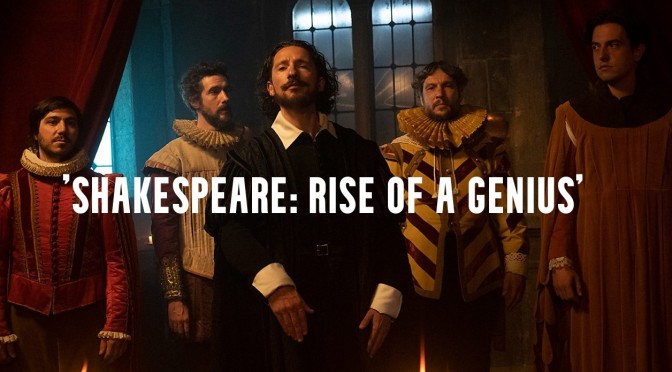
BBC Theater: ‘Shakespeare – Rise Of A Genius’ (2023)

BBC (November 12, 2023) – This gripping three-part documentary series for BBC Two and iPlayer features an A-list cast of actors, including Dame Judi Dench, Dame Helen Mirren, Brian Cox, Adrian Lester, Lolita Chakrabarti, Martin Freeman and Jessie Buckley, alongside academics and writers James Shapiro, Jeanette Winterson, Lucy Jago , Jeremy O’Harris and Ewan Fernie – who provide fresh insights into the incredible story of our greatest writer, the place and time he inhabited and the work he produced.

Shakespeare: Rise of A Genius

November marks 400 years since arguably the greatest work of English literature was created, the First Folio, published seven years after the death of William Shakespeare and without which much of his work would have been lost for future generations to enjoy today.

The BBC is celebrating this extraordinary anniversary with an ambitious season of content across TV, Radio, BBC iPlayer & BBC Sounds exploring why, 400 years on, Shakespeare’s relevance and influence is as strong as ever. A wealth of programming featuring major actors and leading experts, including new documentaries, performance, music, drama, comedy, news coverage and the best of the BBC archive, as well as special items on flagship BBC shows, will celebrate the man, his world and his timeless writing.

Here’s how you can watch, listen and learn about Shakespeare across the BBC…

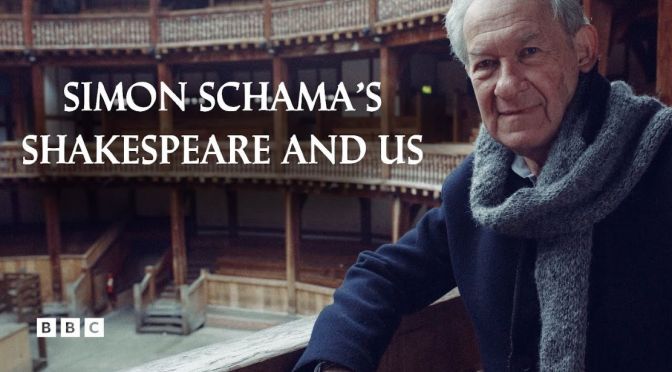
Theater: ‘Simon Schama’s Shakespeare And Us’ (2023)

BBC Select (November 4, 2023) – How much is the personality of England intertwined with the visions of Shakespeare? Acclaimed historian Simon Schama tries to get beneath the skin of the playwright and understand why his stories are so relevant today.

In this insightful documentary we are shown how Shakespeare knew the importance of not just reflecting the lives of the kings and queens who peppered his plays, but ordinary people too – including thieves, clowns and prostitutes.

Watch Simon Schama’s Shakespeare and Us on BBC Select in the US: https://bit.ly/49bpdiK and Canada: https://bit.ly/45WLLAX

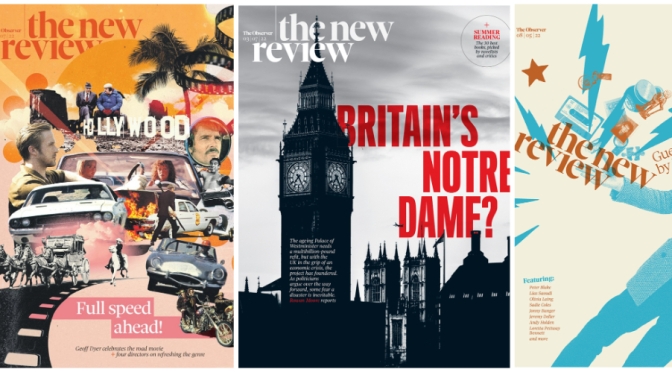
Culture: The New Review Magazine- February 5, 2023

Image

The New Review (February 5, 2023): @natasha_walter on the state’s crackdown on ​the right to protest Plus: @marktpower’s shipping forecast photographs @RobertDFBooks interviewed by @MsRachelCooke On my radar: @paramore’s Hayley Williams & more.

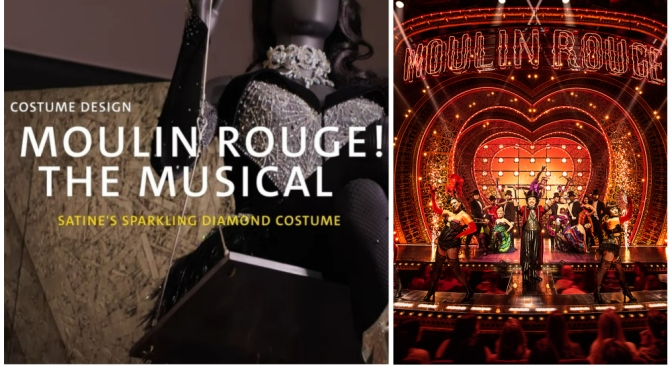
Design: Costume History Behind ‘Moulin Rouge! The Musical’ (V&A Museum)

Victoria and Albert Museum (January 24, 2023) – Moulin Rouge! The Musical is a spectacle of romance and cabaret, set in the heart of Paris’ bohemian scene during the Belle Époque era. Bringing Baz Luhrmann’s landmark film to life on stage, the production is a musical mash-up extravaganza, immersing you in a world of splendour and glory.

Video timeline: 00:00 Catherine Zuber’s design process 0:29 What is Moulin Rouge! The Musical? 00:49 Was the Moulin Rouge real? 01:05 Adapting Baz Luhrmann’s film 01:23 Creating a costume for Satine – design sketches 02:17 Researching the history of showgirls 02:49 How does the costume work? 03:53 Designing costumes for theatre 04:12 Mounting and installing the costume in the Re:Imagining Musicals display

Join Costume Designer Catherine Zuber and Curator Harriet Reed as they take us behind the scenes, introducing the real Moulin Rouge and showgirls of the time, showing the original design sketches for Satine’s dazzling diamond studded costume, and demonstrating how one vital mechanism is crucial for the piece’s quick change on stage.

The costume is now in the V&A’s collection of Theatre and Performance and can be seen as part of the Re:Imagining Musicals display until November 2023.

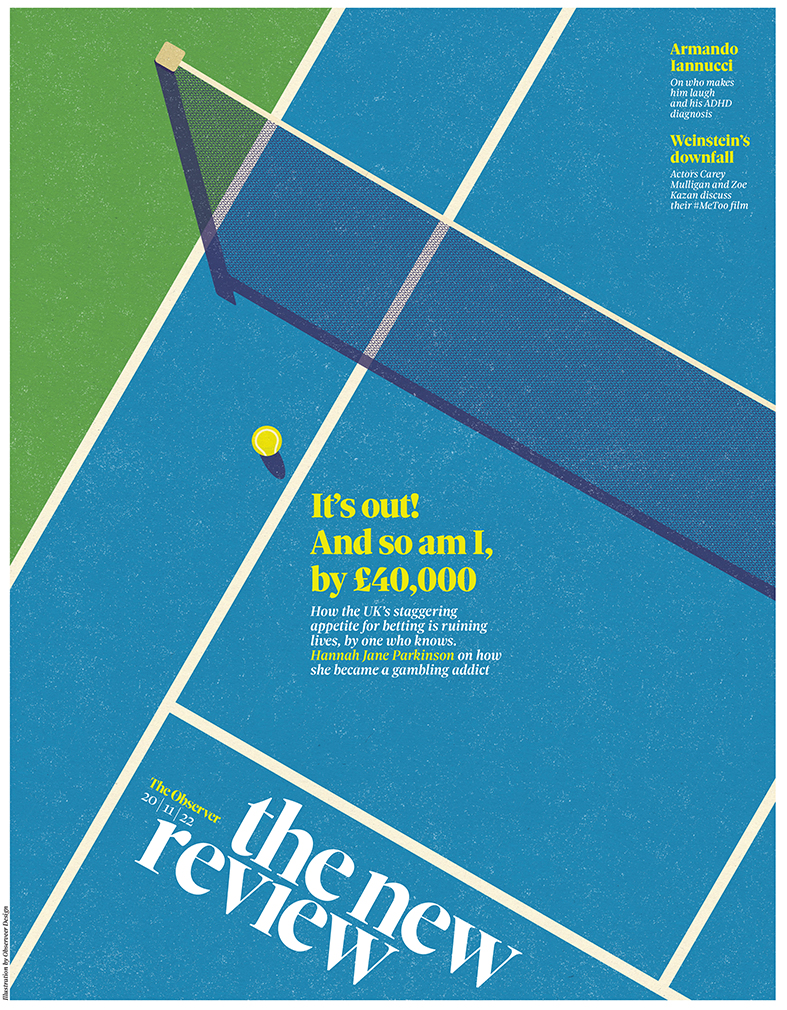
Culture: The New Review Magazine – Nov 20, 2022

Image

The New Review November 20, 2022 issue: Carey Mulligan and @zoeinthecities speak to @carmitstead about She Said, The winners of our graphic short story prize 2022, @Aiannucci Q&A by @michaelhogan, On my radar: @Talldarkfriend And our critics on the week’s arts highlights.

Culture: The New Review Magazine – Nov 13, 2022

Image

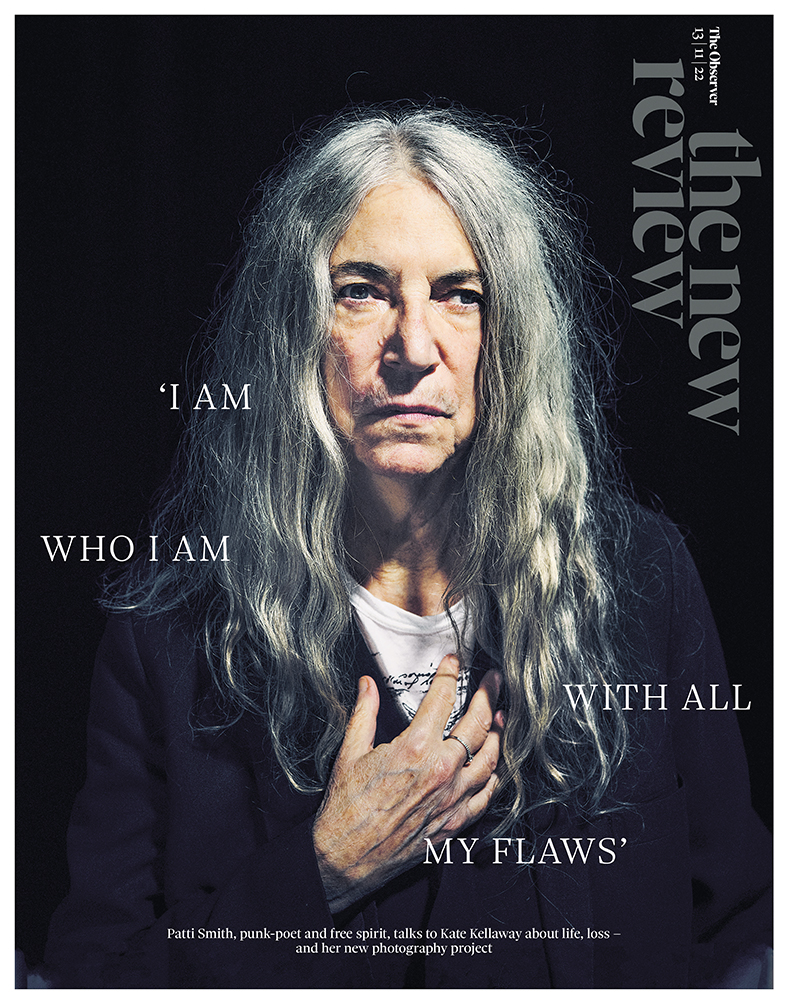
Punk poet Patti Smith speaks to @KateKellaway1 about her new photography book @BloomsburyBooks @cyrilzed.

Out of the Blue by Harry Cole and James Heale – the salad days of Lettuce Liz Truss

This biography of Britain’s shortest-serving prime minister was overtaken by events, but its lively style and air of authority illuminates her failings

The Path of Peace by Anthony Seldon review – a trail of painful history

The writer’s vivid account of walking the Western Front Way illuminates the traumas of the first world war while reassessing his own tumultuous life

Culture: The New Review Magazine – Nov 6, 2022

Image

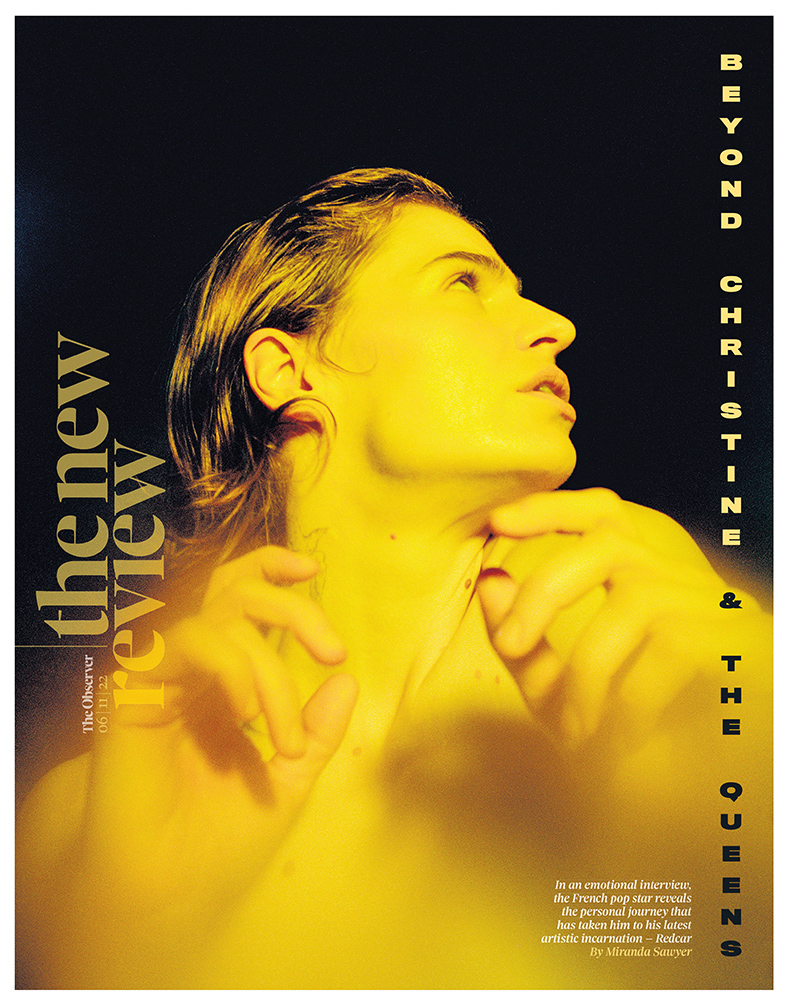
Inside the November 6, 2022 Issue:

TS Eliot’s women: the unsung female voices of The Waste Land

Dylan: The Greatest Thing I’ll Never Learn review – messy, punky pop thrills

The week in theatre: Tammy Faye; Hamlet; Marvellous – review

The best recent crime and thriller writing

The best recent crime and thriller writing

Paris Views: The Daily Life Of A Moulin Rouge Dancer

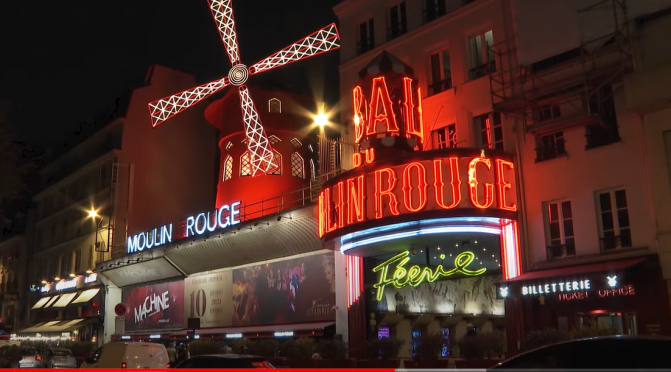
The legendary revue theater Moulin Rouge is one of Paris’s big attractions and the workplace of dancer Nora Mogalle. She has been dancing the Cancan here for 19 years. Behind the scenes of the famous Moulin Rouge we get to know the dancer and doctor, and catch a glimpse of the spectacular shows.

Moulin Rouge is a cabaret in Paris, France. The original house, which burned down in 1915, was co-founded in 1889 by Charles Zidler and Joseph Oller, who also owned the Paris Olympia.