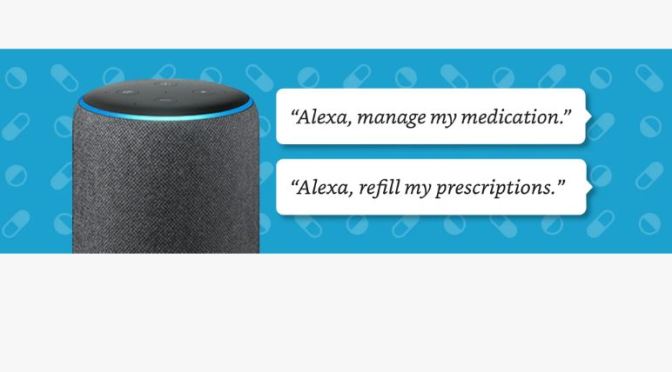
Any customer with an active prescription and an Alexa-enabled device will be able to access the medication management skill on the device, a Giant Eagle spokesperson told CNBC. Rachel Jiang, who leads the Amazon Alexa health and wellness team, said the company began developing the skill after noticing that customers were using the devices to create medication reminders.
Beyond a simple reminder, the skill also offers more information about medication regimens and can be used to order refills. When the skill is installed, Alexa, which was confirmed earlier this year to be HIPAA-compliant, will prompt users to set up a profile and passcode, which must be delivered each time Alexa is asked a question about a medication.
Amazon and Pittsburgh-based supermarket and pharmacy chain Giant Eagle have formed a partnership that will allow Amazon Echo devices to offer Giant Eagle pharmacy patients medication reminders, CNBC reports.
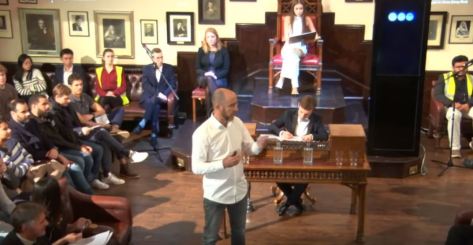
“This House Believes AI Will Bring More Harm Than Good”
This debate was run in association with IBM Research.
Proposition:
Project Debater Project Debater is designed by IBM research. It will deliver a speech based on over 1,100 arguments collected from Union members and others over the past week. It will not be taking points of information.
Sharmila Parmanand
Sharmila Parmanand is a PhD Candidate in Gender Studies at the University of Cambridge and a Gates Scholar. She has served as a debate trainer or chief judge in debating events in 45 countries. She served as a chief judge for most major global debating competitions (World Universities, World Schools, European Universities, Asian Universities, Austral-Asian Universities, North American Universities, and PanAmerican Universities).
Professor Neil Lawrence
Neil Lawrence is the DeepMind Professor of Machine Learning at the University of Cambridge and the co-host of Talking Machines. Neil’s main research interest is machine learning through probabilistic models. He focuses on both the algorithmic side of these models and their application. His recent focus has been on the deployment of machine learning technology in practice, particularly under the banner of data science.
Opposition
Project Debater
Project Debater is designed by IBM research. It will deliver a speech based on over 1,100 arguments collected from Union members and others over the past week. It will not be taking points of information.
Harish Natarajan
Harish Natarajan is a graduate of the University of Oxford and the University of Cambridge. He was a grand fnalist and 2nd best speaker at the 2016 World Debating Championships and won the European Debating Championship in 2012. Harish holds the record for most competition victories. He currently works as the Head of Economic Risk Analysis at AKE International in London.
Professor Sylvie Delacroix
Sylvie Delacroix is professor in Law and Ethics at the University of Birmingham. Her work has notably been funded by the Wellcome Trust, the NHS and the Leverhulme Trust, from whom she received the Leverhulme Prize. She has recently been appointed to the Public Policy Commission on the use of algorithms in the justice system.
Retrofuturism is the curious eye of the past upon us. This era’s rosy predictions about the future seem laughable from the perspective of the present; however, it seems that they got some things exceptionally right. Their ideas ranged from child-like and pridefully ambitious and inspired a movement upon the artists, designers, musicians, and filmmakers who channeled the technological fantasies of a lost age.
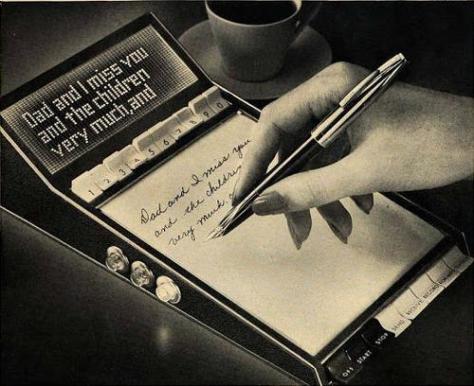
Instant Messaging (1964 Prediction)
This technology has actually become a reality. Many smartphones have this feature, or at least something similar to it. It doesn’t look like this of course, but the main idea is still there: you write it with your smartpen and the device makes your illegible handwriting into a text that is actually readable! However, it is not widely used; nobody could predict that typing would be superior to actual handwriting.
Personal Transportation (1950s Vision)
It is unclear why people in the 1950s thought this was a practical way to travel; not only it looks like it is impossible to breathe in there, who would want to stand upright while driving? It would definitely ease the traffic; however, probably no one would want to use it.
The Smart-Cities of Future
Towering transmitters in the city and private-jet traffic in the sky… This is a prediction that was made probably too early and it is definitely not so far from reality. Today, we paint a similar future for smart-cities and sci-fi movies depict the future cities in the same manner. It seems that older generations and we have a similar vision of the future look of the world.
Every possible step is done online, and for most meals customers must reserve—and often pay—in advance, essentially buying tickets through a service called Tock that’s mostly used only by high-end restaurants. This means no host manning a podium, no reservation or PR teams, no extra staff on a slow night, almost no food waste, and better guest communications. It also allowed them to go from 20 employees to four full-time and three part-time workers.
Within moments of arriving at Seattle’s Addo restaurant, I was handed a Nintendo Switch controller and a can of Georgetown Brewing Company’s Bodhizafa IPA.
While chef Eric Rivera shuttled back and forth to the kitchen to bring out Puerto Rican snacks, Addo’s director of operations Ingrid Lyublinsky took another controller, jumped into a game of Mario Kart 8 Deluxe on a giant projector screen hanging inside the front window, chose Pink Gold Peach, and shot down the track riding a Bone Rattler while someone shouted Pew! Pew! Pew!
Cybertruck is built with an exterior shell made for ultimate durability and passenger protection. Starting with a nearly impenetrable exoskeleton, every component is designed for superior strength and endurance, from Ultra-Hard 30X Cold-Rolled stainless-steel structural skin to Tesla armor glass.
With up to 3,500 pounds of payload capacity and adjustable air suspension, Cybertruck is the most powerful tool we have ever built, engineered with 100 cubic feet of exterior, lockable storage — including a magic tonneau cover that is strong enough to stand on.
Space for your toolbox, tire and Cyberquad, with room to spare. Utilize 100 cubic feet of exterior, lockable storage — including the under-bed, frunk and sail pillars.
Seat six comfortably with additional storage under the second-row seats. Complete with an advanced 17” touchscreen with an all-new customized user interface.
From rugged to refined, Cybertruck is completely adaptable for your needs. Prepare for every experience with a versatile utilitarian design — including on-board power and compressed air.
It’ll do 0-60 mph (0-98 km/h) in 2.9 seconds, and a quarter mile in a ridiculous 10.8 seconds in its highest performance variant. In top spec, it’ll go as far as 500 miles (800 km) on a charge, making it a genuine option for multi-day off-road adventures, and its 250-plus kilowatt charging capability means fast top-ups are on the cards, too. Towing capacity is over 7,500 lb (3,400 kg), which Musk happily demonstrated in an uphill tug of war against a hapless F150.
The idea for this ADU was conceived in the wake of the 2018 Woolsey Fire, as a way to help families reinhabit their properties while rebuilding their primary residence. All “BUD” designs provide beautiful living spaces that can be delivered quickly and enjoyed for generations as a valuable addition to almost any property.
This innovative accessory dwelling unit (ADU) offers four different size and layout options to fit almost any property. From a compact studio, to a two-bed, two-bath home with garage, all configurations meet California ADU size allowances and are designed for fast and efficient prefabrication at Plant.
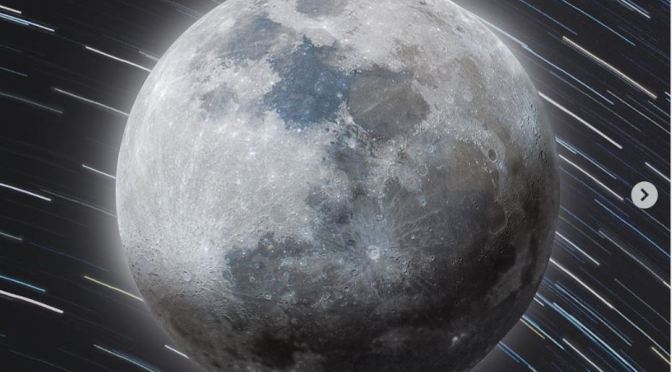
Morgunov said, “This picture is two different types of photos, a long exposure (to capture earthshine) and a fast shutter to capture the illuminated side.”
He continued to explain the additional images he used, which created the final piece: “The illuminated side is 500 photos of 1/60 at 100iso, was stacked and sharpened in autostakertt3 and registax6. The earthshine was around 15 photos at 3-second expo w/ 1600iso stacked and sharpened in autostakertt3 and registax6. I blended the two photos together in photoshop (a lot more work then it seems) added a star trail background gave it glow.”
Eric Morgunov’s image of the Moon stands out for one main reason: it’s 500 pictures of the Moon brought together to create one incredible 52 megapixel photograph.
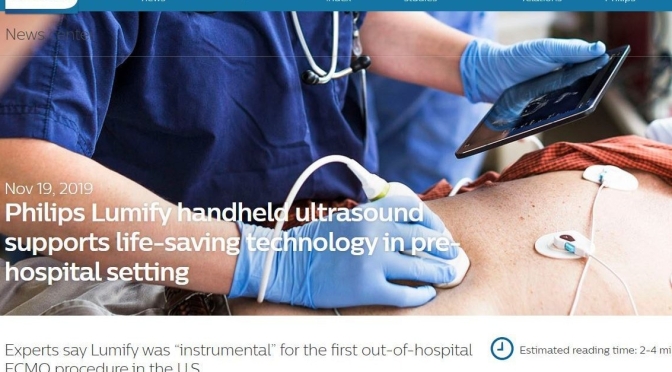
Philips Lumify ultrasound technology is an important component of the mobile ECMO unit. Members of the ECMO team use Lumify for real-time visual guidance when inserting tubes in veins and arteries in a process called ECMO cannulation.
“Lumify has excellent image quality and is easy to use – it was instrumental in our first pre-hospital ECMO cannulation,” said Dr. Darren Braude.
Physicians from the University of New Mexico (UNM) and local emergency responders recently treated a cardiac arrest patient with the first ever out-of-hospital portable life-support system available in the United States.
The machine performs a function called extracorporeal membrane oxygenation, or ECMO. ECMO machines mimic a functioning heart and lungs, circulating oxygenated blood for patients who have suffered a cardiac arrest.
This proposed agency could work like a seal of approval, like the Energy Star program run by the Environmental Protection Agency, for new software, apps, and vendors that will be handling sensitive health information. Just like dishwashers evaluated by Consumer Reports, apps that handle personal health information should have a similar unbiased review process.
The US health care system is finally at a tipping point of much needed and overdue modernization. While it promises a brave new world of streamlined and improved health care, we are facing nothing short of a revolutionary transformation that is based on a tsunami of readily accessible health information and digital tools.
Currently, there is no federal agency, public-private collaboration, or private industry mechanism that is prepared to handle the ensuing activity in its entirety. We need to get a handle on how best to protect our private health care data while also making sure that information is allowed to flow as freely as necessary to improve our delivery system and population’s health. We need a dedicated team of experts who speak the language of both information technology and public policy. We need a new federal agency that has jurisdiction and dedicated staff to oversee health information and the technology that will simplify and operationalize the information.
Wi-Charge says it has a solution to the problem. Its technology allows users to power small devices, such as smartphones, smart fire alarms, and smart locks, from several feet away without any wires.
The technology works by sending out a thin beam of infrared light. A receiver on the enabled device then converts the beam into electricity.
Electronic waste is expected to exceed 50 million tonnes by 2020. That number simply isn’t sustainable.
One company is aiming to get rid of one of the main culprits in e-waste: the electronic cable. Wi-Charge has created a method for powering devices wirelessly using safe and efficient infrared technology.
Aside from having the potential to end a great deal of waste, the company is also aiming to meet a growing demand for power that will only increase with the advent of 5G.

 Any customer with an active prescription and an Alexa-enabled device will be able to access the medication management skill on the device, a Giant Eagle spokesperson told CNBC. Rachel Jiang, who leads the Amazon Alexa health and wellness team, said the company began developing the skill after noticing that customers were using the devices to create medication reminders.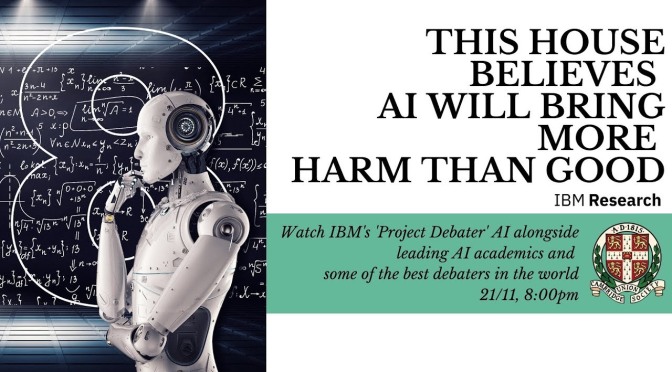

 It is unclear why people in the 1950s thought this was a practical way to travel; not only it looks like it is impossible to breathe in there, who would want to stand upright while driving? It would definitely ease the traffic; however, probably no one would want to use it.
 Towering transmitters in the city and private-jet traffic in the sky… This is a prediction that was made probably too early and it is definitely not so far from reality. Today, we paint a similar future for smart-cities and sci-fi movies depict the future cities in the same manner. It seems that older generations and we have a similar vision of the future look of the world.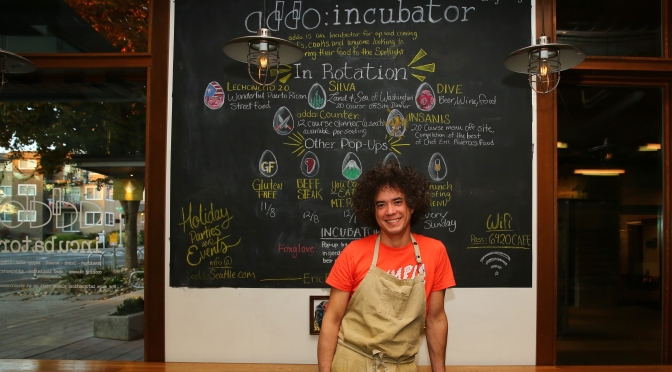
 Every possible step is done online, and for most meals customers must reserve—and often pay—in advance, essentially buying tickets through a service called Tock that’s mostly used only by high-end restaurants. This means no host manning a podium, no reservation or PR teams, no extra staff on a slow night, almost no food waste, and better guest communications. It also allowed them to go from 20 employees to four full-time and three part-time workers.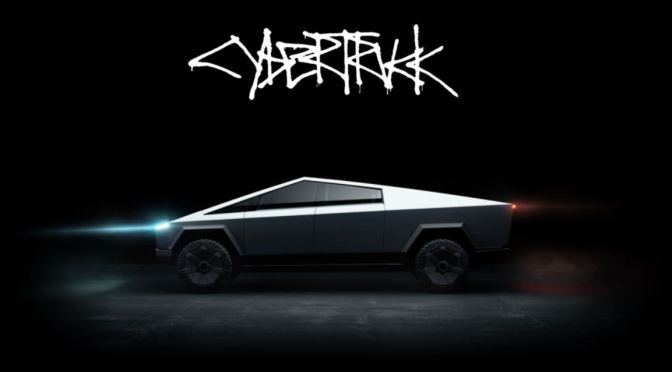



 The idea for this ADU was conceived in the wake of the 2018 Woolsey Fire, as a way to help families reinhabit their properties while rebuilding their primary residence. All “BUD” designs provide beautiful living spaces that can be delivered quickly and enjoyed for generations as a valuable addition to almost any property.

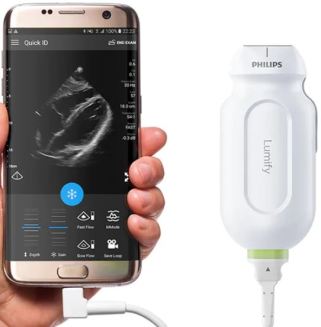 Philips Lumify ultrasound technology is an important component of the mobile ECMO unit. Members of the ECMO team use Lumify for real-time visual guidance when inserting tubes in veins and arteries in a process called ECMO cannulation.
 This proposed agency could work like a seal of approval, like the Energy Star program run by the Environmental Protection Agency, for new software, apps, and vendors that will be handling sensitive health information. Just like dishwashers evaluated by Consumer Reports, apps that handle personal health information should have a similar unbiased review process.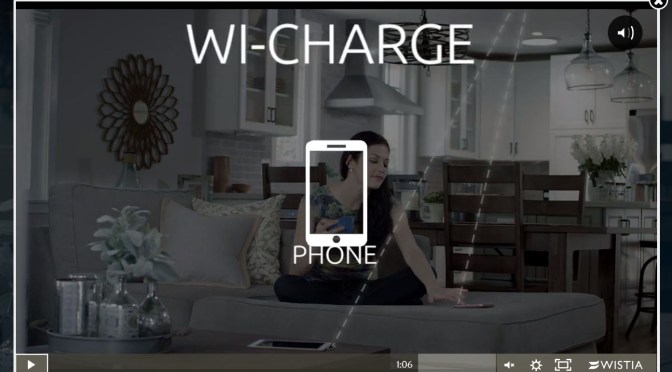
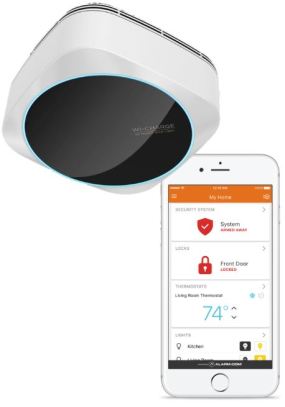 Wi-Charge says it has a solution to the problem. Its technology allows users to power small devices, such as smartphones, smart fire alarms, and smart locks, from several feet away without any wires.
 Boomers Daily