

From a Caltech online news release:
 “Such wearable sweat sensors have the potential to rapidly, continuously, and noninvasively capture changes in health at molecular levels,” Gao says. “They could enable personalized monitoring, early diagnosis, and timely intervention.”
The development of such sensors would allow doctors to continuously monitor the condition of patients with illnesses like cardiovascular disease, diabetes, or kidney disease, all of which result in abnormal levels of nutrients or metabolites in the bloodstream. Patients would benefit from having their physician better informed of their condition, while also avoiding invasive and painful encounters with hypodermic needles.
 Gao’s work is focused on developing devices based on microfluidics, a name for technologies that manipulate tiny amounts of liquids, usually through channels less than a quarter of a millimeter in width. Microfluidics are ideal for an application of this sort because they minimize the influence of sweat evaporation and skin contamination on the sensing accuracy. As freshly supplied sweat flows through the microchannels, the device can make more accurate measurements of sweat and can capture temporal changes in concentrations.
To read more: https://www.caltech.edu/about/news/wearable-sweat-sensor-detects-gout-causing-compounds

 The TACT Pivotal study of MRI-guided TULSA for whole-gland ablation in men with localized prostate cancer met its primary PSA endpoint in 96% of patients, with low rates of severe toxicity and residual GG2 disease. MRI at 12mo detected residual disease with NPV of 93%.
 The reality, however, is that modular, prefabricated housing can exceed the limitations put upon it by popular conceptions of trailer parks and postwar government housing. Not only are they certainly faster – an important factor in cost, as the cost of land and construction have as much as
 In an engaging, deeply reported book, the authors travel to mobility hotspots, from Helsinki to Shanghai, to scout out this future. And they visit the companies putting it together. One, Divergent3d, is devising a system to manufacture cars with robots and 3D printers. PonyAI, a Chinese-Silicon Valley startup, builds autonomous software that perceives potholes, oncoming trucks, and wayward pedestrians, and guides the vehicle around them. Voom, an Airbus subsidiary, is racing with dozens of others to operate fleets of air taxis that fly by themselves.
 “The way our customers order and receive meals is evolving, and ClusterTruck’s innovative culinary and digital design is cracking the code for the future of profitable meal delivery,” said Yael Cosset, Kroger’s CIO. “Kroger is leveraging ClusterTruck’s advanced technology to ensure our customers don’t have to sacrifice quality and value for convenience when it comes to meal delivery. Kroger Delivery Kitchen Powered by ClusterTruck will allow our customers to access restaurant-quality fresh and delicious meals like never before and without having to pay excessive service or delivery fees.”
 “Today, most of the seniors we serve are utilizing easy-to-use mobile phone products and connected devices that are tailored for seniors and come with a range of relevant services,” Best Buy CEO Corie Barry said during an earnings call Nov. 26, according to a transcript from


 Researchers are using artificial intelligence techniques to invent medicines and materials—but in the process are they upending the scientific method itself? The AI approach is a form of trial-and-error at scale, or “radical empiricism”. But does AI-driven science uncover new answers that humans cannot understand? Host Kenneth Cukier finds out with James Field of LabGenius…
 Shoppers have to use a debit card at the door to gain entry to the store. Then they can shop for products and just walk out. Upon exit, customers can verify their purchases against the receipt. No cash is accepted.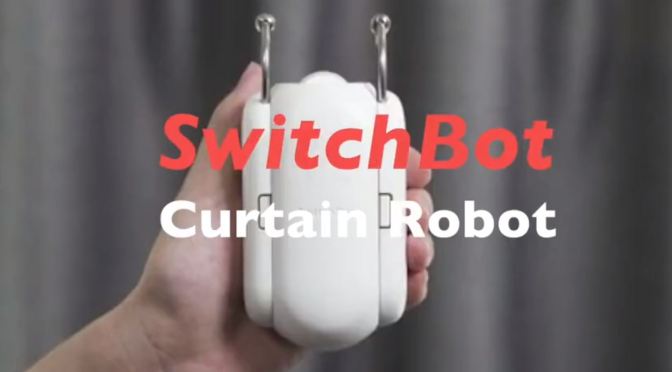
 Designed to universally retrofit onto most curtain rods, the SwitchBot comes with two hooks that hold it in place and a wheel that moves the bot left or right. Place the SwitchBot between the first and second loops of your curtain or blind, and the bot can now, on command, run up and down the curtain rod, maneuvering your curtains open or closed. SwitchBot runs on an app, but even supports voice commands via your phone or smart speaker, effectively allowing you to have your own “Let there be light” moment by commanding the curtains to open at will. IFTTT and shortcuts support even lets you sync SwitchBot with your alarm, or with the time of the day, thanks to the bot’s in-built light sensor.
 Boomers Daily