

Since the beginning of this century, Amazon has emerged as a pre-eminent giant of retail. How? by creating an expectation among consumers that next day, or even same day, delivery is not only possible but basically routine for a dizzying array of consumer products. Millions of Amazon Prime customers all over the world have now come to expect this astonishingly swift service on countless items as standard, and this has put great swathes of the traditional retail landscape in trouble. So today, we’re going to look at how Amazon delivers packages so fast. Let’s pick a typical Amazon product as an example. Say you need a bicycle pump. How will Amazon get that bike pump delivered to your door, the very next day? How Amazon Delivers Packages So FastSHOW LESS
Category Archives: Technology

Future Of Air Travel: ‘Airbus ZEROe – Next-Gen Hydrogen Planes’ (Video)
Airbus has revealed three concepts for the world’s first zero-emission commercial aircraft which could enter service by 2035. These concepts each represent a different approach to achieving zero-emission flight, exploring various technology pathways and aerodynamic configurations in order to support the company’s ambition of leading the way in the decarbonisation of the entire aviation industry.
All of these concepts rely on hydrogen as a primary power source – an option which Airbus believes holds exceptional promise as a clean aviation fuel and is likely to be a solution for aerospace and many other industries to meet their climate-neutral targets.
The three concepts – all codenamed “ZEROe” – for a first climate neutral zero-emission commercial aircraft include:
•A turbofan design (120-200 passengers) with a range of 2,000+ nautical miles, capable of operating transcontinentally and powered by a modified gas-turbine engine running on hydrogen, rather than jet fuel, through combustion. The liquid hydrogen will be stored and distributed via tanks located behind the rear pressure bulkhead.
• A turboprop design (up to 100 passengers) using a turboprop engine instead of a turbofan and also powered by hydrogen combustion in modified gas-turbine engines, which would be capable of traveling more than 1,000 nautical miles, making it a perfect option for short-haul trips.
• A “blended-wing body” design (up to 200 passengers) concept in which the wings merge with the main body of the aircraft with a range similar to that of the turbofan concept. The exceptionally wide fuselage opens up multiple options for hydrogen storage and distribution, and for cabin layout.

Defense Industry: How Companies Make Billions Off Missile Sales (Video)
Missile sales are the number two defense export in the U.S. and production is dominated by a handful of companies such as Raytheon, Boeing and Lockheed Martin. As technology advances, will expensive missiles and hypersonic glide weapons dominate the market, or could start-ups and cheaper technology change the missile economy?

Science: ‘Breakthrough Of The Year In 2020’ (Video)
Each year, editors and writers choose a top research achievement as Science’s Breakthrough of the Year. This year, that honor goes to the multiple COVID-19 vaccines that have succeeded in large human trials—and are now being deployed around the world. But there are a lot of other advances to talk about, from figuring out the origin of Fast Radio Bursts to the discovery of the earliest known figurative art. Check out a few of the runners-up candidates—and this year’s Breakthrough of the Year—in this video rundown. Read the stories here: https://scim.ag/37v20ds
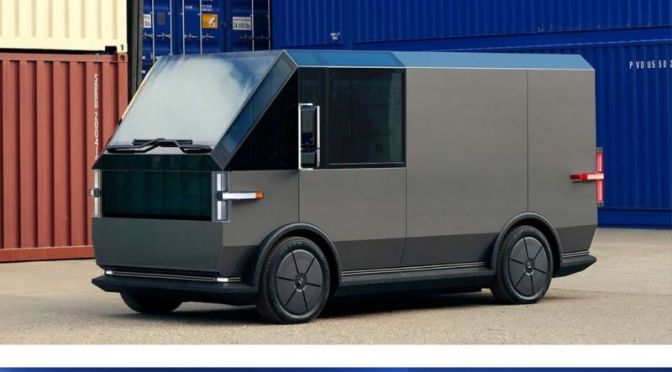
Technology: ‘2021 CAnoo VAN’ – The Most Versatile Electric Delivery Vehicle
California EV startup Canoo has announced a new multipurpose electric vehicle aimed at last-mile deliveries and other small businesses, which starts at $33,000 but scales up in size and cost. It’s Canoo’s second vehicle, following the subscription-only van it debuted last year. Canoo still plans to make that EV — in fact, the new multipurpose vehicle is built on the same technological platform that Canoo developed for the van, and they share similar design features.
The new vehicle will initially be sold in two variants, though Canoo says more will eventually be offered. The smaller one (which is the one that starts at $33,000) is 14.4 feet long, 6.4 feet wide, and 6.2 feet tall, and has 230 cubic feet of cargo space. Canoo will offer three different battery pack options, too: 40kWh (with an estimated 130 miles of range), 60kWh (190 miles), and 80kWh (230 miles). The company will also make a larger version that is 17.1 feet long, 7.2 feet wide, and 8.4 feet tall, with 500 cubic feet of cargo space. The same battery pack options will be available, though the range estimates drop to 90 miles, 140 miles, and 190 miles, respectively, thanks to the extra weight.

Timelaspe Views: 4-Story Prefab Modular School Building Constructed In Sydney, Australia (Video)
This four-storey school was built in the Modscape factory in just 12 weeks before taking the drive up to North Sydney to be installed in just one weekend.
Comprised of 20 modules, the building includes 14 learning spaces, three COLAs, staff amenities, a lift and stairs. In collaboration with Team 2 Architects.
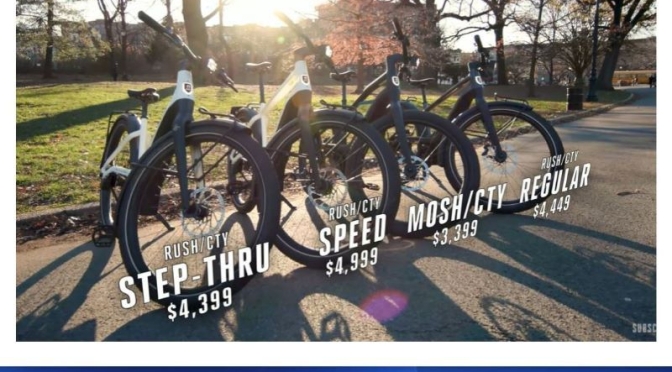
Road Tests: The New ‘Harley-Davidson Serial 1 Electric Bikes’ (Video)
Harley-Davidson’s new Serial 1 electric bikes are coming, and we got one of the first test rides. The bikes are gorgeous, with a clean, non cluttered design and an impressive spec sheet. And they are an absolute joy to ride. But are they worth $5,000? Learn more about the Harley-Davidson Serial 1: http://bit.ly/3gXZL5B

Top Creative Short Films: “Past & Present” (Video)
BTS “Past & Present”.
Director: Kanin Chandrasma
Client BTS Group
Agency BrandAholics
And friends
Production house Don Film

Views: Everday Things Seen In ‘8K Ultra HD’ (Video)
Life in Macro in 8K ULTRA HD / 8K TV.
8K resolution refers to an image or display resolution with a width of approximately 8,000 pixels. 8K UHD is the highest resolution defined in the Rec. 2020 standard. 8K display resolution is the successor to 4K resolution. TV manufacturers pushed to make 4K a new standard by 2017.

Covid-19 Testing: First Rapid, Over-The-Counter Test Using Smartphone Is Approved By FDA

The patented detection method detects minute fluorescence signals using unique fluorescent nanoparticles and a sophisticated reader system to achieve accurate results from a clinical sample, overcoming the sensitivity limitations of typical lateral flow technology. The key elements of Ellume’s digital technology reduce the probability of false results, create new pathways to treatment, and optimize secure public health reporting. These unique features are critical to the approval, success and adoption of self-administered home testing.
Core Technology
Supercharged fluorescent immunochromatography using a quantum-dot based fluorescent particle
The Ellume COVID-19 Home Test’s core technology combines ultra-sensitive optics, electronics and proprietary software to leverage best-in-class digital immunoassay technology with next-generation multi-quantum dot fluorescence technology.
How it works
Safe, accurate and rapid self-test
The test includes a sterile Nasal Swab, a Dropper, Processing Fluid, and a Bluetooth® connected Analyzer for use with an app on the user’s smartphone. Utilizing the dedicated app, the user follows step-by-step video instructions to perform the test including a self-collected mid-turbinate nasal swab. The sample is analyzed, and results are automatically transmitted to the user’s smartphone via Bluetooth® in 15 minutes or less. Results can be shared with healthcare professionals to enable optimal therapy.
Through a secure cloud connection, Ellume’s COVID-19 Home Test can provide real-time reporting of test results to health authorities, employers, and educators, for efficient COVID-19 mapping.
 Boomers Daily