

Over the past 100 years, the technology inside airplanes has become more and more advanced from jumbo jets to smaller Cessna’s. Some see the next step to full automation as removing the pilot completely. Reliable Robots and Xwing are two Bay Area start-ups working on doing just that. Rather than build new aircraft, both companies have retrofitted Cessna Grand Caravan’s. The planes can fly autonomously with a remote operator who monitors the flight and can take control if needed. Both companies are working with the FAA on getting approval. Xwing took CNBC for a test flight, where the pilot didn’t touch the controls once. Watch the video to learn how it works and when pilotless planes will become the norm.
Category Archives: Technology

Mars Missions: The China And U.S. ‘Battle Of Rovers’
The U.S. and China are locked in a fierce battle in the race for Mars. China’s Zhurong rover is circling Mars as the country attempts to land a spacecraft on the red planet for the first time, just months after NASA landed its Perseverance rover. Photos: NASA; CCTV
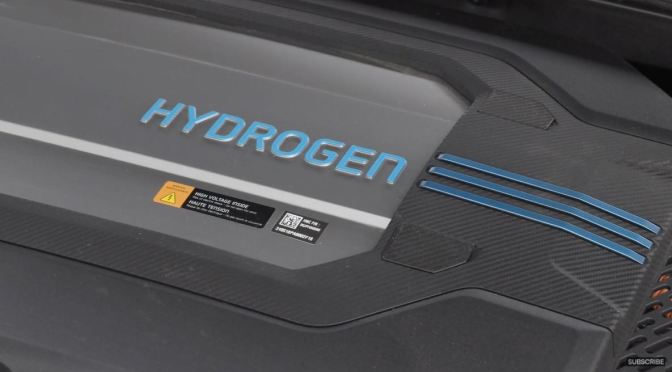
Energy: Why Hydrogen Is The Fuel Of The Future
There’s a lot of interest in the hydrogen fuel economy. Here’s what you need to know about how it works and the hurdles it faces.
Hydrogen is a clean fuel that, when consumed in a fuel cell, produces only water. Hydrogen can be produced from a variety of domestic resources, such as natural gas, nuclear power, biomass, and renewable power like solar and wind. These qualities make it an attractive fuel option for transportation and electricity generation applications. It can be used in cars, in houses, for portable power, and in many more applications.
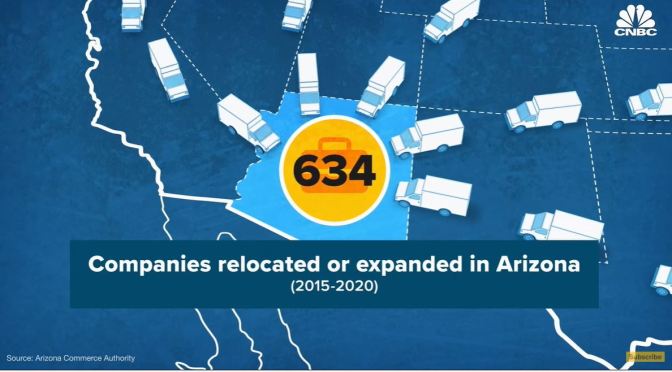
Business: Why Arizona is Now A Technology Hub
Arizona has rapidly become an epicenter for electric vehicle and self-driving tech, and it’s now the site of three big new semiconductor factories as the U.S. struggles to increase production during the global chip shortage. In 2020, Phoenix attracted more residents than any other U.S. city for the fourth year in a row, as highly skilled workers flocked to the lower cost of living and wide open spaces of the Grand Canyon State. From Lucid Motors to ElectraMeccanica, Intel to Taiwan Semiconductor Manufacturing Co, 634 companies relocated or expanded in Arizona between 2015 and 2020. CNBC asked the governor, big companies, and Arizonans about why the tech boom is happening and how it’s changing the state.

Analysis: The Microchip Shortage Limiting Autos
While the automotive industry was ravaged early on in the pandemic thanks to lockdown measures and a dramatic decrease in travel, it more recently has begun facing a new problem: a shortage of microchips.
Microchips are vital to much of a vehicle’s key functions, such as engine control, transmission, infotainment systems, and more. In the last half of 2020 and now in 2021, vehicle sales recovered fairly quickly, faster than automakers anticipated.
Suddenly, they were struggling to meet demand. At the same time, chipmakers were experiencing supply shortages and increased demand from other sectors, such as personal electronics. With the resulting lack of microchip supply, automakers have been forced to slow production, even on their most popular models. For several automakers, the shortage is expected to cost them $1 billion or more — and even still, the alternatives are worryingly few.

Health: Vaccine Passports Explained (WSJ Video)
Startups, governments and nonprofits are racing to create so-called “vaccine passports,” or digital health passes aimed at helping people travel and safely move around in public. WSJ explains what it would take to get a global digital health pass system off the ground. Illustration: Zoë Soriano

Climate: The Empire State Building’s Green Upgrade
Energy usage by large, old buildings like the Empire State Building represents a huge obstacle to cities’ dreams of carbon neutrality. New York City’s buildings account for 70% of its carbon emissions, for example, and half of those emissions are produced by the largest 5% of its structures. But retrofitting old buildings to make them more energy efficient represents a formidable challenge, both from an engineering perspective and in terms of convincing owners that doing so is in their financial interest.

Tech Reviews: Apple AirTag Lost-Item Tracker (Video)
Can a drug-detection dog beat Apple’s U1 chip? Attach a $29 Apple AirTag to your stuff and you can use your iPhone to locate it when it goes missing. WSJ’s Joanna Stern put the new gadget up against a drug-detection dog and other lost-item trackers, like the Tile Pro, in a series of indoor and outdoor challenges. Photo illustration: Laura Porat for The Wall Street Journal

Digital Currencies: Could They Be The End Of Banks?
Cryptocurrencies like Bitcoin have been billed as a major disruptor to finance. But digital currencies issued by governments might be even more radical—they may even threaten the future of traditional banking.
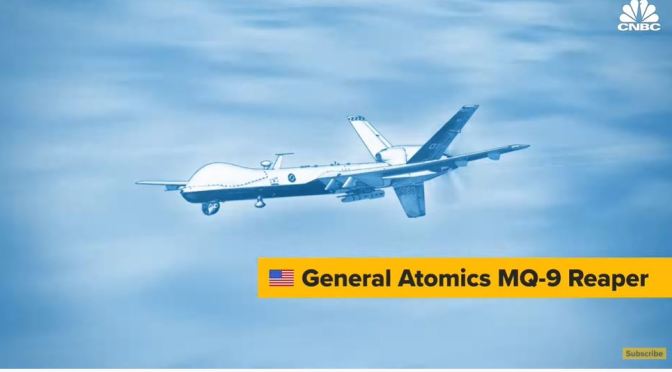
Analysis: Why Demand For Armed-Drones Is Surging
Armed drones are growing in military importance as conflicts around the world have proven the utility of these effective tools of war. Companies in China, Turkey, and Russia, among others, have developed advanced remotely piloted aircraft that can use guided weapons on and off the battlefield.
The widespread use of drones in Iraq and Afghanistan by the United States to target and kill insurgents jump started a new chapter in the history of conflict. These high flying and remotely piloted aircraft could engage targets with impunity while the operators were safely working in a ground control station. Keeping the crews out of danger also made the drones politically cheap to use over dangerous skies.
Now more and more countries are gaining this military capability for their own purposes. “At the moment, we’ve seen over 100 states worldwide using military drones and that number is growing significantly” said Wim Zwijnenburg, Project leader, Humanitarian Disarmament at PAX. “We have over 20 states that are using armed drones in conflicts or outside of armed conflicts.”
Although larger and more complex drones, like the General Atomics MQ-9 Reaper are not cheap to develop or operate, smaller drones are becoming more ubiquitous in conflict zones. Limiting the proliferation of these smaller drones, and the ability to weaponize them, is a regulatory nightmare for government agencies around the world.
“Drones are just model airplanes with great sensors on them. And all of these are dual use and have been used in the civilian realm” said Ulrike Franke, a Senior Policy Fellow at the European Council on Foreign Relations. “And in fact, drones have risen enormously in the civilian realm over the last five to 10 years. And so controlling their export is really difficult.”
 Boomers Daily