Category Archives: Technology

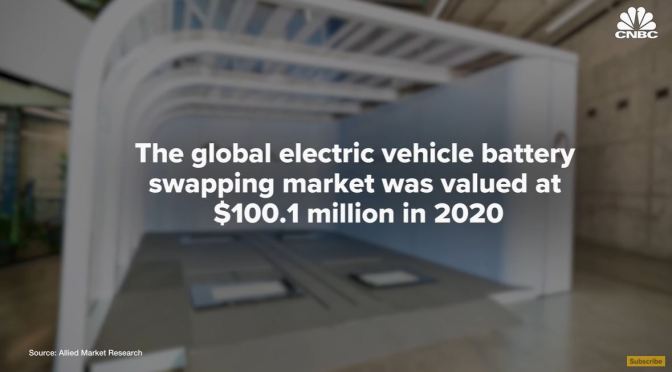
Analysis: Can EV Battery Swapping Gain In The U.S.?

San Francisco-based Ample has brought electric vehicle battery swapping to the U.S. The company was in stealth mode for seven years before launching recently with five swapping stations in the Bay Area. Uber drivers in the area are Ample’s first customers.

The concept isn’t new. A start-up called Better Place launched an EV and battery swapping company after it raised $850 million in venture funding, but it ultimately went bankrupt in 2013. Tesla also demoed battery swapping in 2013 but only opened one station for about a year. Elon Musk said Tesla owners were not interested in it.

Battery swapping is already common in China. Electric vehicle maker Nio, for example, plans to double its network of swapping stations to 500 this year and plans to open stations in Norway as part of its expansion into Europe. Ample has a different approach, with modular batteries and a focus on fleets. CNBC got an inside look at its headquarters and battery factory in San Francisco to learn how the company plans to bring battery swapping into the mainstream.

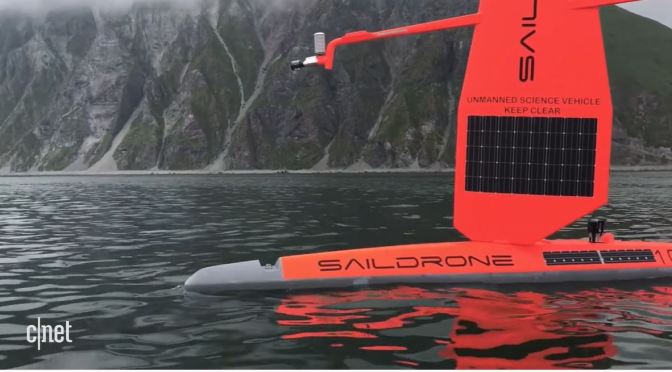
Climate Change: A Fleet Of Saildrones Patrol Oceans

A fleet of unmanned surface vehicles equipped with AI and a suite of scientific sensors are currently mapping the ocean floor, counting fish populations and monitoring ocean and weather conditions all over the planet in the fight against climate change. CNET’s Stephen Beacham spoke with Saildrone Inc. Vice President of Ocean Mapping Brian Connon to learn more about Saildrone’s mission. Read the CNET Article: Autonomous Saildrones are the newest weapon in fighting climate change https://cnet.co/2RwaJaq

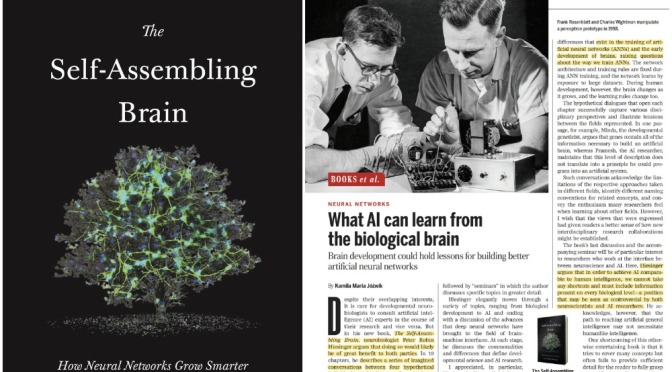
Book Reviews: ‘The Self-Assembling Brain’ – The Future Benefits For AI

As Peter Robin Hiesinger argues, “the information problem” underlies both fields, motivating the questions driving forward the frontiers of research. How does genetic information unfold during the years-long process of human brain development―and is there a quicker path to creating human-level artificial intelligence? Is the biological brain just messy hardware, which scientists can improve upon by running learning algorithms on computers? Can AI bypass the evolutionary programming of “grown” networks? Through a series of fictional discussions between researchers across disciplines, complemented by in-depth seminars, Hiesinger explores these tightly linked questions, highlighting the challenges facing scientists, their different disciplinary perspectives and approaches, as well as the common ground shared by those interested in the development of biological brains and AI systems. In the end, Hiesinger contends that the information content of biological and artificial neural networks must unfold in an algorithmic process requiring time and energy. There is no genome and no blueprint that depicts the final product. The self-assembling brain knows no shortcuts.

Read book review here

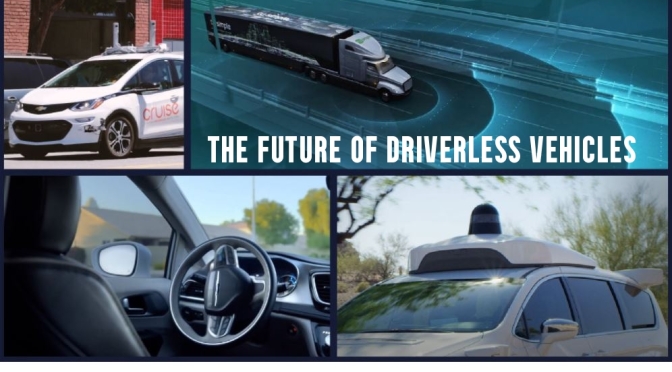
Analysis: The Future Of Driverless Vehicles (WSJ)

While Tesla and others already offer assisted-driving features, startups Waymo, Cruise, TuSimple and Aurora are betting their autonomous vehicles will make driving a thing of the past. WSJ asked them about safety and other challenges they face. Photo composite: George Downs

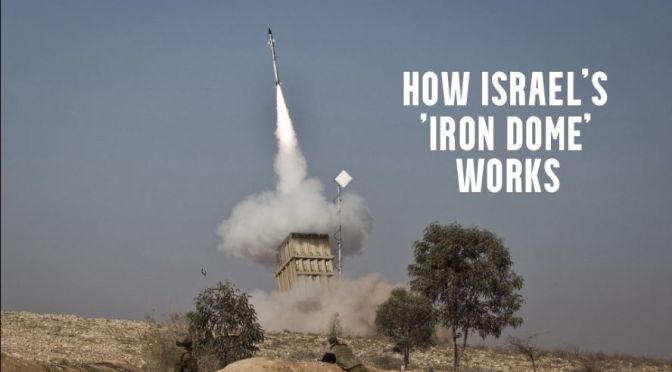
Military Analysis: How Israel’s ‘Iron Dome’ Works

Israel’s Iron Dome missile-defense system is designed to intercept and destroy short-range rockets and mortars. During the recent conflict, it has been used to destroy more than 200 rockets bound for Israeli cities. Here’s how it works. Photo: Ilia Yefimovich/Getty Images

Air Travel: The Rise Of Pilotless Planes (Video)

Over the past 100 years, the technology inside airplanes has become more and more advanced from jumbo jets to smaller Cessna’s. Some see the next step to full automation as removing the pilot completely. Reliable Robots and Xwing are two Bay Area start-ups working on doing just that. Rather than build new aircraft, both companies have retrofitted Cessna Grand Caravan’s. The planes can fly autonomously with a remote operator who monitors the flight and can take control if needed. Both companies are working with the FAA on getting approval. Xwing took CNBC for a test flight, where the pilot didn’t touch the controls once. Watch the video to learn how it works and when pilotless planes will become the norm.

Mars Missions: The China And U.S. ‘Battle Of Rovers’

The U.S. and China are locked in a fierce battle in the race for Mars. China’s Zhurong rover is circling Mars as the country attempts to land a spacecraft on the red planet for the first time, just months after NASA landed its Perseverance rover. Photos: NASA; CCTV

Energy: Why Hydrogen Is The Fuel Of The Future

There’s a lot of interest in the hydrogen fuel economy. Here’s what you need to know about how it works and the hurdles it faces.

Hydrogen is a clean fuel that, when consumed in a fuel cell, produces only water. Hydrogen can be produced from a variety of domestic resources, such as natural gas, nuclear power, biomass, and renewable power like solar and wind. These qualities make it an attractive fuel option for transportation and electricity generation applications. It can be used in cars, in houses, for portable power, and in many more applications.