


That resulted in her new book, “The Story of Art Without Men.” Jeffrey Brown discussed the book with Hessel for our arts and culture series, CANVAS.

That resulted in her new book, “The Story of Art Without Men.” Jeffrey Brown discussed the book with Hessel for our arts and culture series, CANVAS.
0:15 Germany tackles skill gap with on-job training – Jakob Kasperidus joined wind power firm SL Naturenergie 2 years ago despite having no experience in the field. Previously, he managed an organic food shop. Now, he’s training to become a senior project developer as he works. “The first months were not that easy. It has to be said that we actually had quite a nice concept. That is, we had former or senior project developers who have been in the profession for some time now, who were always assigned a tandem junior project developer. That means I’ve had a mentor, if you will, for 2 or 2.5 years now, who then trained me bit by bit, so to speak.”
2:24 New documentary explores endometriosis – This director has endometriosis, along with millions of women. She made a movie about it. Endometriosis is a condition where cells similar to the uterus lining grow outside of the uterus. It causes severe, life-limiting pelvic pain and affects 190 million women of reproductive age globally. That’s 1 in 9 women. Yet many struggle to get their condition recognized and treated.
5:08 Scientists test honey for antibiotic potential – Honey is a traditional remedy for wound-healing due to its antimicrobial and anti-inflammatory properties. Now, scientists at Cardiff University are going back to this ancient cure to search for the next wave of bacteria-fighting medicine. The honey works as a ‘drug discovery tool’. Researchers test samples of honey for antibacterial compounds, then follow them back, using technology, to the plant species the bees visited. Many of these plants would otherwise be dismissed as weeds.
6: 32 Student designs plastic windows for Ukraine – The plastic windows can be built in just 15 minutes at a cost of €13.60 per square metre. The windows combine 4 layers of polythene sheeting with PVC piping and an ‘insulating noodle’ to create an immediate triple-glazed window which lets in enough light to live by. Millions of Ukrainians are living in bomb-damaged homes in a country where temperatures can drop to -20°C. The plastic windows were designed by Cambridge student Harry Blakiston Houston who took a break from his biotechnology PhD to start an NGO, Insulate Ukraine.
_____________________________________________
The World Economic Forum is the International Organization for Public-Private Cooperation. The Forum engages the foremost political, business, cultural and other leaders of society to shape global, regional and industry agendas. We believe that progress happens by bringing together people from all walks of life who have the drive and the influence to make positive change.



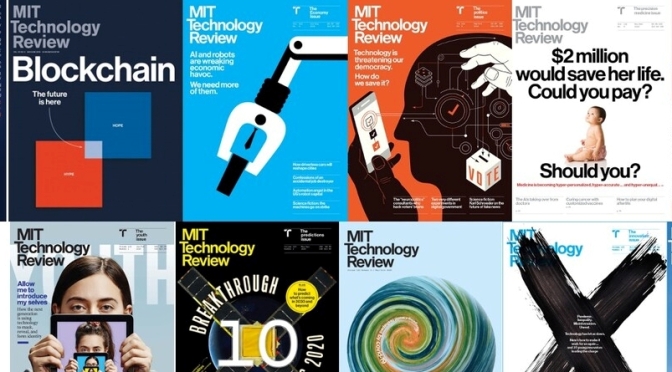
Companies say the software can help improve well-being, but some experts worry it could have the opposite effect.

The historians of tomorrow are using computer science to analyze how people lived centuries ago.
It’s an evening in 1531, in the city of Venice. In a printer’s workshop, an apprentice labors over the layout of a page that’s destined for an astronomy textbook—a dense line of type and a woodblock illustration of a cherubic head observing shapes moving through the cosmos, representing a lunar eclipse.

Junk fees are making companies billions of dollars richer. Watch the video above to learn more about where junk fees hide, details of proposed changes, where policy may fall short and whether increased regulatory oversight may be enough to squash junk fees once and for all. Chapters: 0:00 Introduction 1:26 Defining ‘junk’ fees 5:34 Squashing fees 7:52 Policy problems 10:02 The future of fees

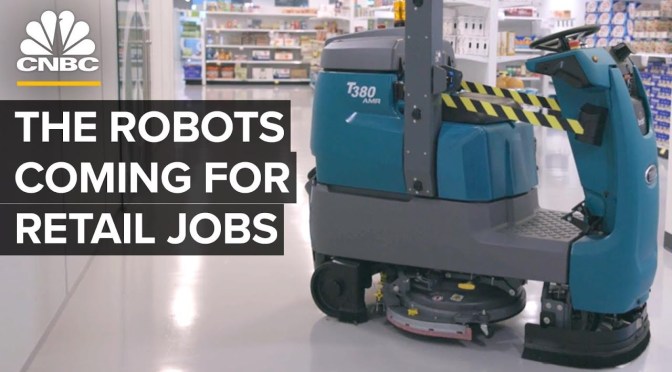
Chapters: 0:00–2:07 Introduction 2:08–5:11 Chapter 1 Empty Shelves 5:12–9:26 Chapter 2 Inventory robots 9:27–12:31 Chapter 3 The future
Missed sales from empty shelves and out-of-stock items cost U.S. retailers $82 billion in 2021, according to NielsenIQ. But an army of inventory robots is being deployed that could help retailers appease angry customers, boost sales and respond to the ongoing worker shortage.

Video timeline: 0:00 EVs and plug-in hybrids are in the spotlight at Auto Shanghai 0:37 BYD’s Seagull and Li Auto’s L8 on display 1:58 How international companies like Volkswagen and Porsche are trying to keep up with Chinese EV companies 3:07 What’s next for China’s EV market?
WSJ’s Yoko Kubota heads to the most prestigious car show in China and takes a look at what’s driving the latest trends.



The car industry
The industry must reinvent itself to keep pace, says Simon Wright
Electrification

The car industry is electrifying rapidly and irrevocably
0:15 China build’s the world’s largest container ship – Mediterranean Tessa is nearly 400 metres long. Her deck area is the size of 4 football pitches. She can carry up to 240,000 tonnes of cargo or more than 24,000 standard containers. The ship is fitted with an air lubrication system. It blows tiny bubbles along the hull to reduce its resistance in the water.This reduces the ship’s CO2 emissions by up to 4% saving around 6,000 tonnes of CO2 a year.
1:36 The first cellphone call was made 50 years ago – On 3 April 1973, Motorola engineer Martin Cooper stood on a Manhattan street and called the landline of a rival who was racing to develop the cellphone, too. This was the world’s first mobile phone call. “I’m calling you on a cellphone,” Cooper said. ‘‘A personal, handheld, portable cellphone” the race was over. Cooper’s prototype became the first commercially available mobile phone. Motorola released the DynaTAC 8000x a decade later, in 1984. It was about the size of a shoebox and cost $11,500 in today’s money. Since then, mobile technology has transformed our lives. Watch to learn more about the first mobile phone call in the world.
3:40 South Korea to pay its citizens to have children – South Korea has the world’s lowest fertility rate. The average South Korean woman will have 0.78 babies in her lifetime. While the average fertility rate in OECD countries is 1.59. South Korea’s population is shrinking as a result. More people die each year than are born. Left unchecked, the country’s working-age population will almost halve by 2070. Globally, the fertility rate is declining it stands at 2.3 today. In 2000 it was 2.7. The UN predicts the global population will peak at 10.4 billion by 2080, but a recent study suggests the peak could be much lower and could arrive much sooner.
5:01 Why sleeper trains are being revived across Europe – The EU has provisionally agreed to call 2021 the European Year of Rail. It says boosting rail travel could help the bloc reach carbon neutrality by 2050.
_____________________________________________
The World Economic Forum is the International Organization for Public-Private Cooperation. The Forum engages the foremost political, business, cultural and other leaders of society to shape global, regional and industry agendas. We believe that progress happens by bringing together people from all walks of life who have the drive and the influence to make positive change.





 Boomers Daily