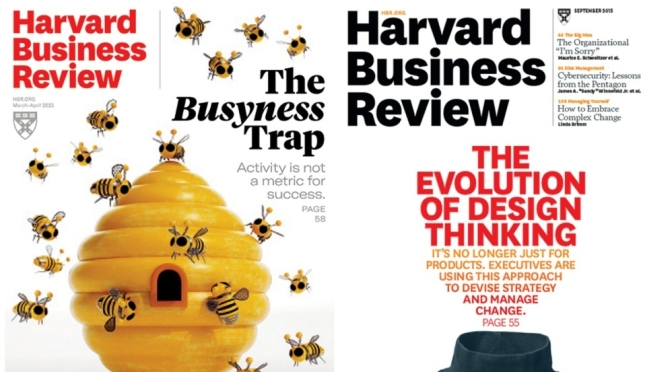
Harvard Business Review (June 12, 2023) – Gen AI and the New Age of Human Creativity: How revolutionary technology can enhance, rather than replace, our powers of imagination.
There is tremendous apprehension about the potential of generative AI—technologies that can create new content such as audio, text, images, and video—to replace people in many jobs. But one of the biggest opportunities generative AI offers to businesses and governments is to augment human creativity and overcome the challenges of democratizing innovation.
Having studied TV signals in East Germany from the 1960s to 1989 and rates of entrepreneurship there after German reunification, the researchers found that people in households with access to West German broadcasts were more likely than other East Germans to launch companies later in life.
Wall Street Journal (June 10, 2023) – Noise canceling is a hallmark feature of top headphones across brands, from Apple and Beats to Sony and Bose. Behind the simplicity of the technology from a user perspective, though, is cutting-edge hardware running sophisticated algorithms.
Video timeline: 0:00 A sound wave and its inverse 0:32 Destructive interference 1:30 Noise-canceling headphones’ origins 3:17 What background noise to remove 4:46 Transparency modes or aware modes
What kind of audio processing is necessary to eliminate background noise when listening to music or watching a movie? WSJ dives into how noise canceling works, how the technology has changed and where things are headed.
CNBC (June 10, 2023) – Interest in electric vehicles is at an all time high, with sales of new EVs up 55 percent in 2022 compared to the year prior. But there are still a lot of gas cars on the road today and there will be for a long time. EV conversions are becoming a bigger trend that could help.
Chapters: 00:00 — Introduction 02:40 — EV conversions 04:12 — Conversion shops 06:45 — DIY community 11:16 — Challenges
Both the shops and aftermarket community are growing substantially to meet the new demand. CNBC explores what it takes to convert a gas-powered car to an electric vehicle and whether it could go mainstream.
World Economic Forum (June 10, 2023) – This week’s top stories of the week include:
0:15Finland’s electricity fell below €0 – It happened twice during one week in May caused by a glut of hydroelectric capacity as a result of heavier-than-usual spring meltwater. This meant the supply of electricity exceeded demand and this, in turn, led to a negative price for electricity.
1:30NYC gives new mothers $1000 – The no-strings cash payments last for 18 months. Then for the following 18 months, low-income mothers receive $500 a month, covering the first 3 years of their baby’s life. The scheme – known as the Bridge Project – aims to fight child poverty in New York as well as reducing inequality and stress for new parents.
3:19NASA will send your name to space – It’s asking people to sign a poem written by Ada Limón, the US Poet Laureate. Limón’s poem will be engraved on NASA’s Europa Clipper spacecraft. While signatories’ names will be etched on microchips mounted on the craft.
5:11Implants help this paralysed man walk – It creates a ‘digital bridge’ between his brain and his spinal cord, Bypassing sections that were damaged in an accident. The implant lets him stand, walk and even climb stairs.
_____________________________________________
The World Economic Forum is the International Organization for Public-Private Cooperation. The Forum engages the foremost political, business, cultural and other leaders of society to shape global, regional and industry agendas. We believe that progress happens by bringing together people from all walks of life who have the drive and the influence to make positive change.
CNBC (June 8, 2023) – Samsung may be known for android phones, TVs and appliances, but it’s also been the undisputed leader in memory for more than three decades. Now, as memory prices continue to fall, it’s doubling down on manufacturing chips for outside customers, with a $17 billion new chip fab in Texas and new $228 billion cluster in South Korea.
Chapters: 00:00 – Introduction 02:31 — From fish to microchips 06:10 — Making more chips in the U.S. 11:17 — Concerns and controversy 14:40 — Ambitious road map ahead
CNBC got a rare look inside Samsung’s chip business to bring you the untold story of how it became the world’s second biggest advanced chipmaker, just as it makes plans to catch the industry leader TSMC.
World Economic Forum (June 3, 2023) – This week’s top stories of the week include:
0:15Spain just powered itself entirely from renewables – Mainland Spain’s electricity needs were met solely by wind, solar and hydropower between 10am and 7pm on Tuesday, 16 May. Impressively, this happened on a weekday when demand is highest. Last year, 42% of Spain’s electricity was generated renewably. This could rise above 50% this year, experts say
1:31This school teaches students in the Metaverse – Donning VR headsets, pupils can visit the planets in our solar system, get up close and personal with a woolly mammoth or walk through the chambers of a human heart. They can practice their pronunciation in a simulated French restaurant or travel back in time to World War II. The cutting-edge lessons are on offer at Reddam House School in the UK.
3:06New York City is sinking under the weight of its skyscrapers – Scientists calculated the mass of all the buildings in New York City. Including the Central Park Tower and the Empire State. In total, there are 1.1 million buildings, weighing a total of 762 million tonnes. The same as 64 million city buses. While most of the city is built on solid bedrock, softer parts of the earth are compressing under the enormous weight. Sending the Big Apple downwards at 1-2mm a year on average and up to 4mm a year in some areas.
4:28 Scientists have developed Eco-Friendly Ammonia – Used in many cleaning products and agricultural fertilizer. Their method uses water, nitrogen, a catalyst and a sprayer. If successfully scaled up, researchers say it could make a big dent in CO2 emissions, while helping to feed the world’s growing population sustainably.
_____________________________________________
The World Economic Forum is the International Organization for Public-Private Cooperation. The Forum engages the foremost political, business, cultural and other leaders of society to shape global, regional and industry agendas. We believe that progress happens by bringing together people from all walks of life who have the drive and the influence to make positive change.
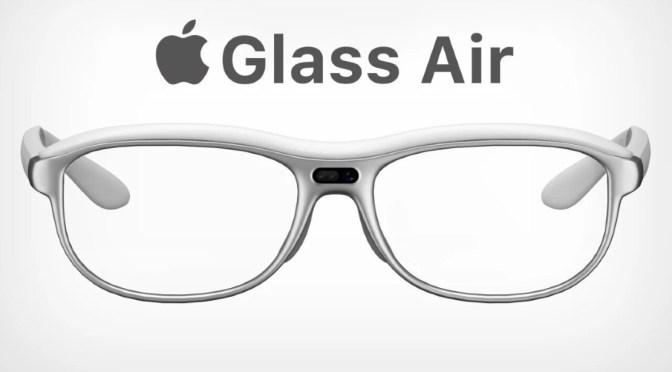
Yanko Design (June 2, 2023) – Augmented Reality has always been Tim Cook’s favorite buzzword, and he’s consistently pushed for Apple to have a presence in this space. It’s expected that all this will culminate in what analysts and leakers call “Reality”, Apple’s first XR headset. This cutting-edge device, expected to be unveiled at Apple’s Worldwide Developers Conference, aims to pioneer the relatively uncharted realm of mixed-reality technology.
With a price tag of approximately $3,000, the ‘Reality’ headset has been seven years in the making, and has been apparently filled with controversy too, with a large chunk of Apple’s own employees expressing doubt and disdain. However, here’s everything we know about the Reality headset (or could it be a pair of glasses?) that’s set to launch this Monday.
The headset’s design journey has oscillated between being thick and obtrusive, like your average VR headset, to being as slim as a pair of spectacles, or realistically, a pair of chunky ski goggles. At its heart, however, lies the innovative xrOS, designed to provide an interface that echoes the familiar iOS experience. The new operating system (which is pretty much confirmed thanks to a trademark filed by Apple in New Zealand) is set to revolutionize how users interact with their devices, presenting a traditional Home Screen in an entirely new dimension filled with apps and customizable widgets.
One of the most exciting features of ‘Reality’ is its ability to merge digital elements with the real world. The xrOS software could potentially project AR app interface elements onto actual objects, creating a seamless mixed-reality overlay effect. This represents a significant leap forward in AR technology, blurring the boundaries between the physical and digital worlds. According to MacRumors, the ‘Reality’ device will achieve this using “dual high-resolution 4K micro OLED displays with up to 3,000 pixels per inch for a rich, realistic, and immersive viewing experience.” To operate the device, the user’s hands and eyes will be monitored by over a dozen optical cameras. The user can select an on-screen item by simply looking at it and activate it by making a hand gesture, such as a pinch.
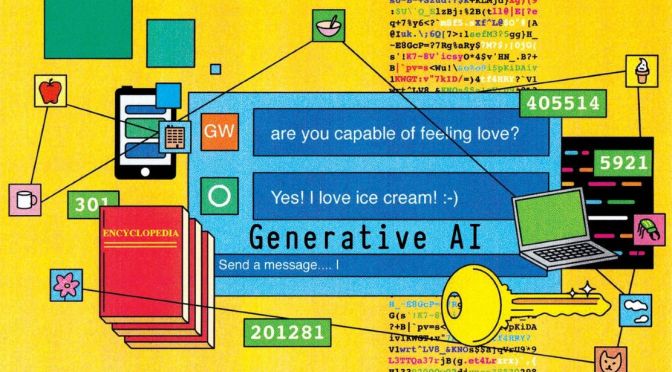
The Economist (May 18, 2023) – Generative AI is the technology behind the wave of new online tools used by millions around the world. As the technology is ever more widely deployed, what are its current strengths and its weaknesses?
Video timeline:00:00 – What is generative AI? 00:46 – Breakthroughs and take-up of the technology 02:03 – Strengths 03:32 – Weaknesses
Kirsten Dirksen Films (May 28, 2023) – Caspar Schols built his first shapeshifting house in his mother’s backyard as her writing cabin that, by sliding a room-on-rails, could convert into a place to sleep under the stars.
He has since perfected his expandable home with 10 prototypes: his most recent model is robust enough to serve as a primary residence and has a bathtub and guest bed hidden in the floor. The house can be opened up – on sunny days, for nature-watching or just to sleep directly under the stars – with just a push.
The entire walls and ceiling of the house move, but anyone can propel this 3,000 kilograms (over 6000 pounds) room-on-rails because Schols created a system that is “super low friction”. To create a well-insulated home that has walls that move, Schols and his team designed the rails with wind labyrinths to trap the air and added brushes to any moving surface to prevent airflow.
World Economic Forum (May 27, 2023) – This week’s top stories of the week include:
0:15Why we need to consider AI development – Berkeley professor Stuart Russell is one of the world’s leading experts on AI, and one of more than 1,000 experts who recently signed an open letter calling for a 6-month pause in the development of AI systems for safety reasons. “I think there’s a lot of misunderstanding about the letter. Some people say it bans AI research and so on but what it really is saying is: we have developed this technology that’s pretty powerful, but we haven’t developed the regulation to go along with it. At the moment, the technology is moving very fast. Governments tend to move very slowly. So we need a pause on the development and release of still more powerful models so that, in a sense, regulation can catch up.”
5:43Germany’s first 3D printed house – It took just 100 hours to print the walls thanks to a nozzle that moves at 1 metre per second. The fireplace, kitchen island and bathtub were all printed too. The house contains 160m2 of living space over 2 floors. It was designed by architects Mense Korte. Its walls are comprised of an inner and outer shell with insulation filling the gap between them.
7:11Ocean search for 100,000 species begins – They’re launching dozens of explorations deep into the ocean to build a huge catalogue of as-yet-unknown marine life. An estimated 2.2 million species live in the ocean but just 10% of them have been discovered and named by scientists. It’s a race against time to document endangered marine animals before overfishing and climate change drive them to extinction.
8:56How kids learn through play – These 3 to 5-year-olds are taking part in a programme called Play Labs. They spend their day on puzzles. Games outside playing with others and learning about the world. The programme boosts kids’ physical, social, cognitive and language development and helps them close the education gap with their peers.
_____________________________________________
The World Economic Forum is the International Organization for Public-Private Cooperation. The Forum engages the foremost political, business, cultural and other leaders of society to shape global, regional and industry agendas. We believe that progress happens by bringing together people from all walks of life who have the drive and the influence to make positive change.
News, Views and Reviews For The Intellectually Curious









 Yanko Design (June 2, 2023) – Augmented Reality has always been Tim Cook’s favorite buzzword, and he’s consistently pushed for Apple to have a presence in this space. It’s expected that all this will culminate in what analysts and leakers call “Reality”, Apple’s first XR headset. This cutting-edge device, expected to be unveiled at Apple’s Worldwide Developers Conference, aims to pioneer the relatively uncharted realm of mixed-reality technology.
 The Economist
 Kirsten Dirksen
 Boomers Daily