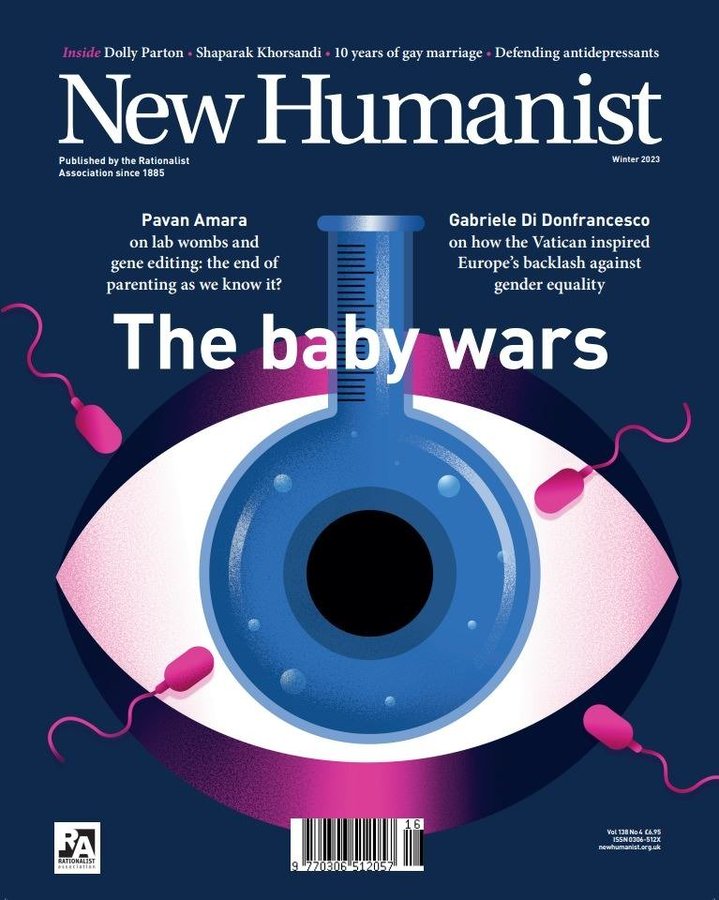
NEW HUMANIST MAGAZINE – WINTER 2023 ISSUE: The new issue features Pavan Amara on the new technologies revolutionising reproduction, Gabriele Di Donfrancesco on Europe’s battle over “family values” and Rachael Lennon on a decade of same-sex marriage, and a new column from Shaparak Khorsandi…
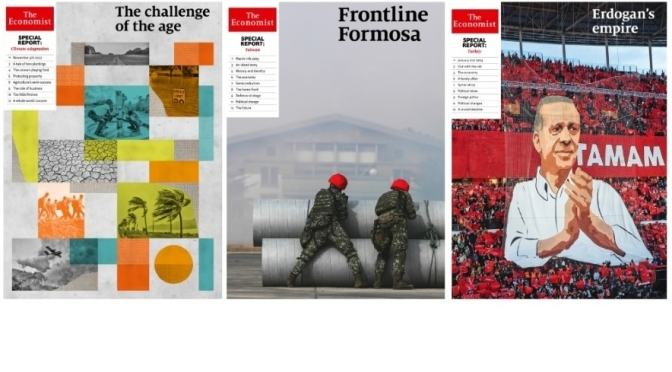
The Economist SPECIAL REPORTS – CHINA’S ARMED FORCES (NOVEMBER 11, 2023): Overestimating China’s armed forces would be dangerous; Unknown soldiers – The People’s Liberation Army is not yet as formidable as the West fears; Rank indifference – China is struggling to recruit enough highly skilled troops; Weapons of woe – From hypersonic missiles to undersea drones, the PLA is making leaps…
Overestimating China’s armed forces would be dangerous, argues Jeremy Page
In 1957 america was gripped by fears of a “missile gap” with the Soviet Union. The Kremlin had stunned the world with a test flight of an intercontinental ballistic missile (icbm) and the launch of Sputnik. An American intelligence report predicted that by 1962, the Soviets could have 500 icbms, outstripping America’s arsenal. When word of that leaked, a political furore erupted. Eyeing the presidency from his Senate seat, John F. Kennedy demanded action to prevent a Soviet “shortcut to world domination”.
TEDx Talks (November 9, 2023) – Competition is a core part of human nature, and it can drive us to extraordinary feats. But when it goes wrong, the results can be devastating.
Poker champion and science communicator Liv Boeree introduces us to the dark force of game theory driving many of humanity’s biggest social problems — a force that’s now threatening to derail the AI industry.
Olivia “Liv” Boeree is a British science communicator, television presenter and former professional poker player. She is a World Series of Poker and European Poker Tour champion, and is the only female player in history to win both a WSOP bracelet and an EPT event.
Tomorrow’s Build (November 7, 2023) – The city of Seville in Spain is implementing measures to mitigate the scorching heat. Called the CartujaQanat, it is a €5 million pilot project that aims to reduce average temperatures by around 10°C in a region of the city.
These systems, developed over 1,000 years ago, consist of the construction of underground channels that transport water across a large area that needs to be cooled. Vertical shafts drilled along the channel bring underground air to the surface, lowering above-ground temperatures.
In summer, people don’t leave their house until 8pm and festivals usually start at 10pm. Built on the banks of the Guadalquivir River during the Middle Ages, the Spanish city regularly records temperatures above 40 degrees Celsius (104 degrees Fahrenheit) during July and August. And scientists expecting temperatures above 50°C in the near future.
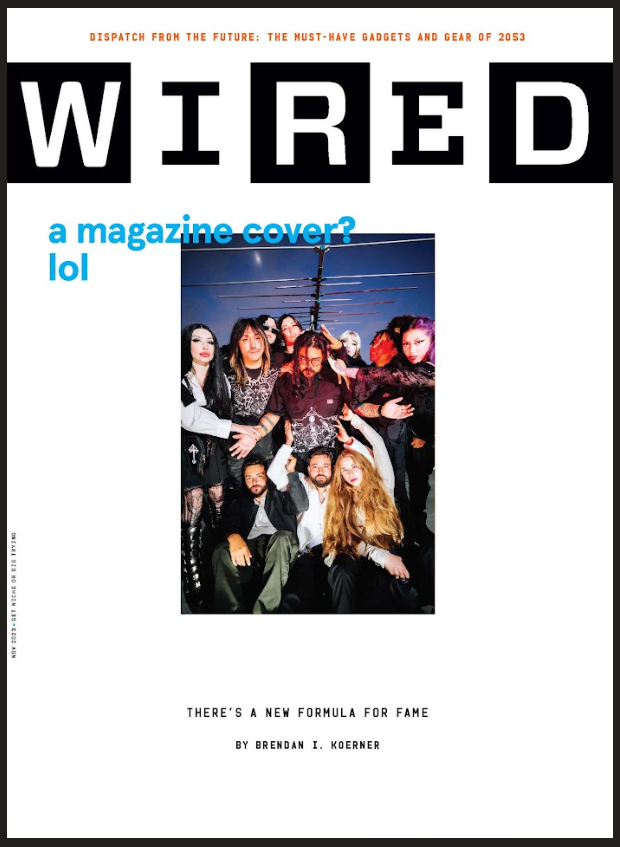
WIRED MAGAZINE (October 31, 2023) – The latest issue features understanding Tik Tok and talent manager Ursus Magana; How Telegram Became a Terrifying Weapon in the Israel-Hamas War; Here’s the Truth Behind the Biggest (and Dumbest) Battery Myths, and more…
The creator economy is fragmented and chaotic. Talent manager Ursus Magana can (almost) make sense of it, with a frenetic formula for gaming the algorithms.
Hamas posted gruesome images and videos that were designed to go viral. Sources argue that Telegram’s lax moderation ensured they were seen around the world.
At around 8 am local time the morning of October 7, Haaretz’s cyber and disinformation reporter, Omer Benjakob, was woken by his wife at their home in the historic port city of Jaffa. Something was happening in southern Israel, she said, but Benjakob shrugged it off, presuming “another round of the same shit.” Flare-ups between the Israel Defense Forces (IDF) and militants in southern Israel are not uncommon. “No, no,” Benjakob’s wife insisted. “It’s more serious.”
Yes, charging your phone overnight is bad for its battery. And no, you don’t need to turn off your device to give the battery a break. Here’s why.
For an object that barely ever leaves our palms, the smartphone can sometimes feel like an arcane piece of wizardry. And nowhere is this more pronounced than when it comes to the fickle battery, which will drop 20 percent charge quicker than you can toggle Bluetooth off, and give up the ghost entirely after a couple of years of charging.
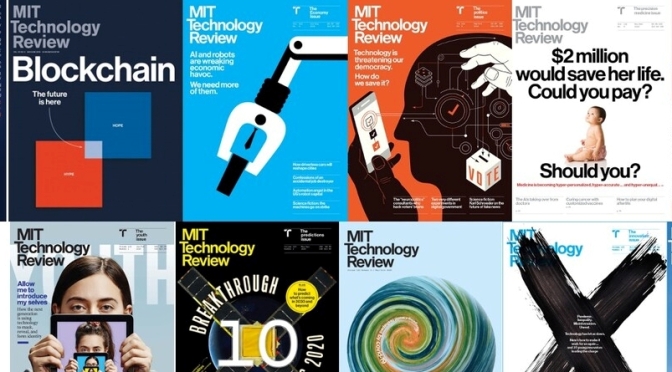
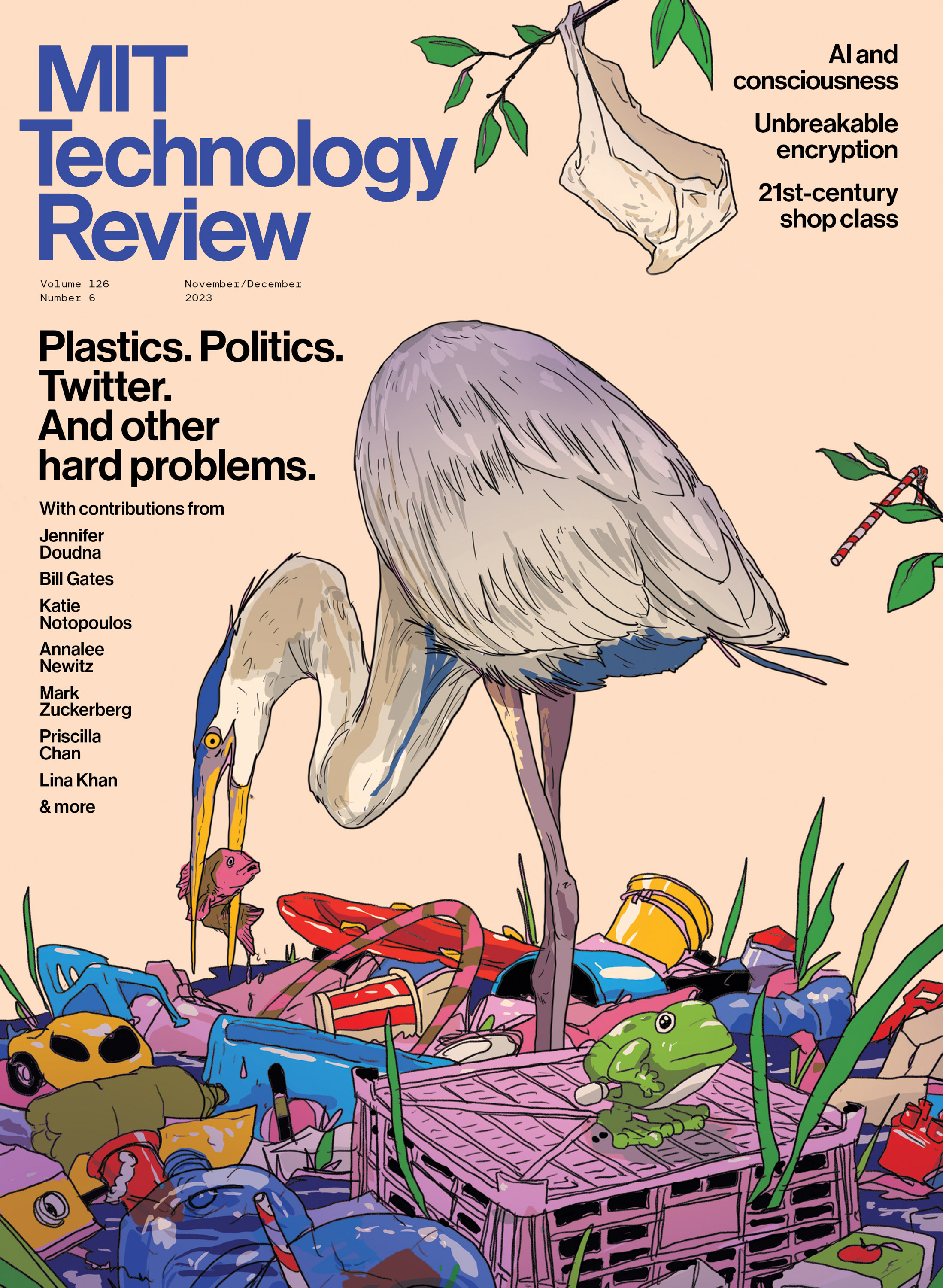
MIT Technology Review – November/December 2023: The Hard Problems issue features the Intractable problem of plastics; Fixing the internet; Exploring what it would it take for AI to become conscious. Also, there are so many urgent issues facing the world—where do we begin? Bill Gates, Mark Zuckerberg, Jennifer Doudna, and others offer their ideas.
Plastic is cheap to make and shockingly profitable. It’s everywhere. And we’re all paying the price.
Plastic, and the profusion of waste it creates, can hide in plain sight, a ubiquitous part of our lives we rarely question. But a closer examination of the situation can be shocking.
Indeed, the scale of the problem is hard to internalize. To date, humans have created around 11 billion metric tons of plastic. This amount surpasses the biomass of all animals, both terrestrial and marine, according to a 2020 study published in Nature.
Currently, about 430 million tons of plastic is produced yearly, according to the United Nations Environment Programme (UNEP)—significantly more than the weight of all human beings combined. One-third of this total takes the form of single-use plastics, which humans interact with for seconds or minutes before discarding.
Philosophers, cognitive scientists, and engineers are grappling with what it would take for AI to become conscious.
David Chalmers was not expecting the invitation he received in September of last year. As a leading authority on consciousness, Chalmers regularly circles the world delivering talks at universities and academic meetings to rapt audiences of philosophers—the sort of people who might spend hours debating whether the world outside their own heads is real and then go blithely about the rest of their day. This latest request, though, came from a surprising source: the organizers of the Conference on Neural Information Processing Systems (NeurIPS), a yearly gathering of the brightest minds in artificial intelligence.
0:15 AI can predict your risk of Parkinson’s – RETFound was trained using 1.6 million retinal images which gave it a picture of a healthy retina. Then its creators added images of eyes from people with certain conditions. Our eyes are a window to our health. They’re the only place where doctors can directly observe capillaries, our smallest blood vessels, enabling detection of cardiovascular illnesses such as hypertension. Eyes are also linked to the central nervous system, giving an insight into neural tissue, too. The RETFound tool was best at picking up eye diseases such as diabetic retinopathy. On Parkinson’s, stroke and heart disease, it performed not quite as well but still beat other AI models.
2:08These are the most detailed heat maps of our planet – They use imagery from a satellite called HotSat-1 which can detect heat and cold at a resolution of 3.5 metres. The satellite can precisely map the fronts of forest fires, detect and monitor heat islands in cities and measure the thermal efficiency of buildings. This information can drive more effective decision-making.
3:51AI designed this robot in 26 seconds – Researchers from Northwestern University gave an AI a simple prompt. ‘Design a robot that can walk across a flat surface’. By the 9th iteration, the AI had successfully met its brief. The robot could walk half its own body length per second. The entire iteration process took just 26 seconds and it ran on a laptop.
6:26 Norway completed it’s largest rewilding project – It’s centred around Sveagruva, a 100-year-old mining town on the Arctic island of Svalbard. Norway decided to close the town and its mining operations in 2017 and return the area to its natural state, restoring biodiversity and the local ecosystem.
_____________________________________________
The World Economic Forum is the International Organization for Public-Private Cooperation. The Forum engages the foremost political, business, cultural and other leaders of society to shape global, regional and industry agendas. We believe that progress happens by bringing together people from all walks of life who have the drive and the influence to make positive change.
CNET (October 19, 2023) – The Pebble Flow electric trailer boosts towing efficiency, parks itself with remote robotics and can even power your house in an emergency thanks to its big battery and electric motors.
Video timeline: 00:00 Pebble Flow RV 00:10 Development of the Pebble Flow 00:48 Dual Electric Motors 01:36 App-controlled Remote Parking 02:02 45 Kilowatt-hour Battery 02:31 Magic Hitch 03:10 Instant Camp Feature
Financial Times (October 18, 2023) – The rush back to the Moon has begun. The US and China are planning permanently crewed bases on the lunar surface. Billions of dollars in contracts are up for grabs as companies are launching ambitious new support projects, from growing food in space to a new lunar internet.
The FT’s Peggy Hollinger asks if the next great leap forward in space is a lunar economy?
Summary: The average U.S. household contains a trove of potentially reusable goods worth roughly $4,500. That’s a lot of trapped value, and companies are at last getting serious about accessing it—by developing new resale capabilities. Resale has been with us for a very long time, of course—at yard sales, on used-car lots, in classified ads.
An advanced AI model considers much more than what competitors are charging.
Summary: In today’s fast-paced world of digital retailing, the ability to revise prices swiftly and on a large scale has emerged as a decisive differentiator for companies. Many retailers now track competitors’ prices via systems that scrape rivals’ websites and use this information as an input to set their own prices manually or automatically. A common strategy is to charge X dollars or X percent less than a target competitor. However, retailers that use such simple heuristics miss significant opportunities to fine-tune pricing.
News, Views and Reviews For The Intellectually Curious



















 CNET
CNET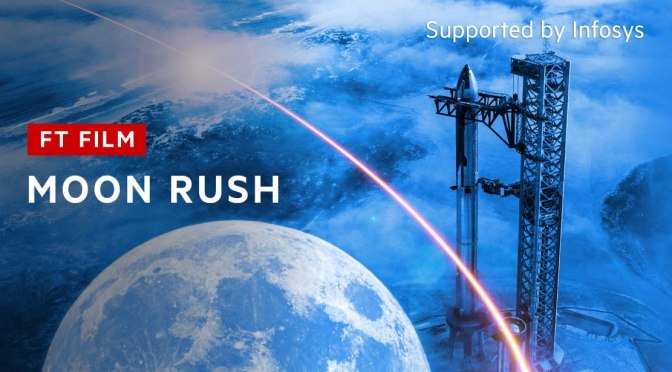
 Financial Times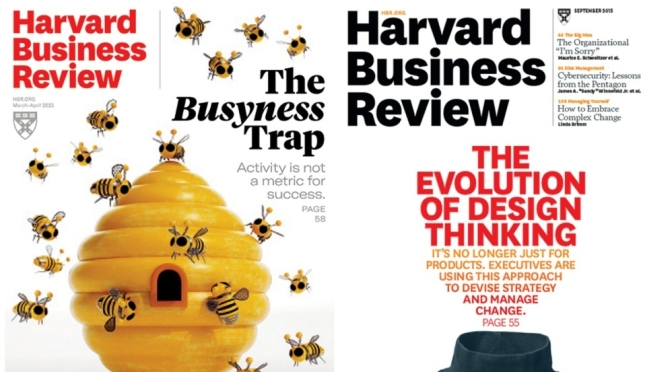

 Boomers Daily