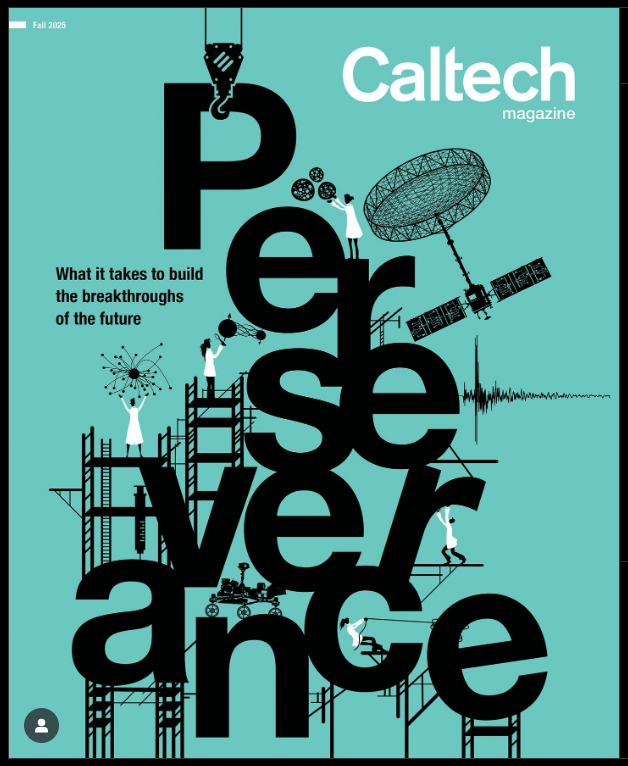
Where Perseverance Meets Discovery
On the power of cathedral-building in science.
The Ice at the Far Ends of Earth
Researchers know the planet’s ice is melting; now, they are uncovering what that will mean for all of us.

On the power of cathedral-building in science.
Researchers know the planet’s ice is melting; now, they are uncovering what that will mean for all of us.
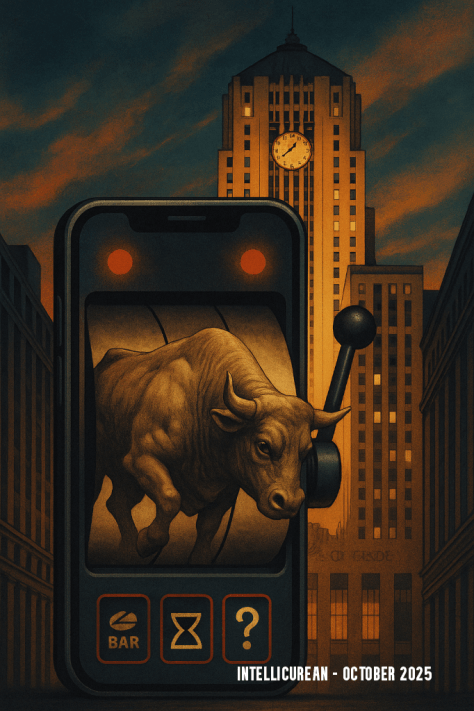
How Chicago’s oldest exchange bet on sixty-minute markets, and what it means when certainty itself is priced like a parlay.

Inspired by conversations on Bloomberg’s “Odd Lots” podcast, October 2, 2025, this essay explores the collision of Chicago’s most venerable marketplace with America’s newest gambling instinct.
By Michael Cummins, Editor, October 2, 2025
Chicago declares its weather. The wind comes down LaSalle Street like a verdict, rattling the brass doors of the Chicago Mercantile Exchange (CME), the world’s largest derivatives marketplace, and Terry Duffy keeps telling the same story about the Sears Tower. Once, Sears was so secure it stamped its name onto the tallest building in the country. Then Amazon arrived and the edifice outlived the company. Duffy repeats the story because he knows it could happen to him. He is the custodian of a market built on trust and clearing, and he now presides over a future in which markets themselves have begun to resemble slot machines.
When CME announced this summer that it would partner with FanDuel to launch retail-friendly “event contracts,” the move was described, in the buttoned-down language of FIA MarketVoice, as bringing “Wall Street to Main Street.” But the reality is stranger: the nation’s most venerable exchange has chosen to build a door onto a sports-betting app. The product is stark in its simplicity—fully funded, binary contracts tied to benchmarks like the S&P 500, gold, or the monthly Consumer Price Index (CPI), each available for a dollar, each expiring in sixty minutes. “We want to attract a new generation of retail traders,” CME explained in its release, emphasizing transparency, defined risk, and the symbolic price point that even the most casual bettor can afford.
Duffy knows what it is to sell certainty. He began his career in the pits, where certainty was conjured out of chaos. To enter the pit was to descend into a human engine: men in jackets of vivid color, chalk dust in the air, sweat soaking the collars, voices rising to a roar. Each shout was a legal contract; each hand signal, a coded promise. Palm in meant buy, palm out meant sell. A quick nod sealed the trade. A look in the eye carried as much weight as a notarized document. The pit was a place where trust was physical, embodied, and enforced by reputation.
He still carries it in his cadence. His sentences are short, clipped, emphatic, relics of the pits’ staccato. A “yes” had to carry over the roar, and a “no” had to land like a gavel. He learned that a man’s word was binding; a lie meant exile. To Duffy, the roar was not noise but a symphony of accountability.
Contrast that to the FanDuel app, silent and frictionless. No shouts, no sweat, no eye contact. A bet placed with a swipe, confirmed by a vibration in the pocket. The counterparty is invisible; the clearing is algorithmic. The visceral contract of the pit has become the abstract contract of the phone. For Duffy, the gap is more than technological—it is civilizational.
His survival has always depended on bridging gaps. In 2007, he forced CME and the Chicago Board of Trade (CBOT)—longstanding rivals, territorial and proud—into a merger that saved both from decline. It was, at the time, a brutal clash of cultures. Pit traders who once hurled insults across LaSalle now shared a roof. Duffy’s achievement was to convince them that survival required sacrifice. The precedent matters now: he knows when to abandon tradition in order to preserve the institution. He has led the exchange for over two decades, long enough to embody continuity in a world addicted to rupture.
Which is why he returns, again and again, to the Sears Tower. Sears did not collapse overnight. Its decline was gradual: catalogs left unopened, trust eroded, relevance seeped away. Sears represented predictability—a known price, a tangible good. It was undone by the infinite shelf of Amazon, where everything was available, untethered from a physical catalog. Duffy fears the same for CME: that in the infinite, unregulated shelf of crypto and apps, the certainty of a clearinghouse will be forgotten. He has made himself the defender of that certainty, even as he opens the door to the FanDuel crowd.
Imagine it, then, not in Chicago but in Des Moines: a woman on her lunch break, soup cooling in its paper cup, phone buzzing with the faintly cheerful ping of a FanDuel notification. She scrolls past the Raiders’ line, taps the “markets” tab, and there it is: gold, $1,737. Above or below? Sixty minutes to decide. She glances at the chart, flickering like a slot machine, and stakes a dollar. Her coworker laughs—he’s on crude oil, betting it falls before the hour. It is a small act, private and almost whimsical. But multiply it by millions, and the cathedral of Chicago has rented space to the gamblers.
Amy Howe, FanDuel’s chief executive, prefers another framing. “By working with CME Group, we can give consumers a transparent, fully funded product with clear rules and protections,” she said in August. For her, the lunch-break wager is less a symptom of dopamine culture than an act of empowerment, bounded by disclosure and design. Later, she would describe it as “responsible innovation for a generation that already expects to engage with markets digitally.”
The phone has conditioned us to view every decision as a micro-transaction with binary payoff, a perpetual A/B test of our own lives. Swipe left or right, invest in Tesla or short its sales, like or ignore, vote or abstain. Certainty itself has become a parlay. The event contract is merely the most transparent expression of this new algorithmic certainty.
Duffy knows the critique—that he is blurring investing and gambling, putting the reputation of the world’s most trusted clearinghouse in play. He shrugs off the taxonomy. “Find me an investment without speculation,” he challenges. Speculators create liquidity; investors ride the train. The problem is not the label. The problem is whether the architecture can hold.
Once, hedging was about survival. A farmer locked in the price of corn to guarantee his family’s subsistence through drought. A grain elevator hedged to manage inventory. Futures were the sober instrument of risk management, a tool for keeping bread on tables. The retail contracts on FanDuel are different. They are not designed to secure a season’s yield but to occupy a lunch break. The hedger and the gambler both face uncertainty, but one does so to live through winter, the other to feel a flicker of dopamine.
What happens when a generation learns to price its risks in sixty-minute increments? When patience is dissolved into perpetual refresh, when civic trust is reshaped by the grammar of instant payoff? Perhaps we become more rational, disciplined consumers of risk. More likely, we become addicted to ever-shorter horizons, citizens of a republic of immediacy.
The FanDuel tie-up is not an aberration; it is the logical culmination of a broader gamification. Fitness apps turn calories into wins and losses. Dating apps transform intimacy into binary swipes. Diet apps offer daily streaks, productivity trackers chart each hour, social media doles out likes. The logic is universal: win or lose, in the money or out. Finance is simply the purest distillation of the loop. The hour-long future looks less like a radical departure than the natural endpoint of the dopamine economy.
Duffy insists that the difference lies in the architecture of the market. Here, the clearinghouse still rules. The CME Clearing division guarantees that each contract, no matter how small, will clear. This is the core trust mechanism: novation. The clearinghouse steps in as the buyer to every seller and the seller to every buyer. It guarantees performance even if a party defaults. It is the invisible institution that makes markets work, as essential as plumbing or electricity. Without clearing, a market is just a game of promises. With clearing, promises become enforceable contracts.
This is why Duffy obsesses over jurisdiction. The nickel crisis in London remains his cautionary tale. When the London Metal Exchange (LME) canceled billions in nickel trades in 2022, after a massive short squeeze threatened a major client, it violated the principle that trades, once made, must stand. In Duffy’s view, this was sacrilege. If trades can be retroactively voided, trust collapses. The nickel debacle lingers as a ghost story he tells often: what happens when clearing is not sacred, when the rules bend to expedience?
The tax code, too, becomes part of his defense. Section 1256 of the Internal Revenue Code gives futures a blended 60/40 tax treatment—sixty percent long-term, forty percent short-term—even though they expire quickly. This means that a futures trader, even in hourly event contracts, can claim a rate unavailable to sports bettors. The distinction between “future” and “security” may be arcane, but in the retail economy it could be decisive. Why place a bet on an unregulated platform with higher tax burdens when you could trade an event future inside CME’s fortress? Duffy is building his moat out of law as well as architecture.
Yet even he admits there are red lines. Political prediction markets, for instance. At first glance, they seem like an extension of the model. Why not allow bets on elections, if you can bet on CPI or jobs reports? But Duffy sees danger. Imagine a small-town school bond vote. A motivated actor buys all the “Yes” contracts, pushing the price higher, creating the illusion of inevitability. Undecided voters, reading the “market,” assume the bond will pass and vote accordingly. Speculation becomes self-fulfilling. A democracy of markets quickly becomes a market for democracy.
The Iowa Electronic Markets (IEM) were tolerated because they were small, academic, pedagogical—designed to teach students about probabilities. But scaled onto a national betting app, political contracts would cease to be an experiment and become an accelerant. Duffy resists. “Every political event is not a presidential election,” he warns. Some are small enough to be readily manipulable. And the Commodity Exchange Act is explicit: contracts cannot be.
He also resists the temptation of perpetual futures. Crypto invented them as an answer to expiry, an infinite bet that never resolves. To Duffy, they fail the laugh test. Immortal cattle cannot be delivered. Wheat cannot grow forever. A Treasury future must expire into a bond. A future without resolution is not a hedge but a hallucination.
Still, he is not afraid of arriving late. In 2017, he was mocked for waiting to list Bitcoin futures. When he did, CME became the premier venue for hedging crypto risk. His philosophy is consistent: better to be late with credibility than early with chaos. “Go when the architecture can hold,” he says, and it sounds less like a trading maxim than a worldview.
The contradiction remains: the man who built his authority in the pits, enforcing trust by the pressure of a body, is now enabling the gamification of markets by the tap of a thumb. Is he selling his integrity, or saving the concept of the market by absorbing the dopamine impulse into its ancient structure? Is CME, in joining FanDuel, protecting the house—or merely becoming one more casino in an infinite arcade?
He walks a city that remembers. The Sears Tower still stands, though its name has eroded. The ghost-hum of the pits lingers in his cadence. The wind whips down LaSalle, eternal as ever. The phones in people’s pockets glow across the country, each a miniature trading pit, silent and frictionless. A new market is trying to clear—not just trades, but trust, patience, and perhaps the architecture of democracy itself.
THIS ESSAY WAS WRITTEN AND EDITED UTILIZING AI
How microgambling apps turn male solitude into profit.

By Michael Cummins, Editor, September 30, 2025
The slot machine has left the casino. Now, with AI precision, it waits in your pocket—timing its ping to the hour of your despair.
The ghost light of the television washes the room, a half-forgotten Japanese baseball game murmuring from the corner. Alex sits in the dark with his phone held at the angle of prayer, the glass an altar, an oracle, a mirror. A ping sounds, small and precise, like a tuning fork struck in his palm. Next pitch outcome—strikeout or walk? Odds updated live. Numbers flicker like minnows. The bet slip breathes. He leans forward. The silence is not merely the absence of sound, but the pressure of who isn’t there—a vacuum he has carried for years.
The fridge hums behind him, its light flickering like a faulty heartbeat. On the counter, unopened mail piles beside a half-eaten sandwich. His last real conversation was three days ago, a polite nod to the barista who remembered his name. At work, Zoom windows open and close, Slack messages ping and vanish. He is present, but not seen.
He is one of the nearly one in three American men who report regular loneliness. For him, the sportsbook app isn’t entertainment but companionship, the only thing that demands his attention consistently. The ping of the odds is the sound of synthetic connection. Tonight he is wagering on something absurdly small: a late-night table tennis serve in an Eastern European hall he’ll never see. Yet the stakes feel immense. Last year in Oregon, bettors wagered more than $100 million on table tennis alone, according to reporting by The New York Times. This is the new American pastime—no stadium, no friends, just a restless man and a glowing rectangle. The algorithm has found a way to commodify the quiet desperation of a Sunday evening.
This isn’t an evolution in gambling; it’s a fundamental violation of the natural pace of risk. Pregame wagers once demanded patience: a pick, a wait, a final score. Microbetting abolishes the pause. It slices sport into thousands of coin-sized moments and resolves them in seconds. Behavioral scientists call this variable-ratio reinforcement: rewards arriving unpredictably, the most potent engine of compulsion. Slot machines use it. Now sports apps do too. The prefrontal cortex, which might otherwise whisper caution, has no time to speak. Tap. Resolve. Tap again.
The shift is from the calculated risk of an investment to the pure reflex of a hammer hitting a knee. Fifty-two percent of online bettors admit to “chasing a bet”—the desperate reflex to wager more after losing. One in five confess to losing more than they could afford. The harm isn’t accidental; it’s engineered. Rachel Volberg, who has studied problem gambling for four decades, told The New York Times that live betting is “much more akin to a slot machine rather than a lottery ticket.” It bypasses deliberation, keeping the brain trapped in a continuous, chemical loop.
And it isn’t marginal to the industry. Live wagers already account for more than half of all money bet on DraftKings and FanDuel. The slot machine has left the casino. It is now in the pocket, always on, always glowing.
The uncanny efficiency of the app lies not in predicting what Alex will bet, but when he will be weakest. After midnight. After a loss. After a deposit he swore not to make. DraftKings’ $134 million purchase of Simplebet, as reported by The New York Times, wasn’t just a business deal; it was the acquisition of a behavioral engine. These models are trained not only on the game but on the gambler himself—how quickly he scrolls, when he logs on, whether his bets swell after defeat, whether his activity spikes on holidays.
DraftKings has gone further, partnering with Amazon Web Services to refine its predictive architecture. At a recent engineering summit in Sofia, engineers demonstrated how generative AI and AWS tools could enhance the personalization of wagers. The same anticipatory logic that once powered retail nudges—“this user is hovering over a product, send a discount”—is now recalibrated to detect emotional vulnerability. In betting apps, the purchase is a wager, the discount is a boost, and the timing is everything: late at night, after a loss, when silence settles heaviest.
The AI’s profile of Alex is more precise than any friend’s. It has categorized his distress. Recent surveys suggest men in the lowest income brackets report loneliness at twice the rate of wealthier peers—a demographic vulnerability the models can detect and exploit through the timing and size of his wagers. Loneliness among men overall has risen by more than thirty percent in the past decade. An algorithm that watches his patterns doesn’t need to imagine his state of mind. It times it.
The profile is not a dashboard; it’s a lever. It logs his loneliest hours as his most profitable. It recognizes reckless bets after a gut-punch loss and surfaces fast, high-variance markets promising a chemical reset. Then comes the nudge: “Yankees boost—tap now.” “Next serve: Djokovic by ace?” To Alex it feels like telepathy. In truth, the system has mapped and monetized his despair. As one DraftKings data scientist explained at a gambling conference, in remarks quoted by The New York Times: “If we know a user likes to bet Yankees games late, we can send the right notification at the right time.” The right time, of course, is often the loneliest time.
Microbetting doesn’t just gamify sport—it gamifies emotion. The app doesn’t care if Alex is bored, anxious, or heartbroken. It cares only that those states correlate with taps. In this system, volatility is value. The more erratic the mood, the more frequent the bets. In this economy of emotional liquidity, feelings themselves become tradable assets. A moment of heartbreak, a restless midnight, a twinge of boredom—all can be harvested. Dating apps convert longing into swipes. Fitness trackers translate guilt into streaks. Robinhood gamified trading with digital confetti. Sportsbooks are simply the most brazen: they turn solitude into wagers, despair into deposits.
Beneath the betting slips lies a hunger for competence. Only forty-one percent of men say they can confide in someone about personal problems. Men without college degrees report far fewer close friendships. Many describe themselves as not meaningfully part of any group or community. In that vacuum, the interface whispers: You are decisive. You are strategic. You can still win. Microbetting offers a synthetic agency: decisiveness on demand, mastery without witness. For men whose traditional roles—provider, protector, head of household—have been destabilized by economic precarity or cultural drift, the app provides the illusion of restored mastery.
The sheer volume of micro-choices acts as a placebo for real-world complexity. Where a career or relationship requires slow, uncertain effort, the app offers instant scenarios of risk and resolution. The system is perfectly aligned with the defense mechanism of isolation: self-soothing through hyper-focus and instant gratification. The product packages loneliness as raw material.
The genius of the app is its disguise. It feels less like a gambling tool than an unjudging confidant, always awake, always responsive, oddly tender. Welcome back. Boost unlocked. You might like… A digital shadow that knows your rhythms better than any friend.
“The clients I see gamble in the shower,” says counselor Harry Levant. “They gamble in bed in the morning.” The app has colonized spaces once reserved for intimacy or solitude. Men and women report similar levels of loneliness overall, but men are far less likely to seek help. That gap makes them uniquely susceptible to a companion that demands nothing but money.
FanDuel actively recruits engineers with backgrounds in personalization, behavioral analytics, and predictive modeling—the same skills that fine-tuned retail shopping and streaming recommendations. There is no direct pipeline from Amazon’s hover-prediction teams to the sportsbooks, but the resemblance is unmistakable. What began as an effort to predict which blender you might buy has evolved into predicting which late-inning pitch you’ll gamble on when you’re most alone.
Some apps already track how hard you press the screen, how fast you scroll, how long you hesitate before tapping. These aren’t quirks—they’re signals. A slower scroll after midnight? That’s loneliness. A rapid tap after a loss? That’s desperation. The app doesn’t need to ask how you feel. It knows. What looks like care is in fact surveillance masquerading as intimacy.
For Alex, the spiral accelerates. Fifty. Then a hundred. Then two-fifty. No pause, no friction. Deposits smooth through in seconds. His body answers the staccato pace like it’s sprinting—breath shallow, fingers hot. Loss is eclipsed instantly by the next chance to be right. This is not a malfunction. It is maximum efficiency.
In Phoenix, Chaz Donati, a gambler profiled by The New York Times, panicked over a $158,000 bet on his hometown team and tried to counter-bet his way back with another $256,000. Hundreds of thousands vanished in a single night. After online sportsbooks launched, help-seeking searches for gambling addiction surged by sixty percent in some states. The pattern is unmistakable: the faster the bets, the faster the collapse. The app smooths the path, designed to be faster than his conscience.
In Vancouver, Andrew Pace, a professional bettor described by The New York Times, sits before three monitors, scanning Finnish hockey odds with surgical calm. He bets sparingly, surgically, explaining edges to his livestream audience. For him, the app is a tool, not a companion. He treats it as a craft: discipline, spreadsheets, controlled risk. But he is the exception. Most users aren’t chasing edges—they’re chasing feelings. The sportsbook knows the difference, and the business model depends on the latter.
Meanwhile, the sport itself is shifting. Leagues like the NBA and NFL own equity in the data firms—Sportradar, Genius Sports—that provide the feeds fueling microbets. They are not neutral observers; they are partners. The integrity threat is no longer fixing a whole game but corrupting micro-moments. Major League Baseball has already investigated pitchers for suspicious wagers tied to individual pitches. When financial value is assigned to the smallest, most uncertain unit of the game, every human error becomes suspect. The roar of the crowd is drowned out by the private vibration of phones.
Lawmakers have begun to stir. In New Jersey, legislators have proposed banning microbets outright, citing research from Australia showing nearly eighty percent of micro-bettors meet the criteria for problem gambling. Representative Paul Tonko has pushed for national standards: deposit caps, affordability checks, mandatory cool-off periods. “We regulate tobacco and alcohol,” he said. “Why not emotional risk?” Public health advocates echo him, warning of “a silent epidemic of digital compulsion.” The industry resists. Guardrails, they insist, would ruin the experience—which, of course, is the point.
The deeper question is not consumer choice; it is algorithmic ethics. Loneliness is already a recognized risk factor for cardiovascular disease and dementia. What happens when the same predictive infrastructure used to ship packages anticipatorily or recommend movies is redeployed to time despair? The failure to regulate is a failure to acknowledge that algorithmic harm can be as corrosive as any toxin.
At 2:03 a.m., Alex finally closes the app. The screen goes dark. The room exhales. The silence returns—not as peace, but as pressure. The television murmurs on, but the game is long over. What remains is residue: the phantom buzz of a notification that hasn’t arrived, the muscle memory of a finger poised to tap, the echo of odds that promised redemption.
He tells himself he’s done for the night. But the algorithm doesn’t need urgency. It waits. It knows his hours, his teams, the emotional dip that comes after a loss. It will tap him again, softly, precisely, when the silence grows too loud.
One in four young men will feel this same loneliness tomorrow night. The casino will be waiting in their pockets, dressed as a companion, coded for their cravings. Outside, dawn edges the blinds. Somewhere a stadium will fill tomorrow, a crowd roaring in unison. But in apartments like Alex’s, the roar has been replaced by a private buzz, a vibration against the skin. The app is patient. The silence is temporary. The house never sleeps.
Because in this new emotional economy, silence is never a stop. It is only a pause. And the algorithm waits for the ping.
THIS ESSAY WAS WRITTEN AND EDITED UTILIZING AI
On a Central Park bench, a student-poet becomes the witness as Wallace Stevens, T. S. Eliot, Langston Hughes, and Mary Oliver clash over the future of verse.

By Michael Cummins, Editor, September 19, 2025
It was Sunday, late morning, and the city had softened. The joggers had thinned into solitary silhouettes, their sweat darkening cotton in abstract shapes of effort and release. The brunch crowd had not yet surged onto the avenues, their laughter still a distant, imagined chorus. Under the arcade, a saxophone player blew short, testing gusts—vibrations that trembled like the first sentences of a story he wasn’t sure how to tell. Not yet music, more like the throat-clearing of the city itself, a quiet settling before the day’s performance began. The air was a mosaic of scents: damp earth, a faint sweetness from the flowerbeds, and the savory promise of roasted nuts from a cart not yet rolled into place.
Bethesda Terrace shimmered in late-September light, the Angel of the Waters extending her shadow over the fountain’s slow churn. The sandstone bench, curved and facing the pool, was empty. It waited, a silent invitation. She sat. The stone’s chill pressed through her jeans, climbed her spine, spread across her shoulder blades. She leaned into it, a physical surrender, her body quieted, her mind alert. This was catalepsy—not sleep, not paralysis, but suspension. A body stilled into receptivity; a consciousness stretched thin, porous, listening with its skin. The shuffle of leaves, the clap of pigeon wings, the metallic crack of a pretzel bag: everything arrived brighter, as if a filter had lifted. She was no longer simply a woman on a bench; she was a conduit, participant in a larger, unacknowledged ritual.
From her tote she drew The Collected Poems of Wallace Stevens, its margins crowded with penciled hieroglyphs. She was a sophomore at Columbia, apprenticing herself to poetry the way others apprenticed themselves to finance or law. The writing program had its rites: chalk-dusted seminar rooms, steam radiators clanking, professors who spoke of poets as if handling relics. Stevens was invoked in hush, his lines treated as proofs in sacred geometry. She remembered one professor sketching a triangle on the board and calling it “Stevens’s geometry of the imagination,” as if abstraction could be mapped. But she also remembered reading him alone in her dorm, the fluorescent hum above, feeling the language bend her without yielding. Still, something stirred—the tremor that words might bend time, that they could turn a bench into a portal if she sat still enough.
She flipped to “The Comedian as the Letter C.” That line, the one that haunted her: “A bench was his catalepsy, theater of trope.” She whispered it, and the pigeons, used to human murmur, did not flinch. The bench was not only stone. It was a tuning fork, a place where perception settled into resonance. Stevens had given her a name for what she was doing: sitting, body locked, mind open, waiting for the city to become legible.
Then another voice intruded—T. S. Eliot, stern and dry, from “Burnt Norton”: “Words strain, / Crack and sometimes break, under the burden, / Under the tension, slip, slide, perish.” Not Stevens’s easing cadence but a warning, a cold draught of reality. She remembered first reading those lines in Butler Library, underlining so hard she nearly tore the page. Words strain. How often had they failed her? She knew Eliot was right: no trance of perception could spare language from the world’s pressure.
The fountain gave its own reply, a language without alphabet. Its voice was a fluid script, endlessly transcribed by the Angel above, her arm raised as if in dictation. If words strain, perhaps water does not. Maybe poetry’s task is less to master than to echo this ceaseless murmur, to become porous to it.
She turned a page, this time to “Description Without Place”:
Nietzsche in Basel studied the deep pool
Of these discolorations, mastering
The moving and the moving of their forms
In the much-mottled motion of blank time.
The mottled motion was here: leaves circling, coins winking on the bottom, fragments of sky trembling on the surface. She imagined Nietzsche not in Basel but here, hunched on a nearby bench, attempting to master tourists and pigeons, saxophonists and children. Wasn’t this what Stevens asked—that the city itself be read as poem, each gesture a coloration across blank time?
But Stevens was not the only voice in her bag. She pulled out Langston Hughes, slim and sharp, his “Park Bench” already dog-eared:
I live on a park bench. / You, Park Avenue.
No metaphor. No gloss. Just fact. She looked across the terrace to a man sleeping on the far bench. His belongings were stacked in a rusted cart: a green plastic bag, a jacket folded awkwardly, a cracked umbrella. His beard uneven, a shoelace untied, one hand gripping the bench as if to keep from sliding off. His chest rose and fell, slow and steady. Not a symbol. Not a trope. A man. Hughes refused to let her forget him. In workshop a classmate had dismissed Hughes as “too simple,” mere reportage. The word still stung. She had wanted to ask: what is survival if not the hardest metaphor? What is hunger if not its own supreme fiction—one body insisting on endurance?
Could she hold both visions at once—Stevens’s trance and Hughes’s ledger? Eliot complicated things further. In Tradition and the Individual Talent, he had written: “Poetry is not a turning loose of emotion, but an escape from emotion.” Was she escaping into Stevens, away from Hughes’s blunt truth? Or was this escape a discipline, a refusal of indulgence, a transmutation of feeling into form? Again Eliot whispered across the water: “Only by the form, the pattern, / Can words or music reach / The stillness.”
She looked down. Perhaps the bench itself was a form, a stanza of stone. It received everything: the boy’s paper boat veering toward collapse, the woman in a camelhair coat leaping at her phone, the saxophone’s melody finding coherence. The bench gathered fragments without commentary. Was poetry like that—absorbing, indiscriminate, neither consoling nor condemning, only holding?
The saxophonist found his line—“Autumn Leaves”—and the terrace filled with it like a breath held and released.
One Sunday the bench was occupied. An older man in frayed tweed sat with a notebook in his lap, smelling faintly of espresso. She sat beside him. Silence was easy; the fountain supplied conversation. He scribbled; she read Stevens. At last he asked, “Do you come here often?”
“Most Sundays.”
“A good place for thinking.”
“Or not thinking.”
He smiled. “Same thing, sometimes.” He closed his notebook, stood, and, as he left, offered a benediction: “Good luck with your poems.” He was punctuation in her life—a comma pause, an exclamation departure.
Her poems began to shift. They still strained, but now they breathed. “There’s more space in these,” a professor said. “More air.” Stevens’s credo returned: “It must be abstract. / It must change. / It must give pleasure.” Change, yes—but into what? Pleasure, yes—but for whom? Hughes would demand reckoning. Eliot would demand pattern. Beyond the seminar room, Instagram couplets hustled for attention, TikTok captions performed disposable verse, headlines rhymed only by accident. Did poetry still have a place in a city where jingles worked harder than sonnets and slogans colonized every surface?
Another Sunday, rain slicked the bench, but she sat anyway. Water seeped through denim, chilling her thighs, and Stevens blurred on the page until she closed the book. A line returned from “The House Was Quiet and the World Was Calm”: “The reader became the book; and summer night / Was like the conscious being of the book.” If the reader could become the book, could she become the bench? She felt the city write itself into her—the man in the wheelchair pausing at the balustrade, the woman in saffron photographing the Angel, the skateboarder skimming past with ears sealed. Each was a sentence inscribed across her awareness.
And Eliot again, exacting: poetry is not release but reception. Form, not confession.
By winter the fountain had been drained, the Angel presiding over silence. The saxophonist still came, sending vaporous notes that hung like clouds—an arc from tentative gusts in October to frozen ellipses in December. She began to imagine benches as the city’s libraries. Not catalogues of bound paper but palimpsests of bodies: grooves of old kisses, indents of forgotten elbows, ghosts of whispered confessions. A library of sandstone, open to anyone who would sit.
Was poetry necessary anymore—or only another archive browsed by the dutiful few? Eliot had said words strain, crack, perish. Stevens had countered: poetry is the supreme fiction. Hughes insisted it is survival’s blunt truth.
Then a new voice arrived, unbidden and clear as spring water. Mary Oliver. Not a specter, but a woman with kind eyes and a notebook pressed to her chest. She pointed not at the fountain or the sleeping man, but to a sparrow hopping between flagstones. “Look,” she said, a quiet command. “Every morning, a little prayer. A little ceremony.”
“Poetry is not in the grand gesture,” Oliver said, her gaze fixed on the sparrow. “It’s in the particular.” She turned to the student, her voice both tender and insistent. “It doesn’t need a city to thrive. It only needs an open eye. Tell me—what is it you plan to do with your one wild and precious life?” The question arrived not as judgment but as invitation, a door left ajar.
And then her words seemed to fold into image:
And did you see it, finally, just under the clouds—
a white cross streaming across the sky, its feet
like black leaves, its wings like the stretching light of the river?
Oliver’s presence was another kind of weather. Eliot demanded tradition, Stevens imagination, Hughes survival. Oliver offered attention. The sparrow hopped to the fountain’s lip, bent to drink, then vanished into the elms—a poem enacted, and over. She turned back to the student, her eyes luminous, and said, “You do not have to be good.” The words fell with the quiet weight of a feather. “You only have to let the world break your heart,” she added softly, “so the world may also heal it.”
The student gave in to the smallest details: the brown V of the sparrow’s back, the chipped basin of the fountain, the hairline crack in her own thumbnail. Attention, Oliver implied, is the first discipline, and gentleness the second. Poetry, then, is attention married to mercy.
Spring returned. The fountain gushed into speech again. She drafted her thesis, uncertain about an MFA, uncertain about poetry as livelihood. Stevens’s line steadied her: “The poem of the mind in the act of finding / What will suffice.” Poetry did not have to be everything. It had to suffice. And Eliot’s assurance from “Little Gidding” answered: “We shall not cease from exploration / And the end of all our exploring / Will be to arrive where we started / And know the place for the first time.” That, she realized, was what her Sundays had become: recurrence as revelation. The same bench, the same fountain, mottled anew.
She thought of defending Hughes in workshop, furious at the word “simple.” She remembered copying Stevens until the lines lived inside her like scaffolding. Reading Eliot at midnight, indicted and rescued by austerity. Hearing Oliver’s imperative—look—and the sparrow that answered it by existing without explanation. Her apprenticeship was not to one voice but to the friction between voices, to the city’s mottled motion and its counterpoint of stillness.
One evening in May, dusk violet around the Angel, she rose. Her shadow stretched across the bench, a fleeting discoloration that dissolved as she stepped away. The bench held, as it always had, receiving its next actor. Maybe that is poetry’s place now: not permanence but recurrence. Not monument but act. To sit, to read, to hear, to write—to do it again and again. To know the bench, and then to know it again for the first time.
The saxophonist lifted his horn and released a phrase that drifted up and seemed, almost, to answer her unasked question. Poetry was not gone. It was still here—cataleptic, receptive, crucible, witness. It persisted like water, like stone, like breath meeting cold air and making a brief, visible shape. And perhaps that was enough.
THIS ESSAY WAS WRITTEN AND EDITED UTILIZING AI
The wager has always been our way of taming uncertainty. But as AI and neural interfaces blur the line between self and market, prediction may become the very texture of consciousness.

By Michael Cummins, Editor, August 31, 2025
On a Tuesday afternoon in August 2025, Taylor Swift and Kansas City Chiefs tight end Travis Kelce announced their engagement. Within hours, it wasn’t just gossip—it was a market. On Polymarket and Calshi, two of the fastest-growing prediction platforms, wagers stacked up like chips on a velvet table. Would they marry before year’s end? The odds hovered at seven percent. Would she release a new album first? Forty-three percent. By Thursday, more than $160,000 had been staked on the couple’s future, the most intimate of milestones transformed into a fluctuating ticker.
It seemed absurd, invasive even. But in another sense, it was deeply familiar. Humans have always sought to pin down the future by betting on it. What Polymarket offers—wrapped in crypto wallets and glossy interfaces—is not a novelty but an inheritance. From the sheep’s liver read on a Mesopotamian altar to a New York saloon stuffed with election bettors, the impulse has always been the same: to turn uncertainty into odds, chaos into numbers. Perhaps the question is not why people bet on Taylor Swift’s wedding, but why we have always bet on everything.
The earliest wagers did not look like markets. They took the form of rituals. In ancient Mesopotamia, priests slaughtered sheep and searched for meaning in the shape of livers. Clay tablets preserve diagrams of these organs, annotated like ledgers, each crease and blemish indexed to a possible fate.
Rome added theater. Before convening the Senate or marching to war, augurs stood in public squares, staffs raised to the sky, interpreting the flight of birds. Were they flying left or right, higher or lower? The ritual mattered not because birds were reliable but because the people believed in the interpretation. If the crowd accepted the omen, the decision gained legitimacy. Omens were opinion polls dressed as divine signs.
In China, emperors used lotteries to fund walls and armies. Citizens bought slips not only for the chance of reward but as gestures of allegiance. Officials monitored the volume of tickets sold as a proxy for morale. A sluggish lottery was a warning. A strong one signaled confidence in the dynasty. Already the line between chance and governance had blurred.
By the time of the Romans, the act of betting had become spectacle. Crowds at the Circus Maximus wagered on chariot teams as passionately as they fought over bread rations. Augustus himself is said to have placed bets, his imperial participation aligning him with the people’s pleasures. The wager became both entertainment and a barometer of loyalty.
In the Middle Ages, nobles bet on jousts and duels—athletic contests that doubled as political theater. Centuries later, Americans would do the same with elections.
From 1868 to 1940, betting on presidential races was so widespread in New York City that newspapers published odds daily. In some years, more money changed hands on elections than on Wall Street stocks. Political operatives studied odds to recalibrate campaigns; traders used them to hedge portfolios. Newspapers treated them as forecasts long before Gallup offered a scientific poll.
Henry David Thoreau, wry as ever, remarked in 1848 that “all voting is a sort of gaming, and betting naturally accompanies it.” Democracy, he sensed, had always carried the logic of the wager.
Speculation could even become a war barometer. During the Civil War, Northern and Southern financiers wagered on battles, their bets rippling into bond prices. Markets absorbed rumors of victory and defeat, translating them into confidence or panic. Even in war, betting doubled as intelligence.
London coffeehouses of the seventeenth century were thick with smoke and speculation. At Lloyd’s Coffee House, merchants laid odds on whether ships returning from Calcutta or Jamaica would survive storms or pirates. A captain who bet against his own voyage signaled doubt in his vessel; a merchant who wagered heavily on safe passage broadcast his confidence.
Bets were chatter, but they were also information. From that chatter grew contracts, and from contracts an institution: Lloyd’s of London, a global system for pricing risk born from gamblers’ scribbles.
The wager was always a confession disguised as a gamble.
At times, it became a confession of ideology itself. In 1890s Paris, as the Dreyfus Affair tore the country apart, the Bourse became a theater of sentiment. Rumors of Captain Alfred Dreyfus’s guilt or innocence rattled markets; speculators traded not just on stocks but on the tides of anti-Semitic hysteria and republican resolve. A bond’s fluctuation was no longer only a matter of fiscal calculation; it was a measure of conviction. The betting became a proxy for belief, ideology priced to the centime.
Speculation, once confined to arenas and exchanges, had become a shadow archive of history itself: ideology, rumor, and geopolitics priced in real time.
The pattern repeated in the spring of 2003, when oil futures spiked and collapsed in rhythm with whispers from the Pentagon about an imminent invasion of Iraq. Traders speculated on troop movements as if they were commodities, watching futures surge with every leak. Intelligence agencies themselves monitored the markets, scanning them for signs of insider chatter. What the generals concealed, the tickers betrayed.
And again, in 2020, before governments announced lockdowns or vaccines, online prediction communities like Metaculus and Polymarket hosted wagers on timelines and death tolls. The platforms updated in real time while official agencies hesitated, turning speculation into a faster barometer of crisis. For some, this was proof that markets could outpace institutions. For others, it was a grim reminder that panic can masquerade as foresight.
Across centuries, the wager has evolved—from sacred ritual to speculative instrument, from augury to algorithm. But the impulse remains unchanged: to tame uncertainty by pricing it.
Already, corporations glance nervously at markets before moving. In a boardroom, an executive marshals internal data to argue for a product launch. A rival flips open a laptop and cites Polymarket odds. The CEO hesitates, then sides with the market. Internal expertise gives way to external consensus. It is not only stockholders who are consulted; it is the amorphous wisdom—or rumor—of the crowd.
Elsewhere, a school principal prepares to hire a teacher. Before signing, she checks a dashboard: odds of burnout in her district, odds of state funding cuts. The candidate’s résumé is strong, but the numbers nudge her hand. A human judgment filtered through speculative sentiment.
Consider, too, the private life of a woman offered a new job in publishing. She is excited, but when she checks her phone, a prediction market shows a seventy percent chance of recession in her sector within a year. She hesitates. What was once a matter of instinct and desire becomes an exercise in probability. Does she trust her ambition, or the odds that others have staked? Agency shifts from the self to the algorithmic consensus of strangers.
But screens are only the beginning. The next frontier is not what we see—but what we think.
Elon Musk and others envision brain–computer interfaces, devices that thread electrodes into the cortex to merge human and machine. At first they promise therapy: restoring speech, easing paralysis. But soon they evolve into something else—cognitive enhancement. Memory, learning, communication—augmented not by recall but by direct data exchange.
With them, prediction enters the mind. No longer consulted, but whispered. Odds not on a dashboard but in a thought. A subtle pulse tells you: forty-eight percent chance of failure if you speak now. Eighty-two percent likelihood of reconciliation if you apologize.
The intimacy is staggering, the authority absolute. Once the market lives in your head, how do you distinguish its voice from your own?
Morning begins with a calibration: you wake groggy, your neural oscillations sluggish. Cortical desynchronization detected, the AI murmurs. Odds of a productive morning: thirty-eight percent. Delay high-stakes decisions until eleven twenty. Somewhere, traders bet on whether you will complete your priority task before noon.
You attempt meditation, but your attention flickers. Theta wave instability detected. Odds of post-session clarity: twenty-two percent. Even your drifting mind is an asset class.
You prepare to call a friend. Amygdala priming indicates latent anxiety. Odds of conflict: forty-one percent. The market speculates: will the call end in laughter, tension, or ghosting?
Later, you sit to write. Prefrontal cortex activation strong. Flow state imminent. Odds of sustained focus: seventy-eight percent. Invisible wagers ride on whether you exceed your word count or spiral into distraction.
Every act is annotated. You reach for a sugary snack: sixty-four percent chance of a crash—consider protein instead. You open a philosophical novel: eighty-three percent likelihood of existential resonance. You start a new series: ninety-one percent chance of binge. You meet someone new: oxytocin spike detected, mutual attraction seventy-six percent. Traders rush to price the second date.
Even sleep is speculated upon: cortisol elevated, odds of restorative rest twenty-nine percent. When you stare out the window, lost in thought, the voice returns: neural signature suggests existential drift—sixty-seven percent chance of journaling.
Life itself becomes a portfolio of wagers, each gesture accompanied by probabilities, every desire shadowed by an odds line. The wager is no longer a confession disguised as a gamble; it is the texture of consciousness.
But what does this do to freedom? Why risk a decision when the odds already warn against it? Why trust instinct when probability has been crowdsourced, calculated, and priced?
In a world where AI prediction markets orbit us like moons—visible, gravitational, inescapable—they exert a quiet pull on every choice. The odds become not just a reflection of possibility, but a gravitational field around the will. You don’t decide—you drift. You don’t choose—you comply. The future, once a mystery to be met with courage or curiosity, becomes a spreadsheet of probabilities, each cell whispering what you’re likely to do before you’ve done it.
And yet, occasionally, someone ignores the odds. They call the friend despite the risk, take the job despite the recession forecast, fall in love despite the warning. These moments—irrational, defiant—are not errors. They are reminders that freedom, however fragile, still flickers beneath the algorithm’s gaze. The human spirit resists being priced.
It is tempting to dismiss wagers on Swift and Kelce as frivolous. But triviality has always been the apprenticeship of speculation. Gladiators prepared Romans for imperial augurs; horse races accustomed Britons to betting before elections did. Once speculation becomes habitual, it migrates into weightier domains. Already corporations lean on it, intelligence agencies monitor it, and politicians quietly consult it. Soon, perhaps, individuals themselves will hear it as an inner voice, their days narrated in probabilities.
From the sheep’s liver to the Paris Bourse, from Thoreau’s wry observation to Swift’s engagement, the continuity is unmistakable: speculation is not a vice at the margins but a recurring strategy for confronting the terror of uncertainty. What has changed is its saturation. Never before have individuals been able to wager on every event in their lives, in real time, with odds updating every second. Never before has speculation so closely resembled prophecy.
And perhaps prophecy itself is only another wager. The augur’s birds, the flickering dashboards—neither more reliable than the other. Both are confessions disguised as foresight. We call them signs, markets, probabilities, but they are all variations on the same ancient act: trying to read tomorrow in the entrails of today.
So the true wager may not be on Swift’s wedding or the next presidential election. It may be on whether we can resist letting the market of prediction consume the mystery of the future altogether. Because once the odds exist—once they orbit our lives like moons, or whisper themselves directly into our thoughts—who among us can look away?
Who among us can still believe the future is ours to shape?
THIS ESSAY WAS WRITTEN AND EDITED UTILIZING AI

How a practice born on Civil War battlefields became the latest front in America’s fight over trust, law, and the vote.

By Michael Cummins, Editor, August 23, 2025
On a raw November morning in 1864, somewhere in a Union encampment in Virginia, soldiers bent over makeshift tables to mark their ballots. The war was not yet won; Grant’s men were still grinding through the trenches around Petersburg. Yet Abraham Lincoln insisted that these men, scattered across muddy fields and far from home, should not be denied the right to vote. Their ballots were gathered, sealed, and carried by courier and rail to their home states, where clerks would tally them beside those cast in person. For the first time in American history, large numbers of citizens voted from a distance—an innovation spread across 19 Union states by hasty wartime statutes and improvised procedures (National Park Service; Smithsonian).
Lincoln understood the stakes. After the votes were counted, he marveled that “a people’s government can sustain a national election, in the midst of a great civil war” (Library of Congress). To deny soldiers their ballots was to deny the Union the very legitimacy for which it fought. Then, as now, critics fretted about fraud and undue influence: Democrats accused Republicans of manufacturing ballots in the field; rumors spread of generals pressuring soldiers to vote for Lincoln. Newspapers thundered warnings about the dilution of the franchise. But the republic held. Soldiers voted, the ballots were counted, and Lincoln was re-elected.
A century and a half later, the envelope has become a battlefield again. Donald Trump has promised to “end mail-in ballots” and scrap voting machines, declaring them corrupt, even while bipartisan experts explain that nearly all U.S. ballots are already paper, with machines used only for tabulation and auditing (AP; Bipartisan Policy Center). The paradox is striking: modern tabulators are faster and more accurate than human tallies, while hand counts are prone to fatigue and error (Time).
But how did a practice with Civil War pedigree come to be portrayed as a threat to democracy itself? What, at root, do Americans fear when they fear the mailed ballot?
In a Phoenix suburb not long ago, a first-time voter—call her Teresa—dropped her ballot at a post office with pride. She liked the ritual: filling it out at her kitchen table, checking the boxes twice, signing carefully. Weeks later, she learned her ballot had been rejected for a signature mismatch with an old ID on file. She had, without knowing it, missed the deadline to “cure” her ballot. “It felt like I didn’t exist,” one young Arizonan told NPR, voicing the frustration of many. Across the country, younger and minority voters are disproportionately likely to have their mail ballots rejected for administrative reasons such as missing signatures or late arrival. If fraud by mail is vanishingly rare, disenfranchisement by process is not.
Meanwhile, on the factory floor of American vote-by-mail, the ordinary hum of democratic labor continues. Oregon has conducted its elections almost entirely by mail for a quarter century, with consistently high participation and confidence (Oregon Secretary of State). Colorado followed with its own all-mail model, paired with automatic registration, ballot tracking, and risk-limiting audits (Colorado Secretary of State). Washington and Utah have joined in similar fashion. Election officials talk about the efficiency of central counting centers, the ease of auditing paper ballots, the increased access for rural and working-class voters. One clerk described her office during election week as “a warehouse of democracy,” envelopes stacked in trays, staff bent over machines that scan and sort. In one corner, a team compares signatures with the care of art historians verifying provenance. The scene is not sinister but oddly moving: democracy reduced to thousands of small acts of faith, each envelope a declaration that one voice counts.
And yet suspicion lingers. Part of it is ritual. The image of democracy for generations has been the polling place: chalkboard schedules, folding booths, poll books fat with names. The mailed ballot decentralizes the ceremony. It moves civic action into kitchens and break rooms, onto couches and barracks bunks. For some, invisibility breeds mistrust; for others, it is the genius of the thing—citizenship woven into home life, not just performed in public.
Part of the anxiety is legal. The Constitution’s Elections Clause gives the states authority over the “Times, Places and Manner” of congressional elections but empowers Congress to “make or alter such Regulations” (Constitution Annotated). Presidents have no such power. The White House cannot ban absentee ballots by decree. Congress could attempt to standardize or limit the use of mail ballots in federal elections—though any sweeping restriction would run headlong into litigation from voters who cannot be present on Election Day, from soldiers on deployment to homebound citizens.
And we have seen how precarious counting can be when law and logistics collide. In 2000, Florida’s election—and the presidency—turned not on fraud but on ballots: “hanging chads,” the ambiguous punch-card remnants that confounded machines and humans alike. The Supreme Court’s decision in Bush v. Gore halted a chaotic recount and left many Americans convinced that the true count would forever be unknowable (Oyez). The lesson was not that ballots are fraudulent, mailed or otherwise, but that the process of counting and verifying them is fragile, and that the legitimacy of outcomes depends on rules agreed to before the tally begins.
It is tempting, in moments of panic, to look abroad for calibration. In the United Kingdom, postal ballots are an ordinary convenience governed by clear rules (UK Electoral Commission). Canadians deploy a “special ballot” system that lets voters cast by post from the Yukon to Kandahar (Elections Canada). The Swiss have made postal voting a workaday part of civic life (Swiss Confederation). Fraud exists everywhere—but serious cases are exceptional, detected, and punished.
Back home, the research is blunt. The Brennan Center for Justice finds that fraud in mail balloting is “virtually nonexistent.” A Stanford–MIT study found that universal vote-by-mail programs in California, Utah, and Washington had no partisan effect—undercutting claims that the method “rigs” outcomes rather than simply broadening access. And those claims that machines slow results? Election administrators, backed by Wisconsin Watch, explain that hand counts tend to be slower and less accurate, while scanners paired with paper ballots and audits deliver both speed and verifiability.
Still, mistrust metastasizes, not from facts but from fear. A rumor in Georgia about “suitcases of ballots,” long debunked, lingers as a meme. A Michigan voter insists he saw a neighbor mail five envelopes, unaware they were for a household of five registered voters. Conspiracy thrives in the gap between visibility and imagination.
Yet even as the mailed ballot feels embattled, the next frontier is already under debate. In recent years, pilot projects have tested whether citizens might someday cast votes on their phones or laptops, secured not by envelopes but by cryptographic ledgers. The mobile voting platform Voatz, used experimentally in West Virginia and a few municipal elections, drew headlines for its promise of accessibility but also for its flaws: researchers at MIT found vulnerabilities tied to third-party cloud storage and weak authentication, prompting urgent warnings (MIT Technology Review). GoatBytes’ 2023 review noted that blockchain frameworks like Hyperledger Sawtooth and Fabric might one day offer stronger, verifiable digital ballots, and even the U.S. Postal Service has patented a blockchain-based mobile voting system (USPTO Patent). Capitol Technology University traced this shift as the latest stage in the long evolution from paper to punch cards to optical scanners, with AI now assisting ballot tabulation (Capitol Tech University). For proponents, mobile systems are less about novelty than necessity: the disabled veteran, the soldier abroad, the homebound elder—all could vote with a tap.
But here, too, the fault lines are visible. The American Bar Association recently cautioned that while blockchain and smartphone voting might expand access, they raise thorny questions about privacy, coercion, and verification—how to ensure a vote cast on a personal device is both secret and authentic. TIME Magazine spotlighted the allure of digital voting for those long underserved by the system, even as groups like Verified Voting warned that premature adoption could expose elections to risks far graver than those posed by paper mail ballots (TIME). In this telling, technology is Janus-faced: a path to broaden democracy’s reach, and a Pandora’s box of new vulnerabilities. If the mailed envelope embodies trust carried by hand, the mobile ballot would ask citizens to entrust their franchise to lines of code. Whether Americans are ready to make that leap remains an open question.
If there is a flaw to worry about, it is not the specter of rampant fraud, but the small, fixable frictions that disenfranchise well-meaning voters: needlessly strict signature-match policies, short cure windows, postal delays for ballots requested late, confusing instructions, and uneven funding for local election offices. The remedy comes not from abolishing the envelope, but from investing in the infrastructure around it: clear statewide standards for verification and cure; robust voter education about deadlines; modernized voter registration databases; secure drop boxes; and the budget lines that let county clerks hire and train staff.
In the end, the mailed ballot is less a departure from American tradition than a continuation of it. The ritual has changed—less courthouse, more kitchen table—but the bargain is the same. When a soldier in 1864 dropped his folded ballot into a wooden box, he entrusted strangers to carry it home. When a modern voter seals an envelope in Denver or Tacoma, she entrusts a chain of clerks, scanners, and auditors. Trust, not spectacle, is the beating heart of the system.
And perhaps that is why the envelope matters so much now. To defend it is not merely to defend convenience; it is to defend a vision of democracy capacious enough to reach the absent, the disabled, the far-flung, the over-scheduled—our fellow citizens whose lives do not always bend to a Tuesday line at a nearby gym. To reject it is to narrow the franchise to those who can appear on command.
Imagine Lincoln again, weary at the White House in the fall of 1864, reading dispatches about alleged fraud in soldier ballots and still insisting the votes be counted. Imagine a first-time voter in Phoenix who lost her chance over a mismatched squiggle, and the next one who won’t because the state clarified its cure rules. Imagine the county clerk who will never trend on social media, but who builds public confidence day by day with plain procedures and paper trails.
At the end of the day, American democracy may still come down to envelopes—white, yellow, blue—carried in postal bins, stacked in counting rooms, marked by the smudges of human hands. They are fragile, yes, but they are resilient too. The Civil War ballots survived trains and rivers; today’s ballots survive disinformation and delay. The act is the same: a citizen marks a choice, seals it, and sends it forth with faith that it will be received. If democracy is government of, by, and for the people, then every envelope is its emissary.
What would we lose if we tore that emissary up? Not only the votes of those who cannot stand in line, but the habit of trust that keeps the republic breathing. Better, then, to do what we have done at our best moments—to keep counting, keep auditing, keep improving, keep faith. The mailed ballot is not a relic of pandemic panic; it is a tested tool of a sprawling republic that has always asked its citizens to speak from wherever they are.
THIS ESSAY WAS WRITTEN AND EDITED UTILIZING AI
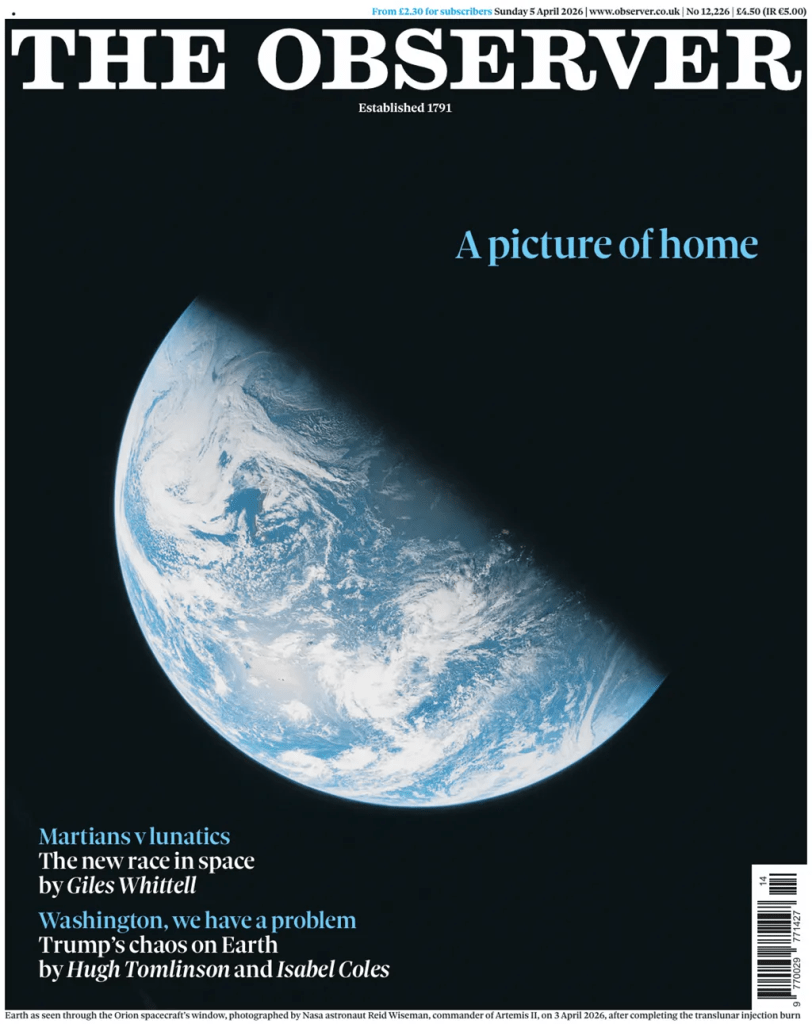

In the latest edition of our “Voices” section, we ask five experts – from scientists to philosophers – how to protect space for the benefit of all of humanity.
“When people hear the term ‘space technology’, they tend to picture rocket launches, or maybe missions to the Moon … Other types of space activity with strong social impact tend to get less attention”
We speak to security expert Mark Hilborne about space warfare – and how it could be the deciding factor in the conflict between Russia and Ukraine.
“The public doesn’t understand how much we rely on space as a domain of warfare”
When Nasa prepared a message to aliens with the Pioneer probes in the 1970s, sexism skewed how they represented humankind. Within the next decade, we may have another chance to send a message deep into space – and this time, we must do better, writes Jess Thomson.
“Only five objects we have crafted here on Earth are now drifting towards infinity, and four of them tell a lie about half of humankind”
The new Superman movie offers the vision of a kinder, more tolerant United States – saved by an immigrant, in this case a literal alien. But should we really pin our hopes on a superhero?
“Trump has even shared photoshopped images of himself as Superman. The idea that superheroes can save us all, if we just let them break all the rules, is one that the Maga followers find congenial”
How Arizona’s microschool boom is reshaping the American classroom—and reviving old questions about freedom, equity, and the gaze of the state.

By Michael Cummins, Editor, August 21, 2025
Jeremy Bentham never saw his panopticon built. The English philosopher imagined a circular prison with a central watchtower, where a single guard could observe every inmate without being seen. Bentham saw it as a triumph of efficiency: if prisoners could never know when they were being watched, they would behave as though they always were. A century later, Michel Foucault seized on the design as metaphor. In Discipline and Punish, he argued that the panopticon revealed the true mechanics of modern institutions—not brute force, but the internalization of surveillance. The gaze becomes ambient. The subject becomes self-regulating.
This, in many ways, is the story of the American public school. The common school movement of the mid-nineteenth century, led by Horace Mann, sought standardization: children from Boston to St. Louis would recite the same lessons, read the same primers, and adopt the same civic habits. As cities grew, schools scaled up. By the twentieth century, especially in the wake of A Nation at Risk, the classroom had become a site of discipline. Bells regulated time. Grades ranked performance. Administrators patrolled hallways like wardens. Testing regimes quantified ability. The metaphor was not lost on Foucault. Brown University notes that his vision of the panopticon extended beyond prisons to schools: a “system of surveillance where individuals internalize the feeling of being constantly watched, leading to self-regulation of behavior” (Brown University).
Every American child knows this regime. The bell rings. The roll is called. The test is bubbled and scanned. Hall passes are signed like parole slips. Cameras blink in cafeteria corners. Laptops carry software that tracks keystrokes. Even silence becomes an instrument of order.
Bentham saw efficiency. Foucault saw discipline. Students often see only the weight of the watchtower.
What happens when families walk out of the circle?
In the far suburbs of Phoenix, on the edge of the White Tank Mountains, a converted casita serves as the Refresh Learning Center. Founded in 2023 by a pastor and his wife, it doesn’t look like much—aluminum siding, recycled chairs, a wall chart that places the birth of the universe at 4004 B.C. Yet, as Chandler Fritz wrote in the September 2025 issue of Harper’s Magazine, the little school has become an emblem of a movement reshaping American education.
Its existence rests on a radical policy shift. In 2022, Arizona launched the nation’s most expansive Empowerment Scholarship Account (ESA) program. Unlike traditional vouchers, which could be redeemed only at approved institutions, ESA funds flow directly to parents—roughly $7,500 per student, sometimes more. Families can spend the money on almost anything that counts as “educational”: a cello, a VR headset, a trampoline, or, increasingly, a place in one of the microschools sprouting across the state.
The metaphor of the frontier clings naturally to Arizona. Here, in the desert’s glare, families are homesteading education in much the same spirit as settlers once claimed land. A garage becomes a classroom. A supply closet, a high school. A church basement, an academy. In his Harper’s piece, Fritz describes a child attending class in a room where chickens wandered the yard outside, and another high-school seminar meeting in a closet stacked with supply boxes. Parents pull their children not only for ideology but for intimacy, pace, or simple safety. “Without ESA, this school would not—could not—exist,” one founder told him.
For advocates, the program represents liberation from a failing system. For critics, it siphons resources from public schools already parched of funding. But for the families gathered in little schoolhouses like Refresh, the stakes feel simpler: children freed from the gaze of bureaucracy, from endless testing and administrative oversight, given room to learn like human beings again.
Microschools are not new. Before the rise of the common school, most American children learned in homes, barns, or one-room cabins where a single teacher instructed a dozen children of all ages. Reformers dismissed those spaces as unsystematic, unjust. The standardized school, they argued, would correct inequities and prepare citizens for democracy.
Today, the pendulum swings back. Inside Refresh’s aluminum-sided room, teenagers do crafts next to six-year-olds. Grade levels blur: a thirteen-year-old may still be in second grade; another, the same age, reads at a high school level. Students spend mornings mucking chicken coops and afternoons in shop class. A boy named Aaron, dyslexic and restless in traditional schools, thrives in the workshop, building desks and repairing tools. He dreams of becoming an Air Force mechanic. One teacher observed that he learned fractions by cutting lumber and measuring shelves—mathematics discovered in wood grain and sawdust.
Another student, Hailey, is quick with skepticism. She listens to indie rock from her AirPods between classes, balances her faith with her friendships, and rolls her eyes at biblical literalism. “Stop comparing everything to religion,” she wrote in a survey. “I know it’s a Christian school, but it’s annoying learning about history when it’s asking about the Bible.”
And then there is Canaan, a foster child, the oldest in the room. During a discussion of To Kill a Mockingbird, he startled his peers by pressing the point of segregation. “What if everyone were actually given the same resources?” he asked. The question, naïve and profound, echoed the legal logic of Brown v. Board of Education, though he had never heard of it. His teachers had worried about whether he was “ready” for a seminar text. Yet here he was, articulating the problem of equality with more clarity than many adults.
Their stories recall sepia-toned photographs of America’s one-room schoolhouses, where a teacher might balance a baby on one hip while drilling older students in long division. Nostalgia clings to such places, but for children like Aaron and Hailey and Canaan, the sense of being known—of not being lost in the machinery of standardization—is more than nostalgia. It is survival.
The ESA marketplace, though, has the volatility of a boomtown. Alongside earnest shop classes and backyard literature circles, Fritz encountered vendors offering tongue-posture therapy for ADHD, pirate-themed cooking classes tied to multilevel marketing schemes, even sword-making courses. In one Tucson suburb, a “Kids in the Kitchen” class doubled as an advertisement for a health supplement brand. Fraud has siphoned hundreds of thousands of dollars from taxpayers (Arizona Central).
More troubling is fragmentation. Public schools, for all their flaws, force pluralism: children from different families, faiths, and incomes learning together under one roof. In microschools, communities splinter. Wealthier families claim ESA funds for private tuition; poorer families scrape together what they can. Evangelical churches convert Sunday schools into full-time academies. A Southern Baptist initiative now urges every church with a basement to consider opening a weekday school. For some, ESAs represent not escape from the panopticon, but an opportunity to build new watchtowers of ideological oversight.
And yet—the children remain. Their stories suggest that the most powerful escape is not from testing regimes or surveillance, but from anonymity. In a one-room schoolhouse, a teacher cannot forget you. Your hands matter. Your questions land. You are not a datapoint in a dashboard but a voice in a circle.
The paradox of the new homestead is that it is subsidized by the very state it seeks to escape. Every ESA contract is drawn from public funds, even as public schools wither under declining enrollment and teacher shortages. Arizona’s superintendent warned in 2024 that the state’s teacher shortage, already in the thousands, could “eventually lead to zero teachers” (Arizona Policy). Meanwhile, parents swipe ESA debit cards for pianos, VR headsets, or ski passes.
But the deeper paradox is philosophical. The panopticon teaches that institutions discipline by watching. Yet children, it turns out, discipline themselves when unseen, too. In one seminar, Canaan insisted that segregation was the true injustice, not just a false verdict. Without oversight, a conversation about reparations and justice unfolded around plastic tables in a desert conversation.
Could it be that the very fragmentation critics fear might also produce unexpected awakenings? That freedom from the gaze of the state could allow children to stumble, clumsily but genuinely, into civic consciousness?
The question is not whether microschools should exist—they already do, enrolling as many students as Catholic schools nationwide. The question is how to balance their intimacy with the democratic promise of education for all. Some states experiment with guardrails: Georgia ties funds to low-performing districts; Iowa requires accreditation and assessments. Arizona, the boldest frontier, remains laissez-faire. The experiment is still young, and the stakes enormous.
Bentham dreamed of efficiency. Foucault warned of discipline. But neither accounted for what happens when the watchtower is abandoned, when families strike out into the desert to build little schools of their own. The panopticon dissolves, and in its place rises the homestead, the one-room schoolhouse, the handmade desk, the boy who lights up in shop class.
Public education was once America’s grandest democratic experiment: the poor man could reach into the rich man’s pocket and demand an education, as Emerson put it, “not as you will, but as I will” (Ralph Waldo Emerson, Education). That dream is endangered—not only by privatization, but by the creeping sense that children are means rather than ends, data points rather than persons.
The frontier metaphor cuts both ways. It can justify privatization, sectarianism, inequality. But it also gestures toward freedom, self-reliance, discovery. The challenge now is to reclaim the best of the homestead spirit—education as intimate, child-centered, alive—without abandoning the pluralistic commons that democracy requires.
Wallace Stegner once called life on the frontier a “homemade education.” He meant not only the Bible lessons of pioneer families but the curriculum of the land itself—children learning resilience from drought, ingenuity from scarcity, curiosity from the wide sky. The graduates of such an education—Lincoln, Twain, Cather, John Wesley Powell—proved that learning could be stitched together from books, rivers, and conversation. Powell, chastised in school for his parents’ abolitionist views, was pulled from the classroom and tutored privately. He learned geology by picking up stones, ornithology by watching birds, justice by watching neighbors turn cruel. The lessons carried him down the Colorado River, into history.
Perhaps the future lies not in the panopticon or the homestead alone, but in something more fluid: a system where every child is seen not from above, but up close. Where accountability measures ensure equity without strangling individuality. Where the workshop and the test, the prayer and the debate, the child who loves Jesus and the child who loves indie rock can share the same fragile, human classroom.
Education is not a prison, nor a frontier settlement. It is, at its best, a river: wide enough to carry all, winding enough to follow curiosity, strong enough to shape the land it touches. The question is whether we will keep damming it with watchtowers—or whether we will learn, finally, to let it flow.
THIS ESSAY WAS WRITTEN AND EDITED UTILIZING AI
By Michael Cummins, Editor, August 14, 2025

Imagine a world where, in a single decade, half the laughter shared between friends vanishes. Imagine a childhood where time spent outdoors is cut by a third and the developmental benefits of reading are diminished by two-thirds. This is not a dystopian fantasy. According to social psychologist Jonathan Haidt, in a “Prof G Podcast with Scott Galloway published on August 14, 2025, it is the stark reality for a generation that has been systematically disconnected from the real world and shackled to the virtual. “We have overprotected our children in the real world,” Haidt argues, “and underprotected them in the virtual world.”
This profound dislocation is the epicenter of a “perfect storm” disproportionately harming boys and young men—a crisis fueled by predatory technology, economic precarity, and the collapse of institutions that once guided them into manhood. It is a crisis, as a growing chorus of thinkers like Haidt, Brookings scholar Richard Reeves, and professor Scott Galloway have illuminated, born not from a single cause, but from a collective, intergenerational failure. It is a betrayal of the implicit promise that each generation will leave the world better for the next, a promise broken by a society that has become, in Galloway’s stark assessment, “a generation of takers, not givers.”
The most abrupt change to the landscape of youth has been technological. Haidt identifies the years between 2010 and 2015 as the “pivot point” when a “play-based childhood” was supplanted by a “phone-based childhood.” This was not a simple evolution from the television sets of the past. The smartphone is a uniquely invasive tool—a supercomputer delivering constant, algorithmically curated interruptions. It extracts data on its user’s deepest desires while creating a feedback loop of social comparison and judgment, resulting in a documented catastrophe for mental health. It is no coincidence that between 2010 and 2021, the suicide rate for American boys aged 10-14 nearly tripled, according to CDC data highlighted by Haidt.
This digital vacuum has been eagerly filled by what Scott Galloway calls the “great white sharks” of the tech industry. The most insidious outcome of their engagement-at-all-costs model is the weaponization of social validation into a system of industrialized shame. “Imagine growing up in a minefield,” Haidt suggests. “You would walk really carefully.” This pervasive fear suppresses healthy risk-taking, a crucial component of adolescent development, particularly for boys who learn competence through trial, error, and recovery.
This isolation is especially damaging for boys who, as scholar Warren Farrell argues, already suffer from a crisis of “dad-deprivation” and a lack of positive male mentorship. “A boy’s search for a father,” Farrell writes in The Boy Crisis, “is a search for a purpose-driven life.” Into this void step not fathers or coaches, but the algorithmic sirens of the “manosphere.” These figures thrive because they offer a counterfeit version of the very thing Farrell identifies as missing: a strong, authoritative male voice providing direction, however misguided. Figures like Andrew Tate have built empires by offering lonely or insecure young men a seductive, off-the-shelf identity, often paired with dubious get-rich-quick schemes that prey directly on their economic anxieties. The algorithms on platforms like TikTok and YouTube are ruthlessly efficient, creating a pipeline that can push a boy from mainstream gaming content to nihilistic or misogynistic ideologies in a matter of weeks. This is not a moral failing of young men; it is the predictable result of a human need for guidance meeting a machine optimized for radicalizing engagement.
This digital betrayal is compounded by an economic one, as the foundational promises of prosperity have been broken for an entire generation. The traditional path to stability—education, career, family, homeownership—has become fractured. As Galloway argues, older generations have effectively “figured out that the downside of democracy is that old people… can continue to vote themselves more money,” leaving the young to face a brutal housing market and stagnant wages. He describes it as a conscious “pulling up of the ladder,” where asset inflation benefits the old at the direct expense of the young.
This economic anxiety shatters the “get rich slowly” ethos and replaces it with a desperate search for a shortcut. And in 2018, the state effectively handed this desperate generation a loaded gun in the form of frictionless, legalized sports betting. The Supreme Court decision placed, as Reeves describes it, a “casino in everyone’s pocket,” making gambling dangerously accessible to a demographic of young men who are biologically more prone to risk-taking and socially more isolated than ever. The statistics are damning: young men are the fastest-growing group of problem gamblers, and in states that legalize online betting, bankruptcy filings often spike.
The consequences are existential. This trend is the leading edge of the “deaths of despair” phenomenon identified by economists Anne Case and Angus Deaton, who documented rising mortality among men without college degrees from suicide, overdose, and alcohol-related illness. Their research concluded these deaths were “less about the sting of poverty and more about the pain of a life without meaning.” When a young man, steeped in economic anxiety and disconnected from real-world support, takes a huge financial risk and fails, the shame can be unbearable. Haidt delivers a chillingly direct warning of the foreseeable consequences: “you’re gonna have dead young men.”
Underpinning both the technological and economic crises is a deeper social one: the systematic dismantling of the institutions, norms, and rituals that once guided boys into healthy manhood. Society has become deinstitutionalized, removing the “guardrails” that once channeled youthful energy.
This is acutely visible in education. The modern classroom, with its emphasis on quiet compliance and verbal-emotive skills, is often a poor fit for the learning styles more common in boys. As author Christina Hoff Sommers has argued for years, “For more than a decade, our schools have been enforcing a zero-tolerance policy for any behavior that suggests boyishness.” The result is a widening gender gap at every level. Women now earn nearly 60% of all bachelor’s degrees in the U.S. Boys are more likely to be diagnosed with a learning disability, more likely to face disciplinary action, and have largely abandoned reading for pleasure. We are, in effect, pathologizing boyhood and then wondering why boys are checking out of school.
This deinstitutionalization extends beyond the schoolhouse. The decline of institutions like the Boy Scouts, whose membership has plummeted in recent decades, local sports leagues, and church groups has removed arenas for mentorship and character formation. From an anthropological perspective, this is a catastrophic failure. “Wherever you have initiation rights,” Haidt notes, “they’re always harsher, stricter, tougher for boys because it’s a much bigger jump to turn a boy into a man.” This journey requires structure, discipline, and challenge. Yet modern society, in its quest for safety, has stripped away opportunities for healthy risk, leaving boys to “just vegetate.”
Into this vacuum has rushed a toxic cultural narrative that pits the sexes against each other. But the hunger for meaning has not disappeared. Reeves’s powerful anecdote of visiting a Latin Mass in Denver on a Sunday night and finding it “full of young men, most of them on their own,” speaks volumes. They are not seeking chaos; they are desperately searching for “structure and discipline and purpose and institutions that will help them become men.” They are looking for the very things society has stopped providing.
Recognizing this betrayal is the first step. The next is to act. This requires moving past the gender wars and embracing a bold, pro-social agenda to rebuild the structures that turn boys into thriving men.
1. Rebuild the Guardrails: Institutional and Economic Solutions The most immediate need is to create viable, non-collegiate pathways to success and dignity. We must champion a massive expansion of vocational and technical education, celebrating the mastery of a trade as equal in status to a four-year degree. As Mike Rowe, a vocal advocate for skilled labor, has stated, “We are lending money we don’t have to kids who can’t pay it back to train them for jobs that no longer exist. That’s nuts.” Imagine a modern Civilian Conservation Corps, where young men from all backgrounds work side-by-side to rebuild crumbling infrastructure or restore national parks—learning a trade while forging bonds of shared purpose and earning a tangible stake in the country they are helping to build.
2. Create Modern Rites of Passage: Community and Mentorship Communities must step into the void left by failing institutions. This means a national push to fund and expand mentorship programs. Research from MENTOR National shows that at-risk youth with a mentor are 55% more likely to enroll in college and 130% more likely to hold leadership positions. It means local leaders creating their own modern “rites of passage”—challenging, team-based programs that teach resilience, problem-solving, and civic responsibility through tangible projects. As Reeves bluntly puts it, “pain produces growth,” and we must reintroduce healthy, structured struggle back into the lives of boys.
3. A Pro-Social Vision: Redefining Honorable Masculinity The most crucial task is cultural. We must stop telling boys that their innate nature is toxic and instead offer them a noble vision of what it can become. We must define honorable manhood not as domination or material wealth, but as competence, responsibility, and protectiveness. This means redefining competence not just as physical strength, but as technical skill, emotional regulation, and intellectual curiosity. It means redefining protectiveness not just against physical threats, but against the digital and psychological dangers that poison our discourse and harm the vulnerable. It is a masculinity defined by what it builds and who it cares for—the courage to be a provider for one’s family, a pillar of one’s community, and a steward of a just society.
We have stranded a generation of boys in a digital “Guyland,” a perilous limbo between a childhood they were forced to abandon and an adulthood they see no clear path to reaching. We have told them their natural instincts are a problem while simultaneously exposing them to the most predatory, high-risk temptations ever devised. This is more than a crisis; it is a profound societal malpractice.
The choice we face is stark. We can continue our slide into a zero-sum society of horizontal, gendered conflict, or we can recognize this crisis for what it is: a vertical, intergenerational failure that harms everyone. We must have the courage to declare that the well-being of our sons is not in opposition to the well-being of our daughters. As Richard Reeves has said, the goal is to “get to a world which is better for both men and women.” This is not a zero-sum game; it is a positive-sum imperative.
This requires a new intergenerational compact, one rooted in action, not grievance. It demands we stop pathologizing boyhood and start building the institutions that mold it. It requires that we offer our young men not frictionless temptation, but meaningful struggle. It insists that we provide them not with algorithmic influencers, but with real-world mentors who can show them the path to an honorable life.
The hour is late, and the damage is deep. But in the quiet hunger of young men for purpose, in the fierce love of parents for their children, and in the courage of thinkers willing to speak uncomfortable truths, lies the hope that we can yet forge a new path. The work is not to turn back the clock, but to build a better future—one where we finally keep our promise to the next generation.
THIS ESSAY WAS WRITTEN AND EDITED UTILIZING AI
By Michael Cummins, Editor, August 10, 2025

The American system of government, with its intricate web of checks and balances, is a continuous negotiation between competing sources of authority. At the heart of this negotiation lies the judiciary, tasked with the unenviable duty of acting as the final arbiter of power. The Bloomberg podcast “Weekend Law: Texas Maps, ICE Profiling & Agency Power” offers a compelling and timely exploration of this dynamic, focusing on two seemingly disparate legal battles that are, in essence, two sides of the same coin: the struggle to define the permissible boundaries of government action.
This essay will argue that the podcast’s true essence lies in its powerful synthesis of these cases, presenting them not as isolated political events but as critical manifestations of an ongoing judicial project: to determine the limits of legislative, executive, and administrative power in the face of constitutional challenges. This judicial project, as recent scholarly works have shown, is unfolding within a broader shift in American federalism, where a newly assertive judiciary and a highly politicized executive branch are rebalancing the relationship between federal and state power in unprecedented ways.
“The judiciary’s role is not merely to interpret the law, but to act as the ultimate check on a government’s temptation to consolidate power at the expense of its people.” — Emily Berman, law professor, Texas Law Review (2025)
The Supreme Court’s role as the final arbiter of these powers is not an original constitutional given, but rather a power it asserted for itself in the landmark 1803 case Marbury v. Madison. In that foundational ruling, Chief Justice John Marshall established the principle of judicial review, asserting that “it is emphatically the province and duty of the judicial department to say what the law is.” This declaration laid the groundwork for the judiciary to act as a check on both the legislative and executive branches, a power that would be tested and expanded throughout history. The two cases explored in the “Weekend Law” podcast are the latest iterations of this long-standing judicial project, demonstrating how the courts continue to shape the contours of governance in the face of contemporary challenges.
This is particularly relevant given the argument in the Harvard Law Review note “Federalism Rebalancing and the Roberts Court: A Departure from Historical Patterns” (March 2025), which contends that the Roberts Court has consciously moved away from historical trends and is now uniquely pro-state, often altering existing federal-state relationships. This broader jurisprudential shift provides a crucial backdrop for understanding Texas’s increasingly assertive actions, as it suggests the state is operating within a legal landscape more receptive to its claims of sovereignty.
The first case study, the heated Texas redistricting battle, serves as a vivid illustration of the tension between legislative power and fundamental voting rights. The podcast effectively frames the drama: Texas Democrats, in a last-ditch effort, fled the state to deny the Republican-controlled legislature a quorum, thereby attempting to block the passage of a new congressional map. The stakes of this political chess match are immense, as the proposed map, crafted following the census, could solidify the Republican party’s narrow majority in the U.S. House. The legal conflict hinges on the subtle but consequential distinction between “racial” and “political” gerrymandering, a dichotomy that the Supreme Court has repeatedly struggled to define.
While the Court has held that drawing district lines to dilute the voting power of a racial minority is unconstitutional under the Fourteenth Amendment’s Equal Protection Clause and the Voting Rights Act of 1965, it has also ruled in cases like Rucho v. Common Cause (2019) that political gerrymandering is a “political question” beyond the purview of federal courts. The Bipartisan Policy Center’s explainer, “What to Know About Redistricting and Gerrymandering” (August 2025), is particularly relevant here, as it directly references a similar 2003 case where the Supreme Court allowed a Texas mid-decade map to stand. This history of judicial deference provides the specific legal precedent that empowers Texas to pursue its current redistricting efforts with confidence, and it helps contextualize the judiciary’s reluctance to intervene.
The Texas case exploits this judicial gray area. The state legislature, while acknowledging its aim to benefit the Republican Party—a seemingly permissible “political” objective—faces accusations from Democrats and civil rights groups that the new map disproportionately dilutes the power of Black and Hispanic voters, particularly in urban areas. The podcast highlights the argument that race and political preference are often so tightly intertwined that it becomes nearly impossible to separate them. This is precisely the kind of argument the Supreme Court has had to grapple with, as seen in recent cases like Alexander v. South Carolina State Conference of the NAACP (2024). In that case, the Court’s majority, led by Justice Alito, held that challengers must provide direct, not just circumstantial, evidence that race, rather than politics, was the “predominant” factor in drawing a district. This ruling, and others like it, effectively “stack the deck” against plaintiffs, creating novel and significant roadblocks to a successful racial gerrymandering claim.
“The Supreme Court has relied upon the incoherent racial gerrymandering claim because the Court lacks the right tools to police certain political conduct that might be impermissibly racist, partisan, or both.” — Rick Hasen, election law expert
Legal experts like Rick Hasen, whose work on election law is foundational, would likely view this trend with deep concern. Hasen has long argued for a more robust defense of voting rights, noting the Constitution’s surprising lack of an affirmative right to vote and the Supreme Court’s incremental, often restrictive, interpretations of voting protections. The Texas situation, in his view, is not a bug in the system but a feature of a constitutional framework that has been slowly eroded by a Court that has become increasingly deferential to state legislatures. The podcast’s narrative here is a cautionary tale of a legislative body wielding its power to entrench itself, and of a judiciary that, by its own precedents, may be unable or unwilling to intervene effectively.
The political theater of the Democrats’ walkout, therefore, is not merely a symbolic act; it is a desperate attempt to use the legislative process itself to challenge a power grab that the judiciary has made more difficult to contest. This is further complicated by the analysis in Publius – The Journal of Federalism article “State of American Federalism 2024–2025” (July 2025), which explores the concept of “transactional federalism,” where presidents reward loyal states and punish those that are not. This framework provides a vital lens for understanding how a state like Texas, with a strong political alignment to the executive branch, might feel empowered to take such aggressive redistricting actions.
On the other side of the legal spectrum, the podcast turns to the Ninth Circuit’s ruling against U.S. Immigration and Customs Enforcement (ICE) in Southern California. This case shifts the focus from legislative overreach to executive overreach, particularly the conduct of an administrative agency. The court’s decision upheld a lower court’s temporary restraining order, barring ICE agents from making warrantless arrests based on a broad “profile” that included apparent race, ethnicity, language, and location. This is a critical challenge to the authority of a federal agency, forcing it to operate within the constraints of the Fourth Amendment. The court’s ruling, as highlighted in the podcast, was predicated on a “mountain of evidence” demonstrating that ICE’s practices amounted to unconstitutional racial profiling.
“The Ninth Circuit’s decision is a critical affirmation that the Fourth Amendment does not have a carve-out for immigration enforcement. A person’s skin color is not probable cause.” — David Carden, ACLU immigration attorney (July 2025)
The legal principles at play here are equally profound. The Fourth Amendment protects “the right of the people to be secure in their persons, houses, papers, and effects, against unreasonable searches and seizures.” The Ninth Circuit’s ruling essentially states that a person’s appearance, the language they speak, or where they work is not enough to establish the “reasonable suspicion” necessary for a warrantless stop. This decision is a powerful example of the judiciary acting as a check on the executive branch, affirming that even in the context of immigration enforcement, constitutional rights apply to all individuals within the nation’s borders. The podcast emphasizes the chilling effect of these raids, which created an atmosphere of fear and terror in communities of color. The court’s decision serves as a crucial bulwark against an “authoritarian” approach to law enforcement, as noted by ACLU attorneys.
Immigration attorney Leon Fresco, who is featured in the podcast, provides a nuanced perspective on the case, discussing the complexities of agency authority. While the government argued that its agents were making stops based on a totality of factors, not just race, the court’s rejection of this argument underscores a significant judicial shift. This is not a new conflict, as highlighted in the Georgetown Law article “Sovereign Resistance To Federal Immigration Enforcement In State Courthouses” (published after November 2020), which examines the historical and legal foundation for state and individual resistance to federal immigration enforcement. The article identifies the “normative underpinnings” of this resistance and explores the constitutional claims that states and individuals use to challenge federal authorities.
This historical context is essential for understanding the sustained nature of this conflict. This judicial skepticism toward expansive agency power is further illuminated by the Columbia Law School experts’ analysis of 2025 Supreme Court rulings (July 2025), which focuses on the federalism battle over immigration law and the potential for a ruling on the federal government’s ability to condition funding on state compliance with immigration laws. This expert commentary shows that the judicial challenges to federal immigration authority, as seen in the Ninth Circuit case, are part of a broader, ongoing legal battle at the highest levels of the judiciary.
The true genius of the podcast is its ability to weave these two disparate threads into a single, cohesive tapestry of legal thought. The Texas redistricting fight and the ICE profiling case, while geographically and thematically distinct, are both fundamentally about the limits of power. In Texas, we see a state legislature exercising its power to draw district lines in a way that, critics argue, subverts democratic principles. In Southern California, we see a federal agency exercising its power to enforce immigration laws in a way that, the court has ruled, violates constitutional rights. In both scenarios, the judiciary is called upon to step in and draw a line.
“It is emphatically the province and duty of the judicial department to say what the law is.” — Chief Justice John Marshall, Marbury v. Madison (1803)
The podcast’s synthesis of these cases highlights the central role of the Supreme Court in this ongoing process. The Court, through its various rulings, has crafted the very legal tools and constraints that govern these conflicts. The precedents it sets—on gerrymandering, on the Voting Rights Act, and on judicial deference to agencies—become the battleground for these legal fights. The podcast suggests that the judiciary is not merely a passive umpire but an active player whose decisions over time have shaped the very rules of the game. For example, the Court’s decisions have made it harder to sue over gerrymandering and, simultaneously, have recently made it harder for agencies to act without judicial scrutiny. This creates a fascinating and potentially contradictory legal landscape where the judiciary appears to be simultaneously retreating from one area of political contention while advancing into another.
Ultimately, “Weekend Law” gets to the essence of a modern American dilemma. The legislative process is increasingly characterized by partisan gridlock, forcing a reliance on executive and administrative actions to govern. At the same time, a judiciary that is more ideological and assertive than ever before is stepping in to review these actions, often with a skepticism that questions the very foundations of the administrative state.
The cases in Texas and Southern California are not just about voting maps or immigration sweeps; they are about the fundamental structure of American governance. They illustrate how the judiciary, from district courts to the Supreme Court, has become the primary battleground for defining the scope of constitutional rights and the limits of state and federal power. This is occurring within a new legal environment where, according to the Harvard Law Review, the Roberts Court is uniquely pro-state, and where the executive branch, as discussed in the Publius article, is engaging in a form of “transactional federalism.”
The podcast masterfully captures this moment, presenting a world where the most profound political questions of our time are no longer settled in the halls of Congress, but in the solemn chambers of the American courthouse. As we look ahead, we are left to ponder a series of urgent questions. Will the judiciary’s new skepticism toward administrative power lead to a more accountable government or a paralyzed one? What will be the long-term impact on voting rights if the courts continue to make it more difficult to challenge gerrymandering?
“When the map is drawn to silence the voter, the very promise of democracy is fractured. The judiciary’s silence is not neutrality; it is complicity in the decay of a fundamental right.” — Professor Sarah Levinson, University of Texas School of Law (2025)
And, in an era of intense political polarization, can the judiciary—a branch of government itself increasingly viewed through a partisan lens—truly be trusted to fulfill its historic role as a neutral arbiter of the Constitution? The essence of the podcast, then, is a sober reflection on the state of American democracy, filtered through the lens of legal analysis. It portrays a system where power is constantly tested, and the judiciary, despite its own internal divisions and evolving doctrines, remains the indispensable mechanism for mediating these tests.
“A government that justifies racial profiling on the streets is no different from one that seeks to deny justice in its courthouses. The Ninth Circuit has held a line, declaring that our Constitution protects all people, not just citizens, from the long shadow of authoritarian overreach.” — Maria Elena Lopez, civil rights attorney, ACLU of Southern California (2025)
The podcast’s narrative arc—from the political brinkmanship in Texas to the constitutional defense of individual rights in California—serves as a powerful reminder that the rule of law is a dynamic, living concept, constantly being shaped and reshaped by the cases that come before the courts and the decisions that are rendered. It is a story of power, rights, and the enduring, if often contentious, role of the American judiciary in keeping the two in balance.
THIS ESSAY WAS WRITTEN AND EDITED UTILIZING AI