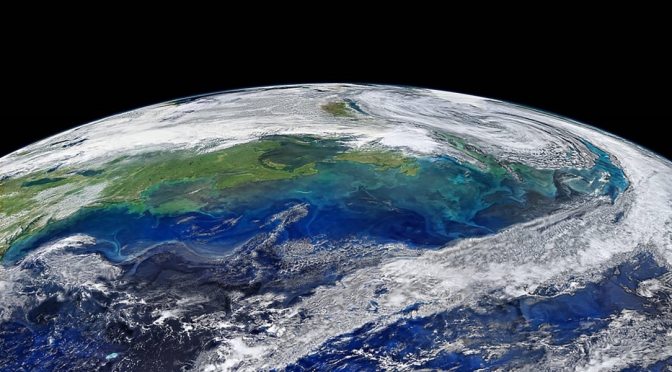
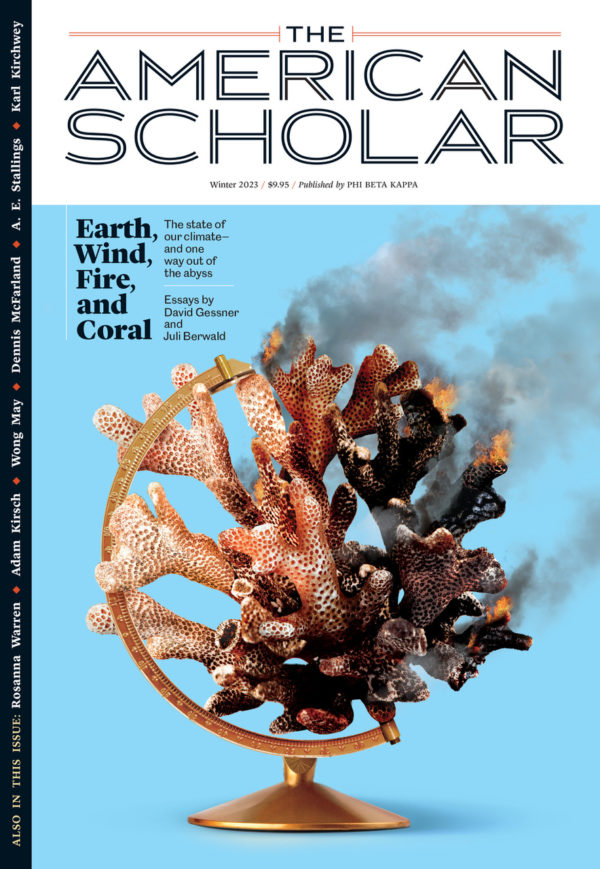
Princeton University (December 13, 2022) – Earth’s atmosphere, oceans, and land surfaces interact and combine in powerful, yet often unseen, ways as part of a complex planetary system that determines the climate.
Over many decades, researchers at Princeton University have played a leading role in the development of advanced computational models that simulate interactions among these elements to inform an understanding of future climate scenarios under varying conditions.
In this video, climate scientists Gabe Vecchi and Laure Resplandy discuss how computational models are used to project future climate scenarios and inform mitigation strategies.
This year’s crop of winning products features many with a clinical focus and others that represent significant advances in sequencing, single-cell analysis, and more.
Calibr at Scripps Research is celebrating a major milestone, a decade of discovery. Take a look at the past 10 years of scientific innovation, and see what the next 10 years have in store.
The California Institute for Biomedical Research (Calibr) is a first-of-its-kind, nonprofit translational research institute dedicated to accelerating the next generation of medicines, celebrating its 10-year anniversary in 2022. Affiliated with Scripps Research—among the most innovative institutes worldwide—we spearhead drug discovery from a steady flow of pioneering science.
Our self-sustaining model encourages broad and bold exploration with far-reaching goals, yet rapid transition of our most successful, high-impact programs into the clinic. We pursue audacious and imaginative ideas—bridging scientific and technological advances to develop new medicines for unmet medical needs.
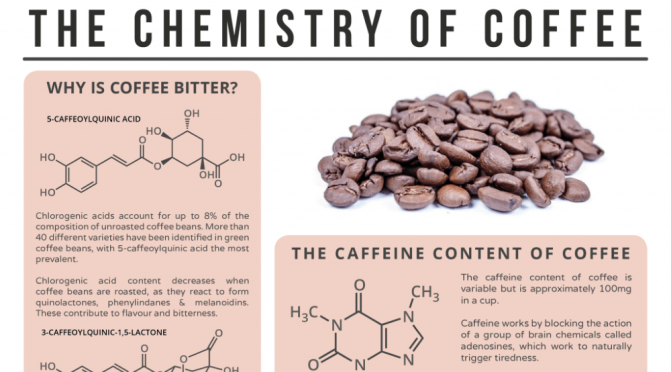
National Science Foundation – The chemistry of the universe is, in a way, in your morning cup of coffee. Coffee contains a tremendous number of chemicals, with over 1000 aroma compounds. If you are looking for antioxidants, the most abundant phenolic compounds in coffee are chlorogenic acids (CGAs), which account for up to 12 per cent of the dry weight of green unroasted coffee beans. Much of coffee’s bitter taste comes from CGAs, which also cause the acid reflux that is sometimes experienced by coffee drinkers.
Produced by the PBS Digital Studio / American Chemical Society
World Economic Forum (December 9, 2022) – This week’s top stories of the week include:
0:15The world’s most expensive cities – This list of the most expensive cities is based Worldwide Cost of Living 2022 report that compares 200 products and services in more than 170 cities. Prices in big cities have risen by an average of 8.1% in the past year. Their fastest rise for 20 years. Driven by the knock-on effects of the pandemic and Russia’s invasion of Ukraine, some of these most expensive cities have high wages and taxes, while another has an average rent of about 92% of the median worker’s pre-tax salary. Watch to know which cities are the most expensive to live in.
1:36The era of the megalopolis has begun – Today 60% of people live in urban areas, and by 2100 it’s forecast to be 85%. We are entering the era of the megalopolis. Cities around the world are merging as they grow and spread, forming supercities connected by urban sprawl. The largest megalopolis is in China – it’s known as the Greater Bay Area. But what are megapolis?
2:53Scientists develop a universal flu vaccine – Scientists have developed a universal flu vaccine. It’s effective against all 20 known strains of flu and could help us fight off dangerous new strains before they develop into a pandemic. The new vaccine could be in use within 2 years.
3:53This device will heat our homes sustainably – Heat pumps run on electricity rather than fossil fuels and are 3 times more efficient than gas boilers. They capture thermal energy from the air outside and use that energy to warm your home.
When it comes to knowing yourself, your own perception of your personality doesn’t necessarily align with that of people around you. But which is more accurate? And can discovering your true nature lead to a better life?
The International Liquid Mirror Telescope, perched high in the Himalayas, has finally started making observations. If it succeeds, we could one day put a much larger liquid telescope on the moon









 Boomers Daily