

In this Nature podcast: a new way to produce aerogels opens up their use, the countries that collect Covid-19 data effectively, and understanding how sulfur can change state between two liquids.
In this episode:
01:05 Printing aerogels
Aerogels are materials with impressive insulating properties, but they’re difficult to handle, due to their innate fragility. Now, researchers have shown a new way to 3D print the most common form of aerogel, opening up a range of potential new applications. Research Article: Zhao et al.
07:00 Coronapod
To provide targeted public health interventions during the pandemic, it’s vital that data are collected and shared effectively. We discuss the countries doing this well, and find out how fragmented systems are preventing epidemiologists from giving up-to-date information on outbreaks.
21:11 Research Highlights
Fats in the blood as a possible marker of autism, and the selfish component to solar panel adoption. Research Highlight: Fats in the blood linked to autism; Research Highlight: Self-interest powers decision to go solar
23:24 Liquid-liquid transitions
It’s been thought that some liquids may be able to exist in two distinct states, but evidence has been scarce. Now, researchers show that sulfur can exist in two liquid states, and have discovered some insights into how this might occur. Research Article: Henry et al.; Video: 24 hours in a synchrotron
30:09 Briefing Chat
We take a look at some highlights from the Nature Briefing. This time we discuss the English language’s dominance in science, and how to make squid transparent. Symmetry: Physics in a second language; OneZero: The First Gene-Edited Squid in History Is a Biological Breakthrough
Our planet is a beautiful water-filled world, teeming with life. But did you know that Earth is not the only world in our solar system with an ocean? Here’s what you need to know about Ocean Worlds.
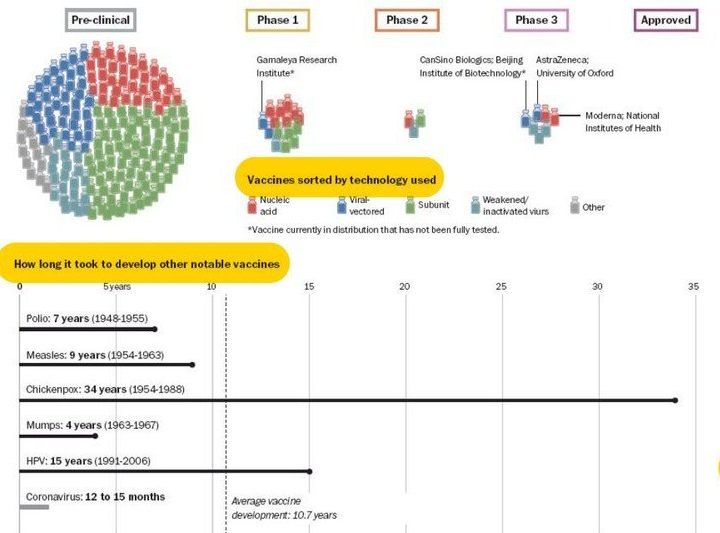
WASHINGTON POST (AUG 16, 2020): Researchers in the United States set an audacious goal in January to develop a coronavirus vaccine within 12 to 18 months. This would be a world record. The mumps vaccine is considered to be the fastest to move, in four years, from scientific concept to approval in 1967. The quest for an HIV vaccine continues, 36 years and counting.



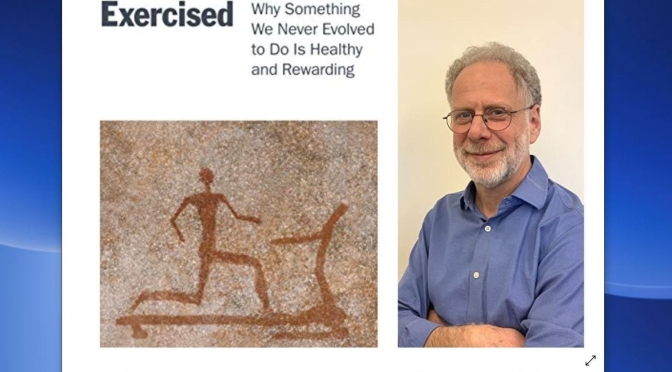
HARVARD MAGAZINE (SEPT – OCT 2020): From the book EXERCISED: Why Something We Never Evolved to Do Is Healthy and Rewarding by Daniel E. Lieberman, to be published on September 8, 2020 by Pantheon Books:

In order to elucidate the links between exercise and aging, I propose a corollary to the Grandmother Hypothesis, which I call the Active Grandparent Hypothesis. According to this idea, human longevity was not only selected for but was also made possible by having to work hard during old age to help as many children, grandchildren, and other younger relatives as possible survive and thrive. That is, while there may have been selection for genes (as yet unidentified) that help humans live past the age of 50, there was also selection for genes that repair and maintain our bodies when we are physically active.
Daniel E. Lieberman is a paleoanthropologist at Harvard University, where he is the Edwin M Lerner II Professor of Biological Sciences, and Professor in the Department of Human Evolutionary Biology. He is best known for his research on the evolution of the human head and the evolution of the human body.

Staff Writer Robert Service talks with host Sarah Crespi about a different approach to COVID-19 testing that might be useful in response to the high numbers of cases in the United States. To break chains of transmission and community spread, the new strategy would replace highly accurate but slow polymerase chain reaction (PCR) tests with cheaper, faster tests that are less accurate but can be administered frequently.
Such tests cost between $1 and $3 compared with more than $100 for diagnostic PCR tests and give results in less than 30 minutes instead of days. Read all of our coronavirus coverage here. Also this week, Salma Mousa, a postdoctoral fellow at Stanford University, joins Sarah to talk about an experiment that added Muslim players to teams in a Christian soccer league in northern Iraq. The goal of the study was to see whether this type of social contact would change how the Christians—a threatened minority in the region—behaved toward Muslims, on and off the field.
Arizona has what researchers call “the climate of tomorrow, today.” Scientists are using a 30-ton robotic field scanner in the state to study plant genetics and hopefully develop stress-resilient crops.
Photo: Jesse Rieser for The Wall Street Journal
More from the Wall Street Journal: Visit WSJ.com: http://www.wsj.com
 This week’s Nature Podcast looks at: Triggering swarming behaviour in locusts, antibody therapies as a bridge to Covid-19 vaccine, and new insights into how humans synchronize.
In this episode:
01:56 Understanding swarming behaviour
Swarms of migratory locusts regularly devastate crops across the world, but why these swarms form has been a mystery. Now, a team of researchers have identified a compound that causes solitary locusts to come together in their billions – a finding that could have practical applications for preventing this behaviour. Research article: Guo et al.; News & Views: Catching plague locusts with their own scent
08:48 Coronapod
We discuss the role that monoclonal antibodies may have as therapeutics to treat COVID-19. Although promising, there are numerous hurdles to overcome before these drugs can be used. News: Antibody therapies could be a bridge to a coronavirus vaccine — but will the world benefit?
15:30 Research Highlights
A satellite’s fecal find reveals that Antarctica’s emperor penguin population is much larger than previously thought, and changing how genes are named to avoid Excel’s autocorrect. Research Highlight: Satellites find penguins by following the poo; Research article: Bruford et al.
17:49 An out-of-sync arts project
A collaborative art-science project featuring a network of connected violinists has given new insights into how humans synchronize. Research article: Shahal et al.
23:51 Briefing Chat
We take a look at some highlights from the Nature Briefing. This time we find out about the odd immune system of the anglerfish, and the beetle that can pass through a frog’s digestive system without coming to harm. Wired: The Anglerfish Deleted Its Immune System to Fuse With Its Mate; Research paper: Sugiura






 Boomers Daily