Investigative journalist Charles Piller joins host Sarah Crespi to discuss his latest Science exclusive: a deep dive into the Food and Drug Administration’s protection of human subjects in clinical trials. Based on months of data analysis and interviews, he uncovered long-term failures in safety enforcement in clinical trials and potential problems with trial data used to make decisions about drug and device approvals.
Sarah also talks with Klaus-Robert Müller, a professor of machine learning at the Technical University of Berlin, about an artificial intelligence (AI) trained in the sport of curling—often described as a cross between bowling and chess. Although AI has succeeded in chess, Go, and poker, the constantly changing environment of curling is far harder for a nonhuman mind to adapt to. But AIs were the big winners in competitions with top human players, Müller and colleagues report this week in Science Robotics.
How current and future ice loss in Greenland compares to the past, Long-Covid, and using graphene to make ultra-sensitive radiation detectors.
In this episode:
00:45 Greenland’s historic ice loss
Climate change is accelerating the loss of ice and glaciers around the world leading to unprecedented levels of disappearance. Researchers have drilled samples from deep in the Greenland ice sheet, to model how current, and future, losses compare to those seen in the last 12,000 years. Research Article: Briner et al.; News and Views: The worst is yet to come for the Greenland ice sheet; Editorial: Arctic science cannot afford a new cold war
09:23 Coronapod
Despite recovering from an initial COVID-19 infection, many patients are experiencing severe symptoms months later. We find out about the impact of ‘Long Covid’ and the research that’s being done to try and understand it. News Feature: The lasting misery of coronavirus long-haulers
Radiation-detectors known as bolometers are vital instruments in many fields of science. This week, two groups of researchers have harnessed graphene to make super sensitive bolometers that could be used to improve quantum computers, or detect subtle traces of molecules on other planets. Research Article: Lee et al.; Research Article: Kokkoniemi et al.
27:49 Briefing Chat
We discuss some of the latest stories highlighted in the Nature Briefing. This week we chat about the lack of diversity in academia, and an animal ally that can protect wildlife during forest fires. Nature Careers: Diversity in science: next steps for research group leaders; National Geographic:
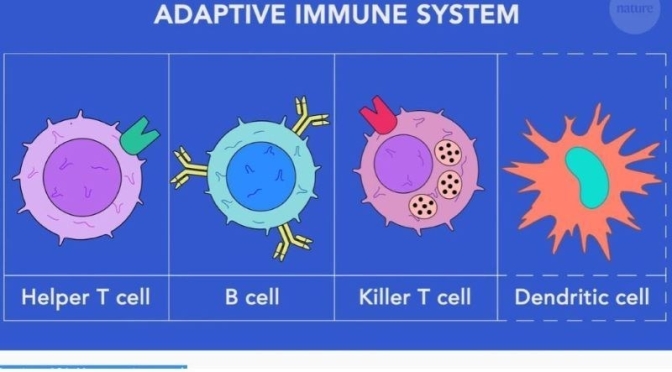
As the world waits for a potential COVID-19 vaccine, we delve into how vaccines actually work. What are the different types of vaccine? How do they trigger and train the immune system, and what is the role of herd immunity?
With the annual flu season looming, GPs are anticipating a frenzy of vaccinations, perhaps more so than ever this year. As so many ‘flu and respiratory viruses circulate every year, and as the ‘flu vaccine is for one strain of influenza only, is the vaccine worth getting, and what are the risks associated with vaccinating vs. not vaccinating?
In this week’s episode, we discuss the high vaccine uptake in New Zealand, and the role that social distancing for COVID-19 may have played in their low numbers of seasonal flu. We also talk about whether or not the message we give to patients about the benefits and risks of vaccination is transparent enough, and how we might communicate better with them to allow them to make an informed decision. We feel pressure to increase vaccination rates, because we believe we are protecting people, but does the evidence support that?
Our guests: Nikki Turner is the director of the Immunisation Advisory Centre (IMAC) at the university of Auckland. She is an academic general practitioner, and a professor at the university. Jeff Kwong is a professor at the University of Toronto, and the interim director of the Centre for Vaccine Preventable Diseases at the university’s Dalla Lana School of Public Health. Newest Oldest Longest Shortest Random
Contributing Correspondent Ann Gibbons talks with host Sarah Crespi about a series of 120,000-year-old human footprints found alongside prints from animals like asses, elephants, and camels in a dried-up lake on the Arabian Peninsula. These are the earliest human footprints found so far in Arabia and may help researchers better understand the history of early hominin migrations out of Africa.
Continuing on the history of humanity theme, Sarah talks with Janet Kelso of the Max Planck Institute for Evolutionary Anthropology, about her team’s efforts to fish the elusive Y chromosome out of Neanderthal and Denisovan DNA. It turns out Y chromosomes tell a different story about our past interbreeding with Neanderthals than previous tales told by the rest of the genome.
Nature reports on: Coaxing tiny colloid particles into a diamond structure, rapid antigen tests and manipulating cell death and homeostasis in neurodegenerative disease.
In this episode:
00:45 Creating colloidal crystals
For decades, researchers have attempted to create crystals with a diamond-like structure using tiny colloid particles. Now, a team thinks they’ve cracked it, which could open the door for new optical technologies. Research Article: He et al.
In neurodegenerative disease, cell death can be prevented, however this can lead to the accumulation of incorrectly folded proteins. Now researchers have found targets that can be used to both stop cell death and protein aggregation. Research Article: Xu et al.
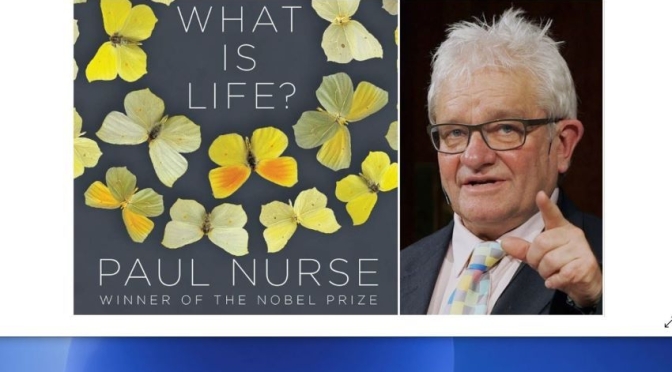
In his new book, Paul Nurse, Nobel prize winner and director of the Francis Crick Institute, addresses a question that has long plagued both philosophers and scientists – what does it really mean to be alive?
Speaking to Madeleine Finlay, Paul delves into why it’s important to understand the underlying principles of life, the role of science in society, and what life might look like on other planets.
Sir Paul Maxime Nurse FRS FMedSci HonFREng HonFBA MAE, is an English geneticist, former President of the Royal Society and Chief Executive and Director of the Francis Crick Institute.
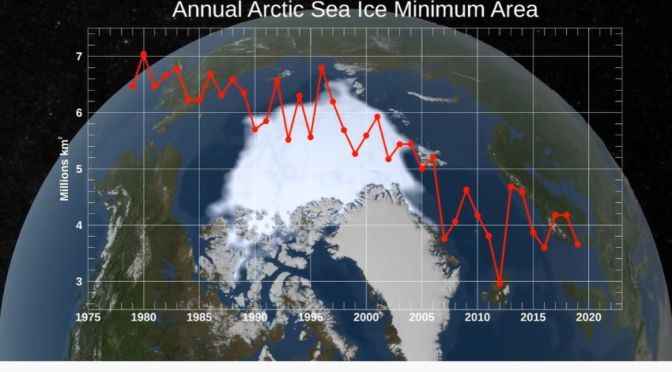
On Sept. 15, 2020, Arctic sea ice reached its annual minimum extent — the second-lowest on record. This summer, temperatures soared in the Siberian Arctic, and intense fires burned through peatland. The Arctic region is warming three times faster than the rest of the planet.
News, Views and Reviews For The Intellectually Curious









 Boomers Daily