Category Archives: Reviews

Top Camper Vans: ‘2021 La Strada Nova M’ (Video)

Club atmosphere with panoramic view: the dignified living space of the NOVA M shows its highest pretension up to each detail. First class travelling: high quality furniture surfaces, smooth leather and elegant wall covers for pure luxurious atmosphere. The timeless beautiful interior design sets new criterions in functional design and quality. Drawers and cupboards integrated with love and intelligence make tidying up very easy.

If you sleep well, you enjoy your holiday more. The very large double bed is easy to access and invites you to relaxing moments. All fits together in the NOVA M. The elegant design makes it difficult to step out the van and guarantees the interested stare of your neighbours. The kitchen has it all and is perfectly integrated in the interior of the van. No, this is no hotel bathroom. The NOVA M really features such a large bath with wood furniture, fibre glass washing basin and nice water tabs.
Covid-19 Podcast: Latest On Vaccine Rollout, New Mutation & FDA Approvals

Stephen Hahn, U.S. Food and Drug Administration Commissioner, Sigal Atzmon, founder and chief executive officer of Medix Global, and Roche CEO Severin Schwan, on the pandemic, Covid-19 vaccines and the new mutation.

Sailboat Racing: The Spectacular Technology Behind The ‘America’s Cup AC75 Monohulls’ (Video)

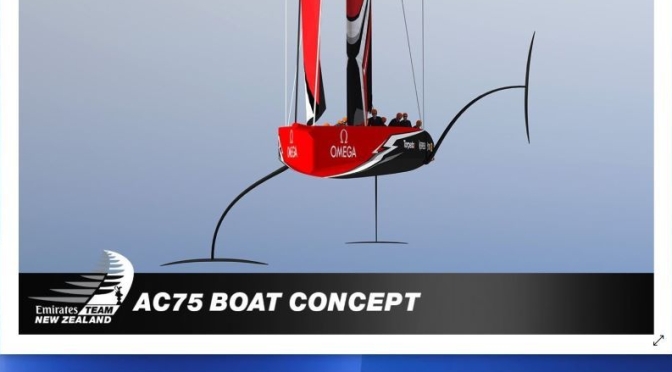
Fusing athleticism, teamwork, and technology, the monohulls competing for the 36th #AmericasCup are the fastest in the world. It was August 2012 when the sailing world was turned upside down by a 72 foot catamaran flying in the Hauraki Gulf. Emirates Team New Zealand had brought the foils to the America’s Cup and changed the face of top-level yacht racing forever. Since then the increase in performance for America’s Cup boats has been greater than at any point in the 170-year history of the event. Six years later, in 2018, the publication of the AC75 Class rule, marked the beginning of a new sailing era. Nowadays foils are commonplace, but the engineering and sailing techniques needed to get the AC75 to fly are completely different from anything seen before.

Read more

Aviation: The ‘Ten Most Innovative Amphibious Aircrafts’ (Video)

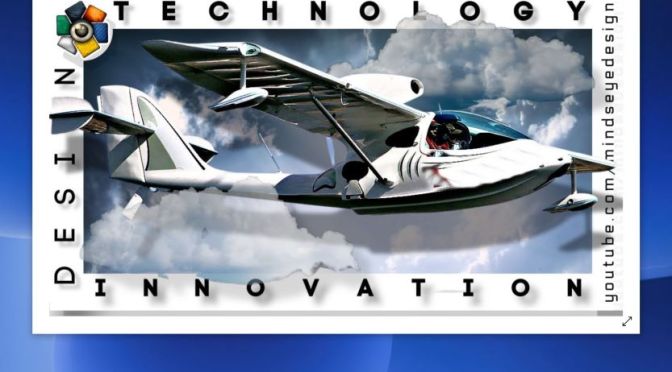
From aquatic planes to amphibious aircraft, taking off and landing on the water can be beneficial. Amphibious planes can be used for fishing, search and rescue, and even anti-submarine warfare. let’s take a look at the 10 most innovative amphibious planes.

Medical Technology: The ‘3D-Printed Heart’ (Video)

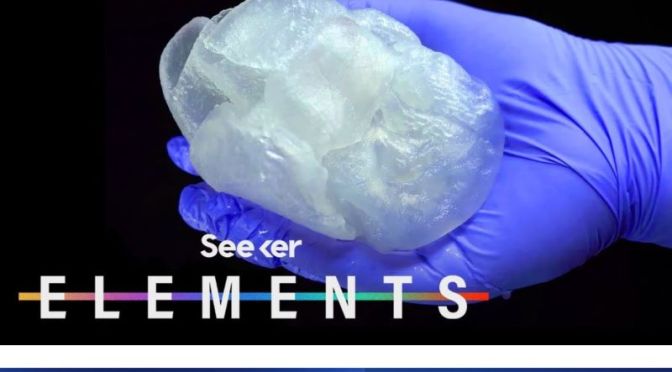
Imagine having the option to get a 3D-printed organ. Well, a team of biomedical engineers from Carnegie Mellon University has just developed the first flexible, full-size, 3D-print of a human heart, bringing us one step closer to that reality.

Additive manufacturing printers are popular, but are typically known to build hard objects using materials like plastic or metal. But rigid plastic organs aren’t very practical. These printers could be used with softer materials, like biological hydrogels — you know, to make a heart — but those tend to collapse mid-print. But this new method can change the game.

The 3D-printing technique is called Freeform Reversible Embedding of Suspended Hydrogels or FRESH. It can print biological structures with soft squishy materials like alginate, a biomaterial made from seaweed, which feels like human tissue. AND it cleverly solves that collapsing problem during print by suspending flexible materials inside a container of gelatin.

For this team of researchers it all starts with a MRI scan from a real heart. The scan gets “chopped-up” digitally into horizontal slices by a program which then translates them into code that a printer will understand. A needle-like nozzle moves through the gelatin support bath, extruding thin layers of alginate. The layers stack on top of each other to build the shape. When the print is complete, it’s put in an incubator overnight, where the temperature is raised to 37°C to gently melt away the gelatin support structure, leaving only the 3D-printed heart.

Read more

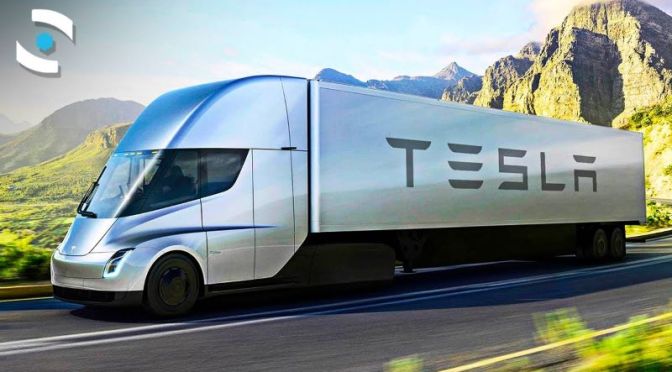
Future Of Trucks: Inside The ‘Tesla Electric Semi’

The personal transportation industry has been shaken up over the past decade or so, with the introduction of electric cars proving to be more environmentally friendly, and importantly, cheaper to run, than their petrol or diesel counterparts. Bike manufacturers are also working on the transition in the motorcycle segment. While this change has been taking place, trucking has been continuing unchanged in the background. Our food, household goods, and even electric car parts, have been transported by diesel power just like they have been from the start, while the industry has grown to be worth $700 billion in the US alone, more than many of the world’s countries’ GDPs. With the huge weights involved, electrifying the trucking industry has taken a back seat due to the impracticality, but at the end of 2017, 3 years ago, Tesla announced plans to change this with the Semi, a fully electric truck designed to shake up the shipping industry. Why The Tesla Semi Is The Future of Trucks

SCIENCE: ‘THE BIGGEST BREAKTHROUGHS IN Math & Computer Science’ In 2020

For mathematicians and computer scientists, 2020 was full of discipline-spanning discoveries and celebrations of creativity. We’d like to take a moment to recognize some of these achievements.

  • 1. A landmark proof simply titled “MIP* = RE” establishes that quantum computers calculating with entangled qubits can theoretically verify the answers to an enormous set of problems. Along the way, the five computer scientists who authored the proof also answered two other major questions: Tsirelson’s problem in physics, about models of particle entanglement, and a problem in pure mathematics called the Connes embedding conjecture.
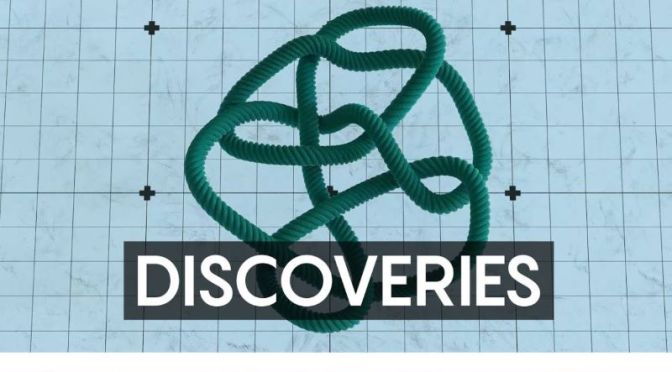
  • 2. In February, graduate student Lisa Piccirillo dusted off some long-known but little-utilized mathematical tools to answer a decades-old question about knots. A particular knot named after the legendary mathematician John Conway had long evaded mathematical classification in terms of a higher-dimensional property known as “sliceness.” But by developing a version of the knot that yielded to traditional knot analysis, Piccirillo finally determined that the Conway knot is not “slice.”
  • 3. For decades, mathematicians have used computer programs known as proof assistants to help them write proofs — but the humans have always guided the process, choosing the proof’s overall strategy and approach. That may soon change. Many mathematicians are excited about a proof assistant called Lean, an efficient and addictive proof assistant that could one day help tackle major problems. First, though, mathematicians must digitize thousands of years of mathematical knowledge, much of it unwritten, into a form Lean can process. Researchers have already encoded some of the most complicated mathematical ideas, proving in theory that the software can handle the hard stuff. Now it’s just a question of filling in the rest.

Science: ‘The Biggest Breakthroughs In Physics In 2020’ (Quanta Video)

This year, two teams of physicists made profound progress on ideas that could bring about the next revolution in physics. Another still has identified the source of a long-standing cosmic mystery.

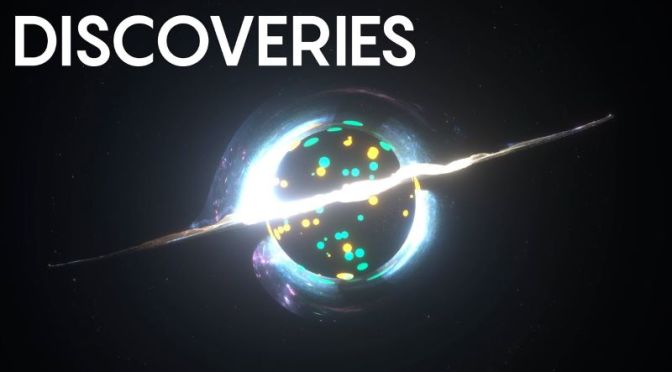
  • 1. Here’s an extremely brief version of the black hole information paradox: Stuff falls into a black hole. Over time — a long, long time — the black hole “evaporates.” What happened to the stuff? According to the rules of gravity, it’s gone, its information lost forever. But according to the rules of quantum mechanics, information can never be lost. Therefore, paradox. This year, a series of tour de force calculations has shown that information must somehow escape — even if how it does so remains a mystery.
  • 2. Levitating trains, lossless power transmission, perfect energy storage: The promise of room-temperature superconductivity has fed many a utopian dream. A team based at the University of Rochester in New York reported that they had created a material based on a lattice of hydrogen atoms that showed evidence of superconductivity at up to about 15 degrees Celsius (59 degrees Fahrenheit) — about the temperature of a chilly room. The only catch: Superconductivity at this temperature only works if the material is crushed inside a diamond anvil to pressures approaching those of Earth’s core. Utopia will have to wait.
  • 3. A dazzling cosmic strobe has ended an enduring astronomical mystery. Fast radio bursts — blips of distant radio waves that last for mere milliseconds — have eluded explanation since they were first discovered in 2007. Or rather, astronomers had come up with far too many theories to explain what are, for the brief time they’re alight, the most powerful radio sources in the universe. But on a quiet morning in April, a burst “lit up our telescope like a Christmas tree,” said one astronomer. This allowed researchers to trace its source back to a part of the sky where an object had been shooting out X-rays. Astronomers concluded that a highly magnetized neutron star called a magnetar was behind the phenomenon.

Science: ‘The Biggest Breakthroughs In Biology In 2020’ (Video)

In 2020, the study of the SARS-CoV-2 virus was undoubtedly the most urgent priority. But there were also some major breakthroughs in other areas. We’d like to take a moment to recognize them.

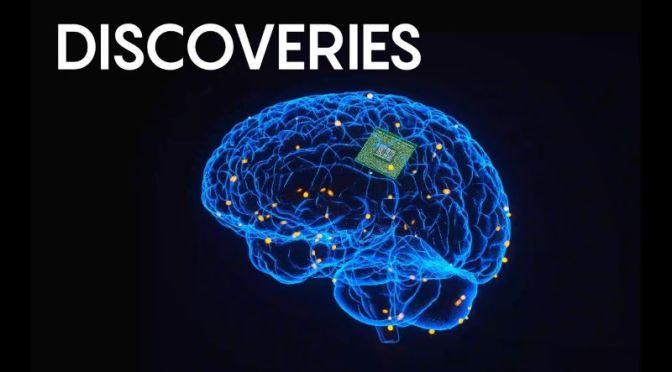
  • 1. This year, we learned that we had severely underestimated the human brain’s computing power. Researchers are coming to understand that even the dendritic arms of neurons seem capable of processing information, which means that every neuron might be more like a small computer by itself.
  • 2. The new Information Theory of Individuality completely reimagines the way biologists have traditionally thought about individuality. Armed with information theory, the researchers found objective criteria for defining degrees of individuality in organisms.
  • 3. Deprived of sleep, we and other animals die within weeks. More than a century of scrutiny failed to explain why lack of sleep is so deadly. This year, an answer was finally found — not inside the brain, as expected, but inside the gut.