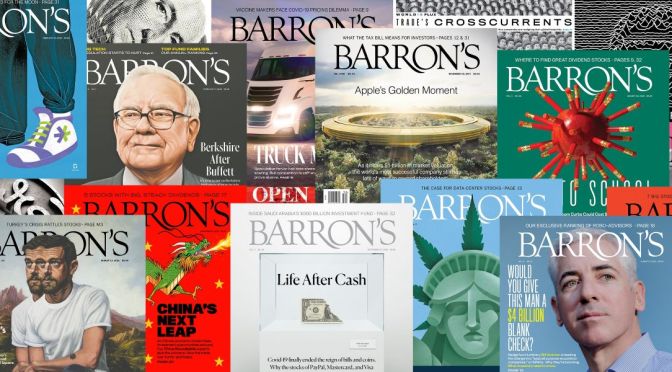
Comcast’s broadband network is crucial to the future of technology. Even so, its stock is cheap compared with buzzier names like Netflix, Nvidia, and Meta Platforms.
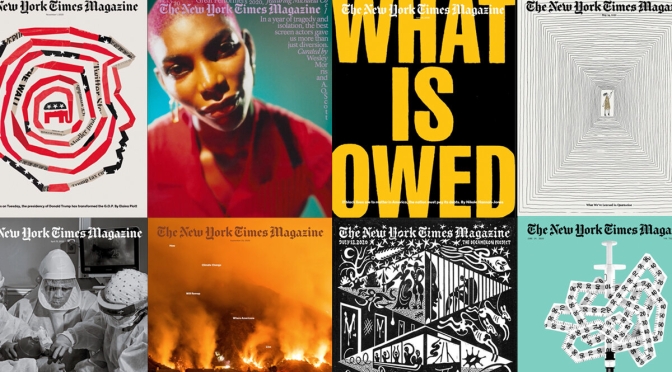
THE NEW YORK TIMES MAGAZINE – The 8.13.23 Issue: In this special issue, Wesley Morris on hip-hop’s 50th anniversary; Niela Orr on the ascendance of female rappers; Miles Marshall Lewis on how hip-hop changed the English language forever; Daniel Levin Becker on the history of bling; Tom Breihan on Too Short’s long career; and Danyel Smith on the rappers we lost.
As their male counterparts turn depressive and paranoid, it’s the women who are having all the fun.
By Niela Orr
Like American men in general, our top male rappers appear to be in crisis: overwhelmed, confused, struggling to embody so many contradictory ideals. As a result, the art is suffering, too. If the music were any more existentially morose, or stylistically comatose, mainstream hip-hop made by men might be headed the way of hair metal or disco. The narcotized indolence is everywhere; the recounting of opioid abuse is so blasé (the Percs, Xans and Oxys) that these pillbox litanies leave you wondering if the Sackler family sponsored a wing in the rap museum. And then there’s the sense of foreshortened future that’s baked into the genre but has been amplified as gangsta rap branched off into trap, drill and other grittier subgenres. Many of the male rappers are documenting social strife and commenting on the violence that comes with being young, Black, famous men. This thread can be moving and also heartbreaking. When listening to these songs, it is impossible to not ache for their makers, to be afraid right along with them. But the music bears the weight of all that anxiety and grief. Even the occasional Drake smash is not enough to disturb the disquiet.
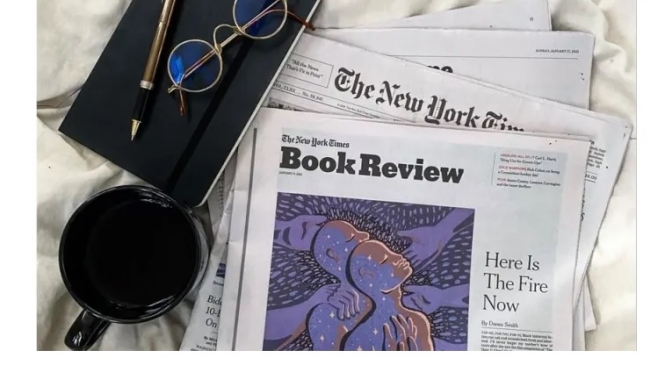
THE NEW YORK TIMES BOOK REVIEW – August 13, 2023: The annual thrillers issue features – a tense murder mystery set aboard a cruise ship; a heist novel involving rough diamonds, crooked lawyers and masters of the double cross; and an especially creepy serial-killer novel, to name just a few.
In “Flirting With Danger,” Janet Wallach tells the story of Marguerite Harrison, who traded a life of privilege to become America’s first international female spy.
By Chloe Malle
FLIRTING WITH DANGER: The Mysterious Life of Marguerite Harrison, Socialite Spy, by Janet Wallach
Anyone complaining about a canceled Delta flight would do well to channel Marguerite Harrison. The United States’ first international female spy, Harrison crisscrossed the globe by rickshaw, propeller plane, camel, inflated goatskin raft and rail freight car and once brightly described a trans-Siberian voyage, in which she was wedged between sacks of tea and oats on the back of a troika in a blizzard, as “a rare and delightful experience.”
From left: John Fairfax; Tom McCleanCredit…From left: Daily Mail/Shutterstock; Tom McClean
In “Completely Mad,” James Hansen tells the stories of two men who in 1969 vied to be the first to row solo across the Atlantic Ocean.
COMPLETELY MAD: Tom McClean, John Fairfax, and the Epic Race to Row Solo Across the Atlantic, by James R. Hansen
The day before the Apollo mission landed two men on the moon, a British man named John Fairfax waded into Hollywood Beach, Fla., greeted by masses of cheering fans, having been the first person to row solo across the Atlantic Ocean. Eight days later, another Briton, Tom McClean, pulled his dory up a deserted beach in Blacksod Bay, Ireland, having rowed solo across the Atlantic in the opposite direction. While Fairfax was acclaimed and feted, McClean walked to the closest pub, alone.
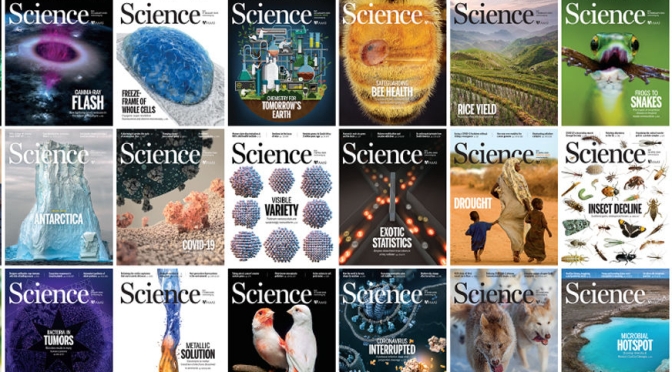
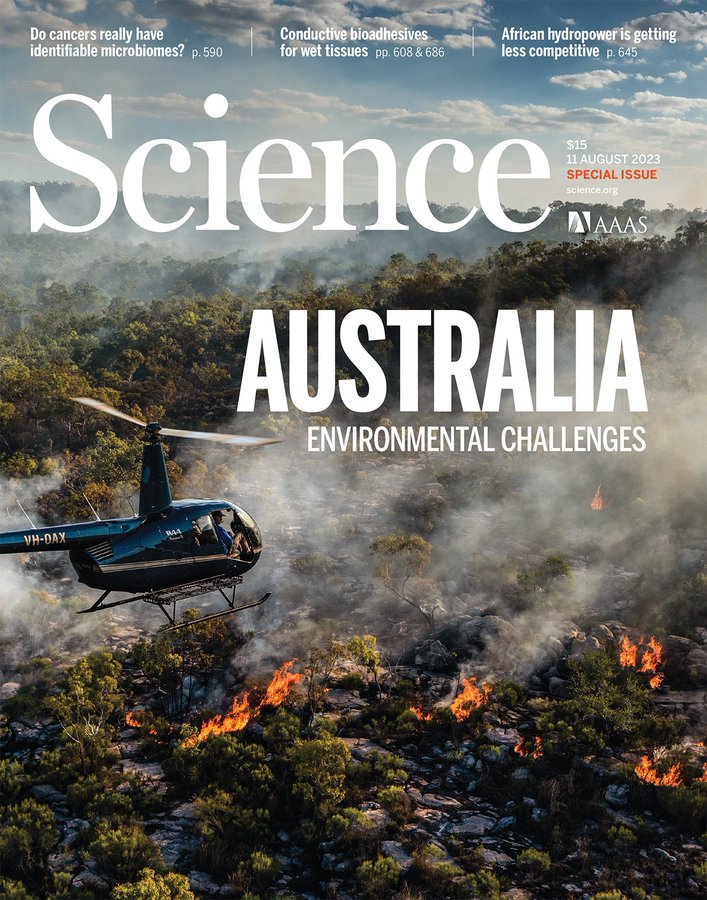
Science Magazine – August 11, 2023 issue: Environmental challenges in Australia; Do cancers really have identifiable microbiomes; Conductive bioadhesives for wet tissues; African hydropower is getting less competitive, and more…
First up on this week’s podcast, we hear about the skewed perception of our own hands, extremely weird giant viruses, champion regenerating flatworms, and more from Newsletter Editor Christie Wilcox
The Economist Magazine (August 12, 2023 issue): Why Biden’s China strategy is not working; Saudi Arabia upends sport; The attack on universal values; Twitternomics lives on; How green is your EV and more…
Supply chains are becoming more tangled and opaque
On august 9th President Joe Biden unveiled his latest weapon in America’s economic war with China. New rules will police investments made abroad by the private sector, and those into the most sensitive technologies in China will be banned. The use of such curbs by the world’s strongest champion of capitalism is the latest sign of the profound shift in America’s economic policy as it contends with the rise of an increasingly assertive and threatening rival.
The countries’ economic ties are more profound than they appear
image: alberto miranda
When it comes to tracing the geography of global supply chains, few companies provide a better map than Foxconn, the world’s largest contract manufacturer. This year the Taiwanese giant has built or expanded factories in India, Mexico, Thailand and Vietnam. The Chinese production sites once loved by Western companies are firmly out of fashion. Souring relations between the governments in Washington and Beijing have made businesses increasingly fretful about geopolitical risks. As a consequence, in the first half of the year, America traded more with Mexico and Canada than it did with China for the first time in almost two decades. The map of global trade is being redrawn.
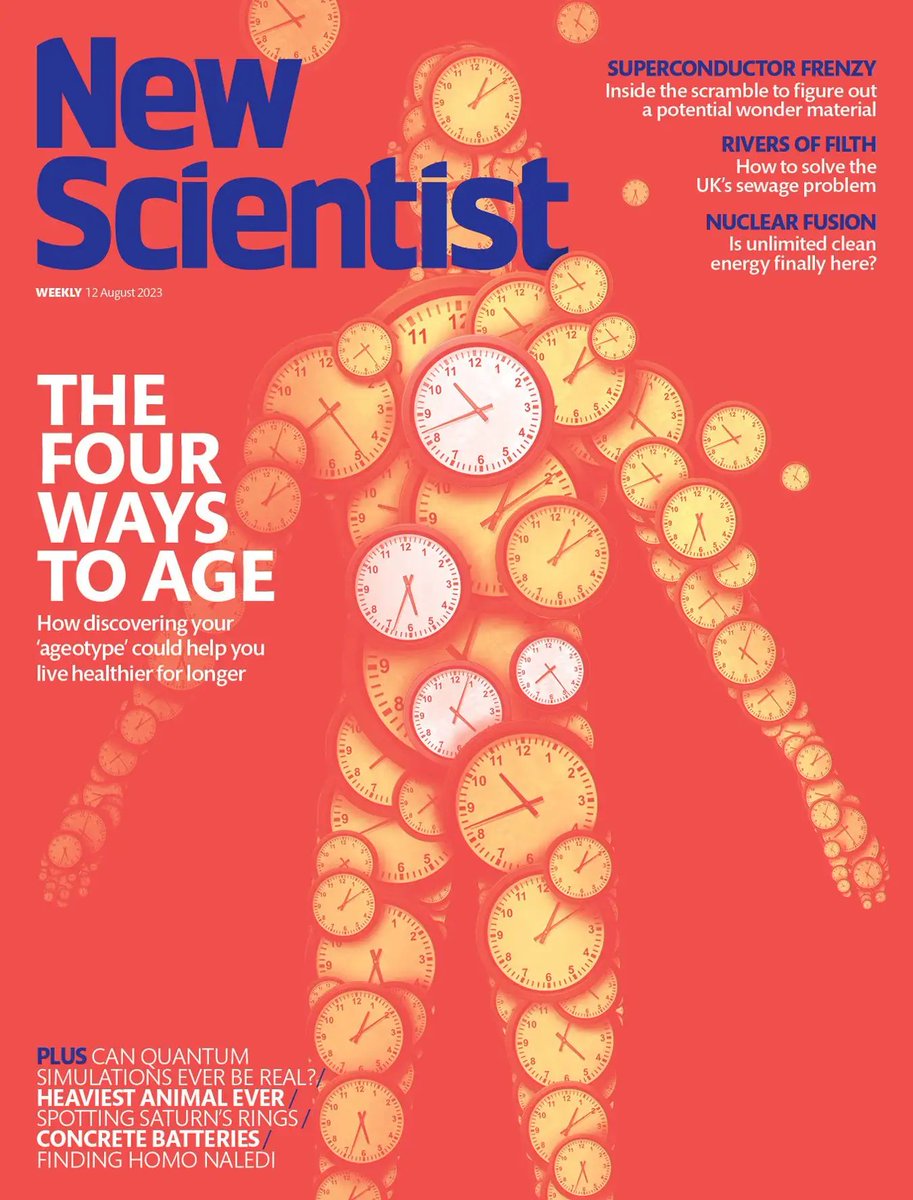
New Scientist Magazine – August 12, 2023 issue: The Four Ways to Age; Can Quantum Simulations ever be real?; Heaviest animal ever; Spotting Saturn’s Rings; Concrete batteries; Finding Homo Naledi and more…
Your body is ageing down one of four – or more – possible pathways. Figuring out your “ageotype” could help you zero in on the things you can do to stay healthier for longer
THERE is a (probably apocryphal) story about Henry Ford sending agents out to junkyards across the US in search of scrapped Model Ts. The famous industrialist wanted to know which of the car’s vital components failed first, so he could do something about it. The agents reported back that every bit of the car was susceptible to failure, but some were more susceptible than others, except for one – a component of the steering system called the kingpin, which almost never failed. They expected Ford to announce plans to extend the working lives of the weaker components. Instead, he ordered his engineers to make less resilient kingpins. No point wasting good money on a component that always outlived the others.
nature Magazine – August 10, 2023 issue: Algorithm designs 3D shapes to follow specific pathways; Why Indigenous youth need a voice in the climate debate; DNA leaks linked to inflammageing in the brains of mice; JWST spots what could be a quasar from the early Universe….
The Scopus, Dimensions and Web of Science databases are introducing conversational AI search.
The conversational AI-powered chatbots that have come to Internet search engines, such as Google’s Bard and Microsoft’s Bing, look increasingly set to change scientific search, too. On 1 August, Dutch publishing giant Elsevier released a ChatGPT-like artificial-intelligence (AI) interface for some users of its Scopus database, and British firm Digital Science announced a closed trial of an AI large language model (LLM) assistant for its Dimensions database. Meanwhile, US firm Clarivate says it’s working on bringing LLMs to its Web of Science database.
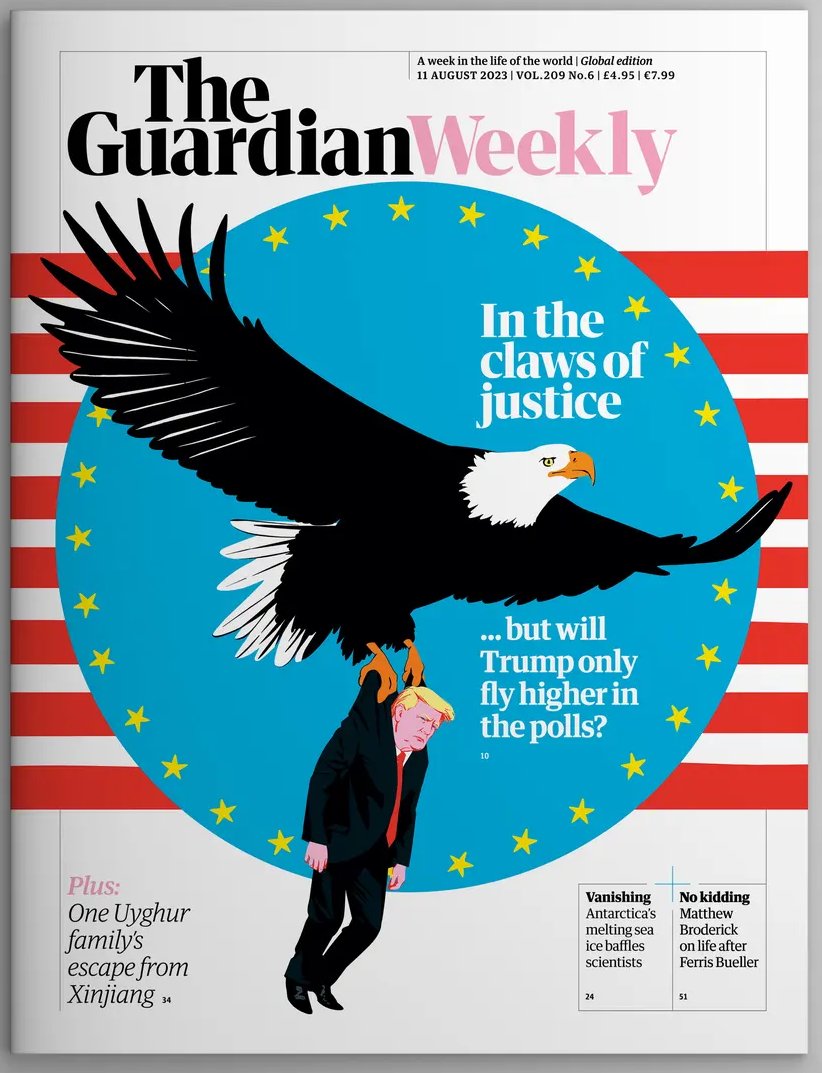
The Guardian Weekly (August 11, 2023)– The issue features Trump playing the victim, escape from Xinjiang, a day off with Matthew Broderick and more…
Donald Trump’s appearance in court in Washington last week to plead not guilty to his third indictment on criminal charges showed how the 45th president of the United States continues to defy every law of political physics.Washington bureau chief David Smith explores how playing the political martyr only firms up support for Trump to be the Republican candidate in the 2024 presidential race and silences critics within his party as well as among Democrats. We profile Trump’s new nemesis, prosecutor Jack Smith, while reporter Chris McGreal takes the temperature among voters in Iowa where the first Republican caucus will take place in January next year.
There have been few authoritative accounts of China’s persecution of the Uyghur people and the repression of their culture in Xinjiang province.Our main feature is an extract from poet Tahir Hamut Izgil’s memoir that details how, seeing the crackdown intensify and friends arrested, he planned to escape knowing that he dare not even say goodbye to his parents.
As the Hollywood industrial action continues, actors and directors have withdrawn from promoting their work, but luckily for Culture Xan Brooks caught up with Matthew Broderick just before the strike was called.He talks about his role as Richard Sackler in the new Netflix drama about the OxyContin scandal, playing opposite his wife, Sarah Jessica Parker, on stage and why escaping his legacy as Ferris Bueller is not an option.
Archaeologists have spent decades excavating the remnants of the Cossack capital of Baturyn in north-central Ukraine. Based on the excavation’s findings, the Ukrainian government has reconstructed the town’s citadel—including the wooden Church of the Resurrection, defensive walls, rampart, and moat—which was destroyed by Russian soldiers in 1708.
In 1708, Peter the Great destroyed Baturyn, a bastion of Cossack independence and culture
By DANIEL WEISS
On November 2, 1708, thousands of Russian troops acting on the orders of Czar Peter I, known as Peter the Great, stormed Baturyn, the Cossack capital in north-central Ukraine. The Cossack leader, or hetman, Ivan Mazepa—who had been a loyal vassal of the czar until not long before—had departed with much of his army several days earlier to join forces with the Swedish king Charles XII, Peter’s opponent in the Great Northern War (1700–1721). The fortified core of Baturyn consisted of a citadel on a high promontory overlooking the Seim River and a larger adjoining fortress densely packed with buildings, above which soared the brick Cathedral of the Holy Trinity. The citadel and fortress were each surrounded by defensive walls, earthen ramparts, and moats whose sides were lined with logs. Although they sustained heavy losses, the Russian forces managed to seize Baturyn, which proved to be a key victory.
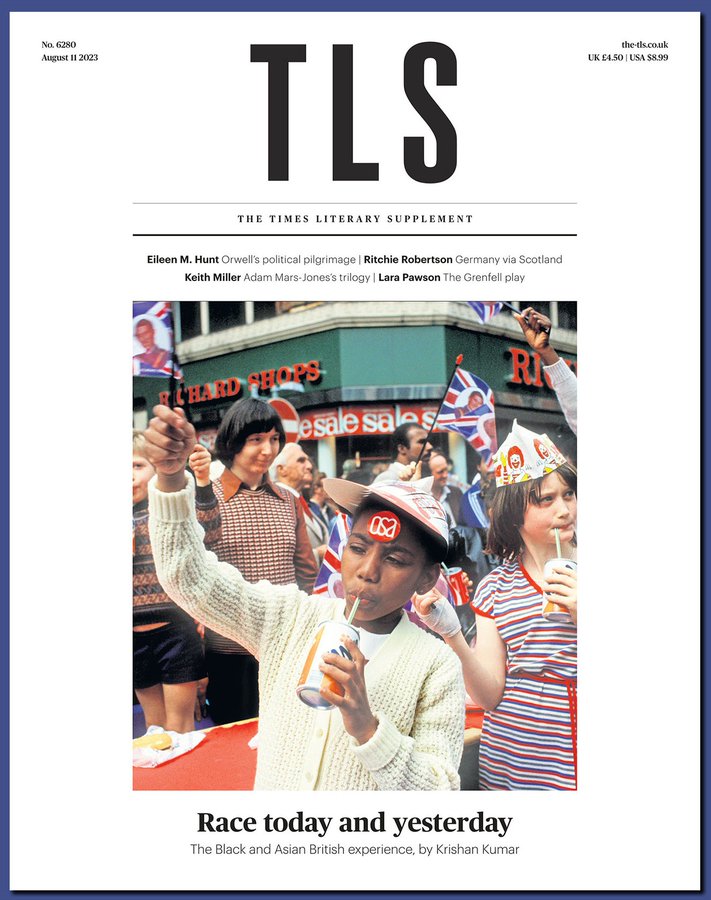
Times Literary Supplement (August 11, 2023): – Race today and yesterday – The Black and Asian British experience; Orwell’s political pilgrimage; Germany via Scotland; Adam Mars-Jones trilogy and the Grenfell play…
News, Views and Reviews For The Intellectually Curious































 Boomers Daily