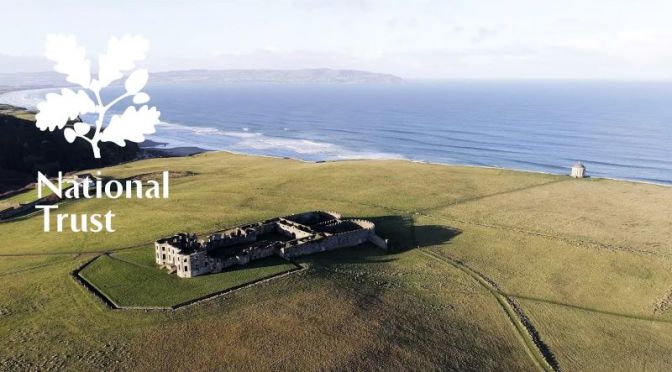
Experience the beauty and mystery of County Londonderry’s Downhill Demesne in this video tour of the vast landscape – fascinating ruins, an intriguing clifftop temple, unusual plants and trees, plus much more. We’ll be shedding light on the eccentric bishop that lived here and treating you to dramatic views of the North Atlantic.
The Mussenden Temple and Downhill Demesne is a National Trust property consisting of Downhill Castle and its estate, which includes the Mussenden Temple.
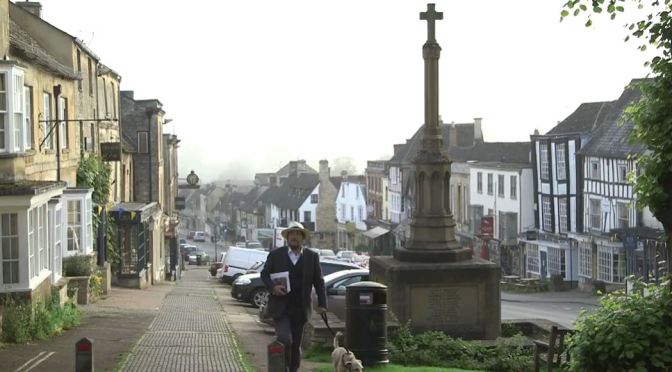
We’re continuing our journey south in this episode, having been to Painswick and the Slad Valley in episode five. We begin in Stroud, and move through the golden valley to Minchinhampton, high up on the escarpment and then down to Cirencester, before moving through Malmesbury and onto Tetbury.
Stroud is a market town and civil parish in the centre of Gloucestershire, England. It is the main town in Stroud District. Situated below the western escarpment of the Cotswold Hills at the meeting point of the Five Valleys, the town is noted for its steep streets, independent spirit and cafe culture.
Tetbury is a town and civil parish inside the Cotswold district in England. It lies on the site of an ancient hill fort, on which an Anglo-Saxon monastery was founded, probably by Ine of Wessex, in 681.
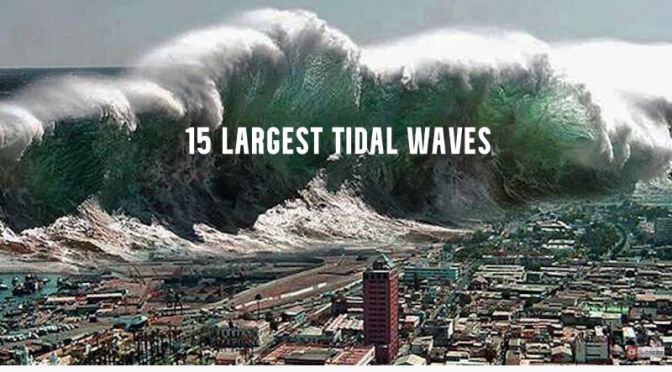
The largest tidal waves, tsunamis, and other types of waves throughout history. Never turn your back to the sea.
#1 Lituya Bay, Alaska – On the night of July 9, 1958, an earthquake along the Fairweather Fault in the Alaska Panhandle loosened about 40 million cubic yards (30.6 million cubic meters) of rock high above the northeastern shore of Lituya Bay. This mass of rock plunged from an altitude of approximately 3000 feet (914 meters) down into the waters of Gilbert Inlet (see map below). The impact force of the rockfall generated a local tsunami that crashed against the southwest shoreline of Gilbert Inlet. The wave hit with such power that it swept completely over the spur of land that separates Gilbert Inlet from the main body of Lituya Bay. The wave then continued down the entire length of Lituya Bay, over La Chaussee Spit and into the Gulf of Alaska. The force of the wave removed all trees and vegetation from elevations as high as 1720 feet (524 meters) above sea level. Millions of trees were uprooted and swept away by the wave. This is the highest wave that has ever been known.
#2 Krakatoa tsunami – The 27 August 1883 explosion of Krakatau Volcano in Indonesia is one example of an eruption-caused tsunami. The eruption generated a 30m tsunami in the Sunda Strait which killed about 36,000 people, as it washed away 165 coastal villages on Java and Sumatra.
#3 2004 Indian Ocean earthquake and tsunami occurred at 07:58:53 in local time on 26 December, with an epicentre off the west coast of northern Sumatra, Indonesia. It was an undersea megathrust earthquake that registered a magnitude of 9.1–9.3 Mw, reaching a Mercalli intensity up to IX in certain areas.
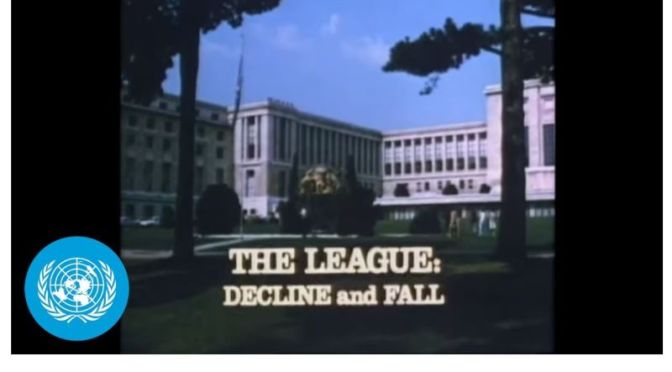
This film is the history of the League of Nations from 1930 to the onset of the Second world War: that 10-year span ending when Geneva, surrounded by Axis Powers, almost faded into memory.
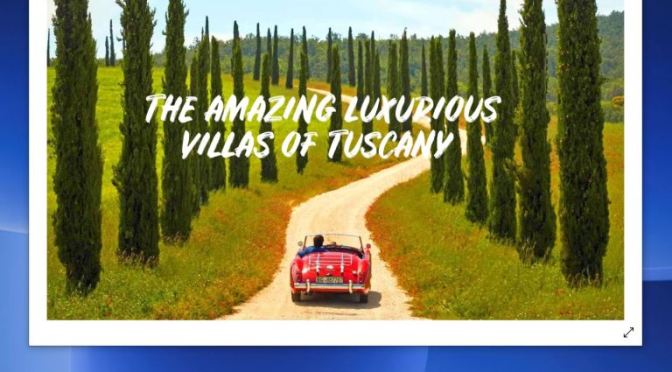
Tuscany is a region in central Italy. Its capital, Florence, is home to some of the world’s most recognizable Renaissance art and architecture, including Michelangelo’s “David” statue, Botticelli’s works in the Uffizi Gallery and the Duomo basilica. Its diverse natural landscape encompasses the rugged Apennine Mountains, the island of Elba’s beaches on the Tyrrhenian Sea and Chianti’s olive groves and vineyards.
Borgo San Felice – An Ancient Tuscan Stone Village Dating Back to Medieval Times in the Heart of Tuscany, in 1992 It Was Converted Into a Luxury Hotel Following a Lengthy Conservative Restoration Project.
Borgo Vendita – Near Siena, and About Half an Hour From Arezzo and Florence, Between the Banks of the Arno and the Soft Hills of Chianti. A Medieval Village With an Ancient Flavor, but With a Modern Layout, Surrounded by Unspoiled Countryside.
Castello Di Leonina – In the Heart of the Famous Crete Senesi, Surrounded by the Most Evocative Views of the Tuscan Countryside, Stands Castello Di Leonina, a Thirteenth-century Fortress That Was Formerly the Residence of the Chigi Family and the Country Residence of Future Pope Alexander Vii, and is Today an Exclusive 4-star Hotel Just Outside Siena.
Villa Antinori – One of Tuscany’s Most Famous Villas A Villa That Once Belonged to the Mona Lisa’s Presumed Model is Up for Sale in Italy. The Villa Antinori Was Once Owned by the Family of Silk Merchant Francesco Del Giocondo, Whose Wife Lisa Gherardini is Widely Believed to Have Sat for Leonardo Da Vinci’s World-famous Portrait.
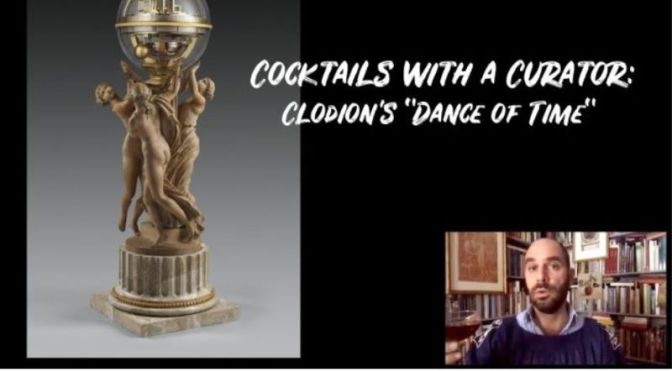
In this week’s episode of “Cocktails with a Curator,” toast the new year with Deputy Director and Peter Jay Sharp Chief Curator Xavier F. Salomon as he examines a masterpiece of both sculpture and clockmaking: “The Dance of Time,” by Clodion (Claude Michel) and Jean-Baptiste Lepaute. In this 18th-century timepiece, three terracotta nymphs or Hours dance in a circle around an exquisite mechanism enclosed in a glass globe. The Frick has one of the country’s most important collections of clocks, many of which came to the museum through a gift from Winthrop Kellogg Edey. Welcome 2021 by raising a Metropolitan cocktail—Happy New Year!
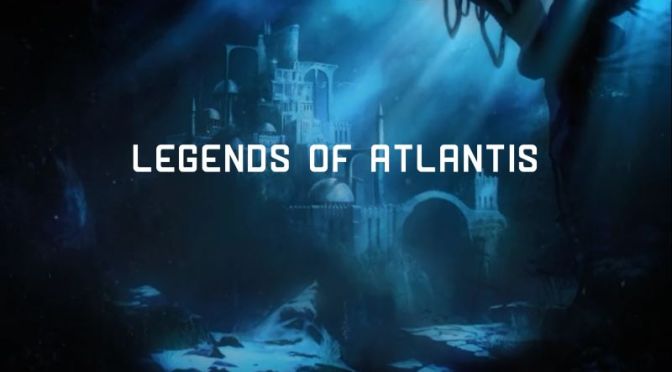
Exciting evidence emerges of civilizations lost for centuries under the waves, from mysterious underwater pyramids off the coast of Japan to the fabled city of Atlantis itself. Using cutting-edge graphics to reveal what’s actually lying on the seafloor, and insight from the world’s top marine archaeologists, Drain the Oceans finds the answers.
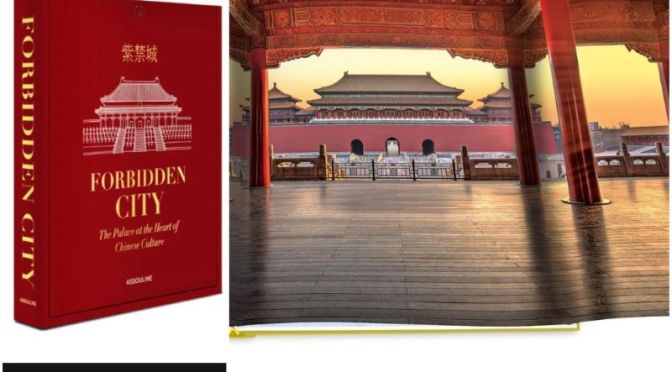
For more than six centuries, the Forbidden City has awed all those who have travelled from near and far to explore its 900 golden-roofed buildings, set amid moats, gardens, and plazas, where thousands of people lived and worked in service of the world’s largest and most sophisticated pre-modern empire. Marco Polo called it “the greatest Palace that ever was;” Simon Leys praised its architectural genius; and Franz Kafka viewed it as an impressive yet alarming symbol of power.
In this compelling addition to Assouline’s Ultimate Collection, Pulitzer Prize-winning author Ian Johnson guides readers through the magnificent and storied palace built by China’s Yongle Emperor to serve as the seat of the Ming dynasty. Weaving in history and events of the past six centuries and featuring more than 100 photographs, artworks, and historical artifacts, this luxury tome conjures life in this imperial sphere—a small city unto itself, in which soldiers, eunuchs, concubines, and merchants resided alongside the royalty they served. A stunning homage to the grand beauty of one of the most complex structures in all of history, Forbidden City reveals that 600 years after its construction, this royal monument endures as the physical and spiritual heart of Chinese civilization. This volume is presented in a regal, glossy red box reminiscent of traditional Chinese lacquerware, and that features a delicately carved map of the Forbidden City’s grounds.
After months of deadlock, a covid-19 relief package has passed, but the battles continue. We ask how things got so dire and what President-elect Joe Biden will inherit.
A deadly shootout in London more than a century ago still resonates today; we examine one of the world’s first breaking-news stories. And the colour black reaches new depths in art.
Michael Portillo’s 1936 Bradshaw’s Guide brings him to the Italian ‘treasure island’ of Sicily, full of natural beauty and ‘scenery of the greatest charm’. But the interwar guide book also tells Michael that the head of government in Italy is the fascist leader Signor Benito Mussolini.
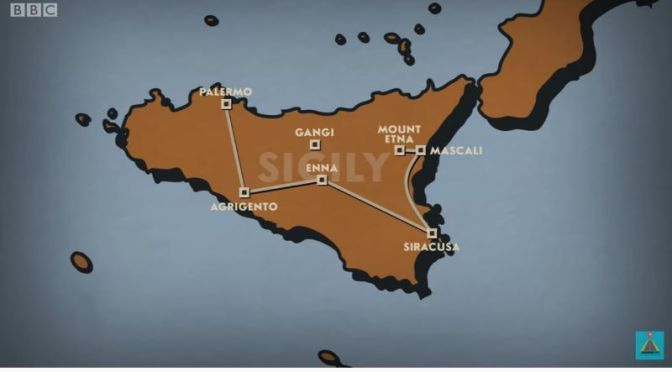
On a railway journey from the capital, Palermo, through the ancient town of Agrigento and the port of Siracusa, to Europe’s largest volcano, Mount Etna, Michael explores Sicilian life under the dictatorship. Michael finds out how the dictator took on the mafia and asks whether it is true that under Mussolini, the trains ran on time. In Palermo, Michael takes in the art and architecture of the futurists and feasts on a Sicilian speciality – spaghetti and sardines – in the city’s Ballaro street market. In the Capo district, Michael learns how the island’s distinctive puppets are made and is enchanted to see them in action.
Among the spectacular ancient Greek and Roman temples of Agrigento, Michael hears of the passionate ten-year search by a British archaeologist at the time of his guide for a long-lost ancient Greek theatre. The drama of the interwar period comes to life in front of Michael’s eyes as he joins six characters in search of an author at the Teatro Pirandello.
Michael takes the helm to explore the port of Siracusa by boat before visiting a controversial monument, which depicts a dark chapter in Italian history. He concludes his Sicilian journey on the circular railway around Mount Etna, aboard the sleek, futurist-inspired train inaugurated by Mussolini in 1937 – La Littorina.
News, Views and Reviews For The Intellectually Curious





 Boomers Daily