
THE YALE REVIEW (March 11, 2025): The latest issue features…
Finding the Real in Photorealism
Do we want art to transform our lives?
“Channel, 2019–24”
Capturing Los Angeles in crisis by Sasha Rudensky
Is life online real? by Jesse Damiani

THE YALE REVIEW (March 11, 2025): The latest issue features…
Do we want art to transform our lives?
Capturing Los Angeles in crisis by Sasha Rudensky
Is life online real? by Jesse Damiani

Foreign Policy (September 20, 2024): The Mediterranean was the backdrop for much of FP’s summer reading. For the first installment of our new column about international fiction, we travel to two very different settings along this vast sea: Muammar al-Qaddafi’s Libya and modern Sicily. Plus, we highlight the buzziest releases in international fiction this month.
Hisham Matar (Random House, 416 pp., $28.99, January 2024)
Hisham Matar’s latest novel, recently longlisted for the 2024 Booker Prize, is about friendship and exile. Matar, a Libyan American writer based in London, was raised in a family of anti-Qaddafi dissidents and has made the tyrant’s maniacal rule the subject of most of his work.

In My Friends, Matar follows protagonist and narrator Khaled from his school days in Benghazi to the period following Qaddafi’s overthrow in 2011. After attending a 1984 anti-Qaddafi demonstration in London and landing on the dictator’s hit list, Khaled is forced to upend his quiet life as a university student in Edinburgh and start over in the British capital. (The real-life protest, where officials at the Libyan Embassy shot several protesters and killed a police officer, led Libya and Britain to sever ties.)
Khaled develops strong friendships with two fellow Libyans in London, Hosam and Mustafa. Unlike Khaled, both are unwavering in their political convictions. Although Khaled is opposed to Qaddafi’s regime, he is also aware of the costs—and futility—of speaking out. That Khaled’s criticism of Qaddafi’s Libya never leaves the private, rhetorical sphere is a point of contention between him and his friends. Ultimately, Hosam and Mustafa return to Libya in 2011 to join the militias fighting Qaddafi; Khaled remains in Britain, deeply insecure about his inaction.
Khaled’s decision to attend the 1984 protest was one he made hesitantly, so it is all the more shocking that his first brush with activism fundamentally altered the course of his life. Khaled’s father, an academic who resigned himself to a mid-level career under Qaddafi to avoid repression, had taught his son that it is “almost always best to leave things be.”
At its core, My Friends is a debate over whether, in the face of repression, such silence is a form of self-preservation or cowardice. This tension exists between the book’s main characters—the friends—as well as within Khaled’s own head. While Khaled’s exile led him to make great friends, his time in London is equally a painful experience of solitude. With Libyan phone lines tapped and mail pilfered by the regime, he has had to uphold a decades-long lie to his family about why he can no longer return home—all because he attended a single protest.
An author with an agenda might have sought to portray Hosam and Mustafa as valiant fighters whose sacrifices are rewarded, opposite Khaled, who prefers comfort to confrontation. But Libyan history does not follow a morally righteous narrative arc. At the end of the book, Libya becomes enveloped in a new crisis, and each friend seeks to find his place within it.—Allison Meakem
Jo Hamya (Pantheon, 240 pp., $26, August 2024)
The Mediterranean is a time-honored stage for the psychosocial dramas of the elite. From British novelist John Fowles’s 1965 masterpiece, The Magus, to the entire Mamma Mia! franchise, fictional foreigners have long flocked to Greek and Italian isles to escape from—and, more often, confront—their heartbreaks and pathologies and familial squabbles. Often left out of these tales are the locals.

The Hypocrite by British author Jo Hamya at first seems like more of the same. It takes place over the course of one staging of a play about a summer that Sophia, the young playwright, once spent in Sicily’s Aeolian Islands with her father, a famous novelist whose work has aged poorly. It’s a smooth and often witty portrait of the upper-middle-class London art scene, written in the streamlined Rachel Cusk-esque register that defines much contemporary literary fiction.
Yet The Hypocrite also attempts to do something more. Although Sophia’s family dramas make up the bulk of the narrative, Hamya eventually shifts her focus to the family’s housekeeper in Sicily. She recalls that Sophia “was demanding in the worst way an English tourist could be.” Sophia didn’t try to learn even a little Italian. She and her father, the housekeeper thinks, were “lazy, messy people” who never bothered “to make her job easier with the simplest of acts.”
Hamya’s novel is part of the recent trend of examining who, historically, has been omitted in traditional narratives, especially ones set in locales that are under-resourced, exoticized, and deeply reliant on tourism. (Sicilians are European, yes, but they also live in one of Italy’s poorest regions.) In this regard, the novel is closer in spirit to HBO’s The White Lotus, the much-lauded send-up of the rich at a luxury resort chain (first in Hawaii, then in Sicily, and soon in Thailand), than many of its other predecessors.
Hamya does not dwell, however, on this upstairs-downstairs dynamic. Rather than skewering the careless interlopers, she aims for a bit more nuance, attending—if only fleetingly—to both the narrower interests of her protagonists and the invisible hands that helped set the stage for them that summer.—Chloe Hadavas
The New York Times Book Review (November 21, 2023): Each year, we pore over thousands of new books, seeking out the best novels, memoirs, biographies, poetry collections, stories and more. Here are the standouts, selected by the staff of The New York Times Book Review.

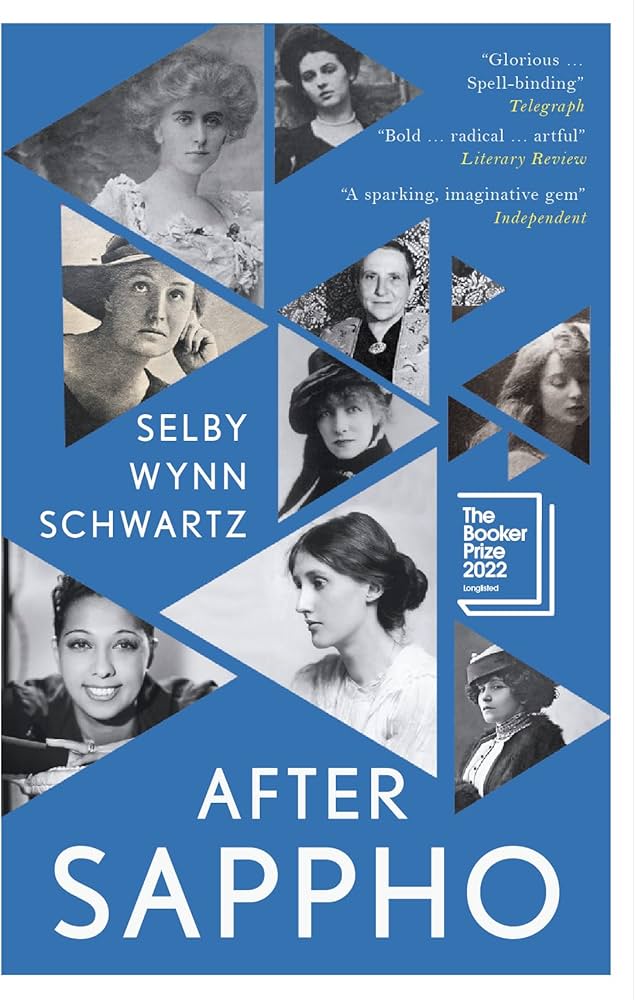
Inspired by Sappho’s work, Schwartz’s debut novel offers an alternate history of creativity at the turn of the 20th century, one that centers queer women artists, writers and intellectuals who refused to accept society’s boundaries.

Verghese’s first novel since “Cutting for Stone” follows generations of a family across 77 years in southwestern India as they contend with political strife and other troubles — capped by a shocking discovery made by the matriarch’s granddaughter, a doctor.
A best-selling novelist and prominent anti-Fascist in her native Italy, de Céspedes has lately fallen into unjust obscurity. Translated by Ann Goldstein, this elegant novel from the 1950s tells the story of a married mother, Valeria, whose life is transformed when she begins keeping a secret diary.
Based on a celebrated 19th-century trial in which the defendant was accused of impersonating a nobleman, Smith’s novel offers a vast panoply of London and the English countryside, and successfully locates the social controversies of an era in a handful of characters.
This remarkable debut novel tells the story of an extended Indo-Ugandan family that is displaced, settled and displaced again.
This tale of a torrid, yearslong relationship between a young woman and a much older married man — translated from the German by Michael Hofmann — is both profound and moving.
Inspired by the life of Graver’s maternal grandmother, this exquisitely imagined family saga spans cultures and continents as it traces the migrations of a Sephardic Jewish girl from turn-of-the-20th-century Constantinople to Barcelona, Havana and, finally, Queens, N.Y.
The year is 1915, and the narrator of LaValle’s horror-tinged western has arrived in Montana to cultivate an unforgiving homestead. She’s looking for a fresh start as a single Black woman in a sparsely populated state, but the locked trunk she has in stow holds a terrifying secret.
Mason’s novel looks at the occupants of a single house in Massachusetts over several centuries, from colonial times to present day. An apple farmer, an abolitionist, a wealthy manufacturer: The book follows these lives and many others, with detours into natural history and crime reportage.
An ex-conquistador in Spanish-ruled, 16th-century Mexico is asked to hunt down an Indigenous prophet in this novel by a leading writer in Spain, splendidly translated by Katie Whittemore. The epic search stretches across much of the continent and, as the author bends time and history, lasts centuries.
In his latest novel, inspired by the true story of a devastating 1912 eviction in Maine that displaced an entire mixed-race fishing community, Harding turns that history into a lyrical tale about the fictional Apple Island on the cusp of destruction.
This novel follows three generations across time and place: a young mother trying to create a home for herself and her son in 1980s Philadelphia, and her mother, who is trying to save their Alabama hometown from white supremacists seeking to displace her from her land.
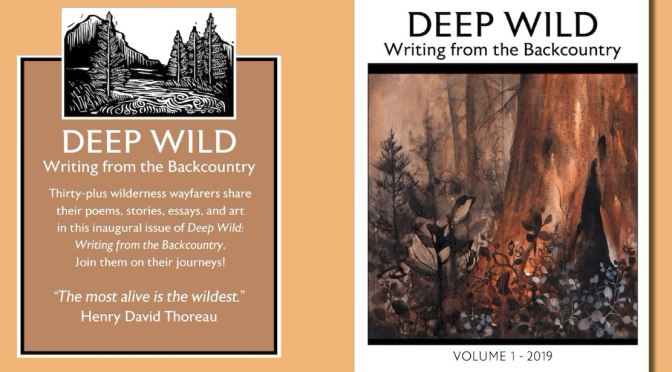
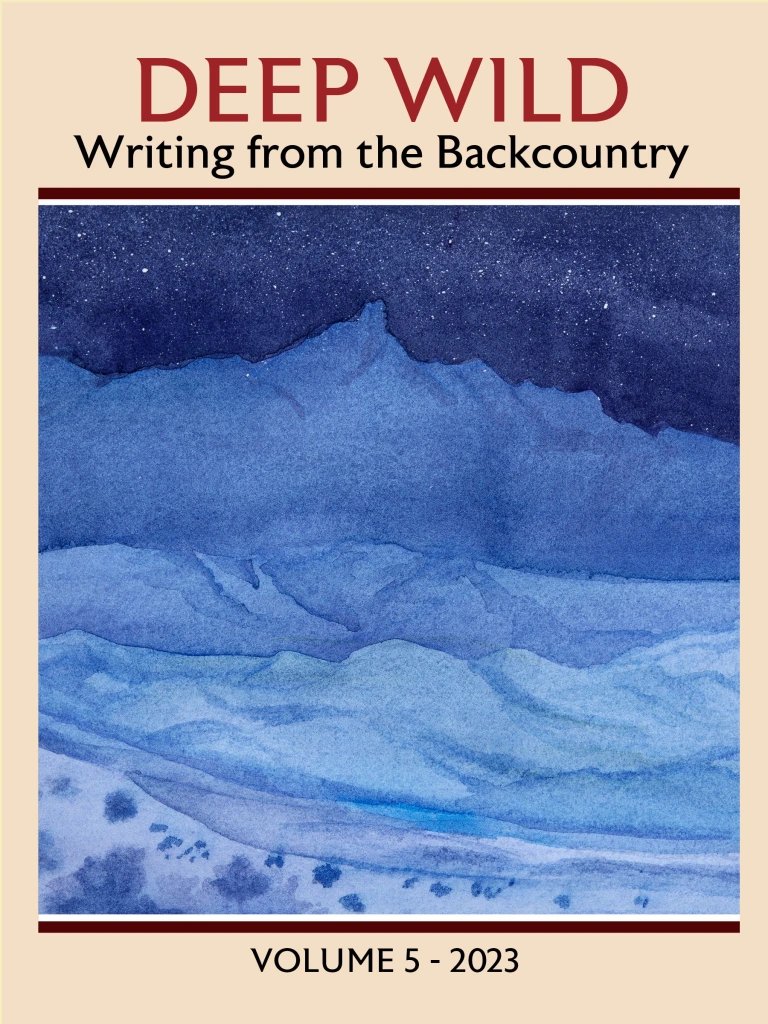
Deep Wild Journal 2023 – Writing from the Backcountry: On skis and snowshoes, by boot and boat, in open water or at the ends of ropes, by night or day, in all four seasons, in searing sun or drenching rain…the adventurer-writers whose work is featured in Deep Wild 2023 take us to all extremes.
Others come to us from a quiet place in the backcountry with their insights, observations, discoveries. Also featured in Deep Wild 2023 is full-color artwork by Tucson watercolorist Kat Manton-Jones and a portfolio of pen-and-ink drawings from the Colorado Plateau by Margaret Pettis.
Deep Wild 2023: Foreword and Contents


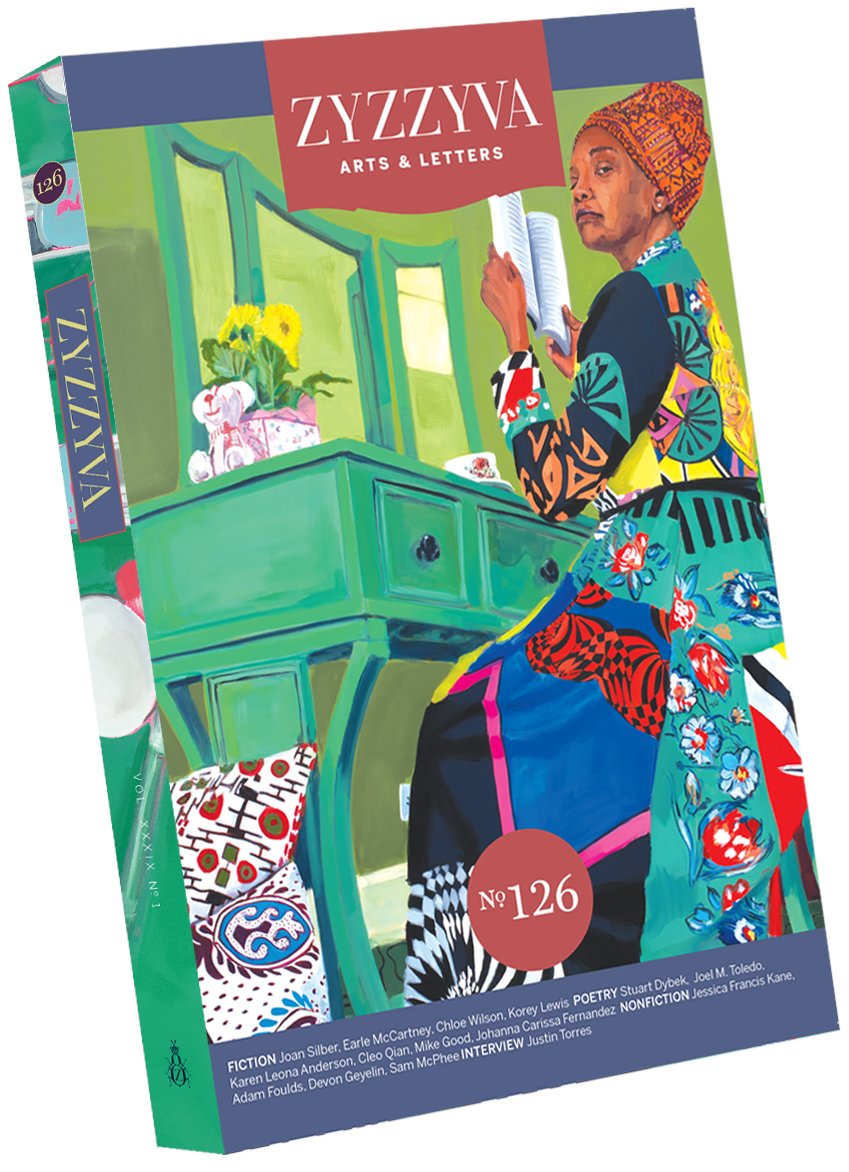
ZYZZYVA Magazine Fall 2023: In This Issue:
Fiction
“Thinking Ahead” by Joan Silber:
“How does a person behave when he knows he’s dying? There’s a myth that people go off and do what they’ve always wanted to do—sail to Spain, buy a horse, eat at the world’s most famous restaurant. ‘They never do that,’ my mother said, ‘that I’ve seen. They don’t even remember why they wanted to do it.”
“Seabreeze” by Korey Lewis:
Jojo and Jaz wait for The Defendant to pick them up from their mother’s place and take them to Seabreeze. “If Disney is where dreams come true, then Seabreeze is where they give up.”
“Eau de Nil” by Chloe Wilson:
“It was a website called Geriatrix. On it were women my age, in various states of undress. I saw breasts droopier and flatter than mine, necks that were crêpier, bellies that bulged and hung. But what really struck me was how happy they looked.”
“Country Furnishings” by Earle McCartney:
The equilibrium in a tetchy blue-collar workshop gets jostled with the arrival of Frank Wonderwood—future son-in-law of the business’s new co-owner and future woodworking graduate from Del Tech.
Poetry
Karen Leona Anderson, Stuart Dybek, Johanna Carissa Fernandez, Mike Good, Cleo Qian, Sarah Lynn Rogers, Joel M. Toledo
Nonfiction
Laura M. Furlan her birth parents, identity, and butterflies. Adam Foulds on the home-turned-museum of one of England’s greatest architects, Sir John Soane. Sam McPhee on the singular fascination hands have on his attention. Jessica Francis Kane on her lifelong affinity with the fascinating James Boswell. And Devon Brody’s “Beth”: “I’m glad to be with only Beth and her long hair that meets the hair on my arms, and the hair on her arms that meets the hair on my arms.”
In Conversation:
Ricardo Frasso Jaramillo delves with Justin Torres into Torres’s career and his new novel, Blackouts, a finalist for the National Book Award.
Art
Wangari Mathenge

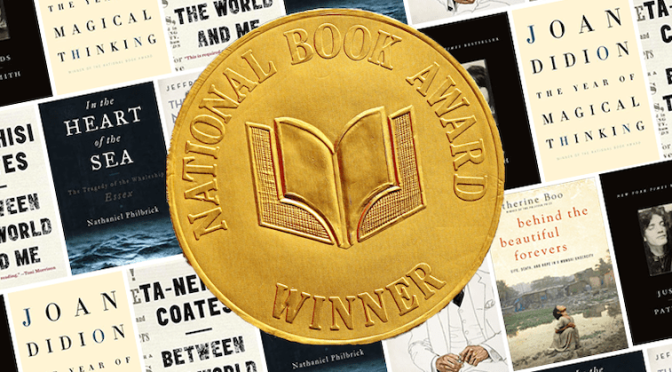
National Book Foundation (September 15, 2023) – The ten titles on the list were chosen from four hundred and ninety-six submissions by publishers. Three authors on the longlist, Nana Kwame Adjei-Brenyah, Jayne Anne Phillips, and Justin Torres, have been previously honored by the National Book Foundation. The full list is below.
Nana Kwame Adjei-Brenyah, Chain-Gang All-Stars
Pantheon Books / Penguin Random House
Aaliyah Bilal, Temple Folk
Simon & Schuster
Eliot Duncan, Ponyboy
W. W. Norton & Company
Paul Harding, This Other Eden
W. W. Norton & Company
Tania James, Loot
Knopf / Penguin Random House
Jayne Anne Phillips, Night Watch
Knopf / Penguin Random House
Mona Susan Power, A Council of Dolls
Mariner Books / HarperCollins Publishers
Hanna Pylväinen, The End of Drum-Time
Henry Holt and Company / Macmillan Publishers
Justin Torres, Blackouts
Farrar, Straus and Giroux / Macmillan Publishers
LaToya Watkins, Holler, Child
Tiny Reparations Books / Penguin Random House

From Open Magazine (May 29, 2020):

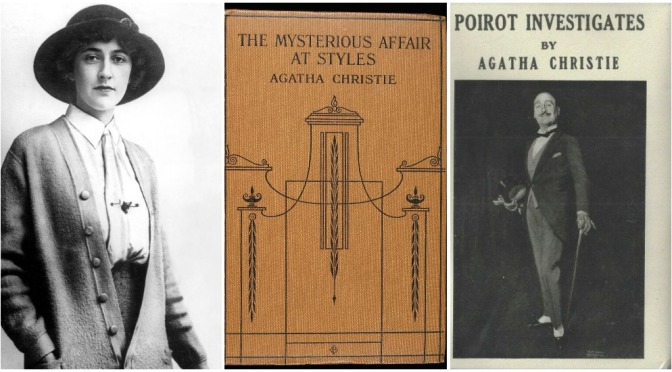
And with The Mysterious Affair at Styles (published a 100 years ago, in 1920) Christie would introduce readers to Monsieur Hercule Poirot, an old Belgian detective who resembled Holmes superficially (‘eccentric detective, stooge assistant’, as the author would admit in her autobiography later) but whose psychological insights and near-mystical idiosyncrasies would make him arguably the most successful and beloved literary sleuth of all time.
IN 1916, THE 26-year-old Agatha Christie finished writing her first detective novel at Dartmoor, a quiet upland in Devon, UK, known for its beautiful granite hilltops. Sir Arthur Conan Doyle had published The Hound of the Baskervilles, in 1902, which would become one of the most widely read Sherlock Holmes adventures—and the story was set in this same corner of the world, Dartmoor.
Books like Murder on the Orient Express (1934), The Murder of Roger Ackroyd (1926) and Death on the Nile (1937) remain some of the bestselling murder mysteries in the world today, over eight decades after their original publication (Christie’s net sales for all of her books combined are over two billion now).
TRANSCRIPT
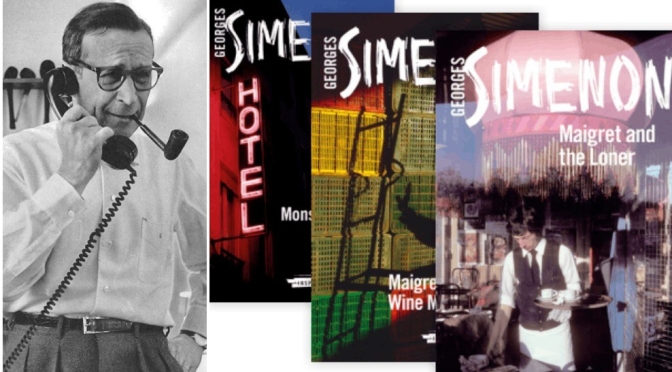
Thomas Jones: Hello, and welcome to the London Review of Books podcast. My name is Thomas Jones, and today I’m talking to John Lanchester, who’s written a piece in the current issue of the LRB about Georges Simenon and his 75 Maigret novels, which Penguin have just finished reissuing in new translations. Hello, John.
John Lanchester: Hi Tom. Thanks for having me.
TJ: Thank you for joining me. And I thought we could begin where you begin your piece with Simenon’s ‘colossal output’, as you put it, and that nobody knows how many books he actually wrote, though it was probably more than four hundred, which is fewer than Barbara Cartland, but still puts the rest of us to shame.
JL: He didn’t half crack on, that’s true. Yes, he started as a young man in Liège, his home town in Belgium. And he got a job as a reporter on the local paper. I think he was not quite 16, which is properly strange. It’s like something out of a high concept kid’s TV show, you know, Georges Simenon – Boy Reporter, and very early on latched onto the idea of making money through writing.He began writing when he was 18, his first book came out when he was 19. He started writing every sort of potboiler, thrillers, romances, sort of semi-porn westerns, things like that, at an absolutely astounding rate of productivity. And his target was eighty pages a day, typewritten, and even on the assumption that the pages … I mean, a short page would be 150 words and it could well have been more, but it was 10,000 words a day, and he did that every single day. And then he’d write eighty pages, and then he’d go and be sick. Just from the physical and mental exertion and the strain. That was in the morning. And then he’d recover and do a bit of light reading and pottering about. And then the next day he did the same again, over and over and over for about seven years. And in that period, as you’ve mentioned, we don’t know exactly how many, because he forgot, and he had multiple pseudonyms. The main one being Georges Sim, which was how he was known when he began writing the Simenon novels. People thought that Simenon was a pseudonym because George Sim was so well known, but he seems to have written about 150 or more books in this seven-year burst. It makes you feel peculiar even to think about what that must have been like.
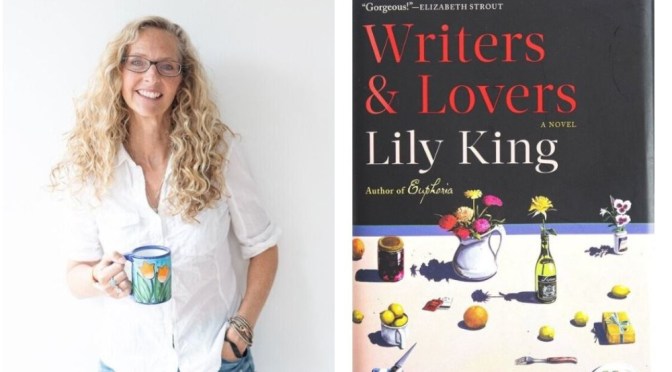
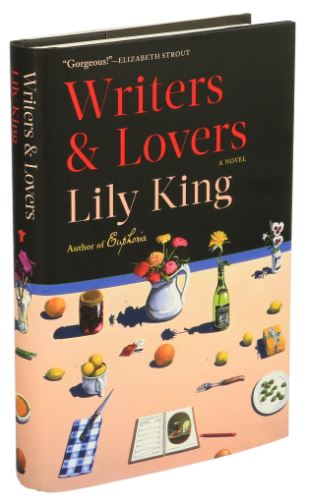
Writers & Lovers follows Casey―a smart and achingly vulnerable protagonist―in the last days of a long youth, a time when every element of her life comes to a crisis. Written with King’s trademark humor, heart, and intelligence, Writers & Lovers is a transfixing novel that explores the terrifying and exhilarating leap between the end of one phase of life and the beginning of another.
Following the breakout success of her critically acclaimed and award-winning novel Euphoria,
Lily King returns with another instant New York Times bestseller: an unforgettable portrait of an artist as a young woman.
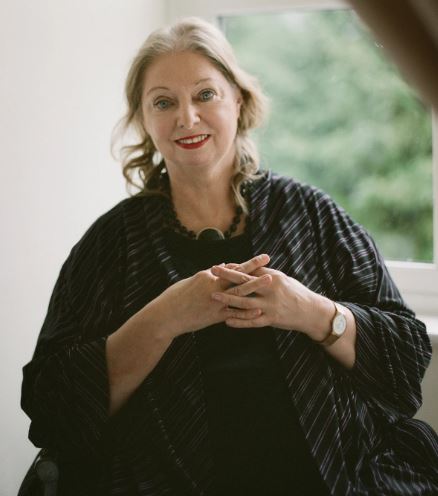
Lily King is the author of five award-winning novels. Her most recent novel, Writers & Lovers, will be published on March 3rd, 2020. Her 2014 novel Euphoria won the Kirkus Award, The New England Book Award, The Maine Fiction Award, and was a finalist for the National Book Critics Award. Euphoria was named one of the 10 Best Books of 2014 by The New York Times Book Review. It was included in TIME’s Top 10 Fiction Books of 2014, as well as on Amazon, NPR, Entertainment Weekly, Publishers Weekly, and Salon’s Best Books of 2014.