Visitors to the Denver Art Museum can currently see 120 different paintings by Claude Monet from all over the world. But how did they get there — like, literally get there?
To find out, I talked with Sarah Cucinella-McDaniel, chief registrar at the Denver Art Museum. She’s sort of like a travel agent for art — and for this exhibition she booked the itineraries for artworks from more than 70 lenders around the world: museums, as well as private collectors. (One of her recent days started unexpectedly, around 1:45 a.m., when one of her nine Monet shipments for the day arrived at the museum hours ahead of schedule.)
At CES 2020, more than 4,400 companies will show how technology is changing our lives for the better, and how every company is a tech company. Follow us at #CES2020 and CES.tech.
Later this month, Jacques-Louis David’s Neoclassical masterpiece of Napoleon crossing the alps will travel to New York for the very first time. Displayed at the Brooklyn Museum alongside Kehinde Wiley’s contemporary reinterpretation, both works in this unprecedented pairing reflect the unique conditions of their respective times.
.
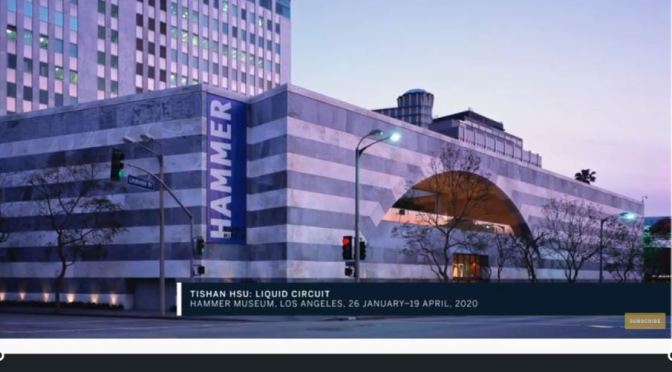
It’s just one of January’s must-see exhibitions, chosen by Tim Marlow, the Design Museum in London’s new director and CEO. Don’t miss this and other exhibitions opening this month in Basel, Cornwall, and Los Angeles.
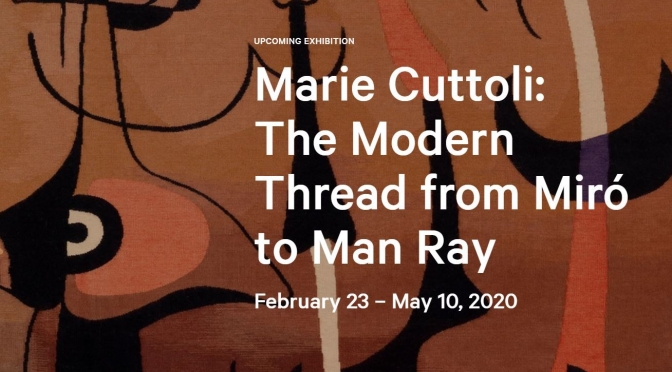
In 1930s Paris, leading modern artists experimented with tapestry design, thanks to pioneering entrepreneur Marie Cuttoli (1879–1973). Cuttoli lived between Algeria and Paris and collected work by artists such as Pablo Picasso, Joan Miró, and Georges Braque.
This exhibition traces her career, from her early work in fashion and interiors to her revival of the French tapestry industry. She commissioned the most celebrated artists of her time—Rouault, Léger, Picasso, Braque, Le Corbusier, Man Ray, and Miró, among others—to create designs for the historic tapestry workshops in Aubusson. By uniting these important paintings and drawings with the resulting tapestry, this exhibition shows their true purpose, revealing modernism’s profound dialogue with the decorative arts.
Located in Bordeaux’s former submarine base, the BASSINS DE LUMIÈRES will present monumental immersive digital exhibitions devoted to the major artists in the history of art and contemporary art. The submarine base’s surface area is three times the size of that of the Carrières de Lumières in Les Baux-de-Provence and five times that of the Atelier des Lumières in Paris.
The digital exhibitions will be perfectly adapted to the monumental architecture of the submarine base and will be reflected in the water of the four enormous basins, thereby adding a new dimension to the immersive experience. Visits will be conducted on gangways above the water and along the quays of the enormous basins.
On 17 April 2020, Culturespaces will open the largest digital art centre in the world: the Bassins de Lumières. France’s leading private operator in the management and promotion of monuments, museums, and art centres, Culturespaces is pursuing the creation of digital art centres and immersive exhibitions.
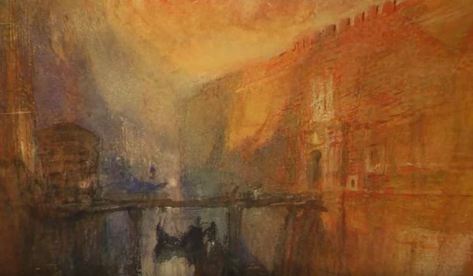
British painter J.M.W. Turner was both prolific and peripatetic, producing more than 30,000 watercolors during a lifetime in which he traveled throughout Europe.
But these works are extremely susceptible to light damage and can be shown only once in a generation. Now, they’re on view at the Mystic Seaport Museum in Connecticut — their only North American stop. Jared Bowen of WGBH reports.
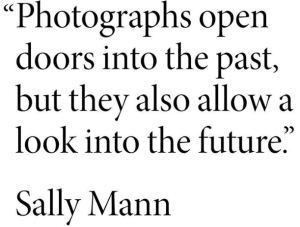
“People want to see photography and right now there are not a lot of places to do that,” he says. Showing “the best photography in the world” remains Fotografiska’s core mission, Broman says.
The global expansion of Fotografiska is finally taking shape. The Stockholm-based photography hub, founded in 2010 by brothers Jan and Per Broman, will open its New York outpost on 14 December, almost two months later than previously announced.
This follows a venue launched in June in Tallinn, Estonia, and anticipates the arrival in late 2020 of Fotografiska London, billed as the world’s largest photography gallery by the British Journal of Photography.
…the Ronald Reagan Presidential Foundation and Institute announced its “Operation Nighthawk Landing” project – a Reagan Foundation & Institute and Lockheed Martin Skunk Works® joint effort that will soon bring an F-117 Nighthawk Stealth Fighter to the Reagan Museum for permanent exhibition. Made possible by loan from the National Museum of the U.S. Air Force, the F-117 placed on display will serve as a visible reminder to the Library’s near half-million annual visitors of President Reagan’s commitment to the rebuilding of the U.S. military through his “Peace through Strength” program. The F-117 Nighthawk, Tail #803, nicknamed “Unexpected Guest,” flew more combat sorties (78) than all other F-117s combined. The aircraft entered service in May 1984, during President Reagan’s administration.
“The Reagan Library will now be one of two places in the nation where the general public can visit an F-117 Stealth Fighter on permanent display,” said John Heubusch, executive director of the Ronald Reagan Presidential Foundation and Institute. “We are deeply grateful to Lockheed Martin for their outstanding assistance in restoring the aircraft for such a meaningful display and to the U.S. Air Force for making it possible for the Reagan Library to exhibit the plane for millions of visitors to enjoy for years to come.”
The F-117 Nighthawk was the world’s first operational stealth aircraft. Between 1981 and 2008, Lockheed Martin produced 59 operational F-117s and five developmental prototypes, but the aircraft weren’t publicly acknowledged until 1988. Known as “stealth fighters,” the F-117’s angular shape was designed to reflect radar waves and was bolstered by the use of a radar-absorbing material. Because the aircraft was only expected to operate at night, it was painted black to make it more difficult to discern against the night sky.
An exhibit at South Carolina’s Columbia Museum of Art shows Vincent van Gogh in a new light. “Van Gogh and His Inspirations” presents the younger, wayward artist who learned from looking hard at the world — and the work of artists around him. A private collection of his inspirations is made public for the first time and presented alongside a dozen original van Gogh works. Jeffrey Brown reports.
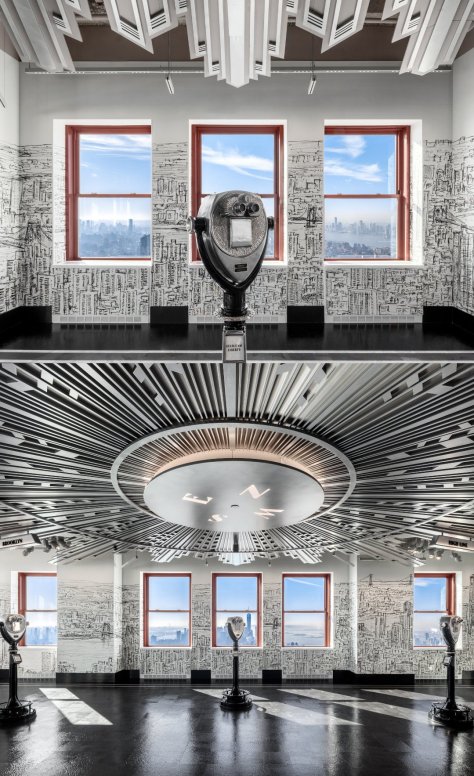
Our 80th Floor is officially re-opened – the final stage of our visitor experience redesign! The floor includes a special @nycgo exhibit that will create a custom itinerary for the rest of your trip, based on questions you answer about your interests! http://esbo.nyc/bc1

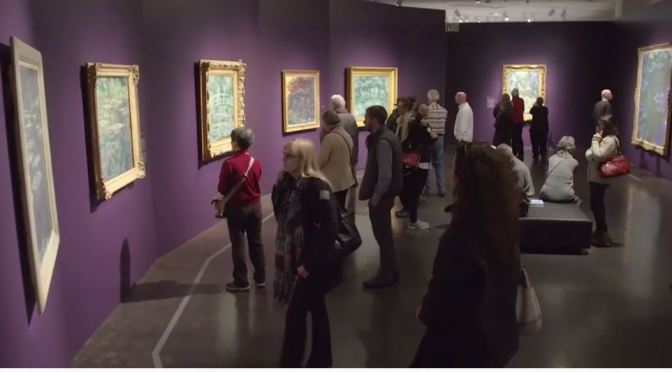
 To find out, I talked with Sarah Cucinella-McDaniel, chief registrar at the Denver Art Museum. She’s sort of like a travel agent for art — and for this exhibition she booked the itineraries for artworks from more than 70 lenders around the world: museums, as well as private collectors. (One of her recent days started unexpectedly, around 1:45 a.m., when one of her nine Monet shipments for the day arrived at the museum hours ahead of schedule.)

 and Paris and collected work by artists such as Pablo Picasso, Joan Miró, and Georges Braque.
 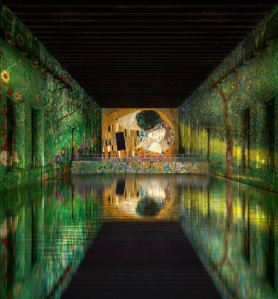 Located in Bordeaux’s former submarine base, the BASSINS DE LUMIÈRES will present monumental immersive digital exhibitions devoted to the major artists in the history of art and contemporary art. The submarine base’s surface area is three times the size of that of the Carrières de Lumières in Les Baux-de-Provence and five times that of the Atelier des Lumières in Paris.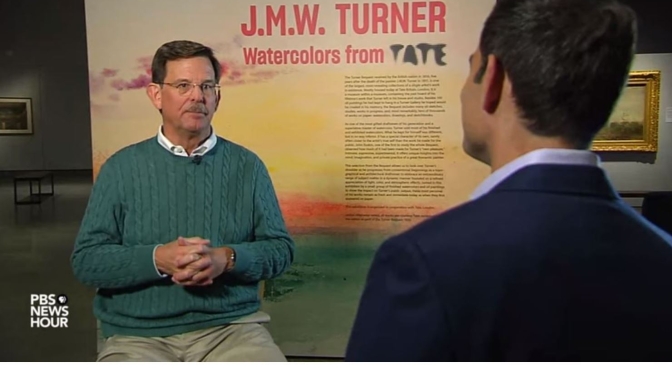

 “People want to see photography and right now there are not a lot of places to do that,” he says. Showing “the best photography in the world” remains Fotografiska’s core mission, Broman says.


 Boomers Daily