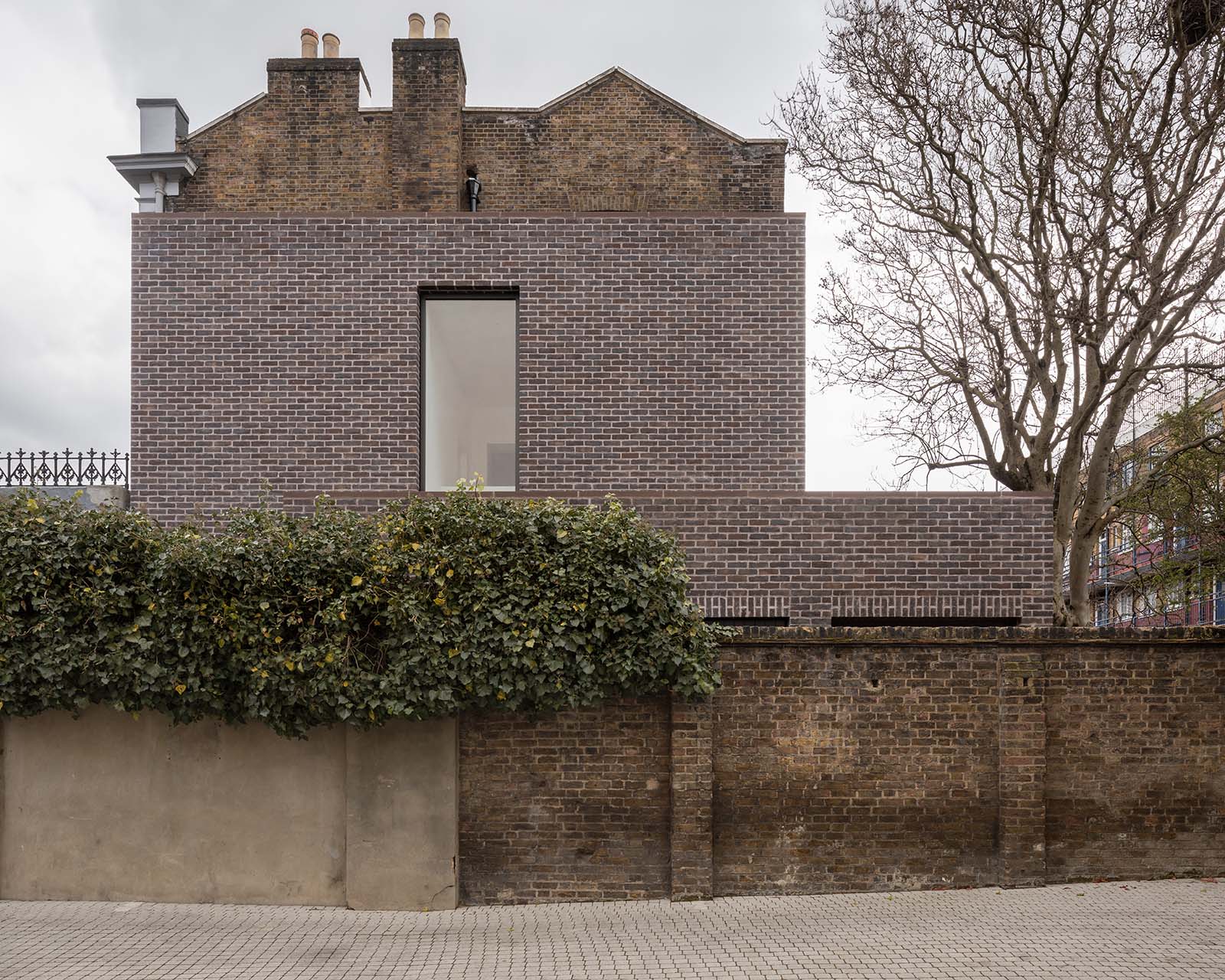
House 101 by Atelier tho.A. Photograph: Anh Chuong
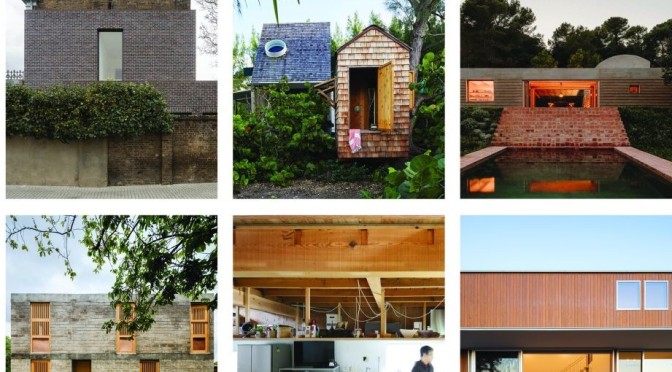
The Architectural Review – The 15 shortlisted projects include houses from all over the world, from the UK, Ireland and Spain, to Mexico, Vietnam, New Zealand and The Bahamas.
Casa Ter by Mesura. Photograph: Salva-López
The private house occupies a unique position in both the history of architecture and human imagination. Beyond its core function of shelter, it is an object of fantasy, a source of delight, a talisman and a testing ground.
Bass Coast Farmhouse by John Wardle Architects. Photograph: Trevor Mein
Blockmakers Arms by Erbar Mattes. Photograph: Ståle Eriksen
Brillhut by Brillhart Architecture. Photograph: Bill Abranowicz
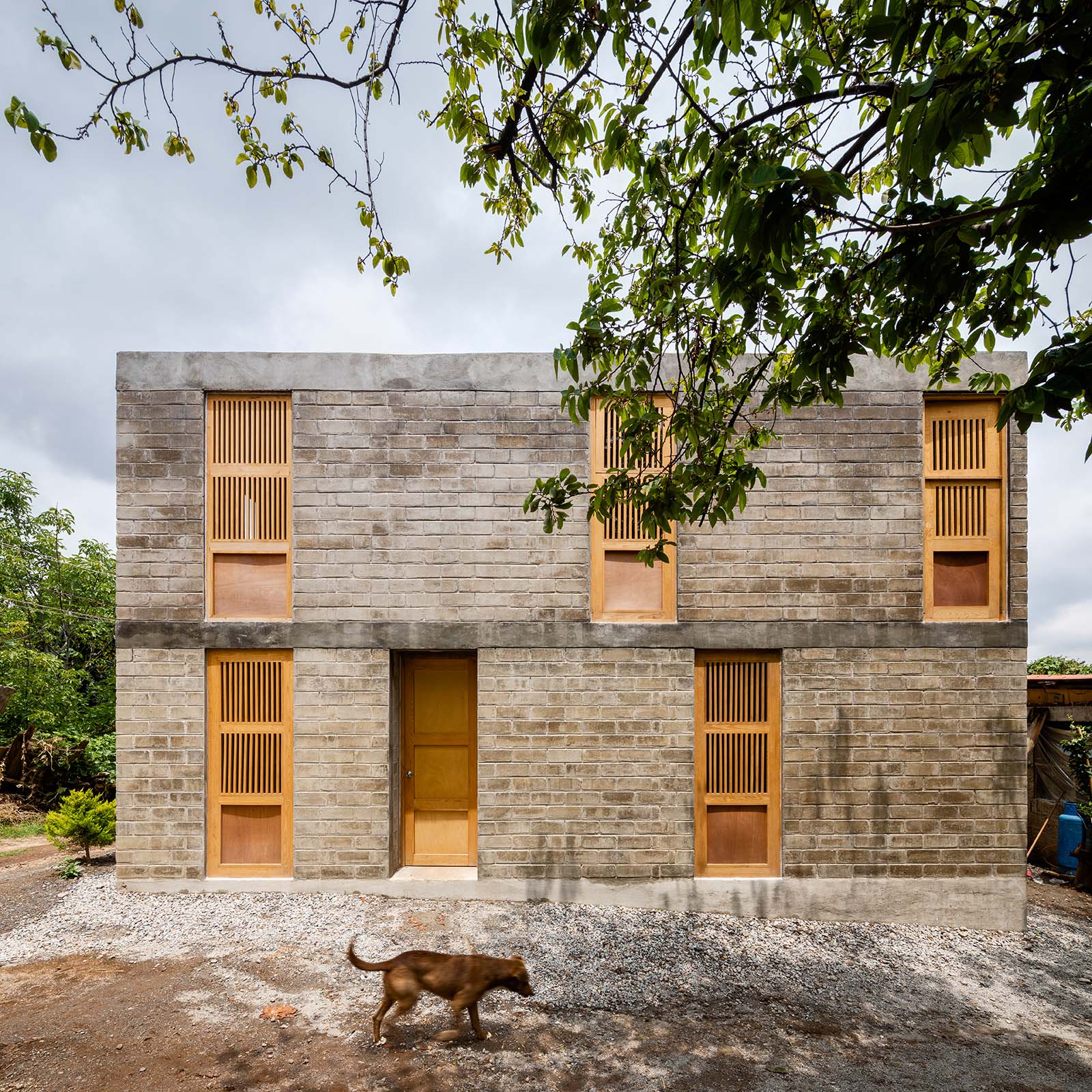
Casa Eva by Fernanda Canales Arquitectura. Photograph: Rafael Gamo
Situated within the Surrey Green Belt in Hampshire, the sustainable three-bedroom house responds to its surrounding natural environment and creates minimal visual impact. Aggregate foundations, locally sourced flint, and a CLT timber structure shape the contemporary design, blending it harmoniously into its picturesque setting, and also proving that it’s possible to recycle, re-source, and reduce impact in construction.
Japanese designer Yuma Kano has creatively worked with forest debris to create ForestBank, a new type of wood that looks to minimise waste.
This pioneering material design makes use of debris from the forest floor that would normally be considered worthless for furniture construction. Formed out of small trees, foliage, bark, seeds, and soil, ForestBank seeks to determine the full value of our local woodlands and in turn it creates an artistic and aesthetically pleasing material out of unutilised debris.
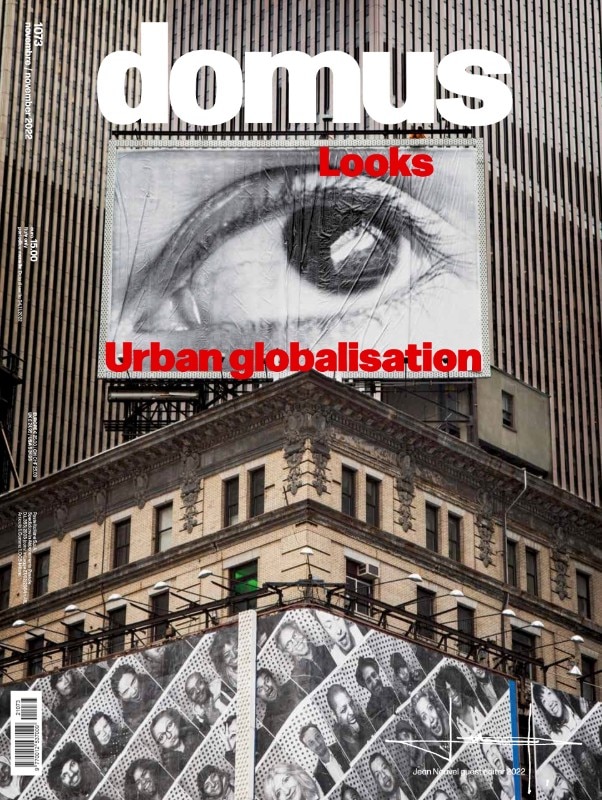
The November issue of Domus, the latest edited by Guest Editor Jean Nouvel, focuses on urban globalization and its relationship with architecture. In his concluding Editorial, the French Pritzker Prize winner tackles the issue by writing about the right to live well that is being challenged by a world that is cloning itself.
“Living well is fundamental to everyone’s life. It is the starting point: without a happy living space, nothing can prosper. Urban globalization is the result of selfishness with no awareness of the immediate future, of a general absence of empathy”. This is followed, again edited by Jean Nouvel, by a selection of fragments from the book Dériville by Bruce Bégout, an essay on the thought of Guy Debord and the imaginative work of the Situationists.
This is followed in the Essays by Tom Avermaete, Professor of the History and Theory of Urban Design at ETH Zurich, and Michelangelo Sabatino, Professor at the College of Architecture of the Illinois Institute of Technology in Chicago, tracing a history of the global in relation to architecture and the city.
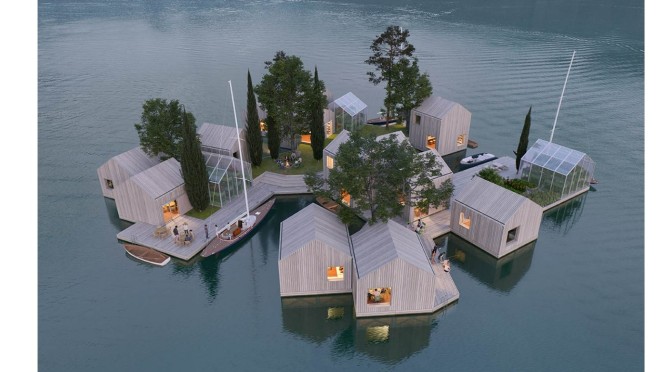
The system is based on simple flat pack modules made from recycled reinforced polymer. These are extremely strong and resilient and can be easily transported and assembled on location
The modules can be assembled in different configurations to provide floating foundations for floating infrastructure, public spaces or housing.
A growing acknowledgement of sea level rise and an increased risk of urban flooding has contributed to a sharp increase in interest in building on water, but current solutions, including polystyrene filled concrete foundations and plastic pontoons are inflexible, difficult to transport and highly unsustainable.
MAST has envisioned a new system of simple of flat-packed modules made from recycled reinforced plastic, that can be easily transported around the globe and assembled into countless configurations, providing a secure floating foundation. The system offers a sustainable and highly flexible solution for building almost anything on the water; from floating houses in Seattle, to floating campsites on Oslo fjord, to saunas on Hobart’s riverfront.
The system was inspired by gabion construction, an ancient technology which utilises mesh cages filled with rubble to create extremely sturdy, low cost foundations. In this case the concept is inverted; and the modular ‘cages’ are filled with locally sourced, up-cycled floatation supporting the weight of any structure built on top. they are also much more adaptable than existing solutions since floatation can be added or adjusted at any time if weight is added or shifted around above.
Land on water will provide a climate resilient and adaptable solution for the construction of new floating buildings worldwide but could also lead to an entirely new type of dynamic and organic off-grid floating community and an alternative to the large master-planned floating cities currently under development which repeat many of the mistakes made by urban planners in the middle of the 20th century.
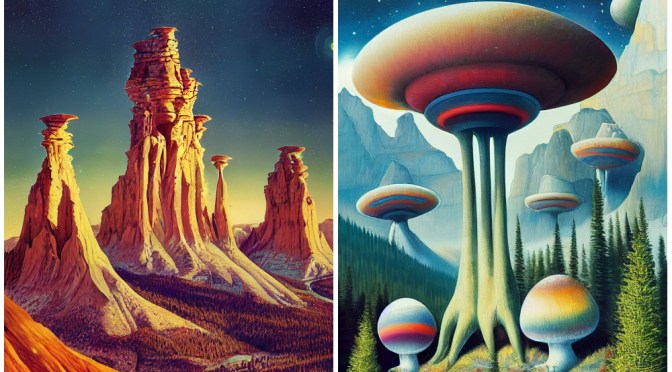
Yongwook Seong created a Sci-Fi themed architecture series (Title: Banff Extraterrestrial Park) by experimenting AI-generated images via Midjourney. The project unfolds from Extraterrestrial 006 visiting Banff and terraforming it to construct a tourist park as part of the Earth revitalization project.
During research, 006 saw Mycelium fungi as an ideal local building material, experimenting it with their stardusts. Sky lounges grow themselves at the extraterrestrial-level strength and stability.
High-Rise Hoodoos became one of the main attractions at Banff Extraterrestrial Park.
Stardust drones are constructing (Ex) terrestrial town. These drones are autonomous builders under the direction of Extraterrestrial Architect.
Yongwook Seong [ joŋuk sʌŋ ] is a designer, holding a Master of Architecture degree from University of British Columbia, Vancouver. His interest lies in various fields including architecture, furniture design, lighting design, visual arts and etc. He lives in Banff, AB, Canada.
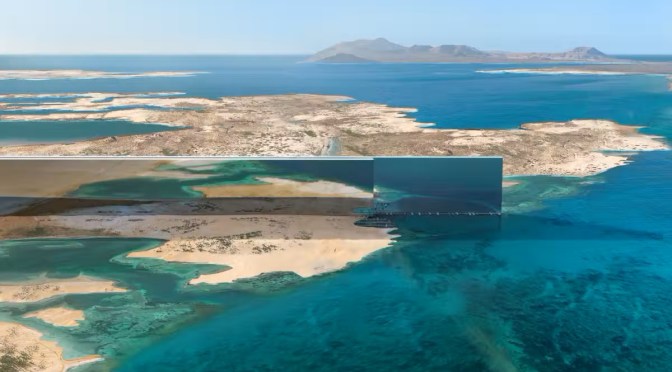
The Line is a proposed smart linear city in Saudi Arabia in Neom, Tabuk, currently under construction, which is designed to have no cars, streets or carbon emissions.
The Line is being described as a one-building vertical city outfitted with exterior mirrors, big enough to house 9 million people — along with everything they need, from parks and waterfalls to flying taxis and robot maids. There are even plans to include an artificial moon for residents to gaze upon.
With its proposed width of only 656 feet, The Line will rely primarily on its height to encompass its residents and a host of modern trappings, such as a high-speed rail to connect sections of the 106-mile city. Saudi Arabian officials claim The Line will be otherwise devoid of roads, cars or emissions and will be powered strictly by clean energy (although details have not been released). Here are a few of most notable proposed features of The Line:
Treehotel has revealed its eighth experimental retreat called Biosphere, which is suspended between two trees and wrapped in a façade of 350 birdhouses.
Designed by BIG in collaboration with Swedish ornithologist Ulf Öhman, the boutique hotel room is designed to immerse guests in nature and to help facilitate the conservation of the local bird population. The 34-square-metre glazed cube is surrounded by a metal grid that supports the timber-made birdhouses of various sizes, and creates its spherical form.
As the soothing colours of its interior spill into the garden space, Turramurra Threads feels deliberately nestled into its outdoor complement. Crafted by Benn + Penna, the calming family house is filled with a sense of peace resulting from its understated design.
Video timeline:00:00 – An Introduction to the Calming Family House 00:30 – Location of the Home 00:43 – The Clients of the Project 01:23 – The Original House 01:51 – The Architects Brief 02:05 – Connecting the House to the Garden 02:25 – Using a Neutral Palette and Natural Materials 03:14 – The Importance of Light in the House 03:45 – The Large Skylight 04:07 – The Arch in the Living Room 04:24 – The New Extension of the Home
Surrounded by charming heritage builds on the northern outskirts of Sydney, Turramurra Threads reimagines an existing Victorian construction. The design brief called for the historic front windows and delicate ceiling detail of the calming family house to be retained whilst an extension be added to the rear, celebrating established architecture in unison with modern amenity.
Featuring the original façade, the calming family house captures a simple spatial plan, directing residents from the old structure into the new. A secondary living space and master bedroom sits perpendicular to the entrance corridor, which leads onto three bedrooms and a study. Beyond, the extension forms a primary living pavilion, opening at its far end to reveal the garden. Rays of sunlight penetrate the calming family house from three points of entry, indicating a studious approach to natural lighting and building materials.
The beams enter from a small pocket garden that serves as a transparent border between the historic and additional architecture and a large skylight positioned on the southern slope of the roof. Enhancing the functionality of a heritage home, Benn + Penna creates an open interior design that engages the garden space. Turramurra Threads is built to embrace the natural surrounds, using its subtle properties to establish a calming family house.
October Project of the Month | Scarborough Béton Brut | Young Architects.
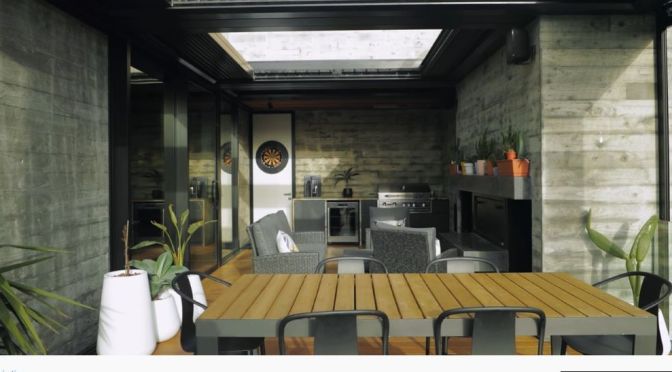
Raw concrete, extensive glazing, and timber accents dominate the design of this home nestled in the hills above Christchurch’s seaside suburb of Sumner. Perched on the edge of a dormant volcano on a 30 degree slope, the form hasn’t been compromised. The structure emerges from the landscape in cubed sections.

















 Boomers Daily