Category Archives: Buildings

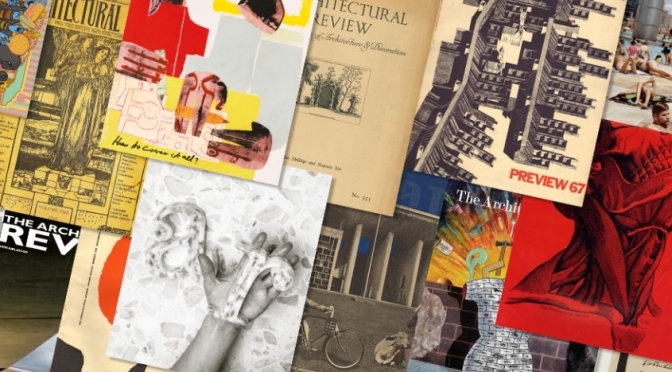
Previews: Architectural Review – April 2022

Ibavi | AAU Anastas | Taller Mauricio Rocha | Grafton | Building Beyond Borders + BC Architects and Studies | Sebastián Arquitectos | Fernand Pouillon | Dimitris Pikionis

If you have purchased an issue and are having trouble with your order, please contact our customer services team on customerservicesteam@emap.com

If you are a subscriber, digital editions of the magazine are available to read – just sign in for full access. Not a subscriber? Find out more and support the AR here

AR April 2022

‘A great deal of human history is told in stone alone’ writes Arianne Shahvisi, ’what is carved in stone is a hard, enduring message to the future’. Messages etched onto stone walls and tablets tell us of a past literally writ in stone, but the rocks we plunder from the Earth’s crust can also help us build a liveable future. The April issue of the AR examines stone as an architectural and urban material, digs into the political landscape it is extracted from and explores the weight of cultural and social meanings it holds. This issue features projects by IBAVI, Building Beyond Borders, Mauricio Rocha, Grafton Architects, Fernand Pouillon, Demetris Pikionis, and contributions by Steve Webb, Tomoki Kato, Nami Ogura, Nadi Abusaada, Perdita Phillips, Pierre Bidaud, and many, many more.

The front cover of the issue features Tito Mouraz’s Open Space Office series, where the lithic violence of stone creation is frozen and silent in the quarry, the detritus of human extraction feeble and tiny in comparison.

Stone

Keynote: Stone age, Steve Webb
Social housing, Mallorca, Spain, IBAVI, Rafael Gómez-Moriana
Foundations of empire, Arianne Shahvisi
City portrait: Jerusalem, Israel-Palestine, Nadi Abusaada
Case study: Analogy pavilion, AAU Anastas
Case study: St Mary of the Resurrection Abbey extension, AAU Anastas
Lithic love, Perdita Phillips
Museo Anahuacalli extension, Mexico City, Mexico, Taller Mauricio Rocha, Juan Carlos Cano
Rock-hewn churches in Ethiopia, Tarn Philipp
Town House, Kingston, and Marshall Building, LSE, London, United Kingdom, Grafton Architects, Stephen Parnell
Outrage: Colonial legacies of concrete, Mohamed Ismail and Caitlin Mueller
Revisit: Climat de France, Algiers, Algeria, Fernand Pouillon, Brittany Utting and Daniel Jacobs
Women’s house, Ouled Merzoug, Morocco, Building Beyond Borders + BC Architects and Studies, Lina Meskine and Anouar Ahdaf
In the Japanese rock garden, Tomoki Kato and Nami Ogura
Reputations: Dimitris Pikionis, Freddie Phillipson
Village and chapel renovations, Ruesta, Spain, Sebastián Arquitectos, Elena Lacilla Larrodé
The stonemason, Pierre Bidaud
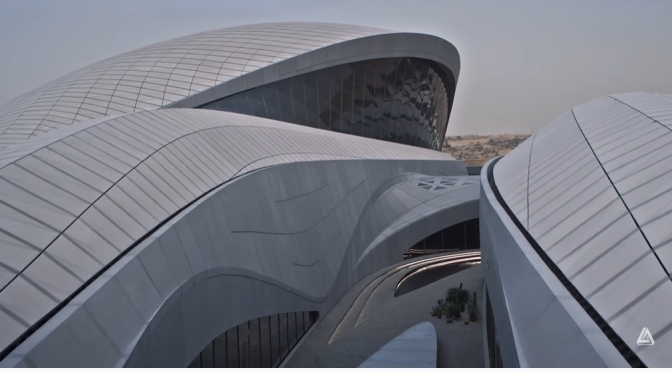
New Architecture: BEEHA Headquarters In Sharjah, UAE By Zaha Hadid (2022)

BEEAH Group’s new headquarters in Sharjah, #UAE, was opened on Wednesday, March 30 by His Highness Dr. Sheikh Sultan bin Muhammad Al Qasimi, Ruler of Sharjah.

Powered by its solar array and equipped with next-generation technologies for operations at LEED Platinum standards, the new headquarters has been designed by Zaha Hadid Architects (ZHA) to achieve net-zero emissions and will be the group’s management and administrative centre that sets a new benchmark for future workplaces…

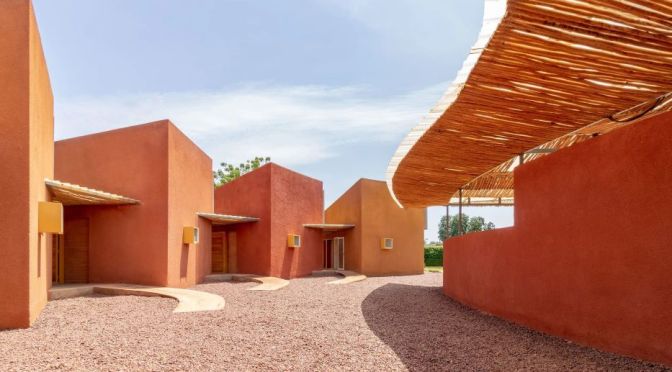
Architectural Awards: Diébédo Francis Kéré Wins The 2022 Pritzker Prize

Building Design: ‘Bicycle Factory Of The Future’

British bicycle manufacturer Brompton has unveiled plans to build a carbon-neutral headquarters and factory building designed by architects Hollaway Studio in Ashford, Kent. Envisioned by Brompton as a factory of the future, the facility will sit within an unused wetlands area that will be rewilded to become a nature reserve as part of the plans.

Architecture: Protecting Modernism (The Getty)

“You look at the thinking behind the creation of the building, but then also at the material needs. And you merge the two to really build an in-depth understanding of the building, and a path forward to preserving it.”

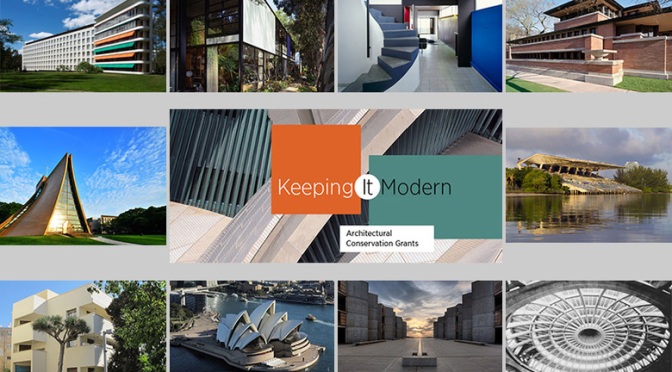
From the sculptural curves of the Sydney Opera House to the sliding walls and windows of the Eames House, the hallmarks of modern buildings make them easy to spot. Modernist architecture—with its signature use of industrial materials and innovative, sleek designs—emerged in the early 1900s and dominated the post–World War II building boom. Unfortunately, many of the iconic buildings from this period are now in serious need of repair but lack clear conservation plans due to the use of untested building methods and materials. How do you fix concrete that’s been damaged by ocean water, or remove graffiti to preserve stainless steel? In response to such dilemmas, the Getty Foundation created the Keeping It Modern initiative, an international grant program focused on the conservation of significant 20th-century architecture. Launched in 2014, Keeping It Modern has to date supported a total of 77 projects in 40 countries.

Profiles: Frank Gehry’s ‘Playful Architecture’

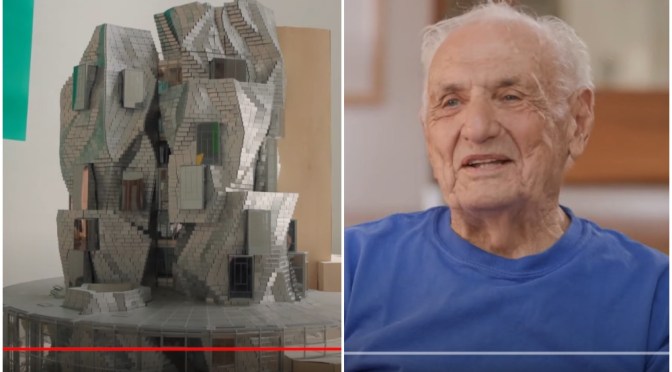
At 92, famed architect Frank Gehry is not resting on his substantial laurels. The designer behind such landmarks as the Walt Disney Concert Hall in downtown Los Angeles and the Guggenheim Museum in Bilbao, Spain, talks with “60 Minutes” correspondent Bill Whitaker about his creative process, and how aerospace technology has enabled him to turn his playful ideas into reality.

Architecture: Undulating Floor Plate Apartments In Rotterdam, Netherlands

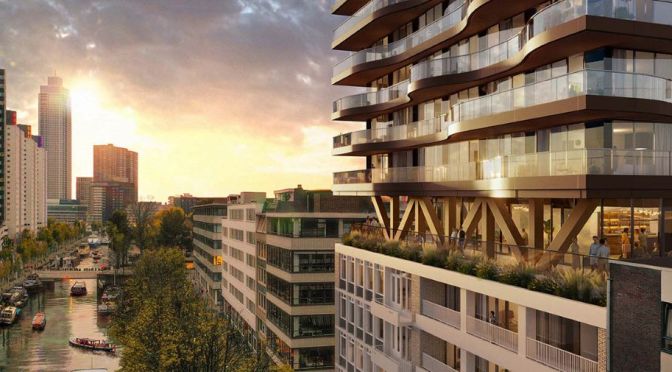
Rotterdam-based architecture studio MoederscheimMoonen Architects has revealed design for a residential tower in the city centre of Rotterdam, the Netherlands.

Called Riva, the new tower will be a residential building built on top of the existing office block, retaining the iconic reconstruction architecture of this building. The office completed the final design of the building. 

Read more

History: Quarry Bank Cotton Mill In Styal, UK

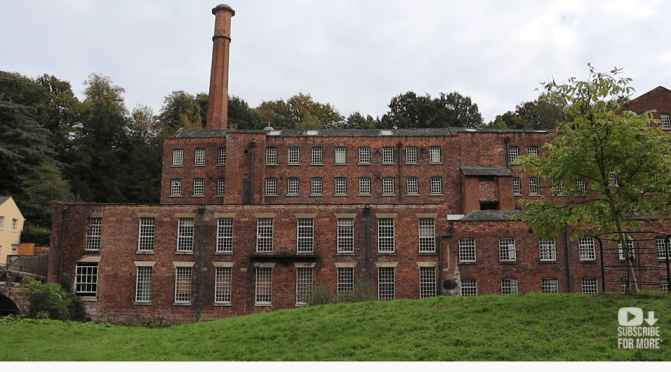
At the beginning of the Industrial Revolution Quarry Bank Mill became one of the most important Cotton Mills in England. Samual Greg embraced the Industrial Revolution to create a powerhouse of the Cotton Milling industry.

180 years after the end of the Industrial Revolution this Cotton Mill is still intact and in full working order. Maintained by the National Trust you can take a day tour of this fascinating Cotton Mill and find out about the Greg family, his workers, including children as young as 8 and the community he created in the village of Styal. You can see the machinery in operation and learn how the fluffy cotton plant is turned into a workable yarn as the volunteers run the machines and show you.

Greg built his family home on the grounds of Quarry Bank Mill, you can view the property or visit the darker side with the apprentice house, home to up to 90 children, working in the mill in return for food and board.

Timeline: 0:00 Intro 1:08 What to see at Quarry Bank 2:01 Cotton Industrial Revolution 2:25 Samual Greg builds Quarry Bank 3:32 The Great Wheel 4:09 Process to make cotton yarn 7:31 Quarry Bank House 10:26 Styal Village 11:53 Apprentice House (Child Labour) 16:44 Steam Power comes to Quarry Bank 19:02 The Gardens

Swiss Views: Streets & Buildings Of Bern (4K)

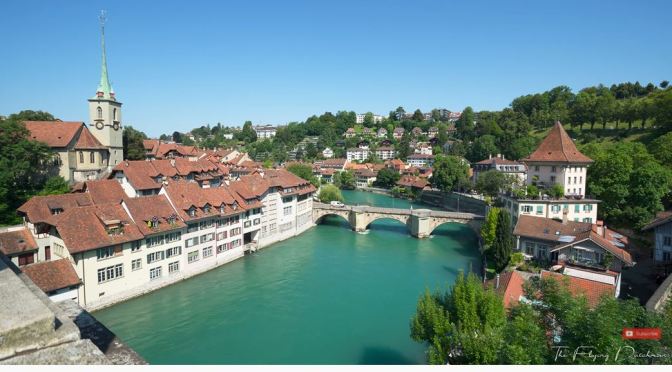
Bern, also spelled Berne, city, capital of Switzerland and of Bern canton, in the west-central part of the country. It lies along a narrow loop of the Aare River. The existence of the ancient castle of Nydegg, guarding a crossing over the Aare, probably led Berthold V, duke of Zähringen, to found Bern in 1191 as a military post on the frontier between the German-speaking Alemanni and the French-speaking inhabitants of Burgundy. After the extinction of the Zähringen dynasty (1218), Bern became a free imperial city. Gradually it extended its power by acquiring surrounding territory, becoming an independent state that in 1353 entered the Swiss Confederation, which it soon began to lead. After a devastating fire ravaged the predominantly wood-built town in 1405, Bern was rebuilt with sandstone. Although much of the surrounding metropolis has since been modernized, the centre (Old Bern) still remains intact from that period.