Mrs Dalloway by Virginia Woolf, edited by Trudi Tate. Oxford, 224 pp., £7.99, May, 978 0 19 285985 3
Ouvriers de luxe
Gustave Flaubert et Michel Lévy: Un couple explosif by Yvan Leclerc and Jean-Yves Mollier. Le Livre de Poche, 224 pp., €8.40, November 2024, 978 2 253 94112 5
Fish in the Wrong Place
Liquid Empire: Water and Power in the Colonial World by Corey Ross. Princeton, 447 pp., £35, September 2024, 978 0 691 21144 2
In Praise of Floods: The Untamed River and the Life It Brings by James C. Scott. Yale, 220 pp., £20, February, 978 0 300 27849 1
THE NEW YORKER MAGAZINE: The latest cover features Harry Bliss’s “Cannonball” – The delights of fall.
The Real Problem Is How Trump Can Legally Use the Military
Congress wrote statutes with the apparent assumption that whoever held the office of the Presidency would use the powers they granted in good faith. By Jeannie Suk Gersen
How Long Will You Live?
Smoking a cig takes twenty minutes off your life. But thinking about Rudy Giuliani’s downfall might add some time back. By Greg Clarke
Inside the Trump Administration’s Assault on Higher Education
How conservatives learned to stop worrying and love federal power. By Emma Green
What Zohran Mamdani Knows About Power
The thirty-three-year-old socialist is rewriting the rules of New York politics. Can he transform the city as mayor? By Eric Lach
Yasmina Snyder spoke to writers, poets, musicians and event organisers based in London about the connections between live music and poetry, and the spaces that host them.
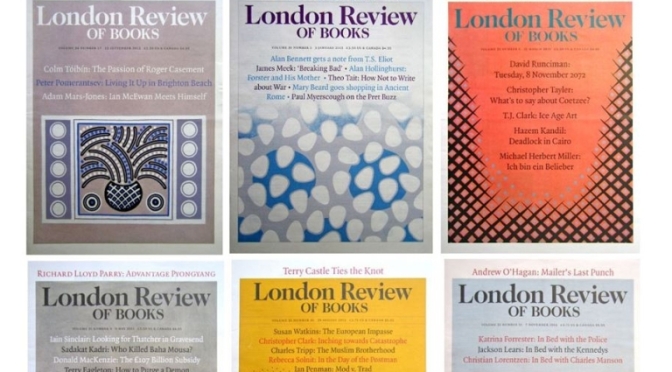
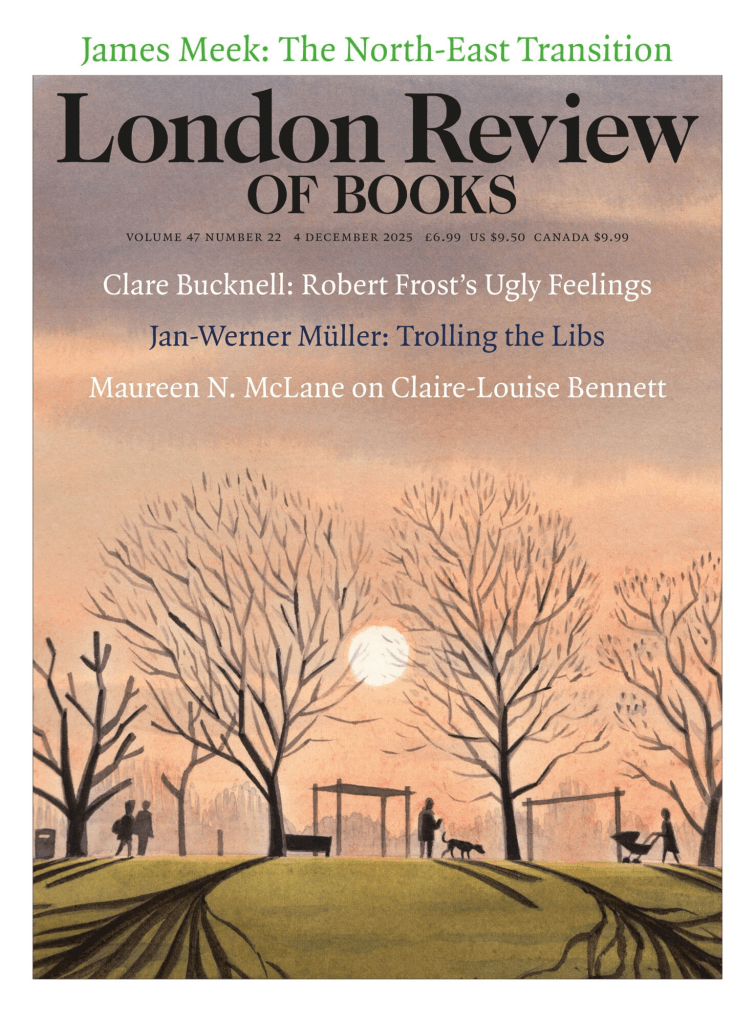
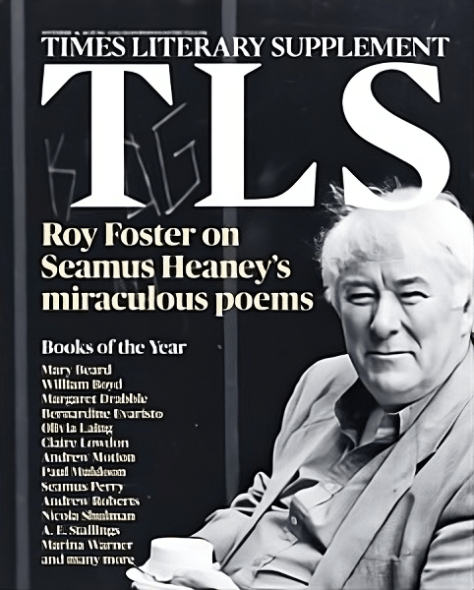
‘There’s big trouble in the world of little magazines. In the last two years, an alarming number have vanished into that second-hand bookshop in the sky. Each leaves the world a little quieter, a little poorer.’
Peace abroad and war at home? It’s an unusual note to strike in an electoral democracy. By Benjamin Wallace-Wells
Before Kimmel, the Smothers Brothers Ate It
President Nixon got the brothers’ variety show cancelled after they wouldn’t let up on Vietnam. In the wake of the new late-night wars, Dick Smothers is having flashbacks. By Bruce Handy
The Prime Minister Who Tried to Have a Life Outside the Office
As the thirtysomething leader of Finland, Sanna Marin pursued an ambitious policy agenda. The press focussed on her nights out and how she paid for breakfast. By Jennifer Wilson
The Hague on Trial
The chief prosecutor has obtained warrants against Israeli leaders for war crimes—but faces allegations of sexual misconduct. By David D. Kirkpatrick
THE WEEK IN ART (October 2, 2025): The latest episode feature a new exhibition at the Fitzwilliam Museum in Cambridge, UK, called Made in Ancient Egypt, reveals untold stories of the people behind a host of remarkable objects, and the technology and techniques they used.
The Art Newspaper’s digital editor, Alexander Morrison visits the museum to take a tour with the curator, Helen Strudwick. One of the great revelations of the past two decades in scholarship about women artists is Michaelina Wautier, the Baroque painter active in what is now Belgium in the middle of the 17th century. The largest ever exhibition of Wautier’s work opened this week at the Kunsthistorisches Museum in Vienna, and travels to the Royal Academy of Arts in London next year.
Ben Luke speaks to the art historian who rediscovered this extraordinary painter, Katlijne Van der Stighelen, who has also co-edited the catalogue of the Vienna show. And this episode’s Work of the Week is Robert Rauschenberg’s Bed (1955), one of the most important works of US art of the post-war period. It features in the exhibition Five Friends: John Cage, Merce Cunningham, Jasper Johns, Robert Rauschenberg, Cy Twombly, which this week arrives at the Museum Ludwig in Cologne.
We speak to Yilmaz Dziewior, the co-curator of the exhibition.
Made in Ancient Egypt, Fitzwilliam Museum, Cambridge, UK, 3 October-2 April 2026
Fights about digital filtering tools have turned more and more bitter. That’s because of their extraordinary power to shape both political opinion and mass culture.
Invisible Rulers: The People Who Turn Lies into Reality by Renée DiResta
Character Limit: How Elon Musk Destroyed Twitter by Kate Conger and Ryan Mac
Filterworld: How Algorithms Flattened Culture by Kyle Chayka
Shadow Ticket is brisker than Thomas Pynchon’s other work, but it’s full of his usual vaudevillian sensibility, and it addresses his favorite theme: how to live freely under powerful systems of control.
APOLLO MAGAZINE: The latest issue features Hew Locke and the Empire’s new clothes | Princeton University Art Museum reopens | William Hogarth’s bedside manner | the many faces of Nigerian modernism
Pico’s Oration contravenes the very idea of human possibility that we think the Renaissance is about – yet we think of the Renaissance this way partly because of a centuries-long misreading of it. In which case, does Pico really belong to the Renaissance? Or is our whole idea of the Renaissance hopelessly flimsy, nothing but a collection of fantasies about what it means to be modern and human?
From Macmillan to Wilson to Heath to Thatcher to Major to Blair to Cameron, a succession of prime ministers persuaded themselves that their country was somehow different from the rest: it could pick and choose from the menu of European options in the way that suited it best. They were all mistaken.
For all the fluency and synthetic friendliness of public-facing AI chatbots like ChatGPT, it seems important to remember that existing iterations of AI can’t care. The chatbot doesn’t not care like a human not caring: it doesn’t care like a rock doesn’t care, or a glass of water. AI doesn’t want anything. But this is bound to change.