
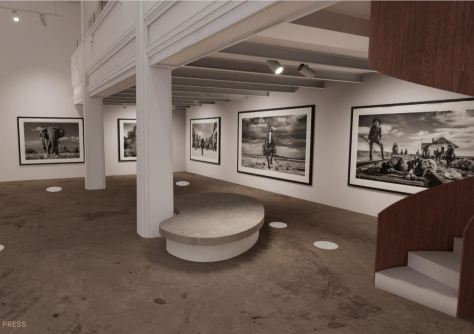
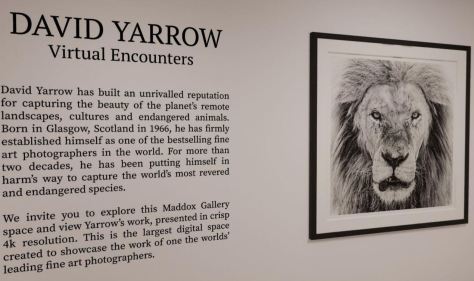
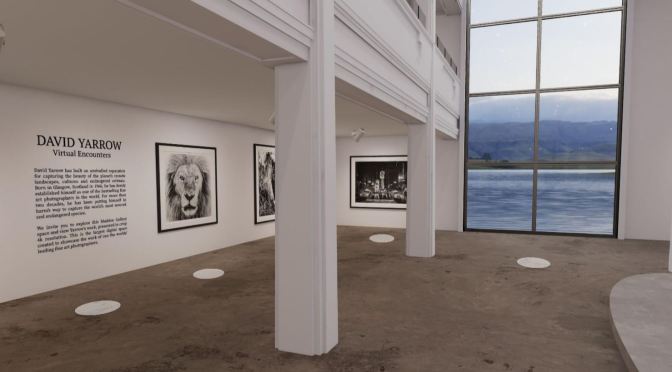
David Yarrow is a British fine-art photographer, conservationist and author. He has travelled to isolated locations to capture images of wildlife, indigenous communities and landscapes. He currently lives in London.
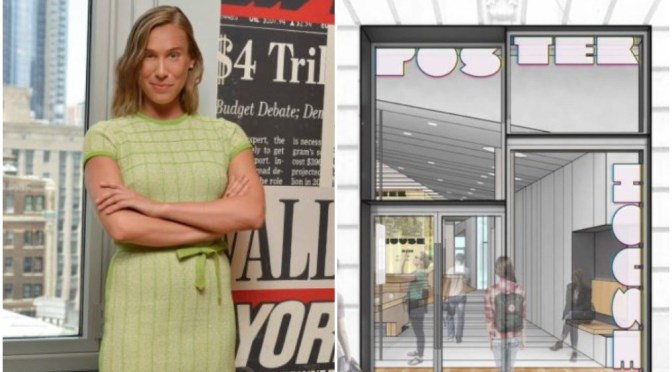
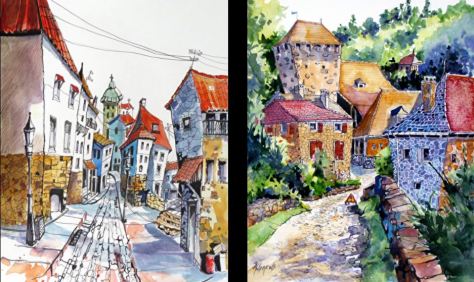
 When New York City’s Poster House museum had to close its doors in early March, director Julia Knight wondered how the institution could support the city.
Today her inspiring solution can be seen across all five boroughs.
Poster House is the first museum in the United States dedicated exclusively to posters.
Through exhibitions, events, and publications, Poster House presents a global view of posters from their earliest appearance in the late 1800s to their present-day use. Poster House takes its mission from the medium, aiming to engage and educate all audiences as we investigate this large-format graphic design and its public impact.
Posters explore:
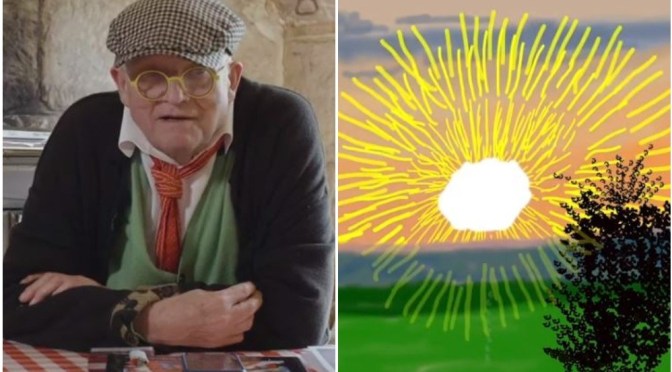
In this short and uplifting video, the influential British painter David Hockney talks about looking and painting for more than 60 years – and shares a story that made him reflect on our time.
“The world is very, very beautiful if you look at it. But most people don’t look very much. They scan the ground in front of them so they can walk, but they don’t really look at things incredibly well, with intensity. I do, and I’ve always known that.” In March 2020, Hockney sent out his iPad drawing ‘Do Remember They Can’t Cancel the Spring’ (2020) in response to the coronavirus outbreak. In this video, he shares the story of how a philosopher on a news program was asked how he could be optimistic with the current news: “And he said: Well, that’s television. Bad news sells.” The reporter then inquired what the good news was, to which the philosopher responded: “Well, the arrival of spring,” Hockney continues laughing.

In the video, you also get to experience the world premiere of an animation technique, which Hockney himself calls “time-based brush painting.”
David Hockney (b.1937) is a British painter, printmaker, photographer and stage designer, who is considered among the most influential and versatile British artists of the 20th century. Hockney is a notable contributor to the pop art movement in Britain, both in its foundation and growth, beginning with his participation in an annual exhibition called ‘Young Contemporaries’ in 1960, which also marked the start of his recognition in the art world. Hockney is the recipient of several prestigious awards including the Praemium Imperiale for Painting (1989), and the Lifetime of Artistic Excellence Award (Pratt Institute) in 2018.
His work can be found in numerous collections worldwide, including National Gallery of Australia in Canberra, National Portrait Gallery and Tate Gallery in London, Museum of Modern Art and Metropolitan Museum of Art in New York, Centre Pompidou in Paris, De Young Museum in San Francisco, Louisiana Museum of Modern Art in Humlebæk, and Museum of Contemporary Art in Tokyo.
David Hockney was interviewed by Marc-Christoph Wagner at his home in France in March 2019.
Many thanks to David Hockney for providing the works and the animation shown in the video. Camera: Jakob Solbakken Edited by Roxanne Bagheshirin Lærkesen Produced by Marc-Christoph Wagner Copyright: Louisiana Channel, Louisiana Museum of Modern Art, 2020 Supported by Nordea-fonden
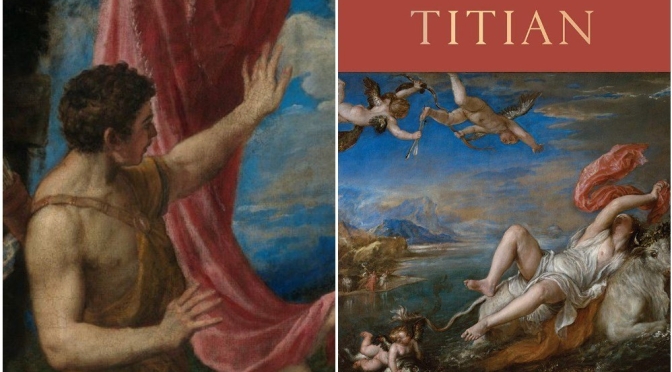
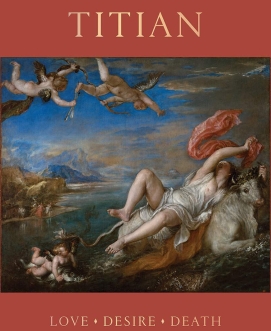 Titian (active 1506–1576) produced a masterful group of paintings for Philip II of Spain, celebrating the loves of gods, goddesses, and mortals. Depicting scenes from Ovid’s narrative poem Metamorphoses, Titian named them “poesie” and considered the works as visual equivalents of poetry.
This volume presents a detailed study of the complete series—Danaë, Venus and Adonis, Perseus and Andromeda, Diana and Actaeon, Diana and Callisto, and The Rape of Europa, as well as The Death of Actaeon—lavishly illustrated with details of these emotionally charged paintings. The book explores Titian’s creative process and technique, in addition to his use of literary and visual sources and his correspondence with Philip II.
The artistic legacy of the series for later European painting is also examined in the works of artists such as Rubens, Velázquez, and Rembrandt. Offering the most comprehensive overview of these remarkable works, Titian: Love, Desire, Death is an indispensable resource for scholars and admirers of Renaissance painting.
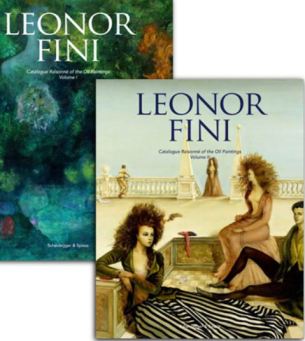 Leonor Fini (1907–96) is one of the most important artists and personalities of the twentieth century. Her work came to prominence as part of the 1936 exhibition Fantastic Art, Dada and Surrealism at New York’s Museum of Modern Art, where her paintings were widely celebrated for their uniquely female approach to surrealism—although Fini never joined the surrealist movement.
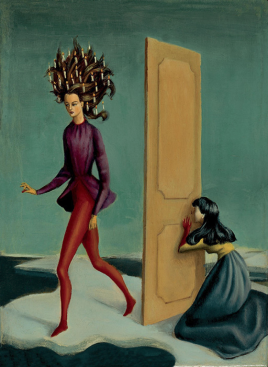 Self-made and self-taught, she preferred to work on her own and was known for her fierce independence and provocative panache. A prolific painter, Fini also wrote, worked extensively in book illustration and printmaking, and designed for plays, ballets, operas, and film.
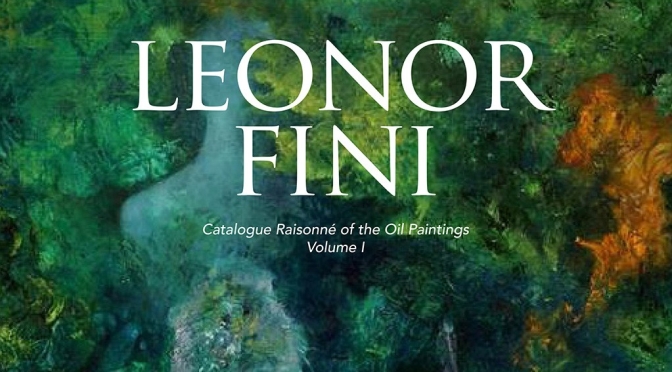
Presenting the definitive catalogue raisonné of Leonor Fini’s more than 1,100 oil paintings, this book brings together more than one thousand color illustrations and essays on her work by Fini experts Richard Overstreet and Neil Zukerman and a concise, up-to-date biography by British art historian Peter Webb.
Richard Overstreet is an American artist and photographer. In 1998, he founded the Leonor Fini Archives in Paris.
Neil Zukerman is the owner of the CFM Gallery in New York. He is an expert of Leonor Fini’s work and author of several books about her.
Peter Webb is an art historian and has published extensively on art and artists of the 20th century. He formerly taught at the Coventry College of Art, the Hornsey College of Art and the Middlesex University in London.
Leonor Fini (1907- 1996) was an Argentinian surrealist painter, designer, illustrator, and author, known for her depictions of powerful women.
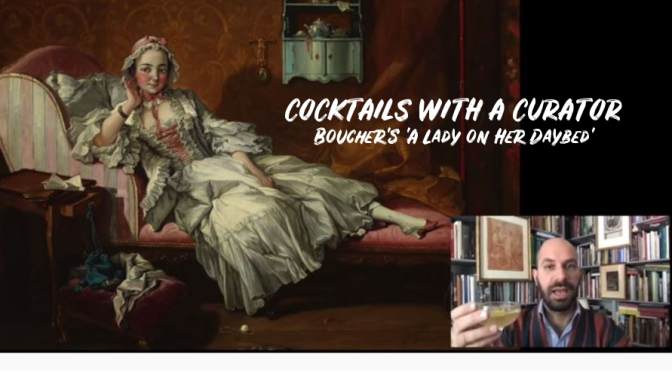
In this episode of “Cocktails with a Curator,” Xavier F. Salomon, Peter Jay Sharp Chief Curator, examines the life and work of French painter François Boucher, with a focus on “A Lady on Her Daybed.” Discover why Boucher was said to epitomize the taste of the eighteenth century.
This week’s complementary cocktail has a kick: the potent French 75, named after the powerful French 75mm field gun.
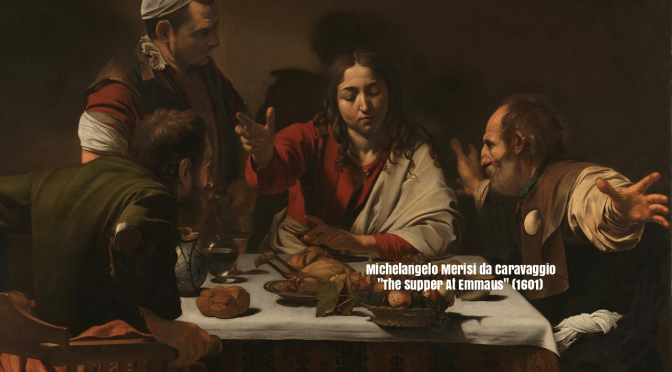
 Michelangelo Merisi da Caravaggio is one of the most admired painters of the late 16th and early 17th centuries. Known for his powerful, dramatically lit compositions, Caravaggio depicted violence and the human form with a degree of realism unprecedented at the time. He was among the most famous painters in Rome—but not only because of his skill as an artist.
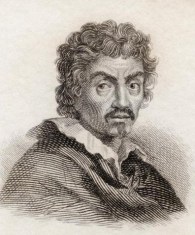 Caravaggio was also notorious for his wild life and shocking temper. After being sentenced to death for murder, he fled Rome and died in exile at age 38 . Three biographies written in the decades after his death constitute nearly all that is known about the enigmatic artist.
In this episode, Getty curator and expert on Italian painting Davide Gasparatto discusses Caravaggio and the role these early biographies, by Giulio Mancini, Giovanni Baglione, and Giovanni Pietro Bellori, played in defining Caravaggio’s legacy.
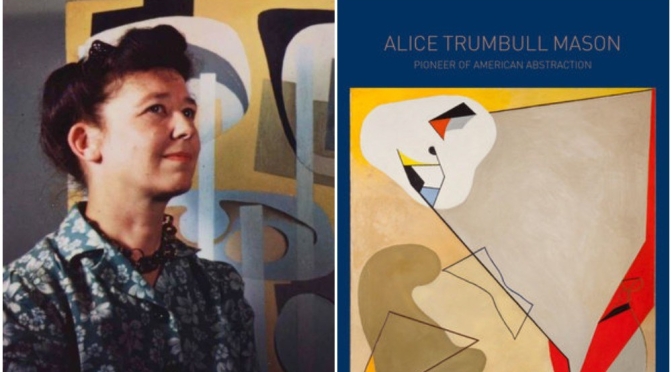
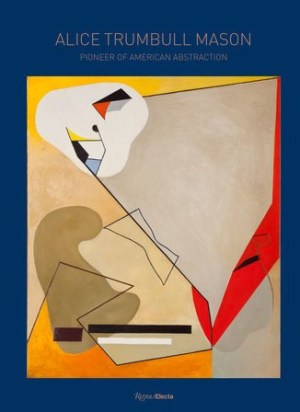 The first comprehensive publication exploring the life and art of pioneering American abstract artist Alice Trumbull Mason is perfect for audiences eager to discover unsung yet brilliantly talented women artists.
A groundbreaking artist, Alice Trumbull Mason (1904-1971) was one of the earliest painters of the twentieth century to embrace abstract painting in America. Mason’s early paintings have been compared to those of Gorky, Kandinsky, and Miró, and in 1936 she became a founding member of the American Abstract Artists (AAA) and one of its leaders in the promotion of abstract work by artists such as Josef Albers, Ad Reinhardt, Piet Mondrian, and many others. Mason was a true artist’s artist whose efforts helped lead to the great movements of later twentieth-century art, such as Abstract Expressionism, Pop Art, Post-Modernism, and Conceptual Art.
 Alice Trumbull Mason features essays that illuminate and contextualize the artist’s multifaceted work and personal life through her paintings, prints, poetry, and letters. The book reveals the full life story of a seminal abstractionist, making a sound argument for adding her to the annals of great twentieth-century artists.
 Boomers Daily