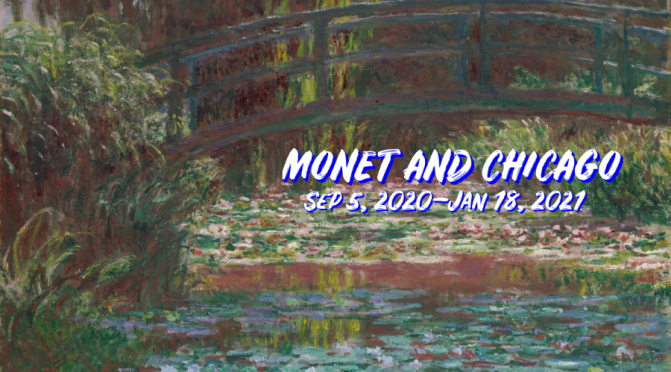
Monet And Chicago Sep 5, 2020–Jan 18, 2021
Learn how the changes Monet made to this painting captured the seaside town he remembered from his youth rather than the tourist destination it had since become.

Learn how the changes Monet made to this painting captured the seaside town he remembered from his youth rather than the tourist destination it had since become.
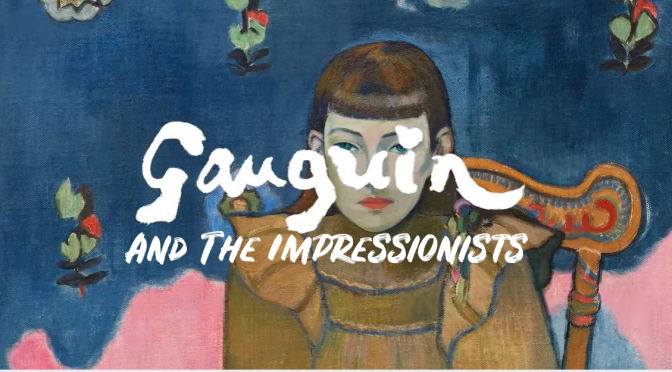
Step into our galleries to experience ‘Gauguin and the Impressionists: Masterpieces from the Ordrupgaard Collection’. Explore the carefully curated collection of Wilhelm and Henny Hansen, who utilised their exceptional eye for quality to assemble works by Renoir, Monet, Degas, Morisot, Manet and Pissarro among many others.
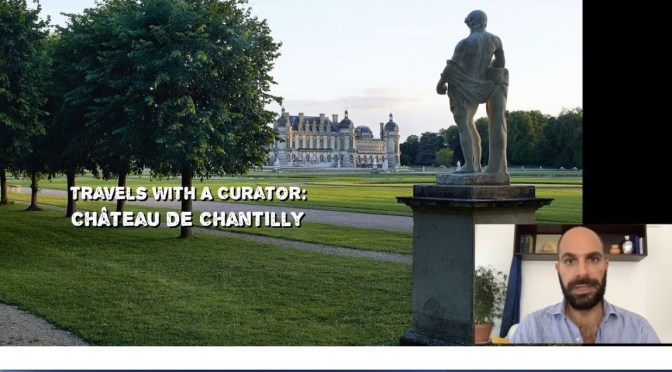
In this week’s episode of “Travels with a Curator,” Deputy Director and Peter Jay Sharp Chief Curator Xavier F. Salomon takes viewers on a journey through the grand halls of the Château de Chantilly, one of his favorite places in France. Like the Frick, Chantilly began as an opulent residence and was once the home of the Grand Condé, a cousin of Louis XIV. Today, the château houses one of the best collections of European paintings in France as well as the world-famous illuminated manuscript “Très Riches Heures du Duc de Berry.” Watch closely for a guest appearance by Jadwiga, Xavier’s kitten.
The Château de Chantilly is a historic French château located in the town of Chantilly, Oise, about 50 kilometres north of Paris.
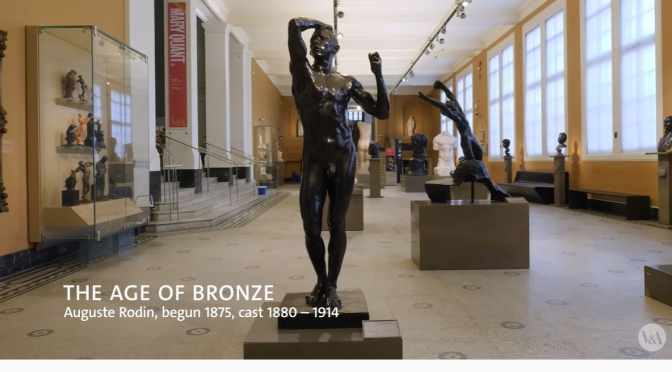
The V&A holds 23 sculptures by French sculptor Auguste Rodin. Between the 1870s and the 1890s he came to challenge traditional notions of beauty and appropriateness – and paved the way for modern sculpture.
This film, presented by V&A curator Alicia Robinson, shows in detail 6 works by Rodin – exploring his earlier work inspired by classical sculpture, Michelangelo and Donatello, and his development into spectacular explorations of patina, light and emotion.
In 1914 Rodin gave his work to the V&A as a symbol of the friendship between the people of France and Great Britain.
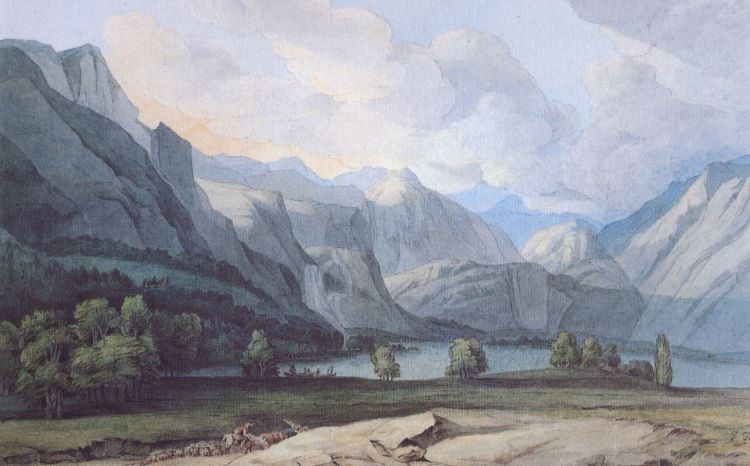
NEWSTATESMAN (August 26, 2020) – Towne (1739-1816) was born on the fringes of London and apprenticed to a coach painter, a skill that demanded the type of precise brushwork that was to become evident in all his later work. He went on to study at William Hogarth’s St Martin’s Lane Academy, Britain’s foremost school of art prior to the establishment of the Royal Academy in 1768. By a quirk of geography, the greatest British landscapist and fellow chronicler of the Lake District, JMW Turner, would be born just 100 yards away in 1775.
In 1780 he made a lengthy drawing trip to the Continent but it wasn’t until 1786 that he visited the Lake District. He proved indefatigable, making 100 drawings and watercolours over the course of two weeks: he often put brief details on the back of his work (“½ past 7 O clock/The sky a Clear warm light/mountains a solemn purple tint/the Lake reflecting the sky, the/Sun in the picture”) and so we know that on 17 August alone, for example, he made seven drawings.
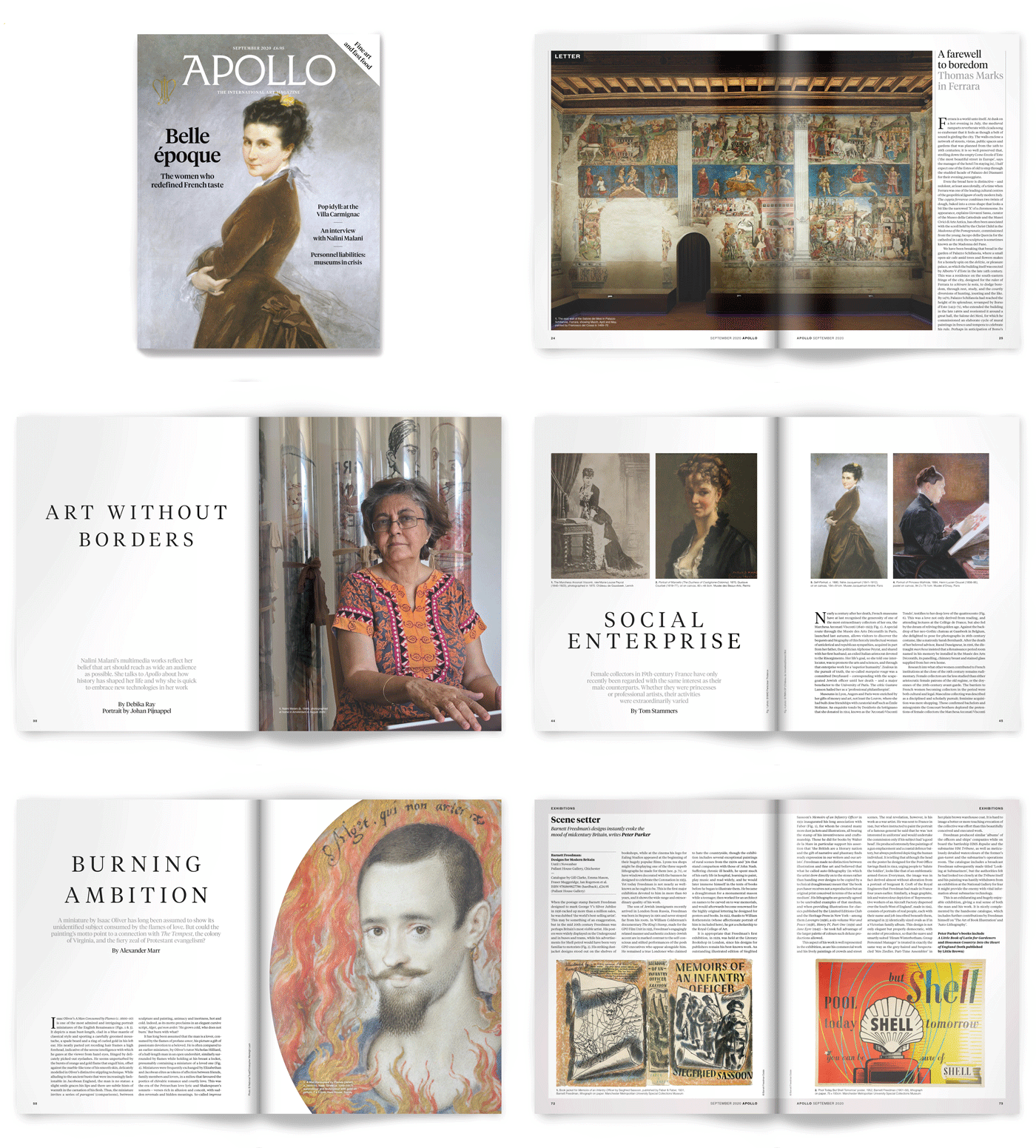
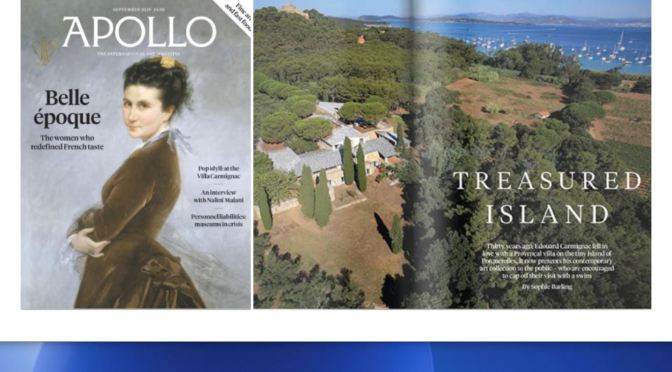
| INSIDE THE ISSUE |
| FEATURES | Tom Stammers on women collectors in 19th-century France; Nalini Malani interviewed by Debika Ray; Alexander Marr puzzles over Isaac Oliver’s most mysterious portrait; Sophie Barling visits the Villa Carmignac; Thomas Marks on fast food and fine art |
| REVIEWS | Peter Parker on Barnett Freedman at Pallant House; Caroline Bugler on Cranach at Compton Verney; Tom Fleming on Bill Brandt and Henry Moore at Hepworth Wakefield; Michael Hall on Edwardian houses; Clare Bucknell on visual traces of the English Civil War; Cora Gilroy-Ware on neoclassical style |
| MARKET | Jo Lawson-Tancred on museums and online shopping; and the latest art market columns from Emma Crichton-Miller, Susan Moore and Samuel Reilly |
| PLUS | Thomas Marks visits the Palazzo Schifanoia in Ferrara; Paul Rennie on public information posters and the pandemic; Otto Saumarez Smith condemns plans to destroy Coventry’s post-war architecture; Gareth Harris and Matt Stromberg investigate mass layoffs at museums; Robert O’Byrne on Venice in peril |
In this week’s episode of “Cocktails with a Curator,” Curator Aimee Ng explores the history behind one of the audience favorites at the Frick, Jean-Auguste-Dominique Ingres’s “Comtesse d’Haussonville.” Sometimes referred to as the “poster girl” of The Frick Collection, the subject of this celebrated portrait led a fascinating life, taking piano lessons from Chopin and writing biographies of Lord Byron and the Irish revolutionary Robert Emmet. (She published the books anonymously to avoid a scandal.) This week’s complementary cocktail calls for an ounce of absinthe, an anise-flavored spirit invented in Switzerland, the country of her birth.
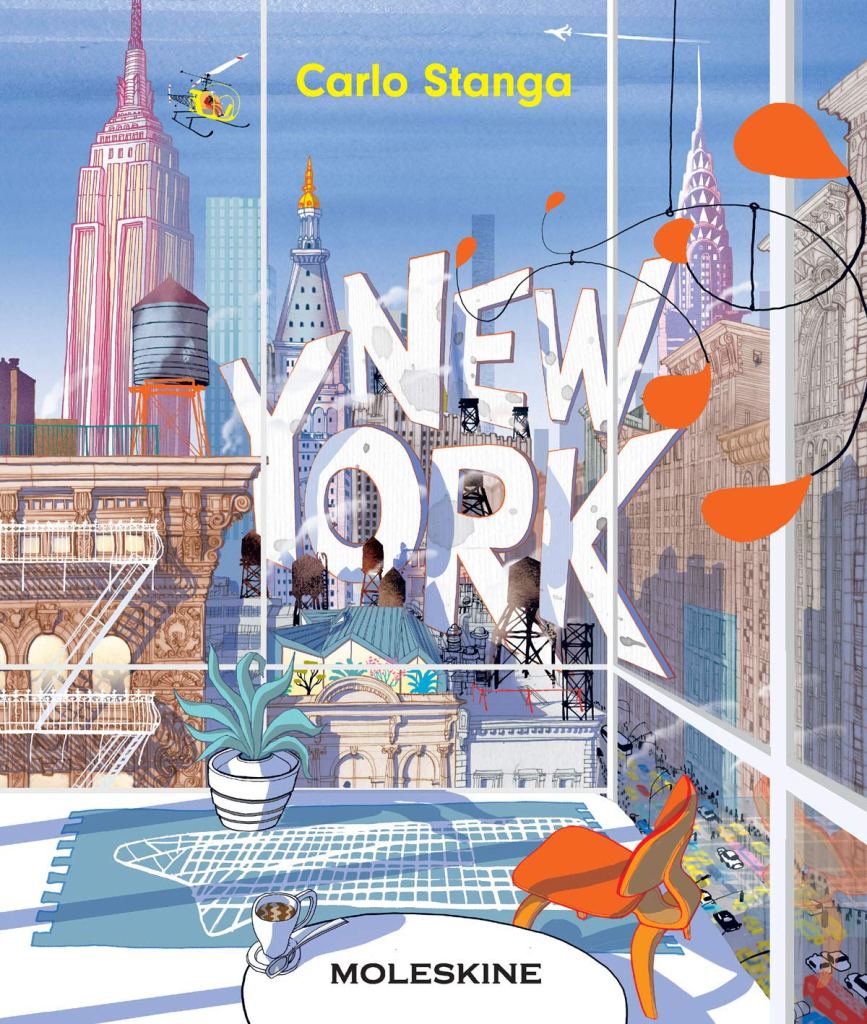
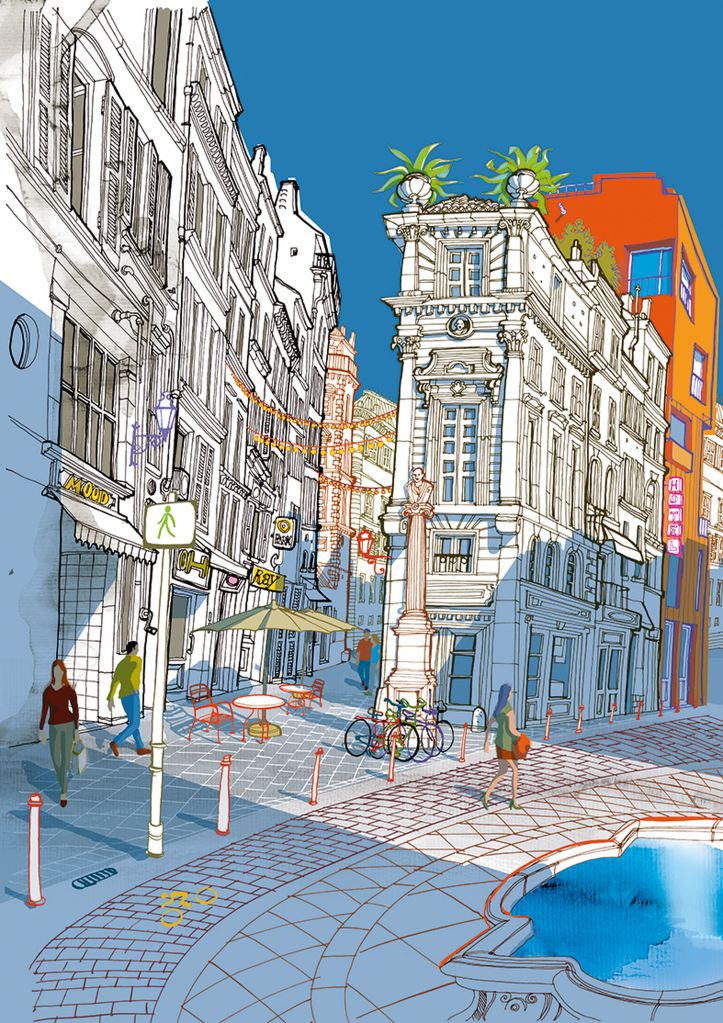
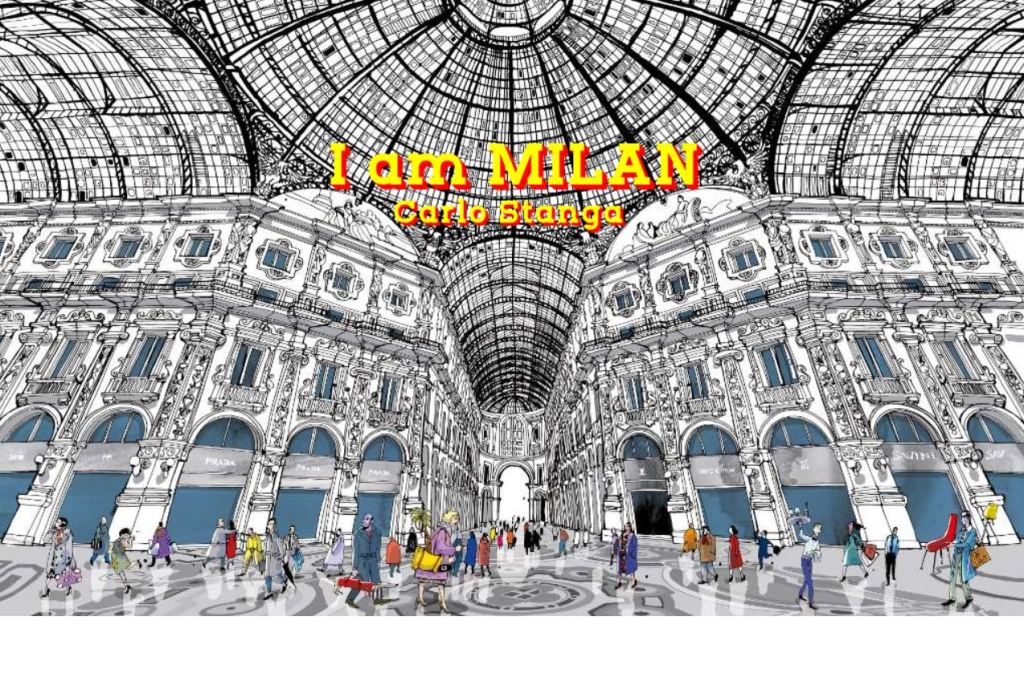
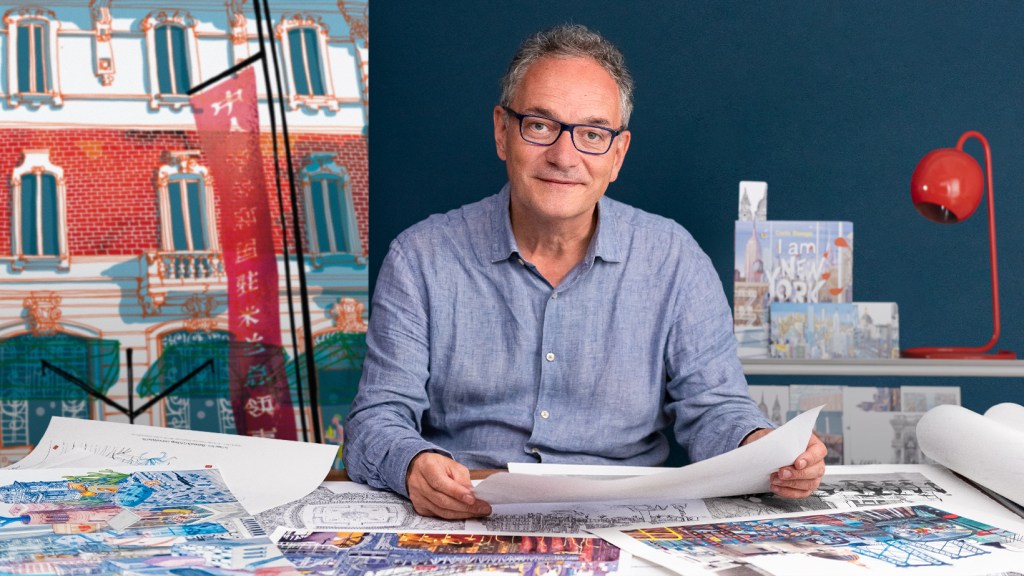
After graduating in Architecture at the Polytechnic of Milan, he chose to further his education attending art and design studies. He collaborated with the premier italian designer Bruno Munari, an amazing experience that influenced his way to see the world.
As an editorial and advertising illustrator, Carlo works with major italian magazines and newspapers and with international clients in Europe and in the U.S.
His distinctive style continually wins Italian Illustration awards and the work has been selected by The American Illustration Annual and won the Gold Medal Award in Creative Quarterly’s #15 contest and Awards of Excellence from Communication Arts.
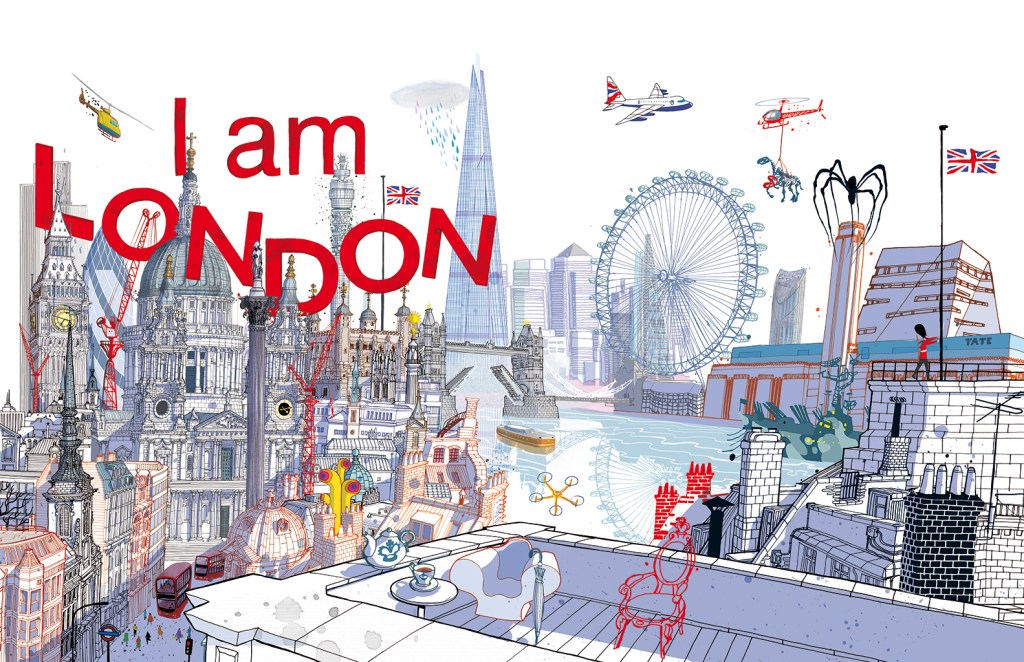
In 2015 he wrote and illustrated I am Milan, followed by I am London and I am New York the first title of a new book collection, published by Moleskine, dedicated to the main cities of the world.
Carlo lives and works in Berlin.
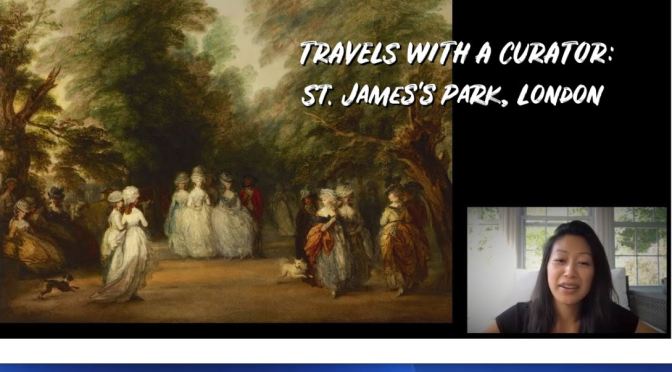
In this week’s episode of “Travels with a Curator,” explore the history of St. James’s Park with Curator Aimee Ng. This popular attraction in London serves as the backdrop for Thomas Gainsborough’s “Mall in St. James’s Park,” which he painted about 1783 for George III. Originally a cockleshell-strewn court for playing pall-mall, a precursor of croquet, the Mall was a place of visual encounters, where fashionable 18th-century Londoners (and their pets) could see and be seen.
To see this painting in detail, please visit our website: https://collections.frick.org/objects…SHOW LESS

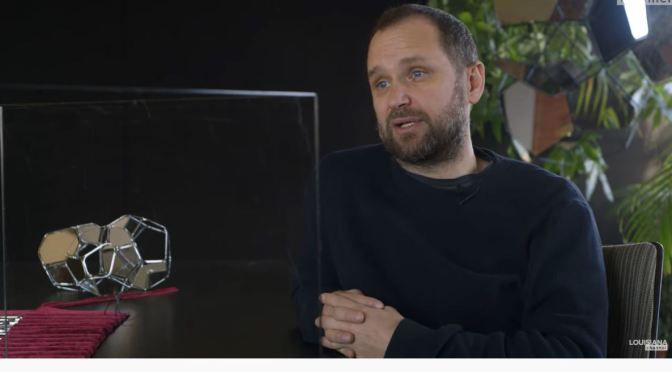
Join us – if you dare – as we follow the acclaimed Argentinian artist Tomás Saraceno into his installations of intricate spider webs inhabited by solitary, social and semi-social spiders, bridging the architectures of each other’s webs.
In the video, Saraceno talks about how spiders mirror human beings and help us understand ourselves and the way we live. “Every day, I try to enter territories, or thoughts, or ways of working, which might challenge ourselves and might challenge how we see the world.”
Observing a spider in its web for more than twenty minutes, Saraceno argues, can completely change your life and way of noticing things, revealing an unseen world. In connection to this, he feels that art and science – as well as other forms of knowledge – combined, can help us “form new alliances between disciplines and lose our comfort zone of operating and seeing and perceiving and being in the world. To try to find new ways to work and to be.”
Tomás Saraceno (b. 1973) is an Argentinian artist. Saraceno is particularly known for his large-scale, interactive installations and floating sculptures, as well as his interdisciplinary approach to art. With his practice, he explores new sustainable ways of inhabiting the environment.
His work has been exhibited at prominent venues all over the world, including the 58th La Biennale di Venezia in Venice, Palais de Tokyo in Paris, and Museo de Arte Moderno in Buenos Aires. Saraceno’s work is also part of international collection such as Bauhaus Museum in Weimar, Walker Art Center in Minneapolis, and SFMoMA in San Francisco.
In 2015, he launched the Aerocene Foundation – an open-source community project for artistic and scientific exploration of environmental issues. Relating to arachnology research, Saraceno is the first person to have scanned, reconstructed and re-imagined spiders’ woven spatial habitats.
For more see: https://studiotomassaraceno.org/about/ Tomás Saraceno was interviewed by Helle Fagralid at his studio in Berlin in November 2019. Camera: Rasmus Quistgaard Edited by Klaus Elmer Produced by Helle Fagralid Cover photo: Tomás Saraceno. ‘Social… Quasi Social… Solitary… Spiders… On Hybrid Cosmic Webs’, 2013. Installation view. Detail. Courtesy of the artist and Esther Schipper Gallery, Berlin Copyright: Louisiana Channel, Louisiana Museum of Modern Art, 2020





 Boomers Daily